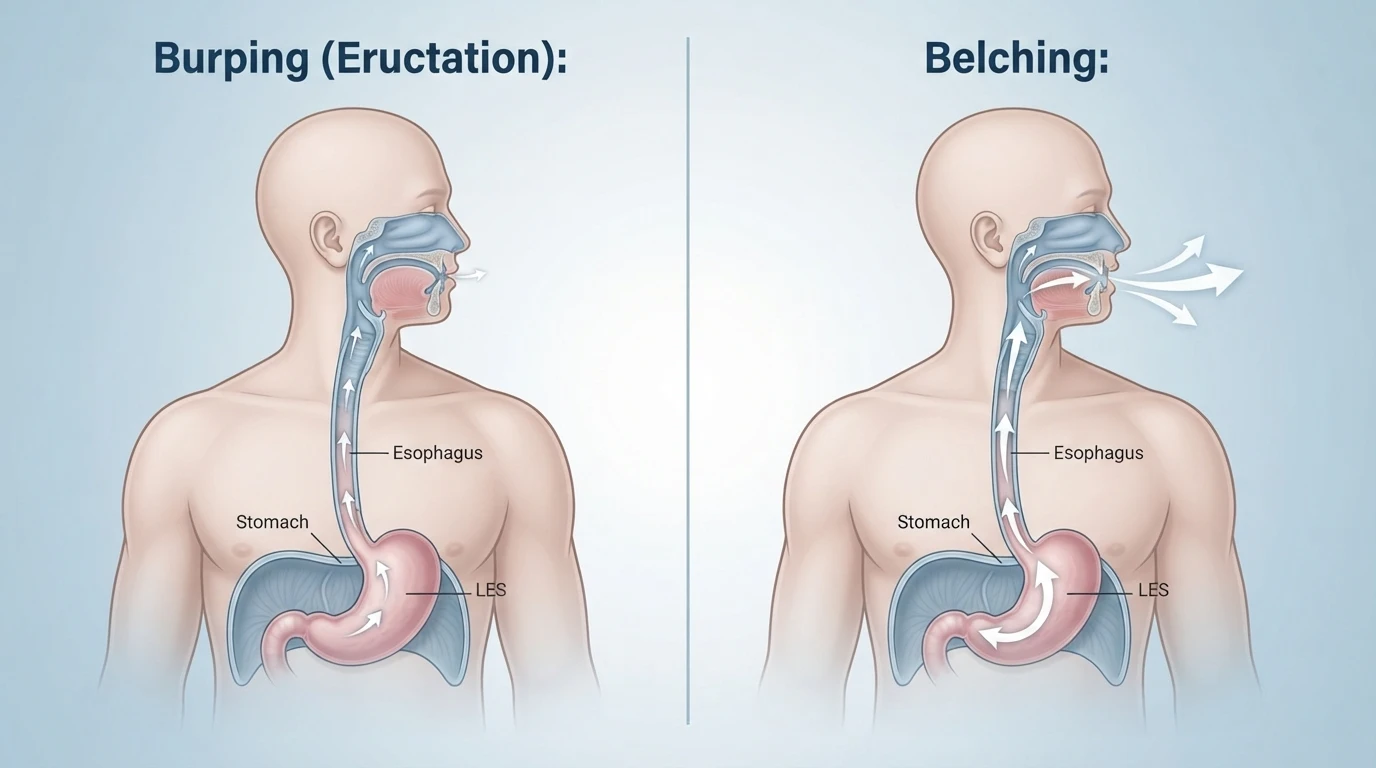
If you are searching for the difference between burping and belching, the short answer is that they usually mean the same thing. Both words describe the release of swallowed air or gas through the mouth.
Burping is the more common word in everyday English, while belching sounds more formal and is often used in medical writing. The difference between burping and belching is therefore mainly about word choice, not a different body function.
In most situations, you can use the two words interchangeably. The difference between burping and belching becomes more important only when discussing frequent or unusual symptoms, because repeated belching can sometimes occur with digestive problems or excessive air swallowing.
Burping vs. Belching: Quick Answer
Burping and belching are essentially synonyms.
Both refer to air or gas leaving the upper digestive tract through the mouth. Healthcare sources commonly use belching as the clinical term and burping as the everyday term. Another medical term for the process is eructation.
For example:
- “I keep burping after drinking soda.” — natural everyday English
- “The patient reports frequent belching.” — more clinical wording
There is no standard medical rule that says a burp and a belch are two different physical events.
What Is Burping?
Burping is the common everyday word for releasing excess air from the digestive tract through the mouth.
You swallow small amounts of air when you eat, drink, talk, chew, or swallow. Some of that air can collect in the upper digestive tract. Your body can then release it through your mouth.
Burping is normal. It can happen during or after a meal and often provides relief from pressure or fullness.
Example sentences
- I started burping after drinking a fizzy drink.
- He burped after eating too quickly.
- Burping helped relieve the pressure in my stomach.
The word burping is common in casual conversation.
What Is Belching?
Belching means the same basic bodily process as burping.
The word appears more often in medical and scientific contexts. For example, a healthcare provider may document excessive belching rather than “too much burping.”
Cleveland Clinic defines belching as the natural process of air leaving the stomach through the mouth and notes that “burping” is another name for it.
Example sentences
- Frequent belching can occur after swallowing too much air.
- The doctor asked about his belching.
- Carbonated drinks can increase belching.
So, belching is not a different type of burping. It is mainly a more formal term.
Difference Between Burping and Belching
| Feature | Burping | Belching |
|---|---|---|
| Basic meaning | Releasing air through the mouth | Releasing air through the mouth |
| Physical process | Same | Same |
| Common in everyday speech | Yes | Less common |
| Common in medical writing | Sometimes | Very common |
| Formality | Casual | More formal/clinical |
| Medical synonym | Yes | Yes |
| Another term | — | Eructation |
The main distinction is language and context, not anatomy.
Why Do People Burp or Belch?
The most common reason is swallowing air.
You naturally swallow some air while eating and drinking. You may swallow more if you:
- Eat or drink quickly
- Talk while eating
- Chew gum
- Suck on hard candy
- Drink carbonated beverages
- Smoke
- Breathe through your mouth
- Have nasal congestion
- Use certain breathing devices
Mayo Clinic notes that carbonated drinks, fast eating, gum chewing, hard candy, and other habits can increase swallowed air and lead to more belching.
Certain digestive conditions can also be associated with excessive belching. These may include acid reflux or GERD, indigestion, and some other upper digestive problems.
Is Burping Normal?
Yes. Occasional burping is a normal bodily function.
Your digestive system needs ways to release excess air. Burping is one of them.
A burp after a meal or carbonated drink usually does not mean that something is wrong. Mayo Clinic describes burping as a typical way the body gets rid of excess gas.
The situation changes when burping becomes frequent, persistent, painful, or disruptive.
In those cases, the burping itself may not be the main problem. It can sometimes occur alongside another digestive issue or because a person is swallowing excessive amounts of air.
What Causes Excessive Burping or Belching?
Several factors can lead to frequent burping.
1. Swallowing too much air
This is called aerophagia when excessive air swallowing causes symptoms.
People may swallow more air when they eat quickly, talk while eating, chew gum, or have certain breathing habits. Aerophagia can cause burping, bloating, and abdominal discomfort.
2. Carbonated drinks
Soda, sparkling water, and other fizzy drinks contain dissolved carbon dioxide.
Drinking them can increase the amount of gas that needs to leave the digestive tract.
3. Acid reflux
Some people with acid reflux or GERD experience frequent belching.
Reflux can also cause symptoms such as heartburn or regurgitation. Mayo Clinic notes that acid reflux can sometimes contribute to excessive belching.
4. Eating too quickly
Fast eating can cause you to swallow more air.
Slowing down can reduce the amount of air you take in while eating and may help reduce frequent burping.
5. Digestive conditions
Frequent belching can sometimes occur with other digestive symptoms or conditions.
However, frequent burping alone does not identify one specific disease. Healthcare professionals usually consider other symptoms and the overall pattern before determining a cause.
Burping, Belching, and Bloating: What’s the Difference?
These terms are sometimes confused, but they describe different things.
Burping or belching means air leaves through your mouth.
Bloating describes a feeling of fullness, pressure, or swelling in the abdomen.
Abdominal distention means the abdomen actually becomes visibly larger or swollen.
The American Gastroenterological Association separates these symptoms because they can occur together but are not the same thing.
For example, someone may feel bloated without burping. Another person may burp several times without feeling bloated.
Is a Loud Burp Different From a Belch?
Not medically.
People may use belch for a loud or noticeable burp in casual speech, but sound is not a standard medical distinction between the two terms.
The important point is the underlying process: air is being released through the mouth.
So a quiet burp and a loud belch do not represent two separate digestive functions.
Can You Burp Too Much?
Yes.
Occasional burping is normal, but persistent or excessive belching may deserve medical attention, especially when it comes with other symptoms.
Cleveland Clinic recommends talking with a healthcare provider when belching does not stop or occurs with symptoms such as abdominal pain, unexplained weight loss, vomiting, diarrhea, fever, weakness, or regurgitation.
Mayo Clinic also recommends medical evaluation when gas symptoms persist, become severe, or interfere with daily life. Chest pain or prolonged stomach pain requires prompt medical attention.
This does not mean frequent burping automatically indicates a serious illness. The cause can be as simple as swallowing too much air.
What Is Supragastric Belching?
This is an important point that basic burping explanations often miss.
Medical literature describes two broad types of belching: gastric belching and supragastric belching.
Gastric belching involves air that has reached the stomach and then moves back up.
Supragastric belching involves air entering the esophagus and quickly coming back out without reaching the stomach. It can occur repeatedly and may be linked to learned or behavioral patterns.
This distinction matters mainly when someone has frequent, troublesome belching that does not have an obvious cause.
It is not a difference between the everyday words burping and belching. Both terms can describe either process in ordinary conversation.
How Can You Reduce Frequent Burping?
If you often burp because you swallow too much air, simple habits may help.
Try to:
- Eat meals more slowly.
- Take smaller bites.
- Avoid gulping drinks.
- Reduce carbonated drinks if they trigger symptoms.
- Limit gum chewing if it increases your burping.
- Avoid sucking on hard candy frequently.
- Notice whether certain foods or drinks make symptoms worse.
Mayo Clinic and Cleveland Clinic both recommend reducing behaviors that increase swallowed air.
If frequent burping continues despite these changes, especially when you have pain, reflux, vomiting, weight loss, or other persistent symptoms, talk with a healthcare professional.
Common Confusion About Burping and Belching
“Belching is more serious than burping.”
Not necessarily.
Belching is simply a more formal or clinical word for the same general process. The seriousness depends on the frequency, cause, and accompanying symptoms.
“Burping means there is too much gas in the intestines.”
Not always.
Much of the air released through burping comes from swallowed air in the upper digestive tract. Intestinal gas is a related but different issue.
“Every frequent burp means you have a stomach disease.”
No.
Frequent burping can result from everyday habits such as fast eating, gum chewing, or carbonated drinks. It can also occur with certain digestive conditions, so persistent symptoms deserve attention rather than self-diagnosis.
“Burping and bloating are the same.”
They are not.
Burping involves releasing air through the mouth. Bloating is a feeling of fullness or pressure in the abdomen.
Frequently Asked Questions
Is there a real difference between burping and belching?
Usually, no. Both words describe the release of air or gas through the mouth. Burping is more common in everyday English, while belching is more formal and frequently used in medical contexts.
Is belching a medical term for burping?
Yes. Healthcare sources commonly use belching to describe the process that people usually call burping. Eructation is another medical term for the process.
Why am I burping so much?
Frequent burping can happen when you swallow too much air, drink carbonated beverages, eat quickly, chew gum, or have certain digestive conditions. Repeated symptoms should be discussed with a healthcare professional if they persist or occur with other symptoms.
Is burping after eating normal?
Yes. Burping during or after eating is generally normal because eating and drinking naturally involve swallowing some air.
When should I worry about frequent burping?
Seek medical advice if frequent burping persists or occurs with symptoms such as abdominal pain, vomiting, unexplained weight loss, diarrhea, regurgitation, or significant changes in your health. Chest pain or prolonged severe stomach pain needs prompt medical attention.
What is the difference between burping and flatulence?
Burping releases gas through the mouth, while flatulence refers to passing gas through the rectum. They are two different ways the body removes gas from the digestive system.
Conclusion
The difference between burping and belching is mostly a matter of language. Both terms describe the release of air through the mouth.
Burping sounds more casual and natural in everyday conversation. Belching is more common in medical and formal writing.
Occasional burping is normal. If it becomes frequent or comes with pain, vomiting, weight loss, reflux, or other persistent symptoms, the underlying cause may need medical evaluation.
External Sources
For reliable medical information, useful external sources include:
- Cleveland Clinic — Belching
- Mayo Clinic — Belching, Gas and Bloating
- American Gastroenterological Association — Belching, Bloating and Abdominal Distention
- Mayo Clinic — Gas and Gas Pains
- PubMed — Chronic Burping and Belching

Anton Reyes is a contributing writer at DiffNexx.com, where he explores meaningful differences in language, culture, and everyday concepts. With a background in creative nonfiction, Anton brings clarity and balance to complex comparisons. His writing helps readers understand subtle distinctions in words and ideas, making learning both insightful and engaging.







