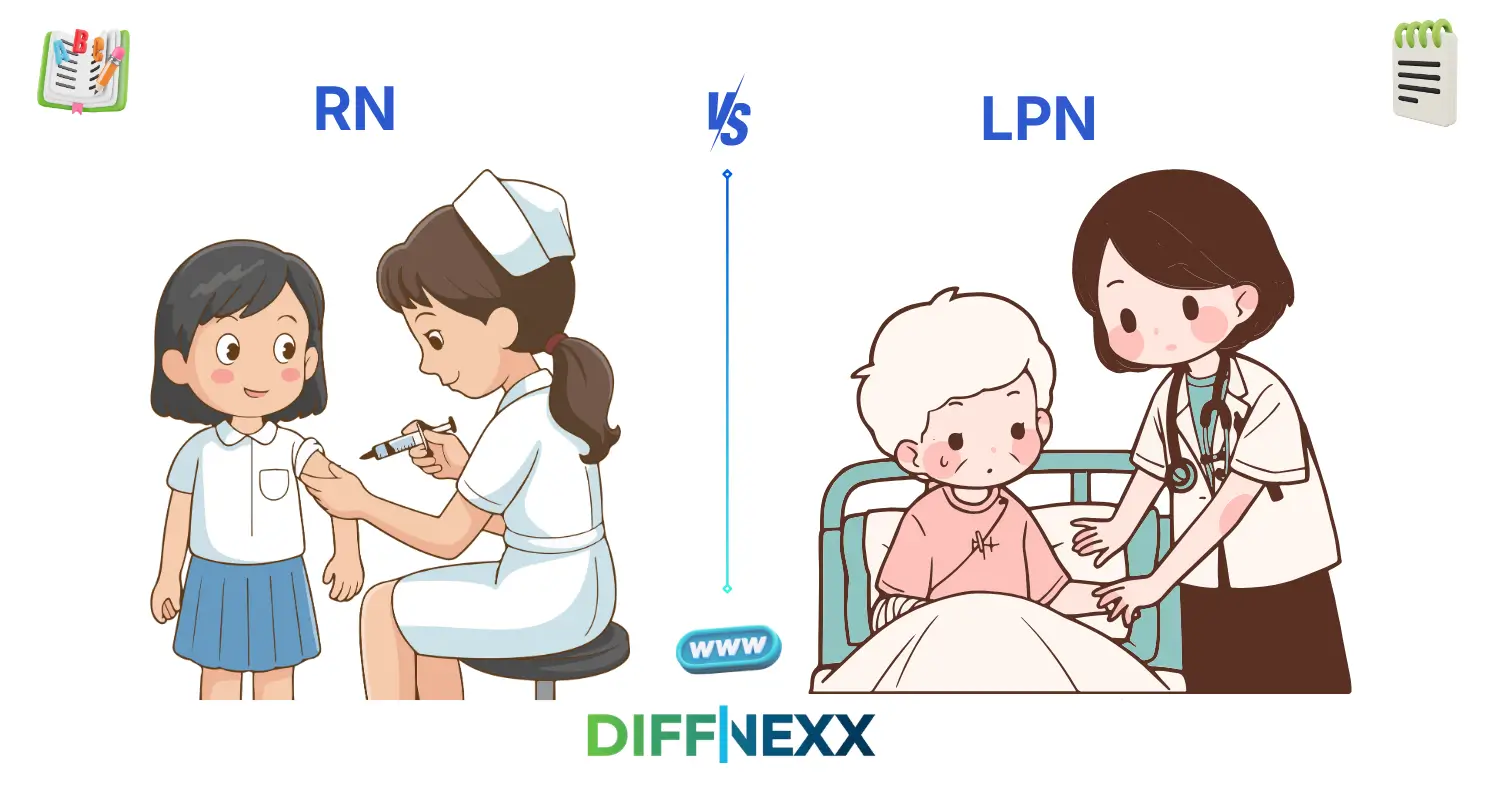
The difference between rn and lpn often becomes clear when someone visits a hospital and meets two nurses with different roles. One gives medication, while the other plans care.
The difference between rn and lpn is important in healthcare. RN stands for Registered Nurse, while LPN means Licensed Practical Nurse. Both care for patients, but their duties differ.
Many students and job seekers wonder about the difference between rn and lpn when choosing a nursing career. It helps them decide their path wisely.
Understanding this topic makes learning easier and improves career choices. Now, let’s explore the key differences in a simple way.
🔑 Key Difference Between the Both
The main difference between RN and LPN lies in education, responsibilities, and decision-making authority.
Registered Nurses (RNs) have more training and can perform complex tasks. Licensed Practical Nurses (LPNs) focus on basic patient care and assist RNs.
RNs often supervise LPNs and handle critical decisions. LPNs support daily patient needs under supervision.
🌍 Importance – Why This Difference Matters
Knowing the difference helps students choose the right career path. It saves time, money, and effort.
For professionals, it improves teamwork and role clarity in hospitals. Everyone knows their responsibilities clearly.
In society, both roles ensure better patient care and safety. Each nurse plays a vital part in the healthcare system.
🔊 Pronunciation Section
RN (Registered Nurse)
US: /ˌɑːr ˈɛn/
UK: /ˌɑː ˈɛn/
LPN (Licensed Practical Nurse)
US: /ˌɛl piː ˈɛn/
UK: /ˌɛl piː ˈɛn/
Now that you know how to say them, let’s understand what they really mean.
📚 Core Definitions
RN (Registered Nurse)
A Registered Nurse is a trained healthcare professional who provides advanced patient care. They assess patients, create care plans, and make decisions.
They often lead teams and work independently.
Example: The RN checked the patient’s condition and adjusted treatment.
LPN (Licensed Practical Nurse)
A Licensed Practical Nurse provides basic nursing care under supervision. They help patients with daily tasks and monitor health.
They work closely with RNs and doctors.
Example: The LPN helped the patient take medicine and checked vital signs.
📚 10 Clear Differences Between RN and LPN
1. Education Level
RNs require more education, often a degree. LPNs complete shorter training programs.
- RN Example: She completed a nursing degree.
- LPN Example: He finished a one-year practical nursing course.
2. Job Responsibilities
RNs handle complex medical tasks. LPNs focus on routine care.
- RN Example: The RN created a care plan.
- LPN Example: The LPN checked blood pressure.
3. Decision-Making
RNs make important medical decisions. LPNs follow instructions.
- RN Example: The RN adjusted treatment.
- LPN Example: The LPN followed the doctor’s orders.
4. Supervision Role
RNs supervise healthcare teams. LPNs work under supervision.
- RN Example: The RN guided junior staff.
- LPN Example: The LPN reported to the RN.
5. Salary
RNs usually earn higher salaries. LPNs earn less due to limited roles.
- RN Example: The RN received higher pay.
- LPN Example: The LPN earned a smaller salary.
6. Work Settings
RNs work in hospitals, clinics, and leadership roles. LPNs often work in care homes or clinics.
- RN Example: The RN worked in ICU.
- LPN Example: The LPN worked in a nursing home.
7. Patient Interaction
RNs handle serious patient cases. LPNs assist with daily care.
- RN Example: The RN treated a critical patient.
- LPN Example: The LPN helped with feeding.
8. Licensing Requirements
RNs must pass advanced exams. LPNs take basic licensing exams.
- RN Example: She passed the RN exam.
- LPN Example: He passed the LPN test.
9. Career Growth
RNs have more career options. LPNs have limited advancement.
- RN Example: The RN became a nurse manager.
- LPN Example: The LPN continued in basic care.
10. Scope of Practice
RNs have a wider scope of practice. LPNs have a restricted scope.
- RN Example: The RN performed complex procedures.
- LPN Example: The LPN handled simple tasks.
🎯 Why Knowing the Difference Matters
Students need this knowledge to choose the right education path. It helps avoid confusion and saves time.
Professionals benefit from clear role understanding. It improves teamwork and reduces errors in healthcare settings.
Society gains safer healthcare systems. Patients receive better care when roles are clearly defined.
Real-world consequences of confusion
Confusion can lead to wrong expectations. A patient may expect advanced care from an LPN, which can cause delays or mistakes.
🧠 Why People Get Confused
Similar Terms
Both RN and LPN are nurses, so people think they are the same.
Overlapping Duties
Both check patients and provide care. This overlap creates confusion.
Informal Speech
People often use “nurse” for both roles. This hides the real difference.
🎭 Connotation & Emotional Tone
(Connotation = the emotional meaning associated with a word.)
RN
- Positive: Skilled and professional
Example: The RN handled the case confidently. - Neutral: Standard healthcare role
- Negative: Rarely negative, sometimes seen as demanding
LPN
- Positive: Caring and supportive
Example: The LPN was kind and helpful. - Neutral: Basic nursing role
- Negative: Sometimes seen as limited (not always fair)
🗣 Usage in Metaphors, Similes & Idioms
Not many idioms exist, but comparisons appear:
- “She works like an RN, leading the team.”
- “He supports others like an LPN, quietly helping.”
These show leadership vs support roles.
📊 Comparison Table
| Feature | RN | LPN |
|---|---|---|
| Meaning | Advanced nurse | Basic care nurse |
| Tone | Professional | Supportive |
| Usage | Complex care | Routine care |
| Context | Hospitals, leadership | Clinics, care homes |
| Formality | High | Moderate |
⚖️ Which Is Better in What Situation?
When to use RN
Choose RN when advanced care is needed. For example, in hospitals or emergencies, RNs handle complex tasks and decisions.
When to use LPN
Use LPN for basic care needs. They are ideal for daily patient support and routine monitoring.
Situational clarity
Both roles are important. The choice depends on patient needs and healthcare setting.
Contextual correctness
Use the correct term based on responsibility level. This ensures clear communication in healthcare.
📖 Literary or Cultural References
- Book: Notes on Nursing (Non-fiction, Florence Nightingale, 1859)
- Movie: Patch Adams (USA, 1998)
These works highlight the importance of nursing roles and patient care.
❓ FAQs
1. Is RN higher than LPN?
Yes, RN is considered higher due to more education and responsibilities. RNs handle complex care and supervise LPNs.
2. Can an LPN become an RN?
Yes, many LPNs continue their education to become RNs. This is a common career path in nursing.
3. Who earns more, RN or LPN?
RNs usually earn more because of their advanced skills and duties. Salary depends on location and experience.
4. Do RN and LPN do the same work?
They share some tasks, but RNs handle more complex duties. LPNs focus on basic care.
5. Which is better for beginners?
LPN is easier to start with because of shorter training. RN offers better long-term growth.
🏁 Conclusion
The difference between RN and LPN mainly lies in education, responsibilities, and authority. RNs handle complex care, while LPNs support daily patient needs.
Understanding this difference helps students choose the right path and improves teamwork in healthcare. It also ensures patients receive the correct level of care.
Both roles are valuable and essential in society. They work together to provide safe and effective treatment.
Keep learning and exploring these roles. The right knowledge leads to better decisions and stronger communication.

Aamer Shahzad is the founder of Diffnexx.com, a fast-growing educational platform focused on high-intent “difference between” topics. With over 8 years of experience in English language education and analytical writing, I specialize in breaking down complex “difference between” topics into clear, structured, and easy-to-understand explanations. Diffnexx.com is your go-to resource for enhancing English skills and writing with confidence.
I specializes in building search-optimized, research-driven comparison content designed for clarity, authority, and long-term digital asset value.