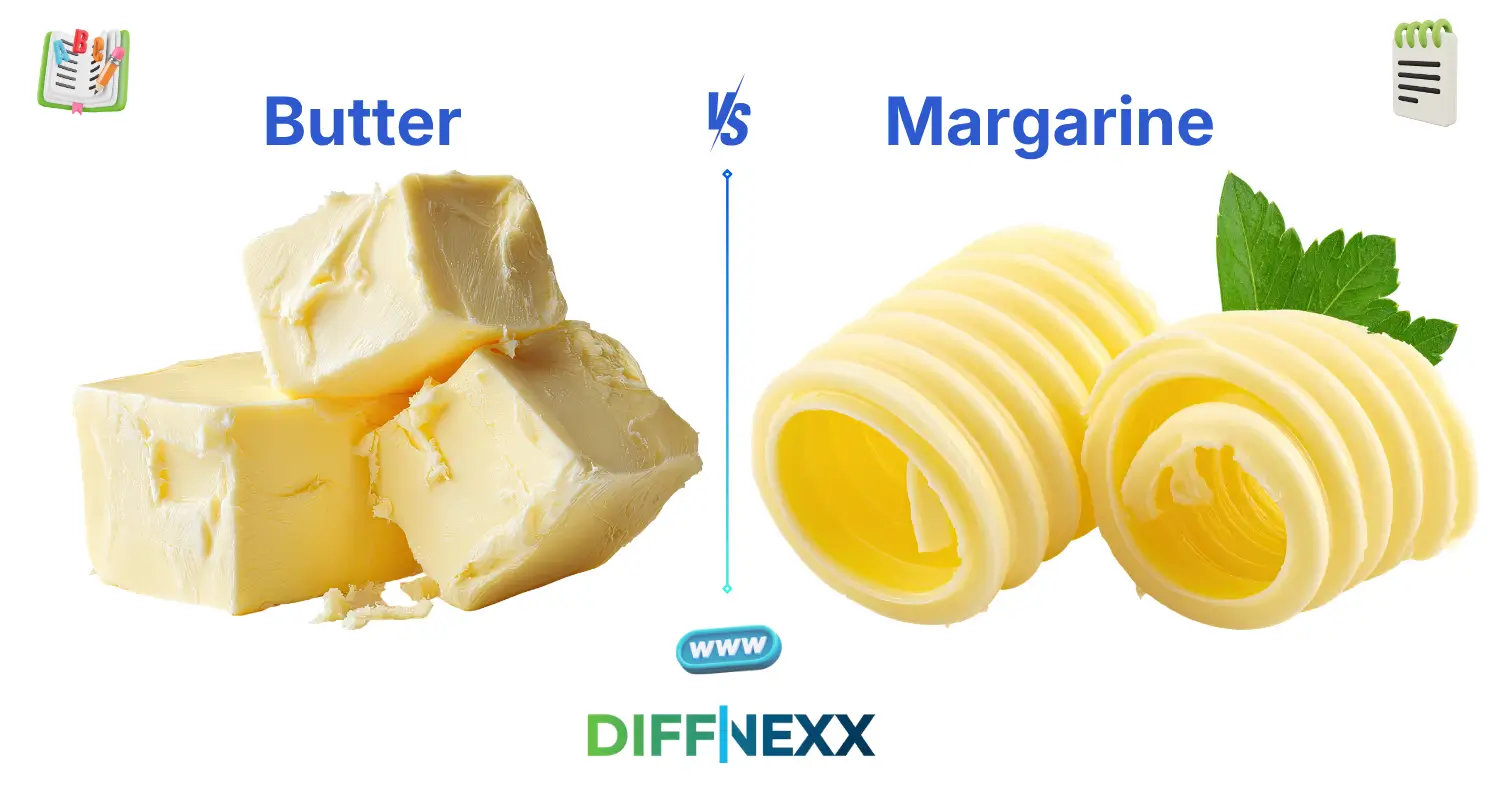
The difference between butter and margarine often comes up when people stand in a grocery store, unsure which spread is healthier or tastier.
In many kitchens, butter is used for rich flavor while margarine is chosen as a cheaper alternative, making the difference between butter and margarine important to understand.
At its core, the difference between butter and margarine lies in their ingredients, origin, and health perception.
Learning the difference between butter and margarine helps students, home cooks, and health-conscious people make better food choices every day.
🧈 Key Difference Between Butter and Margarine
Butter is a natural dairy product made from milk fat, while margarine is a processed spread made from vegetable oils.
Butter has a rich taste, while margarine is designed to mimic butter with a lighter, sometimes neutral flavor.
This core difference affects nutrition, texture, and usage in cooking and baking.
🌍 Importance – Why Knowing the Difference Matters
Students studying nutrition or food science must understand how natural and processed fats differ.
Professionals in cooking and baking need to choose the right ingredient for flavor and texture balance.
For everyday consumers, knowing this difference helps make healthier dietary decisions and avoid confusion in food labeling.
🧠 Real-world consequences of confusion
Using the wrong spread can change recipe taste, nutrition value, and even baking results.
🔊 PRONUNCIATION SECTION
🧈 Butter
US: /ˈbʌt.ər/
UK: /ˈbʌt.ə/
🧴 Margarine
US: /ˌmɑːr.dʒəˈriːn/
UK: /ˌmɑː.dʒəˈriːn/
Now let’s understand both terms clearly before comparing them.
📚 CORE DEFINITIONS
🧈 Butter
Butter is a dairy product made by churning cream from milk. It is rich, natural, and widely used in cooking and baking.
Example: I spread butter on warm toast every morning.
🧴 Margarine
Margarine is a non-dairy spread made from vegetable oils. It is designed as a butter substitute and often marketed as a healthier option.
Example: She uses margarine instead of butter for baking.
🔍 10 CLEAR DIFFERENCES BETWEEN BUTTER AND MARGARINE
1. Source of Ingredients
Butter comes from animal milk. Margarine comes from plant oils.
- Example for Butter: Butter is made from cow’s milk.
- Example for Margarine: Margarine is made from vegetable oil.
2. Natural vs Processed
Butter is natural. Margarine is highly processed.
- Example for Butter: Butter is minimally processed.
- Example for Margarine: Margarine undergoes chemical processing.
3. Taste Profile
Butter has a rich, creamy taste. Margarine has a lighter or neutral taste.
- Example for Butter: Butter enhances flavor in baking.
- Example for Margarine: Margarine tastes less rich.
4. Texture
Butter is solid and creamy when cold. Margarine is softer and more spreadable.
- Example for Butter: Butter hardens in the fridge.
- Example for Margarine: Margarine spreads easily.
5. Fat Composition
Butter contains saturated fat. Margarine contains unsaturated fats (usually).
- Example for Butter: Butter is high in saturated fat.
- Example for Margarine: Margarine may contain plant-based fats.
6. Health Perception
Butter is seen as natural but high in fat. Margarine is seen as a lighter alternative.
- Example for Butter: Butter is natural but calorie-rich.
- Example for Margarine: Margarine is often marketed as heart-friendly.
7. Cooking Performance
Butter browns easily and adds flavor. Margarine is stable but less flavorful.
- Example for Butter: Butter enhances baked goods.
- Example for Margarine: Margarine works in large-scale baking.
8. Shelf Life
Butter has a shorter shelf life. Margarine lasts longer.
- Example for Butter: Butter spoils faster.
- Example for Margarine: Margarine stays fresh longer.
9. Color Difference
Butter is yellowish due to milk fat. Margarine is lighter or artificial yellow.
- Example for Butter: Butter has a golden color.
- Example for Margarine: Margarine looks pale yellow.
10. Price Difference
Butter is usually more expensive. Margarine is cheaper.
- Example for Butter: Butter costs more in stores.
- Example for Margarine: Margarine is budget-friendly.
🎯 Why Knowing the Difference Matters
Students benefit by learning how natural and processed foods affect health and nutrition.
Chefs and food professionals need to choose the right fat for cooking quality and recipe accuracy.
Consumers make better health decisions when they understand food labels clearly and avoid misleading marketing.
🧠 Why People Get Confused
Similar Appearance
Both look similar in shape and packaging.
Same Usage
Both are used for spreading and cooking.
Marketing Influence
Brands often market margarine as a butter substitute.
Everyday Language
People casually use both terms interchangeably.
🎭 Connotation & Emotional Tone
🧈 Butter
- Positive: natural, rich, traditional
- Negative: high in fat for some diets
- Neutral: basic dairy product
🧴 Margarine
- Positive: affordable, light, convenient
- Negative: processed, artificial perception
- Neutral: butter substitute
(Connotation = the emotional meaning associated with a word.)
🗣 Usage in Metaphors & Idioms
- “Smooth as butter” means easy and effortless.
- “Spread like margarine” is sometimes used to describe easy application.
- “Butter up someone” means to flatter someone.
Examples:
- She spreads butter on toast every morning.
- He prefers margarine in baking recipes.
📊 COMPARISON TABLE
| Feature | Butter | Margarine |
|---|---|---|
| Meaning | Dairy fat spread | Plant oil spread |
| Tone | Natural, rich | Processed, light |
| Usage | Cooking, baking | Cooking, baking |
| Context | Traditional food | Modern substitute |
| Formality | Neutral | Neutral |
⚖️ WHICH IS BETTER IN WHAT SITUATION?
🧈 When to use Butter
Use butter when flavor matters most, such as baking cookies, cakes, or rich sauces. It gives a natural creamy taste.
🧴 When to use Margarine
Use margarine when you want a budget-friendly or dairy-free alternative. It also works well in large-scale cooking.
🧭 Situational clarity
Butter suits traditional and rich recipes. Margarine suits lighter or cost-effective cooking needs.
📖 LITERARY OR CULTURAL REFERENCES
- Salt, Fat, Acid, Heat (Cookbook, Samin Nosrat, 2017)
- Julie & Julia (USA Film, 2009)
Both works highlight how fats like butter shape flavor and cooking culture.
❓ FAQS
1. Is butter healthier than margarine?
It depends on diet goals. Butter is natural but high in saturated fat.
2. Is margarine made from plastic?
No, this is a myth. Margarine is made from vegetable oils.
3. Can I replace butter with margarine?
Yes, in most baking recipes.
4. Which tastes better?
Butter generally has a richer taste.
5. Is margarine dairy-free?
Yes, most margarine is plant-based.
6. Why is butter yellow?
Because of natural milk fat and beta-carotene.
7. Does margarine last longer?
Yes, it usually has a longer shelf life.
8. Is butter natural?
Yes, it is made from milk cream.
9. Can both be used for frying?
Yes, but butter burns faster.
10. Which is cheaper?
Margarine is usually more affordable.
🏁 CONCLUSION
The difference between butter and margarine mainly lies in their source and processing method.
Butter is natural, rich, and traditional, while margarine is a processed, plant-based alternative.
Understanding this helps improve cooking choices and health awareness.
When you know the difference, you can cook smarter and choose ingredients that match your needs confidently.

Anton Reyes is a contributing writer at DiffNexx.com, where he explores meaningful differences in language, culture, and everyday concepts. With a background in creative nonfiction, Anton brings clarity and balance to complex comparisons. His writing helps readers understand subtle distinctions in words and ideas, making learning both insightful and engaging.