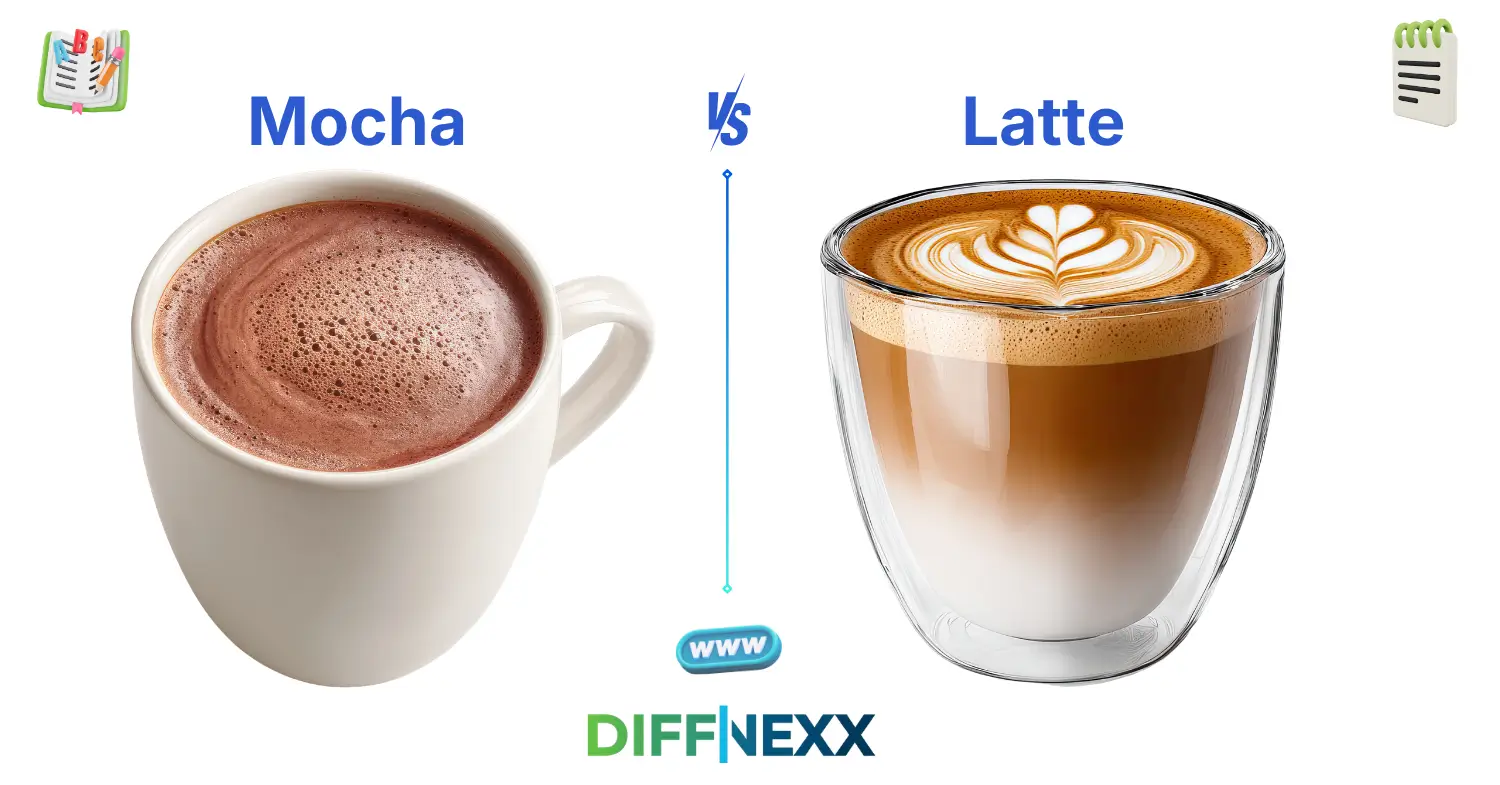
The difference between mocha and latte often confuses coffee lovers when they stand in front of a café menu trying to decide what to order.
One friend may suggest a mocha while another insists on a latte, leaving you unsure about the difference between mocha and latte in taste and ingredients.
At its core, the difference between mocha and latte comes down to chocolate, milk texture, and flavor strength.
Understanding the difference between mocha and latte helps students, travelers, and coffee enthusiasts choose drinks that match their taste perfectly.
☕ Key Difference Between Mocha and Latte
The main difference is simple: mocha includes chocolate, while latte is purely espresso and milk.
Mocha is sweeter and dessert-like, while latte is smoother and more milky.
This core distinction shapes everything from taste to texture and presentation.
🌍 Importance – Why Knowing the Difference Matters
Knowing the difference helps you order the right drink without confusion in cafés.
For baristas and hospitality workers, it ensures correct preparation and customer satisfaction.
For coffee lovers, it improves taste awareness and helps explore global coffee culture more confidently.
🔊 PRONUNCIATION SECTION
☕ Mocha
US: /ˈmoʊ.kə/
UK: /ˈməʊ.kə/
☕ Latte
US: /ˈlɑː.teɪ/
UK: /ˈlæt.eɪ/
Now that pronunciation is clear, let’s understand both drinks in detail.
📚 CORE DEFINITIONS
☕ Mocha
Mocha is a coffee drink made with espresso, steamed milk, and chocolate. It has a sweet, rich, dessert-like taste.
Example: I ordered a mocha because I wanted something sweet after dinner.
☕ Latte
Latte is a coffee drink made with espresso and a large amount of steamed milk. It has a mild, creamy flavor.
Example: She drinks a latte every morning for a smooth coffee start.
🔍 10 CLEAR DIFFERENCES BETWEEN MOCHA AND LATTE
1. Main Ingredient Difference
Mocha includes chocolate syrup or cocoa powder. Latte does not contain chocolate.
- Example for Mocha: I love chocolate mocha in winter.
- Example for Latte: I prefer plain latte without flavor.
2. Taste Profile
Mocha tastes sweet and chocolatey. Latte tastes smooth and milky.
- Example for Mocha: Mocha feels like dessert coffee.
- Example for Latte: Latte tastes light and creamy.
3. Sugar Level
Mocha is naturally sweeter due to chocolate. Latte is less sweet unless sugar is added.
- Example for Mocha: This mocha is very sweet.
- Example for Latte: I added sugar to my latte.
4. Coffee Strength
Latte has a stronger espresso taste. Mocha’s coffee taste is masked by chocolate.
- Example for Mocha: I barely taste coffee in mocha.
- Example for Latte: Latte has bold coffee flavor.
5. Texture
Mocha feels thicker due to chocolate syrup. Latte feels lighter and smoother.
- Example for Mocha: Mocha feels rich and heavy.
- Example for Latte: Latte feels airy and soft.
6. Calorie Content
Mocha usually has more calories. Latte has fewer calories without added syrup.
- Example for Mocha: This mocha is high in calories.
- Example for Latte: Latte is a lighter option.
7. Color Appearance
Mocha is darker brown. Latte is light brown or beige.
- Example for Mocha: Mocha looks deep brown.
- Example for Latte: Latte looks creamy beige.
8. Ingredient Complexity
Mocha has three main ingredients. Latte has two main ingredients.
- Example for Mocha: Espresso, milk, chocolate.
- Example for Latte: Espresso and milk only.
9. Serving Style
Mocha is often topped with whipped cream. Latte is usually served plain or with foam art.
- Example for Mocha: Whipped cream on mocha looks nice.
- Example for Latte: Latte art is common.
10. Emotional Experience
Mocha feels like a dessert treat. Latte feels like a daily routine drink.
- Example for Mocha: I drink mocha as a reward.
- Example for Latte: I drink latte every morning.
🎯 Why Knowing the Difference Matters
Students often see both drinks in cafés and menus, so understanding helps them make better choices.
Professionals in hospitality must know the difference to serve customers correctly and avoid mistakes.
In social settings, knowing coffee types helps you communicate preferences clearly and confidently.
🧠 Real-world consequences of confusion
Ordering the wrong drink can lead to disappointment, especially if someone expects sweetness but receives plain coffee.
🧠 Why People Get Confused
Similar Ingredients
Both drinks use espresso and milk, which makes them look similar.
Café Menu Overlap
Many menus list them side by side, increasing confusion.
Flavor Assumptions
People assume all coffee drinks taste similar, which is not true.
Informal Usage
Casual café talk often blurs differences.
🎭 Connotation & Emotional Tone
☕ Mocha
- Positive: Sweet, comforting, indulgent
- Negative: Too sugary for some
- Neutral: Dessert-style coffee
☕ Latte
- Positive: Smooth, calming, balanced
- Negative: Too mild for strong coffee lovers
- Neutral: Everyday coffee drink
(Connotation = the emotional meaning associated with a word.)
🗣 Usage in Metaphors & Expressions
- “Life is like a mocha—sometimes sweet, sometimes rich.”
- “Her morning feels like a latte—smooth and calm.”
- “He mixes work like espresso and chocolate like mocha.”
📊 COMPARISON TABLE
| Feature | Mocha | Latte |
|---|---|---|
| Meaning | Coffee with chocolate | Espresso with milk |
| Tone | Sweet, rich | Smooth, mild |
| Usage | Dessert drink | Daily drink |
| Context | Treat or dessert | Routine coffee |
| Formality | Informal café drink | Neutral café drink |
⚖️ WHICH IS BETTER IN WHAT SITUATION?
☕ When to use Mocha
Choose mocha when you want something sweet, dessert-like, or rich in flavor. It suits evenings or cold weather.
☕ When to use Latte
Choose latte when you want a light, smooth coffee for daily energy without strong sweetness.
☕ Situational clarity
Mocha is for indulgence. Latte is for balance and routine.
📖 LITERARY OR CULTURAL REFERENCES
- Coffee Culture: A Global History (Book, Mark Pendergrast, 2019)
- Coffee & Kareem (Comedy Film, USA, 2020)
These references show how coffee drinks like mocha and latte appear in culture and media.
❓ FAQS
1. Is mocha stronger than latte?
No, latte is stronger in coffee flavor, while mocha is sweeter.
2. Does mocha contain caffeine?
Yes, both mocha and latte contain espresso-based caffeine.
3. Is latte healthier than mocha?
Latte is usually lower in sugar and calories.
4. Which is sweeter, mocha or latte?
Mocha is sweeter because of chocolate.
5. Can latte be flavored?
Yes, but traditional latte is plain milk and espresso.
6. Is mocha a dessert drink?
Yes, many people treat mocha like a dessert coffee.
7. What milk is used in latte?
Usually steamed whole milk, but alternatives exist.
8. Is mocha Italian?
Yes, it is inspired by Italian coffee culture.
9. Which is more popular?
Latte is more commonly consumed worldwide.
10. Can I make both at home?
Yes, both are easy to prepare with espresso and milk.
🏁 CONCLUSION
The difference between mocha and latte mainly comes down to chocolate content and sweetness level.
Mocha is rich, sweet, and dessert-like, while latte is smooth, mild, and everyday friendly.
Understanding this helps you choose better drinks in cafés and enjoy coffee more intentionally.
With clear knowledge, you can now order confidently and explore coffee culture with ease.

Aamer Shahzad is the founder of Diffnexx.com, a fast-growing educational platform focused on high-intent “difference between” topics. With over 8 years of experience in English language education and analytical writing, I specialize in breaking down complex “difference between” topics into clear, structured, and easy-to-understand explanations. Diffnexx.com is your go-to resource for enhancing English skills and writing with confidence.
I specializes in building search-optimized, research-driven comparison content designed for clarity, authority, and long-term digital asset value.