The difference between adhd and autism often comes up when a child struggles to focus in class or avoids social interaction. Parents and teachers may wonder what is really happening.
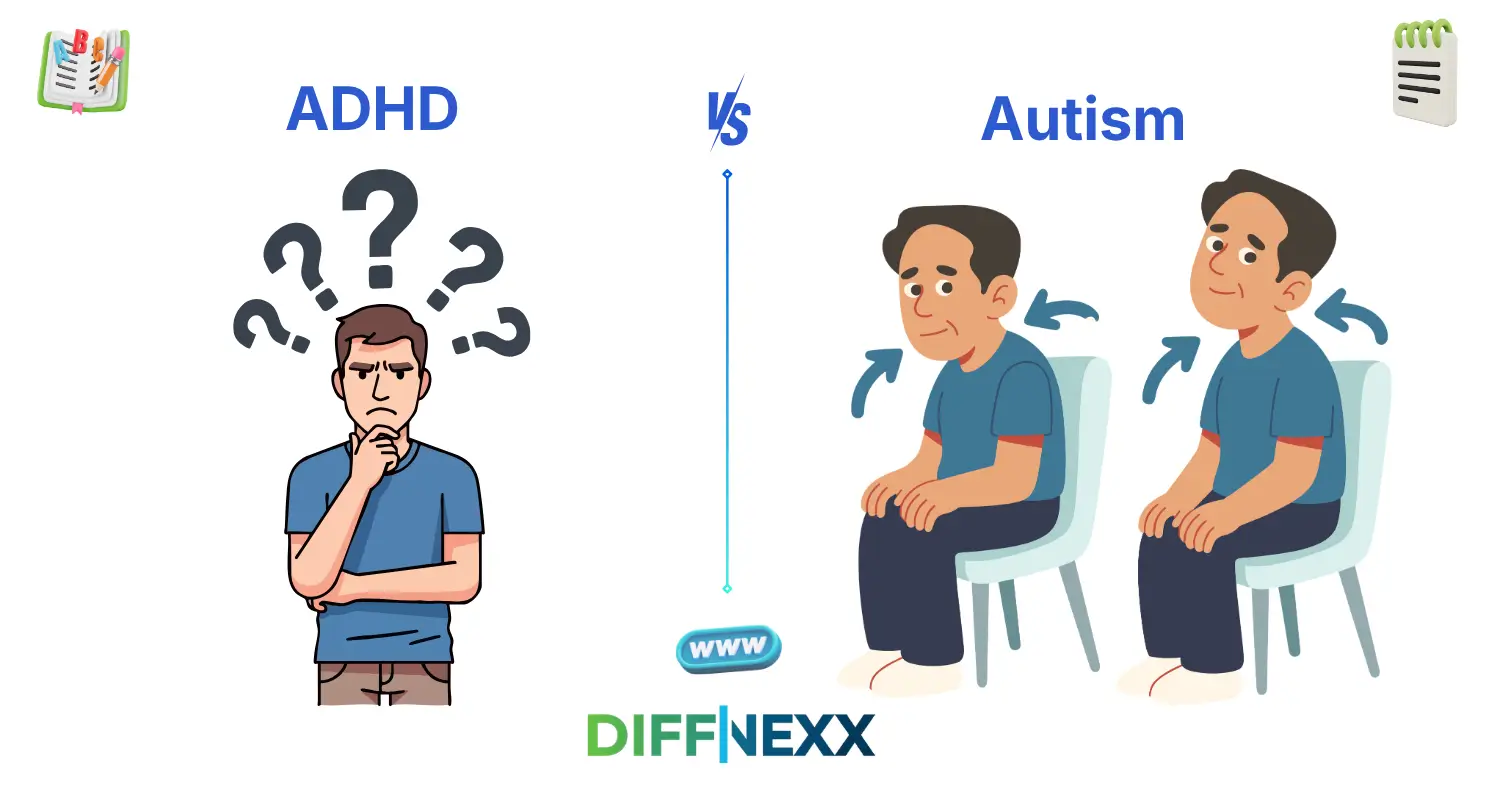
The difference between adhd and autism lies in how the brain processes attention, behavior, and social interaction. ADHD affects focus and impulse control, while autism affects communication and social understanding.
Many people confuse these conditions because some behaviors look similar. Understanding the difference between adhd and autism helps support children and adults better.
If you want clearer answers and practical understanding, this guide will help you step by step. Let’s explore the key differences.
🔑 Key Difference Between the Both
The main difference between ADHD and autism is how each condition affects behavior and thinking.
ADHD mainly impacts attention, hyperactivity, and impulsiveness.
Autism mainly affects social communication, behavior patterns, and sensory responses.
🌍 Importance – Why This Difference Matters
Knowing this difference helps students and families understand behavior correctly. It prevents wrong assumptions.
For professionals like teachers and doctors, it improves accurate support and care plans.
In society, awareness leads to acceptance and inclusion, helping individuals thrive in daily life.
🔊 Pronunciation Section
ADHD (Attention-Deficit/Hyperactivity Disorder)
US: /ˌeɪ diː eɪtʃ ˈdiː/
UK: /ˌeɪ diː eɪtʃ ˈdiː/
Autism
US: /ˈɔːtɪzəm/
UK: /ˈɔːtɪzəm/
Now that you know how to say them, let’s understand what they mean clearly.
📚 Core Definitions
ADHD
ADHD is a condition where a person finds it hard to focus, sit still, or control impulses. It often appears in childhood but can continue into adulthood.
It is linked to attention and activity levels.
Example: The child could not sit still during class and got distracted easily.
Autism
Autism is a developmental condition that affects communication, social skills, and behavior. It is a spectrum, meaning it varies from person to person.
It often involves unique ways of thinking and interacting.
Example: The child preferred routines and avoided eye contact.
📚 10 Clear Differences Between ADHD and Autism
1. Core Focus
ADHD affects attention and activity levels. Autism affects social interaction and communication.
- ADHD Example: He struggles to focus on tasks.
- Autism Example: She finds social interaction difficult.
2. Social Skills
People with ADHD may be social but impulsive. People with autism may struggle with social cues.
- ADHD Example: He interrupts conversations often.
- Autism Example: She avoids eye contact.
3. Communication Style
ADHD communication may be fast and scattered. Autism communication may be limited or repetitive.
- ADHD Example: He jumps between topics.
- Autism Example: She repeats the same phrase.
4. Attention Span
ADHD causes short attention spans. Autism may involve deep focus on specific interests.
- ADHD Example: He loses focus quickly.
- Autism Example: She focuses on one topic for hours.
5. Behavior Patterns
ADHD shows impulsive actions. Autism shows repetitive behaviors.
- ADHD Example: He acts without thinking.
- Autism Example: She repeats the same movements.
6. Sensory Sensitivity
ADHD may include mild sensitivity. Autism often includes strong sensory reactions.
- ADHD Example: Loud noise distracts him.
- Autism Example: Loud sounds feel overwhelming.
7. Routine Preference
ADHD struggles with routines. Autism prefers strict routines.
- ADHD Example: He forgets schedules.
- Autism Example: She follows routines strictly.
8. Emotional Regulation
ADHD may cause quick emotional reactions. Autism may involve difficulty expressing emotions.
- ADHD Example: He gets frustrated quickly.
- Autism Example: She struggles to show feelings.
9. Learning Style
ADHD learners need stimulation and variety. Autism learners prefer structure and repetition.
- ADHD Example: He learns better with activities.
- Autism Example: She learns through repetition.
10. Expression Style
ADHD behavior is energetic and outward. Autism behavior may be calm or withdrawn.
- ADHD Example: He is very active.
- Autism Example: She prefers quiet time.
🎯 Why Knowing the Difference Matters
Students benefit from proper understanding. It helps them learn in ways that suit their needs.
Professionals use this knowledge to create better teaching and therapy plans. It improves outcomes.
Society becomes more inclusive. People receive support instead of judgment.
Real-world consequences of confusion
Misunderstanding can lead to wrong treatment or support. A child with autism may be treated only for attention issues, missing key needs.
🧠 Why People Get Confused
Similar Behavior
Both conditions may show restlessness or social challenges. This overlap causes confusion.
Context-Based Usage
Behaviors change based on situations. This makes diagnosis harder.
Informal Speech
People often use labels casually, which spreads misunderstanding.
🎭 Connotation & Emotional Tone
(Connotation = the emotional meaning associated with a word.)
ADHD
- Positive: Energetic and creative
Example: His ADHD helps him think creatively. - Negative: Seen as distracted or restless
- Neutral: A medical condition
Autism
- Positive: Unique thinking and focus
Example: Her autism gives her strong attention to detail. - Negative: Misunderstood socially
- Neutral: A developmental condition
🗣 Usage in Metaphors, Similes & Idioms
These terms are not commonly used in idioms.
However, people sometimes use them loosely:
- “My brain feels like ADHD today.” (informal, not clinical)
- “He is in his own world like autism.” (not accurate, avoid misuse)
Use these terms carefully and respectfully.
📊 Comparison Table
| Feature | ADHD | Autism |
|---|---|---|
| Meaning | Attention disorder | Developmental condition |
| Tone | Energetic | Reflective |
| Usage | Focus issues | Social/behavior patterns |
| Context | School, daily tasks | Communication, routines |
| Formality | Medical | Medical |
⚖️ Which Is Better in What Situation?
When to use ADHD
Use ADHD when describing attention and activity challenges. For example, a student who cannot sit still or focus may have ADHD traits.
When to use Autism
Use autism when describing social communication and behavioral patterns. For example, difficulty with eye contact or strong routines.
Situational clarity
Each condition is different. They are not better or worse. They simply require different understanding and support.
Contextual correctness
Use accurate terms in medical or educational discussions. This ensures respectful and clear communication.
📖 Literary or Cultural References
- Book: The Reason I Jump (Non-fiction, Naoki Higashida, 2007)
- Movie: Temple Grandin (USA, 2010)
These works provide insight into autism and neurodiversity.
❓ FAQs
1. Can a person have both ADHD and autism?
Yes, some individuals have both conditions. This is called co-occurrence. It requires careful diagnosis and support.
2. Is ADHD a form of autism?
No, ADHD and autism are separate conditions. They share some traits but are different in core features.
3. Which is more common?
ADHD is generally more common than autism. However, both are widely recognized conditions.
4. Do symptoms change with age?
Yes, symptoms can change over time. Children may show different signs as they grow older.
5. Can adults have ADHD or autism?
Yes, both conditions can continue into adulthood. Many adults are diagnosed later in life.
6. How are they diagnosed?
Doctors use behavior assessments and medical guidelines. There is no single test.
7. Can they be treated?
They are managed, not cured. Support includes therapy, education, and sometimes medication.
8. Are people with these conditions intelligent?
Yes, intelligence varies widely. Many individuals are highly skilled and talented.
9. Do they affect daily life?
Yes, both can impact school, work, and relationships. Support helps improve daily functioning.
10. Why is awareness important?
Awareness reduces stigma and improves support. It helps people live better lives.
🏁 Conclusion
The difference between ADHD and autism lies in attention versus social communication. ADHD affects focus and impulse control, while autism shapes interaction and behavior patterns.
Understanding this difference helps avoid confusion and ensures proper support. It also improves communication in schools, workplaces, and families.
Both conditions are part of human diversity. With the right support, individuals can grow and succeed.
Keep learning and stay open-minded. Knowledge builds empathy and creates a more inclusive world.

Eliza Marlowe is a passionate content strategist and comparison writer at diffnexx.com. She specializes in breaking down complex “difference between” topics into clear, reader-friendly guides. With a background in linguistics and digital research, Eliza focuses on accuracy, clarity, and content that helps readers make informed decisions with confidence.