The difference between felony and misdemeanor often comes up when people hear about crimes in news or movies. Imagine someone getting arrested and wondering how serious the charge is.
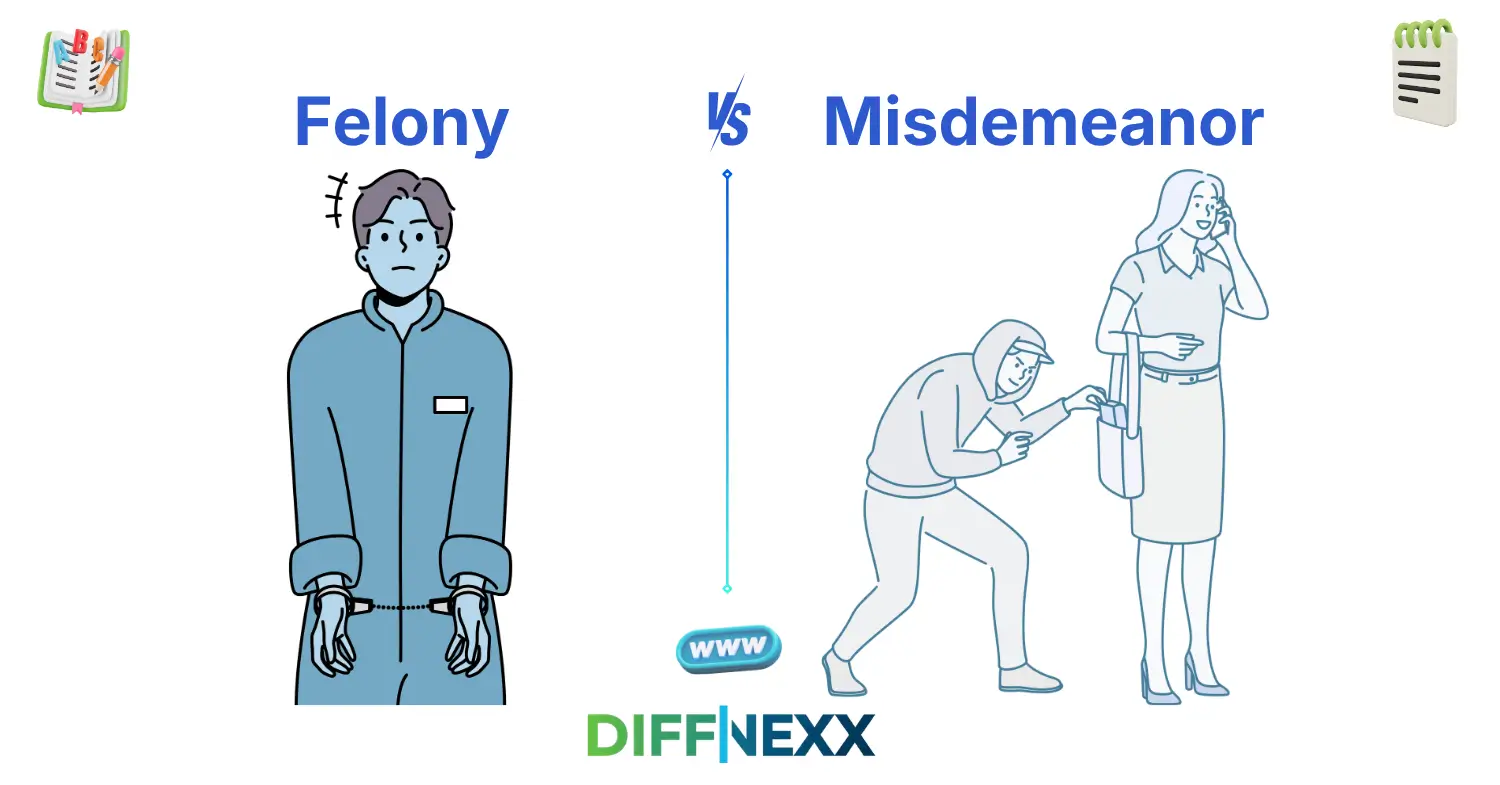
In simple terms, a felony is a serious crime, while a misdemeanor is less severe. Still, many people don’t fully understand what separates them.
The difference between felony and misdemeanor matters because it affects punishment, legal consequences, and a person’s future. It is more than just legal language.
Understanding the difference between felony and misdemeanor helps you make sense of laws, rights, and real-life situations. Let’s break it down clearly.
🔑 Key Difference Between the Both
The key difference is severity of the crime.
- Felony = serious crime with heavy punishment
- Misdemeanor = less serious offense with lighter penalties
🌍 Importance – Why This Difference Matters
Knowing this difference helps learners understand legal systems better. It improves awareness of rights and responsibilities.
Professionals like lawyers, journalists, and educators must know this clearly. It ensures accurate communication and reporting.
In society, understanding crime levels helps people stay informed. It also builds awareness about justice and consequences.
🔊 Pronunciation Section
Felony
US: /ˈfel.ə.ni/
UK: /ˈfel.ə.ni/
Misdemeanor
US: /ˌmɪs.dɪˈmiː.nɚ/
UK: /ˌmɪs.dɪˈmiː.nə/
Now that you know how they sound, let’s explore their meanings in detail.
📚 Core Definitions
Felony
A felony is a serious crime. It usually leads to long prison sentences or heavy penalties.
It carries a strong negative tone because of its severity.
Example: Armed robbery is a felony.
Misdemeanor
A misdemeanor is a minor crime. It often results in fines or short jail time.
It still has a negative tone but is less serious than a felony.
Example: Shoplifting small items is often a misdemeanor.
📚 10 Clear Differences Between Felony and Misdemeanor
1. Severity
Felonies are very serious crimes. Misdemeanors are less severe.
- Example for felony: Murder is a felony.
- Example for misdemeanor: Minor theft is a misdemeanor.
2. Punishment Length
Felonies often lead to long prison sentences. Misdemeanors involve shorter jail time.
- Example for felony: 5+ years in prison.
- Example for misdemeanor: Less than 1 year in jail.
3. Fines
Felonies have higher fines. Misdemeanors have smaller fines.
- Example for felony: Heavy financial penalty.
- Example for misdemeanor: Small fine.
4. Criminal Record Impact
Felonies create serious long-term records. Misdemeanors have lighter impact.
- Example for felony: Difficult to get jobs.
- Example for misdemeanor: Less impact on employment.
5. Court Level
Felonies are handled in higher courts. Misdemeanors go to lower courts.
- Example for felony: Trial in major court.
- Example for misdemeanor: Handled locally.
6. Rights Loss
Felonies may cause loss of rights. Misdemeanors rarely do.
- Example for felony: Loss of voting rights.
- Example for misdemeanor: No major rights loss.
7. Legal Process
Felonies involve complex trials. Misdemeanors are simpler cases.
- Example for felony: Jury trial required.
- Example for misdemeanor: Quick hearing.
8. Social Impact
Felonies carry strong social stigma. Misdemeanors are less damaging.
- Example for felony: Serious reputation damage.
- Example for misdemeanor: Minor social effect.
9. Types of Crimes
Felonies include violent crimes. Misdemeanors include minor offenses.
- Example for felony: Assault or robbery.
- Example for misdemeanor: Traffic violations.
10. Psychological Impact
Felonies create long-term stress. Misdemeanors cause short-term concern.
- Example for felony: Anxiety about future.
- Example for misdemeanor: Temporary worry.
🎯 Why Knowing the Difference Matters
Students need this knowledge to understand legal terms clearly. It helps in studies and general awareness.
Professionals must use correct terms in reports and discussions. It ensures accuracy and credibility.
In daily life, knowing the difference helps people understand news and laws better. It avoids confusion.
🔍 Real-world Consequences of Confusion
Confusing these terms can lead to misunderstanding crime severity. It may cause panic or underestimate risks.
🧠 Why People Get Confused
Similar Structure
Both terms relate to crimes, so learners mix them up.
Semantic Overlap
Both describe illegal actions, but at different levels.
Context-Based Usage
Media sometimes uses them without explanation.
Informal Speech Influence
People casually misuse them, causing confusion.
🎭 Connotation & Emotional Tone
(Connotation = the emotional meaning associated with a word.)
Felony
- Positive: None
- Negative: Strong (serious crime)
- Neutral: Legal classification
Misdemeanor
- Positive: None
- Negative: Mild (minor crime)
- Neutral: Legal term
🗣 Usage in Metaphors, Similes & Idioms
These terms are rarely used in idioms. However, they appear in legal or dramatic expressions.
- “That mistake felt like a felony.”
- “It was treated like a misdemeanor.”
These uses are informal and exaggerated.
📊 Comparison Table
| Feature | Felony | Misdemeanor |
|---|---|---|
| Meaning | Serious crime | Minor crime |
| Tone | Strong negative | Mild negative |
| Usage | Major offenses | Small offenses |
| Context | Legal system | Legal system |
| Formality | Formal | Formal |
⚖️ Which Is Better in What Situation?
When to use Felony
Use “felony” when referring to serious crimes like violence or major theft. It fits legal discussions and formal contexts.
When to use Misdemeanor
Use “misdemeanor” for minor offenses. It applies to small legal violations.
Situational clarity
Choose based on severity. Ask how serious the crime is.
Contextual correctness
Always match the term to legal context. This ensures accuracy and clarity.
📖 Literary or Cultural References
- To Kill a Mockingbird (Novel, Harper Lee, 1960) — explores serious legal issues.
- Law & Order (TV Series, USA) — shows real-life felony and misdemeanor cases.
❓ FAQs (10 Questions)
1. What is the main difference between felony and misdemeanor?
A felony is a serious crime with heavy punishment. A misdemeanor is less serious with lighter penalties.
2. Is jail time longer for felonies?
Yes, felonies often lead to longer prison sentences. Misdemeanors usually have shorter jail terms.
3. Can a misdemeanor become a felony?
Yes, repeated offenses or serious cases can be upgraded. Laws vary by country.
4. Do both affect criminal records?
Yes, both appear on records. However, felonies have stronger long-term impact.
5. Which is more serious?
Felony is more serious. It involves major crimes and strict punishment.
6. Are fines higher for felonies?
Yes, fines are usually much higher for felonies.
7. Can misdemeanors lead to jail?
Yes, but usually for a short period.
8. Do felonies affect employment?
Yes, they can make job opportunities harder to get.
9. Are both legal terms formal?
Yes, both are formal legal terms used in courts and law.
10. Why should I learn this difference?
It helps you understand legal systems and avoid confusion in real-life situations.
🏁 Conclusion
The difference between felony and misdemeanor is mainly about severity and consequences. One represents serious crimes, while the other covers minor offenses.
Understanding this distinction improves awareness of legal systems. It helps you interpret news, laws, and real-life situations clearly.
Using the correct term ensures accurate communication. It also helps you avoid confusion in important discussions.
Keep learning legal vocabulary step by step. Clear understanding builds confidence and strengthens your knowledge.

Aamer Shahzad is the founder of Diffnexx.com, a fast-growing educational platform focused on high-intent “difference between” topics. With over 8 years of experience in English language education and analytical writing, I specialize in breaking down complex “difference between” topics into clear, structured, and easy-to-understand explanations. Diffnexx.com is your go-to resource for enhancing English skills and writing with confidence.
I specializes in building search-optimized, research-driven comparison content designed for clarity, authority, and long-term digital asset value.