The difference between fade and taper often comes up when you sit in a barber’s chair and hear, “Do you want a fade or a taper?” Many people pause because both sound similar.
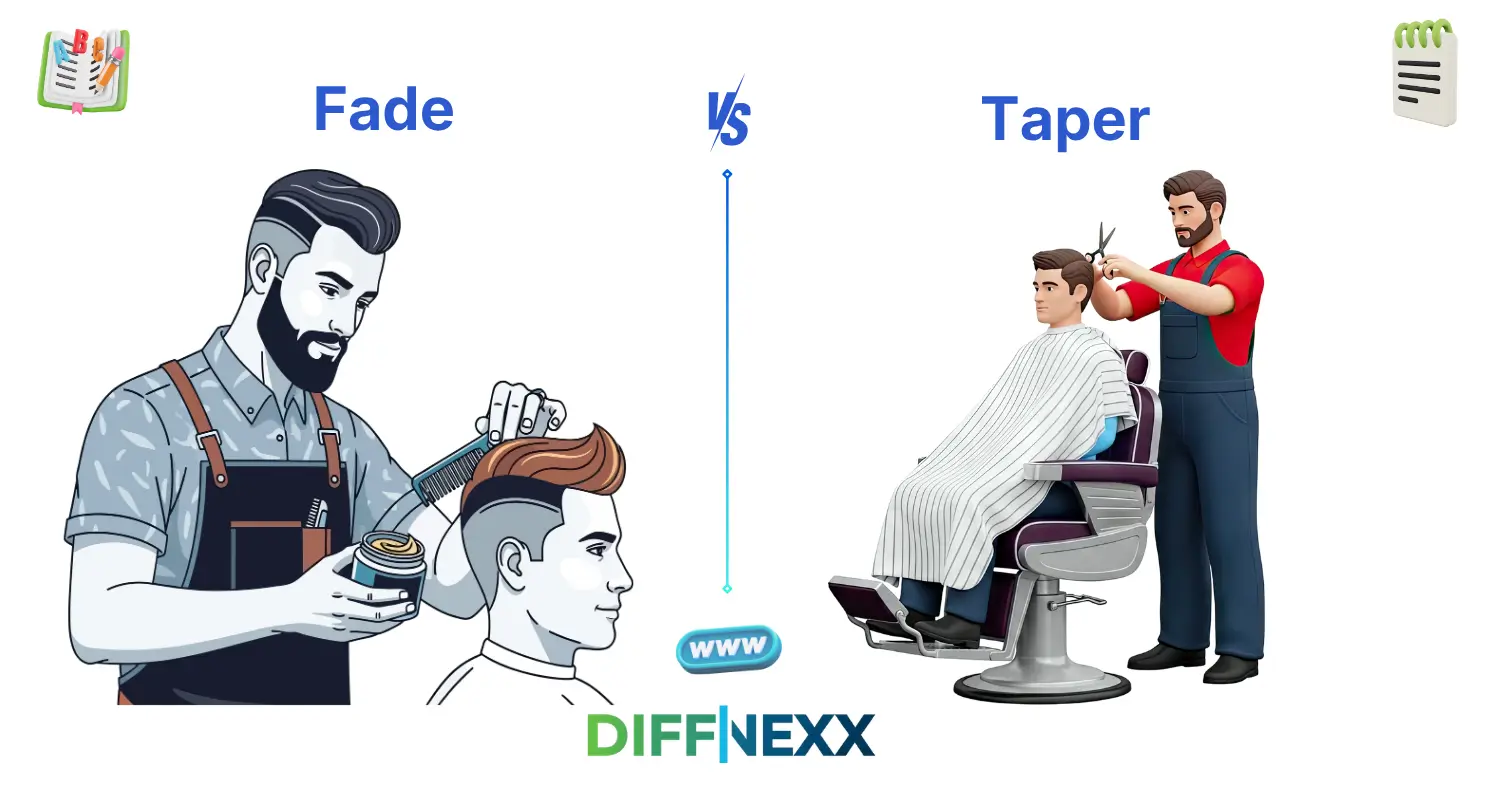
The difference between fade and taper is about how hair gradually changes length. A fade blends hair down to the skin, while a taper shortens it slowly without going too short.
Many beginners confuse these styles because both involve smooth transitions. Understanding the difference between fade and taper helps you ask for the exact haircut you want.
If you want a clean, modern look or a subtle, classic style, knowing this difference matters. Let’s break it down clearly step by step.
🔑 Key Difference Between the Both
The main difference between fade and taper is how short the hair gets and how dramatic the transition looks.
A fade blends hair down to the skin or near zero. It creates a sharp, clean contrast.
A taper keeps more hair length and creates a softer, natural transition around the edges.
🌍 Importance – Why This Difference Matters
Knowing this difference helps students and beginners communicate clearly with barbers. It prevents unwanted haircuts.
For professionals like barbers, it improves precision and customer satisfaction. Clear terms lead to better results.
In society, appearance matters. A good haircut boosts confidence and personal style, making this knowledge valuable.
🔊 Pronunciation Section
Fade
US: /feɪd/
UK: /feɪd/
Taper
US: /ˈteɪpər/
UK: /ˈteɪpə/
Now that you know how to say them, let’s understand their meanings in detail.
📚 Core Definitions
Fade
A fade is a haircut where hair gradually decreases in length until it blends into the skin. It creates a clean and sharp look.
It often feels modern and stylish.
Example: He asked for a high fade for a bold look.
Taper
A taper is a haircut where hair gradually shortens but does not go to the skin. It keeps a more natural and classic appearance.
It feels subtle and neat.
Example: He chose a taper for a simple, professional style.
📚 10 Clear Differences Between Fade and Taper
1. Hair Length Transition
A fade goes very short, often to the skin. A taper keeps some length.
- Fade Example: The sides faded to skin.
- Taper Example: The sides stayed slightly longer.
2. Visual Impact
A fade looks bold and noticeable. A taper looks soft and natural.
- Fade Example: The fade stood out clearly.
- Taper Example: The taper looked subtle.
3. Starting Point
A fade can start high, mid, or low on the head. A taper usually stays near the neckline and sideburns.
- Fade Example: He got a high fade.
- Taper Example: The taper was only at the edges.
4. Maintenance Level
A fade needs frequent touch-ups. A taper is easier to maintain.
- Fade Example: He visits the barber every week.
- Taper Example: He trims it less often.
5. Style Popularity
Fades are trendy and modern. Tapers are classic and timeless.
- Fade Example: The fade matched current trends.
- Taper Example: The taper looked traditional.
6. Professional Look
Tapers fit formal settings better. Fades can look more casual or edgy.
- Fade Example: The fade looked bold at work.
- Taper Example: The taper suited office style.
7. Blending Technique
A fade blends into the skin. A taper blends into shorter hair.
- Fade Example: The blend disappeared into skin.
- Taper Example: The blend stayed visible.
8. Hair Volume
Fades reduce volume quickly. Tapers keep more volume.
- Fade Example: The sides looked very thin.
- Taper Example: The sides kept some thickness.
9. Customization
Fades offer more variations like skin fade or burst fade. Tapers are more limited.
- Fade Example: He chose a skin fade.
- Taper Example: He chose a basic taper.
10. Expression Style
A fade expresses bold personality. A taper shows a calm and neat style.
- Fade Example: The fade made him stand out.
- Taper Example: The taper looked clean and simple.
🎯 Why Knowing the Difference Matters
Students need this knowledge to describe their desired haircut clearly. It helps avoid confusion and disappointment.
Professionals like barbers rely on precise terms. Clear communication improves results and saves time.
In daily life, appearance affects confidence. A correct haircut choice can boost self-image and comfort.
Real-world consequences of confusion
If you ask for a taper but get a fade, your hair may look much shorter than expected. This can affect confidence and satisfaction.
🧠 Why People Get Confused
Similar Sound
Both words sound simple and are often used together. This creates confusion.
Overlapping Meaning
Both involve gradual hair changes, so people think they are the same.
Informal Speech
Barbers sometimes use the terms loosely, which adds to misunderstanding.
🎭 Connotation & Emotional Tone
(Connotation = the emotional meaning associated with a word.)
Fade
- Positive: Stylish and modern
Example: His fade looked sharp and trendy. - Negative: Too bold for some settings
- Neutral: A haircut style
Taper
- Positive: Clean and professional
Example: His taper looked neat and polished. - Negative: May seem less trendy
- Neutral: A classic haircut
🗣 Usage in Metaphors, Similes & Idioms
These words can appear in casual expressions:
- “His confidence didn’t fade.” (means decrease)
- “The sound tapered off.” (means gradually reduced)
They show gradual change in different contexts.
📊 Comparison Table
| Feature | Fade | Taper |
|---|---|---|
| Meaning | Hair blends to skin | Hair shortens gradually |
| Tone | Bold | Subtle |
| Usage | Trendy styles | Classic styles |
| Context | Casual, modern | Formal, professional |
| Formality | Low to medium | Medium to high |
⚖️ Which Is Better in What Situation?
When to use Fade
Choose a fade if you want a modern and bold look. It works well for casual settings and trendy styles. For example, a skin fade suits street fashion.
When to use Taper
Choose a taper for a clean and professional appearance. It is ideal for office or formal environments.
Situational clarity
Your choice depends on your lifestyle and preference. Both styles are useful in different situations.
Contextual correctness
Use the correct term when talking to a barber. This ensures you get the exact haircut you want.
📖 Literary or Cultural References
- Book: The Barber Book (Non-fiction, Graham McDonald, 2017)
- Movie: Barbershop (USA, 2002)
These works show the cultural importance of grooming and hairstyles.
❓ FAQs
1. Is a fade better than a taper?
It depends on your style. A fade is bold and modern, while a taper is simple and classic. Choose based on your preference.
2. Can a haircut have both fade and taper?
Yes, some styles combine both. For example, a fade on the sides and a taper at the neckline.
3. Which lasts longer?
A taper lasts longer because it grows out naturally. A fade needs frequent maintenance.
4. Is a fade more expensive?
Often yes, because it requires more skill and detail. Prices vary by barber.
5. Which is better for school or office?
A taper is usually better for formal settings. It looks neat and professional.
🏁 Conclusion
The difference between fade and taper comes down to style, length, and appearance. A fade creates a bold and sharp look, while a taper offers a softer and more natural finish.
Understanding this difference helps you communicate clearly with your barber. It also ensures you get the haircut you truly want.
Both styles are useful and stylish in their own way. Your choice depends on your lifestyle, personality, and setting.
Keep learning and experimenting with styles. The right knowledge helps you make confident and smart grooming decisions.

Anton Reyes is a contributing writer at DiffNexx.com, where he explores meaningful differences in language, culture, and everyday concepts. With a background in creative nonfiction, Anton brings clarity and balance to complex comparisons. His writing helps readers understand subtle distinctions in words and ideas, making learning both insightful and engaging.