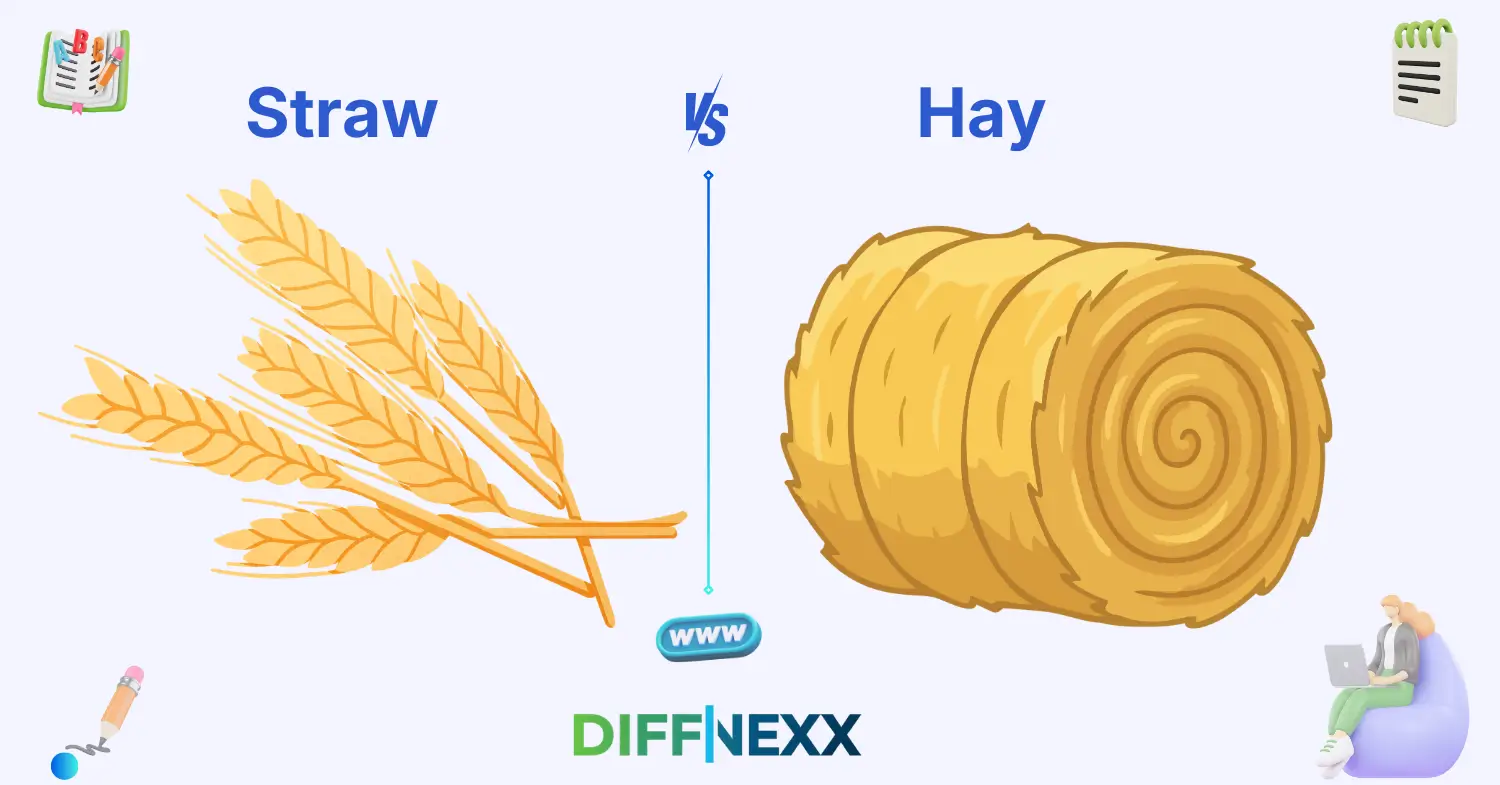
Difference between hay and straw often surprises people when they visit a farm for the first time. Imagine a child pointing at golden bundles stacked in a barn and asking, “Is that hay or straw?” To many people, the two materials look identical. However, farmers know they serve very different purposes.
The difference between hay and straw mainly comes from how they are produced and how they are used. Both come from plants and are commonly found in agriculture, barns, and animal care.
Many learners assume hay and straw are the same. Yet the difference between hay and straw becomes clear when we look at nutrition, farming processes, and animal uses.
Understanding the difference between hay and straw helps students, farmers, and readers interpret agricultural vocabulary correctly. Let’s start by exploring the key difference.
Key Difference Between the Both
The main difference between hay and straw lies in purpose and plant type.
Hay is dried grass or legumes harvested specifically as food for animals.
Straw is the dry stalk left over after grains such as wheat, rice, or barley are harvested.
In simple terms:
- Hay = animal feed
- Straw = plant leftover used mainly for bedding or other purposes
Both may look similar in color and texture, but their roles in agriculture are very different.
Importance – Why Their Difference Matters in Society
Understanding the difference between hay and straw is important in farming, animal care, and environmental knowledge.
For students and learners, this distinction improves agricultural vocabulary and helps them understand how farms operate.
For professionals, such as farmers, veterinarians, and agricultural workers, choosing the correct material is essential. Animals rely on hay for nutrition, while straw provides bedding and insulation.
For society, recognizing this difference encourages better awareness of food production and sustainable farming practices.
🔊 Pronunciation Section
Hay
US: /heɪ/
UK: /heɪ/
Straw
US: /strɔː/
UK: /strɔː/
Both words are simple to pronounce, yet their agricultural meanings differ significantly. Let’s define each term clearly.
Core Definitions
Hay
Hay is dried grass, clover, or legumes harvested and stored as animal feed. Farmers cut the plants while they are still green and nutritious, then dry them in the sun.
The tone of the word often appears in farming and animal care contexts.
Example:
The farmer stored hay in the barn to feed horses during winter.
Straw
Straw is the dry stalk that remains after grains like wheat or barley are harvested. It contains very little nutrition and is mainly used for bedding or packaging.
The tone of the word often appears in agriculture or construction.
Example:
The stable used straw to create soft bedding for animals.
10 Clear Differences Between Hay and Straw
1. Nutritional Value
Hay contains nutrients and serves as animal food. Straw has very little nutritional value.
Example for hay:
The horse ate fresh hay every morning.
Example for straw:
The barn used straw for bedding, not food.
2. Plant Source
Hay comes from grasses or legumes. Straw comes from grain crops like wheat or rice.
Example for hay:
Farmers harvested hay from grass fields.
Example for straw:
After harvesting wheat, straw remained in the field.
3. Harvesting Purpose
Farmers grow hay specifically as animal feed. Straw is a byproduct of grain harvesting.
Example for hay:
The farmer cut hay to prepare winter feed.
Example for straw:
Straw remained after the grain harvest.
4. Color and Appearance
Hay is usually greenish or light green because it retains plant nutrients. Straw is typically yellow or golden.
Example for hay:
The hay looked fresh and slightly green.
Example for straw:
The straw bundles appeared bright yellow.
5. Smell
Hay often smells sweet and grassy. Straw has a more neutral or dry scent.
Example for hay:
The barn smelled sweet from fresh hay.
Example for straw:
Straw had a dry, earthy smell.
6. Primary Use
Hay feeds animals such as cows, goats, and horses. Straw provides bedding, insulation, or mulch.
Example for hay:
The cattle ate hay during winter.
Example for straw:
The chickens rested on straw bedding.
7. Context of Use
Hay appears mostly in animal feeding discussions. Straw appears in farming, gardening, or construction contexts.
Example for hay:
The farmer bought hay for livestock.
Example for straw:
Gardeners used straw as mulch.
8. Psychological Impact
Hay often symbolizes nourishment and farm life. Straw may symbolize rustic simplicity or seasonal decoration.
Example for hay:
Children played near piles of hay in the barn.
Example for straw:
Straw bales decorated the autumn festival.
9. Tone in Language
Hay often appears in practical farming conversations. Straw appears in broader cultural or seasonal discussions.
Example for hay:
The farmer discussed hay supplies.
Example for straw:
They built a scarecrow filled with straw.
10. Expression Style
Hay is usually discussed in agriculture or animal care. Straw appears in many creative or decorative contexts.
Example for hay:
The horses needed fresh hay daily.
Example for straw:
The farmer stacked straw for winter bedding.
Why Knowing the Difference Matters
Understanding the difference between hay and straw helps students learn about farming and food systems. Agricultural vocabulary often appears in environmental and science education.
For professionals such as farmers, veterinarians, and livestock owners, choosing the correct material directly affects animal health and farm management.
In everyday communication, using the right word avoids confusion when discussing farming practices.
Real-world consequences of confusion
If someone mistakenly feeds animals straw instead of hay, the animals may not receive proper nutrition. Accurate knowledge helps ensure animal well-being.
Why People Get Confused
Similar Appearance
Hay and straw often look similar because both appear as dry plant bundles.
Semantic Overlap
Both materials are associated with farms, barns, and agriculture.
Context-Based Usage
People unfamiliar with farming may use the terms interchangeably.
Influence of Informal Speech
In casual conversation, people sometimes call any dry plant material “hay.”
Connotation & Emotional Tone
(Connotation = the emotional meaning associated with a word.)
Hay
Positive:
Often associated with nourishment and farm productivity.
Example:
The cattle thrived on fresh hay.
Negative:
Rarely negative, though poor hay quality can affect livestock.
Example:
Moldy hay can harm animals.
Neutral:
Common in agricultural discussions.
Example:
The farmer stored hay for winter.
Straw
Positive:
Often linked with sustainability and natural materials.
Example:
Straw bales helped insulate the building.
Negative:
Sometimes associated with weakness or emptiness.
Example:
The argument felt like a straw defense.
Neutral:
Common in farming and gardening contexts.
Example:
The garden beds used straw mulch.
Usage in Metaphors, Similes & Idioms
English uses straw in several idioms.
Example with straw:
“The last straw broke the camel’s back.”
Meaning: the final problem in a series of difficulties.
Example with hay:
“Make hay while the sun shines.”
Meaning: take advantage of a good opportunity.
These expressions show how farm vocabulary entered everyday language.
Comparison Table
| Feature | Hay | Straw |
|---|---|---|
| Meaning | Dried grass used as animal feed | Dry stalk left after grain harvest |
| Tone | Agricultural and nutritional | Practical and structural |
| Usage | Feeding livestock | Bedding, mulch, decoration |
| Context | Animal care | Farming and gardening |
| Formality | Neutral | Neutral |
Which Is Better in What Situation?
When to use Hay
Use hay when referring to animal feed made from dried grasses or legumes. Farmers rely on hay to feed livestock, especially during winter.
When to use Straw
Use straw when referring to leftover plant stalks from grain crops. It is ideal for bedding, mulch, or insulation.
Situational Clarity
Hay works best in discussions about livestock nutrition. Straw fits conversations about bedding or farming byproducts.
Contextual Correctness
For example, horses eat hay for nutrition, while chickens may sleep on straw bedding.
Literary or Cultural References
Book:
Charlotte’s Web – E. B. White (Children’s Fiction, 1952)
The story features farm life, including barns filled with hay and straw.
Movie:
Babe (Australia/USA, 1995)
The film portrays farm animals and rural environments where hay and straw are common.
FAQs
1. Is hay the same as straw?
No. Hay is dried grass used as animal feed, while straw is the dry stalk left after grain harvest.
2. Can animals eat straw?
Some animals may chew straw, but it provides very little nutrition compared to hay.
3. Why is hay green but straw yellow?
Hay retains more nutrients from grass, which gives it a greenish color. Straw comes from dry grain stalks and appears yellow.
4. Why do farmers use straw for bedding?
Straw is dry, lightweight, and absorbent. It creates comfortable bedding for animals.
5. Which is more important for livestock?
Hay is more important because it provides the nutrients animals need for health and energy.
Conclusion
Understanding the difference between hay and straw helps learners, farmers, and readers better understand agricultural vocabulary and farm life.
Although both materials come from plants and often look similar, their purposes differ greatly. Hay is harvested from grasses or legumes and serves as nutritious animal feed.
Straw, on the other hand, is the leftover stalk from grain crops and is mainly used for bedding, insulation, or mulch.
Recognizing this distinction helps avoid confusion and supports better farming practices. It also deepens appreciation for how agriculture uses every part of a plant efficiently.
As you continue exploring everyday English and farming terminology, noticing these small differences will strengthen both your vocabulary and practical knowledge. 🌾

Aamer Shahzad is the founder of Diffnexx.com, a fast-growing educational platform focused on high-intent “difference between” topics. With over 8 years of experience in English language education and analytical writing, I specialize in breaking down complex “difference between” topics into clear, structured, and easy-to-understand explanations. Diffnexx.com is your go-to resource for enhancing English skills and writing with confidence.
I specializes in building search-optimized, research-driven comparison content designed for clarity, authority, and long-term digital asset value.