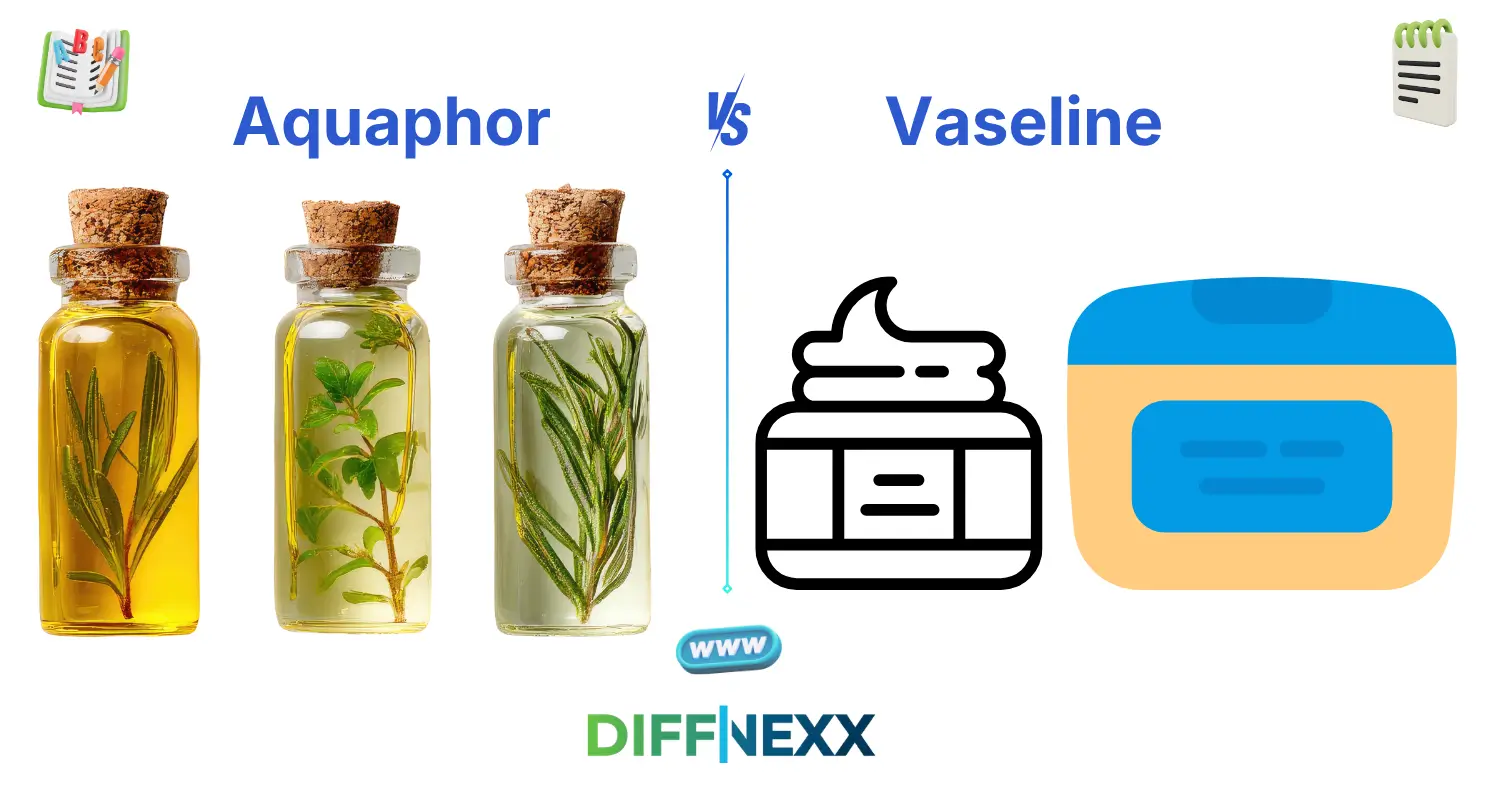
Difference between aquaphor and vaseline is something many people wonder about when standing in front of a skincare shelf. You might have dry lips, cracked skin, or a small cut—and both products look almost the same. So, which one should you pick?
The difference between aquaphor and vaseline is not just about brand names. Both are popular ointments used to protect and heal skin, but they work in slightly different ways. Understanding this can help you choose the right one for your needs.
Many people use these products daily without knowing how they differ. The difference between aquaphor and vaseline becomes important when dealing with sensitive skin, wounds, or dryness.
Let’s explore their key differences step by step so you can make better skincare choices.
🔍 Key Difference Between the Both
The main difference is simple:
- Aquaphor is a healing ointment with multiple ingredients that help repair skin.
- Vaseline is pure petroleum jelly that mainly protects and locks in moisture.
In short, Aquaphor heals + protects, while Vaseline mainly protects.
🌍 Importance – Why Knowing the Difference Matters
Understanding the difference between these two products is important for both beginners and experts.
For learners, it helps in choosing the right product for daily skin care. Using the wrong one may slow healing or not give the best results.
For professionals like dermatologists or skincare specialists, knowing the difference ensures proper treatment advice. Each product serves a different purpose in skin care routines.
In society, people rely on quick solutions for skin problems. Knowing the correct product avoids confusion, saves money, and improves skin health.
🔊 Pronunciation Section
Aquaphor
US: /ˈɑːkwəfɔːr/
UK: /ˈækwəfɔː/
Vaseline
US: /ˈvæsəliːn/
UK: /ˈvæsəliːn/
Now that you know how to say them correctly, let’s understand what they actually mean.
📚 Core Definitions
Aquaphor
Aquaphor is a skin healing ointment made of petroleum jelly plus other ingredients like mineral oil and lanolin. It helps repair damaged skin while also protecting it.
Example: You apply Aquaphor on cracked heels to help them heal faster.
Vaseline
Vaseline is pure petroleum jelly. It forms a barrier on the skin to lock in moisture and prevent dryness.
Example: You use Vaseline on lips to stop them from drying out.
📊 10 Clear Differences Between Aquaphor and Vaseline
1. Purpose
Aquaphor is made to heal and protect damaged skin.
Vaseline mainly protects and seals moisture.
- Example for Aquaphor: Used on cuts or burns.
- Example for Vaseline: Used on dry lips.
2. Ingredients
Aquaphor has multiple ingredients like glycerin and lanolin.
Vaseline contains only petroleum jelly.
- Example for Aquaphor: Helps skin repair faster.
- Example for Vaseline: Simple and pure formula.
3. Healing Ability
Aquaphor supports skin healing.
Vaseline does not heal but protects.
- Example for Aquaphor: Helps minor wounds recover.
- Example for Vaseline: Keeps skin from drying.
4. Texture
Aquaphor feels lighter and less greasy.
Vaseline is thick and very greasy.
- Example for Aquaphor: Easy to spread.
- Example for Vaseline: Feels heavy on skin.
5. Breathability
Aquaphor allows some air to pass through.
Vaseline creates a fully sealed barrier.
- Example for Aquaphor: Better for healing wounds.
- Example for Vaseline: Strong moisture lock.
6. Skin Type Suitability
Aquaphor is better for sensitive or damaged skin.
Vaseline works well for dry but healthy skin.
- Example for Aquaphor: Used on irritated skin.
- Example for Vaseline: Used for daily dryness.
7. Usage Context
Aquaphor is used in medical or skincare treatments.
Vaseline is mostly used for daily care.
- Example for Aquaphor: Recommended by doctors.
- Example for Vaseline: Used at home regularly.
8. Absorption
Aquaphor absorbs slightly into the skin.
Vaseline stays on top of the skin.
- Example for Aquaphor: Feels less sticky over time.
- Example for Vaseline: Remains shiny.
9. Cost and Value
Aquaphor is usually more expensive.
Vaseline is cheaper and widely available.
- Example for Aquaphor: Premium skincare product.
- Example for Vaseline: Budget-friendly option.
10. Versatility
Aquaphor is used for wounds, tattoos, and eczema.
Vaseline is used for dryness and protection.
- Example for Aquaphor: Used after tattooing.
- Example for Vaseline: Used on elbows and lips.
🎯 Why Knowing the Difference Matters
Students need to know the difference to improve their vocabulary and practical knowledge. It helps them understand how similar products can have different uses.
Professionals, especially in skincare, must know this difference to recommend the right treatment. Using the wrong product can slow healing or cause discomfort.
In daily life, clear understanding avoids confusion. People can treat skin problems more effectively and safely.
Real-world consequences of confusion
If someone uses Vaseline on a wound expecting healing, recovery may be slow. On the other hand, using Aquaphor for simple dryness might be unnecessary and costly.
🧠 Why People Get Confused
Similar Appearance
Both look like clear, jelly-like substances, so people assume they are the same.
Semantic Overlap
Both are used for skin care, which creates confusion in meaning.
Context-Based Usage
People often hear both names used in similar situations.
Informal Speech
In casual talk, people use “Vaseline” for all petroleum-based products.
🎭 Connotation & Emotional Tone
Connotation = the emotional meaning associated with a word.
Aquaphor
- Positive: Healing, medical, advanced care
- Neutral: Skin treatment product
- Example: “Use Aquaphor for faster healing.”
Vaseline
- Positive: Simple, reliable, affordable
- Neutral: Basic skincare product
- Example: “Apply Vaseline to keep lips soft.”
🗣 Usage in Metaphors, Similes & Idioms
These words are not commonly used in idioms, but they appear in casual comparisons.
- “His skin was smooth like Vaseline.”
- “The ointment worked like Aquaphor on a wound.”
These comparisons highlight smoothness and healing.
📊 Comparison Table
| Feature | Aquaphor | Vaseline |
|---|---|---|
| Meaning | Healing ointment | Petroleum jelly |
| Tone | Medical, advanced | Simple, basic |
| Usage | Skin repair | Moisture protection |
| Context | Wounds, irritation | Dry skin |
| Formality | Semi-formal | Informal |
⚖️ Which Is Better in What Situation?
When to use Aquaphor
Use Aquaphor when your skin is damaged, irritated, or healing. It works well for cuts, burns, and sensitive skin conditions.
When to use Vaseline
Use Vaseline for everyday dryness. It is great for lips, elbows, and preventing moisture loss.
Situational clarity
Choose based on your need—healing or protection. Aquaphor is better for recovery, while Vaseline is best for maintenance.
Contextual correctness
If you want treatment, go with Aquaphor. If you want simple care, Vaseline is enough.
📖 Literary or Cultural References
- Book: The Skincare Bible (Health Guide, Dr. Anjali Mahto, 2018)
Discusses petroleum jelly and healing ointments in skincare routines. - Movie: The Devil Wears Prada (USA, 2006)
Shows beauty routines where simple products like Vaseline are often used.
❓ FAQs
1. Is Aquaphor the same as Vaseline?
No, they are not the same. Aquaphor contains extra ingredients that help heal skin, while Vaseline is pure petroleum jelly used mainly for protection.
2. Which is better for dry skin?
Vaseline works well for simple dryness because it locks in moisture. However, Aquaphor can also help if the skin is cracked or damaged.
3. Can I use Aquaphor on lips?
Yes, Aquaphor is safe for lips and may even heal cracked lips faster than Vaseline.
4. Is Vaseline good for wounds?
Vaseline protects wounds by sealing them, but it does not actively heal them like Aquaphor.
5. Why is Aquaphor more expensive?
Aquaphor has added ingredients that improve healing, which increases its cost.
6. Can I use both together?
Yes, but it is usually unnecessary. Choose one based on your skin’s needs.
7. Which is better for tattoos?
Aquaphor is often recommended for new tattoos because it supports healing.
8. Is Vaseline safe for daily use?
Yes, Vaseline is safe and widely used for everyday skincare.
9. Does Aquaphor clog pores?
It may clog pores for some people, especially those with oily skin.
10. Which one absorbs better?
Aquaphor absorbs slightly, while Vaseline stays on top of the skin.
🏁 Conclusion
The difference between aquaphor and vaseline comes down to purpose and ingredients. Aquaphor is designed to heal and protect, while Vaseline mainly protects and locks in moisture.
Understanding this difference helps you choose the right product for your skin. It also prevents confusion and improves your skincare routine.
Both products are useful, but they serve different roles. When you know when to use each one, you get better results and healthier skin.
Keep learning, stay curious, and always choose what your skin truly needs.

Aamer Shahzad is the founder of Diffnexx.com, a fast-growing educational platform focused on high-intent “difference between” topics. With over 8 years of experience in English language education and analytical writing, I specialize in breaking down complex “difference between” topics into clear, structured, and easy-to-understand explanations. Diffnexx.com is your go-to resource for enhancing English skills and writing with confidence.
I specializes in building search-optimized, research-driven comparison content designed for clarity, authority, and long-term digital asset value.