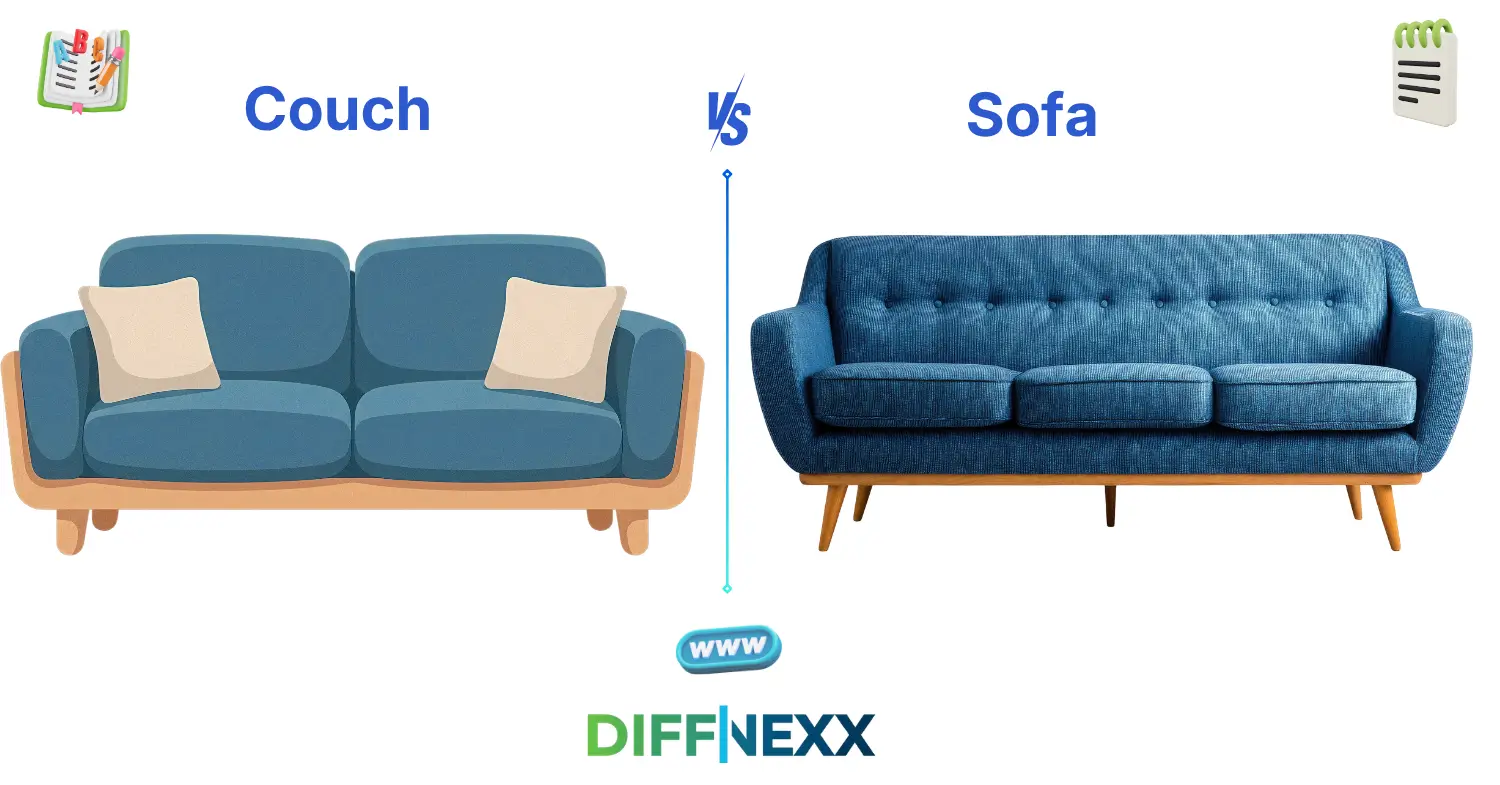
The difference between couch and sofa often comes up when you’re shopping for furniture or talking about your living room. You might hear both words and wonder if they mean the same thing.
Imagine visiting a friend. One says, “Sit on the couch,” while another says, “Relax on the sofa.” The object looks the same, but the words feel slightly different.
The difference between couch and sofa is mostly about style, formality, and usage. Both refer to seating furniture, but each word carries a unique tone and context.
Understanding the difference between couch and sofa helps you speak more clearly. It also improves your writing and everyday communication. Let’s explore the details step by step.
🔑 Key Difference Between the Both
The main difference is in tone and usage. Couch sounds casual and relaxed. Sofa sounds more formal and refined.
A couch often suggests comfort and everyday use. A sofa often suggests style, design, and structure.
In simple terms, both refer to the same furniture. However, the choice of word changes the feeling of the sentence.
🌍 Importance – Why Knowing the Difference Matters
Knowing the difference helps learners use the right word in the right setting. It improves vocabulary and avoids confusion in conversation.
For professionals like interior designers, word choice matters. Saying “sofa” can sound more polished and precise in formal settings.
In society, language reflects style and culture. Choosing between couch and sofa can show tone, personality, and context awareness.
🔊 Pronunciation Section
Couch
US: /kaʊtʃ/
UK: /kaʊtʃ/
Sofa
US: /ˈsoʊfə/
UK: /ˈsəʊfə/
Now that you know how to say both words, let’s understand their meanings clearly.
📚 Core Definitions
Couch
A couch is a comfortable piece of furniture used for sitting or lying down. It often feels casual and cozy.
People use “couch” in relaxed, everyday conversations.
Example: I took a nap on the couch.
Sofa
A sofa is a long upholstered seat with a structured design. It often sounds more formal and stylish.
People use “sofa” in design, decor, or formal contexts.
Example: The living room has a modern sofa.
📚 10 Clear Differences Between Couch and Sofa
1. Formality
Couch is informal and casual. Sofa sounds formal and polished.
- Couch: I’m on the couch watching TV.
- Sofa: The sofa matches the decor.
2. Tone
Couch feels relaxed and friendly. Sofa feels elegant and refined.
- Couch: Come sit on the couch.
- Sofa: The sofa looks luxurious.
3. Context of Use
Couch is common in daily speech. Sofa is used in professional settings.
- Couch: The dog sleeps on the couch.
- Sofa: The sofa is imported.
4. Design Focus
Couch focuses on comfort. Sofa focuses on design and structure.
- Couch: This couch is soft.
- Sofa: The sofa has a sleek design.
5. Emotional Feeling
Couch feels cozy and warm. Sofa feels stylish and neat.
- Couch: I feel relaxed on this couch.
- Sofa: The sofa looks elegant.
6. Cultural Usage
Couch is more common in American casual speech. Sofa is common in British and formal English.
- Couch: He bought a new couch.
- Sofa: She chose a velvet sofa.
7. Professional Language
Couch is rarely used in formal writing. Sofa fits better in professional language.
- Couch: Not used in reports often.
- Sofa: Used in furniture catalogs.
8. Visual Image
Couch suggests a laid-back look. Sofa suggests a structured look.
- Couch: The couch looks comfy.
- Sofa: The sofa looks modern.
9. Usage in Marketing
Couch is used in casual ads. Sofa is used in premium branding.
- Couch: Affordable couches available.
- Sofa: Luxury sofas on sale.
10. Expression Style
Couch appears in casual speech. Sofa appears in descriptive writing.
- Couch: I crashed on the couch.
- Sofa: The sofa enhances the room.
🎯 Why Knowing the Difference Matters
Students benefit by improving vocabulary and understanding tone. It helps them choose the right word in exams and writing tasks.
Professionals need this distinction in communication. It helps in design, marketing, and formal discussions.
In social situations, correct word choice avoids awkwardness. It also makes speech sound more natural and confident.
Real-world consequences of confusion
Using “couch” in a formal presentation may sound unprofessional. Using “sofa” in casual talk may sound overly formal.
🧠 Why People Get Confused
Similar Meaning
Both words refer to the same object. This makes them seem identical.
Context-Based Usage
The meaning depends on the situation. This causes confusion for learners.
Informal Speech
People mix both words freely in conversation. This reduces clarity.
🎭 Connotation & Emotional Tone
(Connotation = the emotional meaning attached to a word.)
Couch
- Positive: Cozy and relaxing
- Example: I love this comfy couch.
- Negative: Can sound less refined
- Example: That old couch looks messy.
- Neutral: Everyday seating
- Example: The couch is in the room.
Sofa
- Positive: Elegant and stylish
- Example: The sofa looks beautiful.
- Negative: Can feel too formal
- Example: Don’t make it sound too sofa-like.
- Neutral: Standard furniture term
- Example: The sofa is new.
🗣 Usage in Metaphors, Similes & Idioms
- “Couch potato” (lazy person)
Example: He is a couch potato. - Sofa is rarely used in idioms, which shows its formal nature.
📊 Comparison Table
| Feature | Couch | Sofa |
|---|---|---|
| Meaning | Casual seating | Formal seating |
| Tone | Relaxed | Elegant |
| Usage | Everyday speech | Formal writing |
| Context | Home, casual talk | Design, business |
| Formality | Informal | Formal |
⚖️ Which Is Better in What Situation?
When to use Couch
Use couch in casual conversations. It works well at home or with friends.
Example: I’m sitting on the couch.
When to use Sofa
Use sofa in formal or professional contexts. It fits writing and design talk.
Example: The sofa complements the interior.
Situational Clarity
Choose based on tone. Casual = couch. Formal = sofa.
Contextual Correctness
Think about audience and setting. Match your word to the situation.
📖 Literary or Cultural References
- Book: “The Great Gatsby” (Novel, F. Scott Fitzgerald, 1925) – uses formal language like “sofa.”
- Movie: “Friends” (USA, 1994) – characters often say “couch” in casual speech.
❓ FAQs
1. Are couch and sofa the same thing?
Yes, both refer to the same type of furniture. The difference is mainly in tone and usage. Couch is casual, while sofa is formal.
2. Which word is more common?
Couch is more common in everyday conversation. Sofa is more common in formal writing and design contexts.
3. Is sofa more professional than couch?
Yes, sofa sounds more professional. It is often used in business, interior design, and marketing.
4. Can I use couch in formal writing?
It is better to avoid couch in formal writing. Sofa is a safer and more polished choice.
5. Why do Americans say couch more?
American English prefers casual language. That is why couch is more popular in daily speech.
🏁 Conclusion
The difference between couch and sofa is simple but important. Both words describe the same furniture, but they carry different tones and contexts.
Couch feels casual, relaxed, and friendly. Sofa feels formal, elegant, and structured. This small difference can change how your message sounds.
Understanding this helps you speak and write with confidence. It also improves your vocabulary and communication skills.
Keep practicing these words in real situations. With time, choosing between couch and sofa will feel natural and easy.

Aamer Shahzad is the founder of Diffnexx.com, a fast-growing educational platform focused on high-intent “difference between” topics. With over 8 years of experience in English language education and analytical writing, I specialize in breaking down complex “difference between” topics into clear, structured, and easy-to-understand explanations. Diffnexx.com is your go-to resource for enhancing English skills and writing with confidence.
I specializes in building search-optimized, research-driven comparison content designed for clarity, authority, and long-term digital asset value.