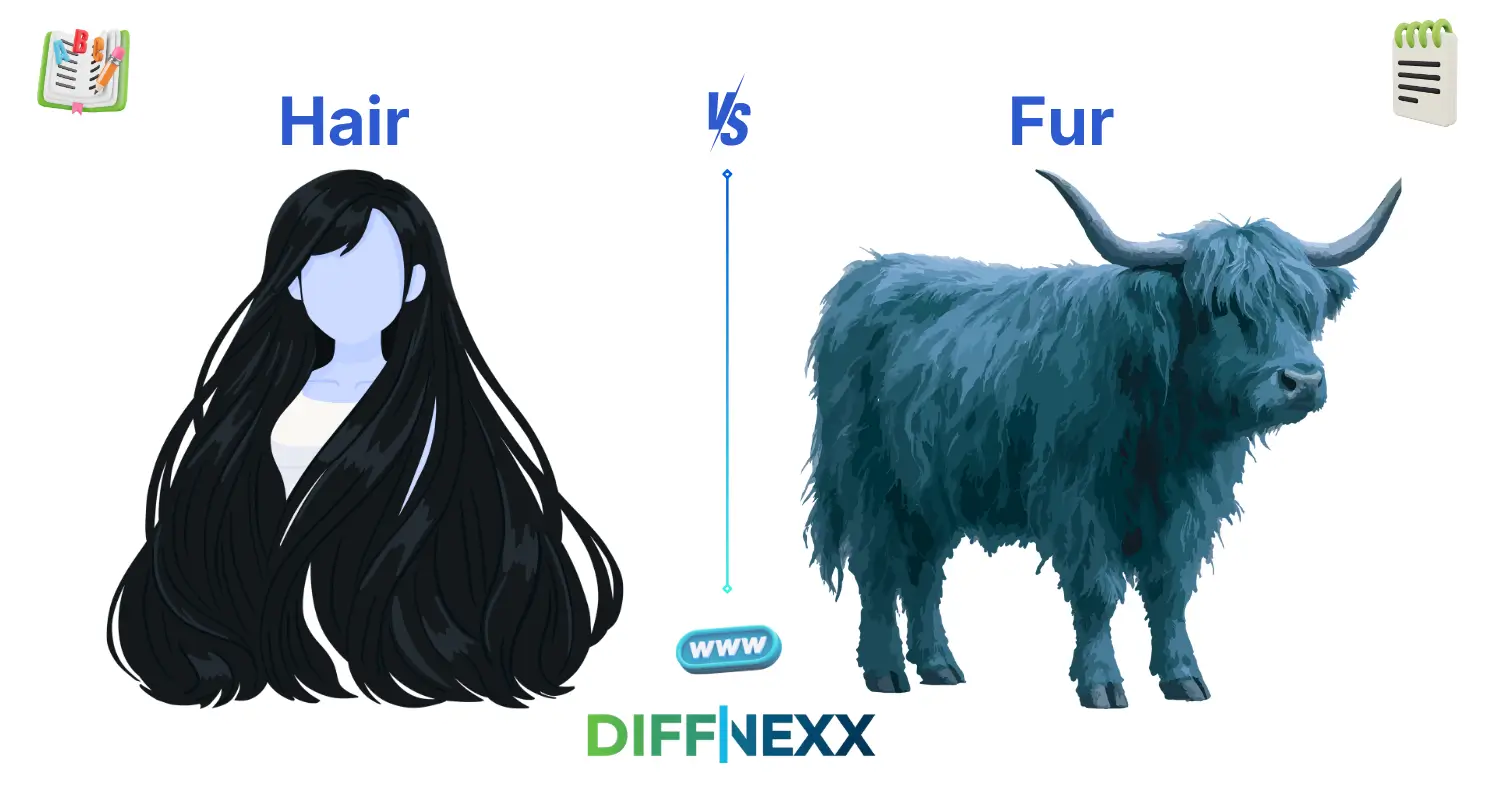
Difference between hair and fur often comes up when you pet a dog or look at your own hair in the mirror. You may wonder are they really different, or just different names?
The difference between hair and fur is not always obvious. Both grow on mammals, both protect the body, and both look similar at first glance. Still, people use these words in different ways.
In simple terms, hair usually refers to human hair, while fur describes animal coats. But the difference between hair and fur is deeper than just naming. It includes growth patterns, texture, and purpose.
Let’s explore this topic step by step so you can clearly understand how hair and fur differ in real life.
🔑 Key Difference Between the Both
The main difference between hair and fur lies in growth cycle and function.
- Hair grows continuously and tends to be longer.
- Fur grows in cycles and is often shorter, denser, and used mainly for insulation.
🌍 Importance – Why This Difference Matters
Understanding the difference between hair and fur is important for both learners and experts.
For students, it builds strong basic knowledge in biology and language. It helps them describe animals correctly and improve vocabulary.
For professionals like veterinarians, groomers, and scientists, this difference helps in understanding animal health, care, and classification.
In society, clear communication matters. Using the correct word avoids confusion, especially in education, pet care, and science discussions.
🔊 Pronunciation Section
Hair
US: /her/
UK: /heə(r)/
Fur
US: /fɝː/
UK: /fɜː/
Now that you know how to say them, let’s understand what each word really means.
📚 Core Definitions
Hair
Hair is a thin strand that grows from the skin of humans and some animals. It usually grows longer and continuously. It can also have emotional meaning, like beauty or identity.
Example: She brushed her long hair before going out.
Fur
Fur is a thick coat of short hair that covers many animals. It helps keep them warm and protected. It usually does not grow very long.
Example: The cat’s fur feels soft and warm.
📚 10 Clear Differences Between Hair and Fur
1. Growth Cycle
Hair grows continuously over time.
Fur grows to a certain length and then stops.
- Example for Hair: Human hair can grow very long.
- Example for Fur: Dog fur stays short even after months.
2. Length
Hair is usually longer and finer.
Fur is shorter and thicker.
- Example for Hair: Long head hair in humans.
- Example for Fur: Short coat on a rabbit.
3. Purpose
Hair often has cosmetic and protective roles.
Fur mainly provides warmth and insulation.
- Example for Hair: Hair styles express identity.
- Example for Fur: Thick fur keeps animals warm in winter.
4. Texture
Hair is often smoother and softer.
Fur can be dense, coarse, or fluffy.
- Example for Hair: Silky human hair.
- Example for Fur: Thick woolly sheep fur.
5. Shedding Pattern
Hair sheds slowly and steadily.
Fur sheds more heavily in seasons.
- Example for Hair: Small daily hair fall.
- Example for Fur: Dogs shed heavily in summer.
6. Density
Hair is less dense.
Fur is more densely packed.
- Example for Hair: Scalp hair has gaps.
- Example for Fur: Animal coats are tightly packed.
7. Growth Control
Hair growth is less affected by seasons.
Fur growth changes with seasons.
- Example for Hair: Human hair grows year-round.
- Example for Fur: Animals grow thicker fur in winter.
8. Maintenance
Hair needs regular grooming and styling.
Fur needs brushing mainly for hygiene.
- Example for Hair: Haircuts and styling.
- Example for Fur: Brushing a pet’s coat.
9. Function in Survival
Hair has limited survival function.
Fur is essential for animal survival.
- Example for Hair: Humans can live without long hair.
- Example for Fur: Animals rely on fur for warmth.
10. Cultural Meaning
Hair often carries social and cultural meaning.
Fur has little cultural symbolism for humans.
- Example for Hair: Hairstyles show identity.
- Example for Fur: Seen mainly as animal covering.
🎯 Why Knowing the Difference Matters
Students need to understand the difference to use correct vocabulary in writing and exams. It helps avoid mistakes in basic science and English learning.
Professionals such as pet groomers and veterinarians must know the difference to provide proper care. It helps them understand animal biology better.
In daily communication, using the wrong word may confuse others. Clear language improves understanding and avoids miscommunication.
Real-world consequences of confusion
If someone says “hair” instead of “fur” for animals, it may sound incorrect in scientific contexts. This can reduce clarity in education or professional settings.
🧠 Why People Get Confused
Similar appearance
Hair and fur look very similar. Both are made of keratin and grow from the skin.
Overlapping meaning
In science, fur is technically a type of hair. This creates confusion in everyday language.
Informal speech
People often use both words casually without strict rules.
🎭 Connotation & Emotional Tone
Connotation = the emotional meaning attached to a word.
Hair
- Positive: Beauty, identity
Example: She has beautiful hair. - Neutral: Description
Example: His hair is short. - Negative: Rare, like “messy hair”
Fur
- Positive: Warmth, softness
Example: The puppy has soft fur. - Neutral: Animal description
Example: The bear’s fur is thick. - Negative: Sometimes linked to animal products
🗣 Usage in Metaphors, Similes & Idioms
- “Make your hair stand on end” (fear)
- “Keep your fur on” (stay calm)
Examples:
- His story made my hair stand on end.
- Don’t get angry keep your fur on!
📊 Comparison Table
| Feature | Hair | Fur |
|---|---|---|
| Meaning | Human strands | Animal coat |
| Tone | Personal, cultural | Natural, biological |
| Usage | Humans, some animals | Mostly animals |
| Context | Beauty, identity | Warmth, protection |
| Formality | Neutral | Neutral |
⚖️ Which Is Better in What Situation?
When to use Hair
Use “hair” when talking about humans or long, fine strands. It fits in beauty, fashion, and personal care contexts.
When to use Fur
Use “fur” when describing animals with thick coats. It is more accurate in biology and everyday speech about pets.
Situational clarity
Choose based on the subject. Humans → hair. Animals → fur.
Contextual correctness
In scientific writing, be precise. In casual talk, both may overlap, but accuracy still helps.
📖 Literary or Cultural References
- Book: Black Beauty (Novel, Anna Sewell, 1877) – describes horse coats (fur/hair traits).
- Movie: The Lion King (USA, 1994) – shows animals with thick fur used for survival.
❓ FAQs (10 Questions)
1. Is fur just a type of hair?
Yes, scientifically fur is a type of hair. The difference is mostly in usage and growth pattern.
2. Why do humans have hair instead of fur?
Humans evolved to have less body hair. Hair helps with temperature control and identity.
3. Do all animals have fur?
No, some animals like whales have very little or no fur.
4. Can animals have hair instead of fur?
Yes, animals like horses are often described as having hair instead of fur.
5. Does fur grow forever like hair?
No, fur grows to a certain length and then stops.
6. Why do pets shed fur?
Fur sheds to adjust to seasonal temperature changes.
7. Is human body hair the same as animal fur?
They are similar but differ in growth cycle and density.
8. Which is softer, hair or fur?
It depends, but fur is often softer due to density.
9. Can fur be styled like hair?
Not usually. Fur is not meant for styling like human hair.
10. Why is this difference important?
It helps in clear communication, learning, and proper understanding of biology.
🏁 Conclusion
The difference between hair and fur may seem small at first, but it becomes clear when you look closely. Hair usually refers to human strands that grow longer and continuously, while fur describes the thick, shorter coat that covers animals.
Understanding this difference improves both your language skills and your knowledge of the natural world. It helps you speak more clearly and avoid simple mistakes.
With practice, you will naturally use the right word in the right situation. Keep learning and observing the world around you it makes language easier and more meaningful every day.

Aamer Shahzad is the founder of Diffnexx.com, a fast-growing educational platform focused on high-intent “difference between” topics. With over 8 years of experience in English language education and analytical writing, I specialize in breaking down complex “difference between” topics into clear, structured, and easy-to-understand explanations. Diffnexx.com is your go-to resource for enhancing English skills and writing with confidence.
I specializes in building search-optimized, research-driven comparison content designed for clarity, authority, and long-term digital asset value.