Difference between morals and ethics often comes up in everyday life. Imagine you find a wallet on the road. You feel it’s right to return it that’s your inner voice. But your workplace may also have a rule about honesty. That’s a structured guideline. Both guide your actions, but they come from different places.
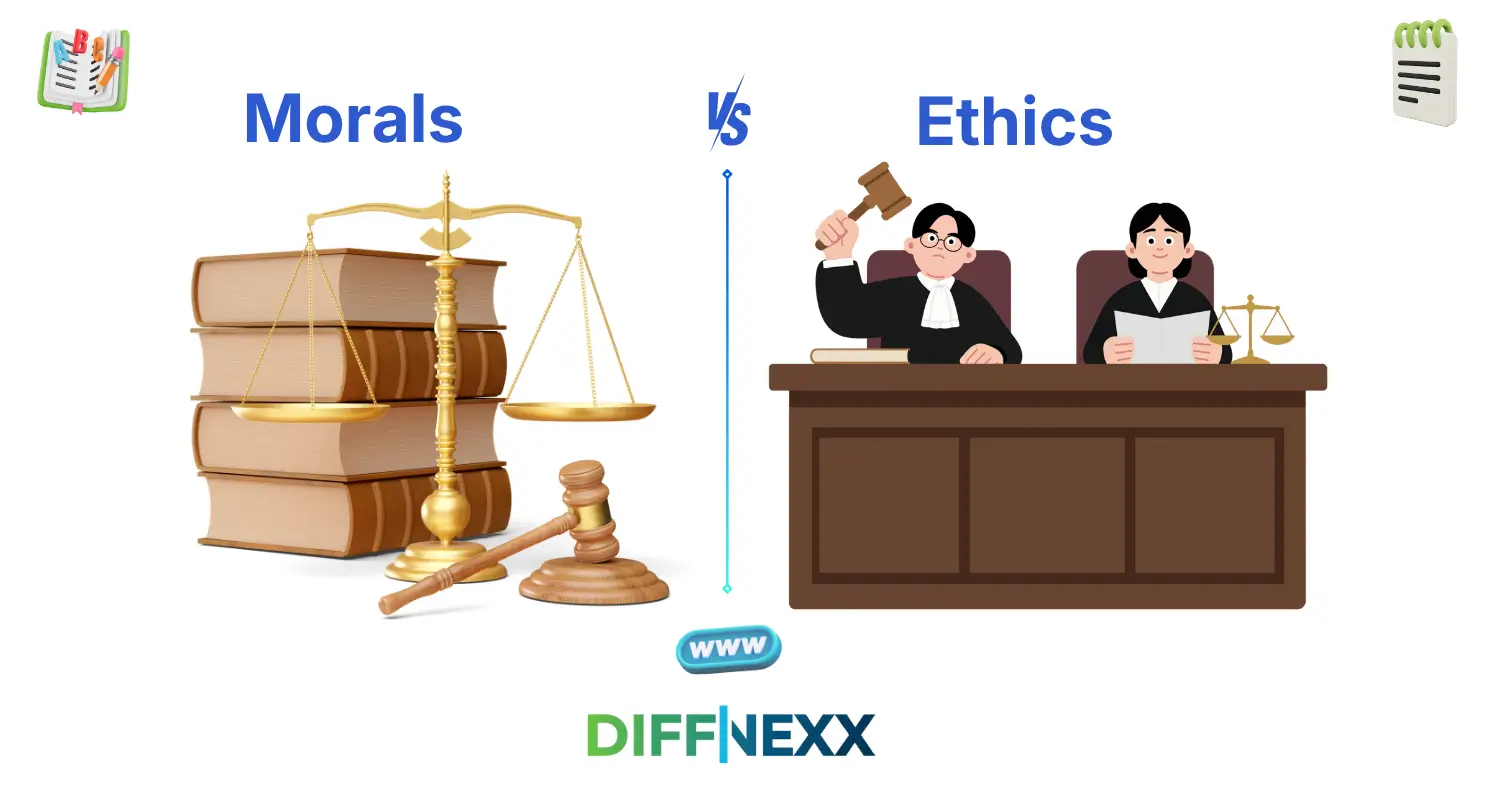
The difference between morals and ethics is subtle but important. Morals come from personal beliefs about what you feel is right or wrong. Ethics, on the other hand, are external rules created by groups, professions, or society. They help people act fairly and consistently.
Many learners mix them up because they overlap in meaning. Still, understanding the difference between morals and ethics helps you communicate clearly and think critically.
Let’s explore how they differ and why it matters.
Key Difference Between the Both
The key difference lies in source and structure.
- Morals are personal and internal.
- Ethics are external and formal.
Morals are shaped by family, culture, and personal values. Ethics are often defined by institutions like schools, workplaces, or legal systems.
Importance – Why Their Difference Matters in Society
Understanding the difference between morals and ethics is essential for both learners and professionals.
For learners, it builds clear thinking. It helps them express ideas accurately and understand others better. It also improves writing and speaking skills.
For experts and professionals, this distinction ensures proper decision-making. In fields like law, medicine, and business, ethical rules guide behavior. Without them, systems could become unfair.
In society, this knowledge promotes respect. People may have different morals, but shared ethics create harmony. It helps balance personal beliefs with social responsibility.
🔊 Pronunciation Section
Morals
US: /ˈmɔːrəlz/
UK: /ˈmɒrəlz/
Ethics
US: /ˈeθɪks/
UK: /ˈeθɪks/
Now that you know how they sound, let’s define them clearly before comparing.
📚 Core Definitions
Morals
Morals are personal beliefs about right and wrong. They come from upbringing, culture, or religion. They often carry strong emotions.
- Example: You believe lying is wrong, even in small situations.
Ethics
Ethics are rules or standards set by a group or profession. They guide behavior in a structured way. They are more logical than emotional.
- Example: A doctor follows medical ethics to treat patients fairly.
📚 10 Clear Differences Between Morals and Ethics
1. Source of Origin
Morals come from within a person. Ethics come from society or institutions.
- Example for Morals: You feel guilty for cheating.
- Example for Ethics: Your school has a strict anti-cheating policy.
2. Emotional Intensity
Morals are strongly emotional. Ethics are more neutral and logical.
- Example for Morals: You feel deeply upset after doing something wrong.
- Example for Ethics: A company follows rules without emotional involvement.
3. Flexibility
Morals can change based on personal growth. Ethics are more fixed.
- Example for Morals: You change your view about forgiveness over time.
- Example for Ethics: Workplace policies remain stable.
4. Scope
Morals are individual. Ethics apply to groups.
- Example for Morals: You avoid gossip because it feels wrong.
- Example for Ethics: Journalists follow ethical reporting standards.
5. Formality
Morals are informal. Ethics are formal and documented.
- Example for Morals: Personal belief about kindness.
- Example for Ethics: Written code of conduct.
6. Enforcement
Morals are self-enforced. Ethics are enforced by authority.
- Example for Morals: You stop yourself from stealing.
- Example for Ethics: Laws punish theft.
7. Context of Use
Morals guide daily life. Ethics guide professional behavior.
- Example for Morals: Helping a neighbor in need.
- Example for Ethics: Lawyers following legal ethics.
8. Rationality
Morals are based on feelings. Ethics rely on reasoning.
- Example for Morals: You feel something is unfair.
- Example for Ethics: A rule ensures fairness.
9. Consistency
Morals vary from person to person. Ethics aim for consistency.
- Example for Morals: Different people have different views on honesty.
- Example for Ethics: Company rules apply equally to all.
10. Expression Style
Morals are expressed through actions. Ethics are expressed through rules.
- Example for Morals: Choosing to forgive someone.
- Example for Ethics: Following a professional guideline.
🎯 Why Knowing the Difference Matters
Students need this knowledge to improve clarity in language. It helps them avoid confusion in writing and exams. It also builds strong critical thinking skills.
Professionals rely on ethics daily. Understanding the difference ensures they follow proper guidelines while respecting personal values.
In communication, confusion can cause misunderstandings. Clear use of these terms leads to better discussions and fewer conflicts.
Real-world consequences of confusion
If someone mixes morals with ethics, they may judge others unfairly. For example, applying personal morals in a professional setting can lead to bias. Clear understanding prevents such issues.
🧠 Why People Get Confused
Similar Meaning
Both relate to right and wrong. This overlap causes confusion.
Context-Based Usage
Sometimes people use them interchangeably in casual speech.
Influence of Informal Language
In daily talk, people don’t always follow strict definitions.
Lack of Awareness
Many learners are not taught the difference clearly.
🎭 Connotation & Emotional Tone
Connotation = the emotional meaning associated with a word.
Morals
- Positive: Suggests integrity and strong values
- Negative: Can imply being judgmental
- Neutral: Personal belief system
Example: “She has strong morals.”
Ethics
- Positive: Suggests professionalism and fairness
- Negative: Can feel rigid or strict
- Neutral: System of rules
Example: “The company follows strict ethics.”
🗣 Usage in Metaphors, Similes & Idioms
- “A moral compass” → guides personal decisions
- “Ethical standards” → rules for behavior
Examples:
- His moral compass always points to honesty.
- The company maintains high ethical standards.
📊 Comparison Table
| Feature | Morals | Ethics |
|---|---|---|
| Meaning | Personal beliefs | Group rules |
| Tone | Emotional | Logical |
| Usage | Daily life | Professional settings |
| Context | Individual | Society or organizations |
| Formality | Informal | Formal |
⚖️ Which Is Better in What Situation?
When to use Morals
Use morals when talking about personal beliefs. For example, discussing honesty or kindness in daily life.
When to use Ethics
Use ethics in professional or academic settings. For example, workplace rules or legal standards.
Situational clarity
Choose based on context. Personal decisions = morals. Group rules = ethics.
Contextual correctness
Using the right word improves clarity. It shows strong language skills and understanding.
📖 Literary or Cultural References
- Book: To Kill a Mockingbird (Fiction, Harper Lee, 1960)
Explores personal morals vs societal ethics. - Movie: A Few Good Men (USA, 1992)
Highlights conflict between personal morals and military ethics.
❓ FAQs
1. Are morals and ethics the same?
No, they are related but different. Morals are personal beliefs, while ethics are external rules. Both guide behavior but come from different sources.
2. Can morals conflict with ethics?
Yes, sometimes they do. A person may feel something is wrong, but rules may allow it. This creates ethical dilemmas.
3. Which is more important?
Both are important. Morals guide personal behavior, while ethics ensure fairness in society.
4. Do all cultures have the same morals?
No, morals vary across cultures. What is right in one culture may differ in another.
5. Are ethics always written?
Not always, but they are often documented. Many professions have formal ethical codes.
6. Can ethics change over time?
Yes, ethics evolve with society. New laws and standards reflect changing values.
7. Do children learn morals or ethics first?
Children usually learn morals first from family. Ethics come later through education and society.
8. Can someone have good ethics but weak morals?
Yes, a person may follow rules but lack strong personal values. Both are needed for balance.
9. Why are ethics important in jobs?
Ethics ensure fairness and trust. They guide professionals in making correct decisions.
10. How can I improve my understanding?
Practice using both terms in context. Read examples and observe real-life situations.
🏁 Conclusion
The difference between morals and ethics is simple yet powerful. Morals come from within; they reflect personal beliefs and emotions. Ethics comes from outside; it guides behavior through rules and standards.
Understanding this difference helps you think clearly and communicate better. It also supports better decisions in both personal and professional life.
When you know when to use each term, you avoid confusion and build stronger language skills. Keep learning, observing, and practicing. With time, this distinction will feel natural and useful in everyday conversations.

Aamer Shahzad is the founder of Diffnexx.com, a fast-growing educational platform focused on high-intent “difference between” topics. With over 8 years of experience in English language education and analytical writing, I specialize in breaking down complex “difference between” topics into clear, structured, and easy-to-understand explanations. Diffnexx.com is your go-to resource for enhancing English skills and writing with confidence.
I specializes in building search-optimized, research-driven comparison content designed for clarity, authority, and long-term digital asset value.