Difference between metaphor and simile often becomes clear in simple moments like when a teacher says, “Time is a thief,” and a student asks, “How can time steal?” That curiosity is exactly where learning begins.
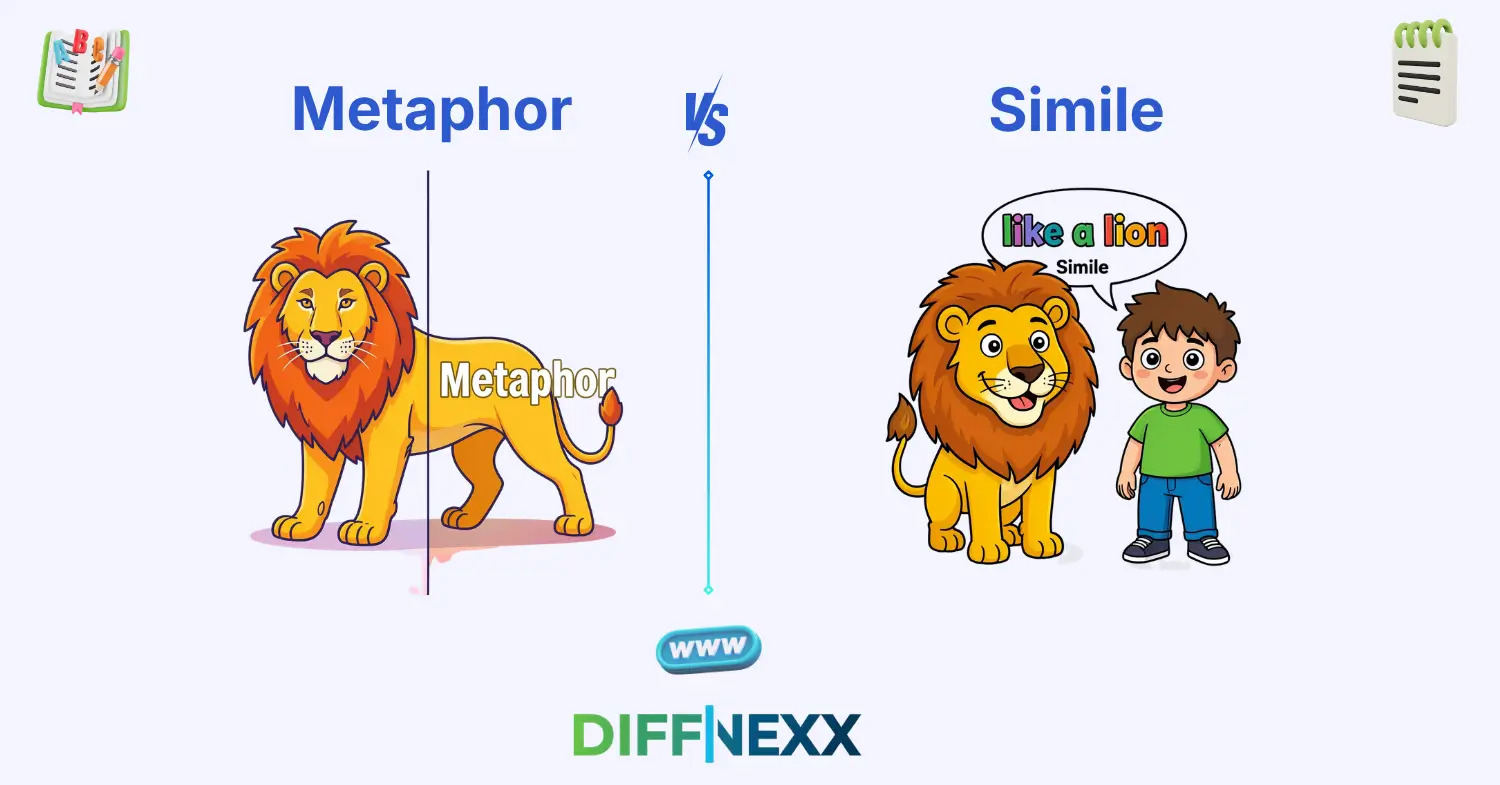
The difference between metaphor and simile lies in how we compare things. Both are figures of speech. They help us describe ideas in a creative way. But they do it differently. A simile uses words like “as” or “like.” A metaphor does not.
Understanding the difference between metaphor and simile can make your writing stronger and your speech more expressive. It also helps you understand literature better.
Let’s now explore their key differences step by step.
Key Difference Between the Both
A simile makes a comparison using “like” or “as.”
A metaphor makes a direct comparison without using those words.
For example:
- Simile: “Her smile is like sunshine.”
- Metaphor: “Her smile is sunshine.”
The meaning is similar, but the expression is different.
Importance – Why Their Difference Matters
Knowing the difference between metaphor and simile is important for both learners and experts.
For students, it improves reading and writing skills. It helps them understand poetry, stories, and even daily language more clearly.
For professionals, especially writers and speakers, it adds depth and creativity. It helps them communicate ideas more effectively.
In society, clear communication builds better understanding. When people use figurative language correctly, their message becomes stronger and more memorable.
🔊 Pronunciation Section
Metaphor
US: /ˈmet̬.ə.fɔːr/
UK: /ˈmet.ə.fɔː/
Simile
US: /ˈsɪm.ə.li/
UK: /ˈsɪm.ɪ.li/
Now that you know how to say them, let’s understand what they really mean.
📚 Core Definitions
Metaphor
A metaphor is a figure of speech that directly compares two different things. It says one thing is another. It often creates a strong emotional effect.
Example:
“Life is a journey.”
Simile
A simile compares two things using “like” or “as.” It is easier to understand and more direct.
Example:
“Life is like a journey.”
📚 10 Clear Differences Between Metaphor and Simile
1. Expression Style
Metaphor uses direct comparison. Simile uses comparison with “like” or “as.”
- Example for Metaphor: “He is a lion.”
- Example for Simile: “He is like a lion.”
2. Emotional Intensity
Metaphors feel stronger and more powerful. Similes feel lighter.
- Example for Metaphor: “Her voice is music.”
- Example for Simile: “Her voice is like music.”
3. Clarity
Similes are easier to understand. Metaphors may need deeper thinking.
- Example for Metaphor: “Time is a thief.”
- Example for Simile: “Time is like a thief.”
4. Creativity
Metaphors are more creative and artistic. Similes are simpler.
- Example for Metaphor: “The classroom was a zoo.”
- Example for Simile: “The classroom was like a zoo.”
5. Formality
Metaphors are often used in literature. Similes are common in daily speech.
- Example for Metaphor: “Hope is a candle.”
- Example for Simile: “Hope is like a candle.”
6. Focus
Metaphors merge two ideas fully. Similes keep them separate.
- Example for Metaphor: “He is a rock.”
- Example for Simile: “He is like a rock.”
7. Psychological Impact
Metaphors leave a deeper impression. Similes are easier but less impactful.
- Example for Metaphor: “Her eyes were oceans.”
- Example for Simile: “Her eyes were like oceans.”
8. Context of Use
Metaphors are common in poetry. Similes are common in teaching.
- Example for Metaphor: “Dreams are wings.”
- Example for Simile: “Dreams are like wings.”
9. Tone
Metaphors often sound serious or dramatic. Similes sound friendly and simple.
- Example for Metaphor: “The world is a stage.”
- Example for Simile: “The world is like a stage.”
10. Rationality
Similes feel logical because they explain similarity. Metaphors feel symbolic.
- Example for Metaphor: “Knowledge is power.”
- Example for Simile: “Knowledge is like power.”
🎯 Why Knowing the Difference Matters
Students need this knowledge to improve writing and understand literature. It helps them answer exam questions correctly and express ideas clearly.
Professionals use these tools in speeches, marketing, and storytelling. A well-placed metaphor can inspire, while a simile can explain.
In everyday communication, using the wrong figure of speech may confuse listeners. Clear usage makes your message stronger and more effective.
Real-world Consequences of Confusion
If someone misunderstands a metaphor as a literal statement, it can cause confusion. In writing, it may weaken the message. In speeches, it may reduce impact.
🧠 Why People Get Confused
Similar Nature
Both compare two things. This makes them seem alike.
Semantic Overlap
They often express the same idea in slightly different ways.
Context-Based Usage
In casual speech, people mix them without noticing.
Informal Speech Influence
Many people use them incorrectly in daily conversations, which spreads confusion.
🎭 Connotation & Emotional Tone
Connotation = the emotional meaning attached to a word.
Metaphor
- Positive: “You are my sunshine.” (warm feeling)
- Negative: “He is a snake.” (danger or betrayal)
- Neutral: “Time is a river.” (flowing idea)
Simile
- Positive: “She shines like the sun.”
- Negative: “He acts like a snake.”
- Neutral: “Time flows like a river.”
🗣 Usage in Metaphors, Similes & Idioms
Many idioms use metaphor-like expressions.
- “Time is money” (metaphor)
- “Busy as a bee” (simile)
Example sentences:
- Metaphor: “His mind is a computer.”
- Simile: “His mind works like a computer.”
📊 Comparison Table
| Feature | Metaphor | Simile |
|---|---|---|
| Meaning | Direct comparison | Comparison using “like/as” |
| Tone | Strong, dramatic | Light, simple |
| Usage | Literature, poetry | Everyday speech |
| Context | Creative writing | Teaching, explanation |
| Formality | More formal/artistic | More casual |
⚖️ Which Is Better in What Situation?
When to Use Metaphor
Use metaphors when you want strong emotional impact. They are great for poetry, speeches, and storytelling.
Example: “Hope is a light.”
When to Use Simile
Use similes when clarity is important. They help explain ideas simply.
Example: “Hope is like a light.”
Situational Clarity
If your audience is young or learning, choose similes. They are easier to understand.
Contextual Correctness
In creative writing, metaphors are better. In teaching or daily talk, similes work best.
📖 Literary or Cultural References
- Book:Romeo and Juliet (Drama, William Shakespeare, 1597)
- “Juliet is the sun.” (metaphor)
- Movie:Forrest Gump (USA, 1994)
- “Life is like a box of chocolates.” (simile)
These examples show how both forms are used in powerful storytelling.
❓ FAQs
1. What is the main difference between metaphor and simile?
A metaphor directly compares two things. A simile uses “like” or “as.” Both describe similarities but in different ways.
2. Which is easier to understand?
Similes are easier because they clearly show the comparison. Metaphors may need deeper thinking.
3. Can a sentence have both?
Yes, but usually one is enough. Mixing both may make the sentence confusing.
4. Are metaphors more powerful?
Yes, metaphors often create stronger emotional effects. They feel more direct and impactful.
5. Do we use them in daily life?
Yes, both are used daily. Similes are more common in casual speech, while metaphors appear more in writing.
🏁 Conclusion
The difference between metaphor and simile is simple but important. A simile compares using “like” or “as,” while a metaphor makes a direct comparison. Both help us express ideas clearly and creatively.
Understanding this difference improves your writing, speaking, and reading skills. It allows you to communicate with more confidence and clarity.
Whether you are a student, writer, or everyday speaker, using the right figure of speech can make your message more powerful.
Keep practicing, notice examples around you, and soon you will use metaphors and similes naturally and effectively. ✨

Aamer Shahzad is the founder of Diffnexx.com, a fast-growing educational platform focused on high-intent “difference between” topics. With over 8 years of experience in English language education and analytical writing, I specialize in breaking down complex “difference between” topics into clear, structured, and easy-to-understand explanations. Diffnexx.com is your go-to resource for enhancing English skills and writing with confidence.
I specializes in building search-optimized, research-driven comparison content designed for clarity, authority, and long-term digital asset value.