Difference between immigration and emigration often confuses people during real conversations. Imagine a student saying, “My uncle immigrated from Canada.” A teacher gently corrects him: “Do you mean emigrated from Canada?” The room goes quiet. One small word changed the direction of movement.
The difference between immigration and emigration is simple, yet many learners mix them up. Both words describe moving from one country to another. However, they focus on different perspectives of that movement.
When someone enters a country, we use one word. When someone leaves a country, we use another. That is the core idea behind the difference between immigration and emigration.
Let’s break it down clearly and step by step.
Key Difference Between the Both
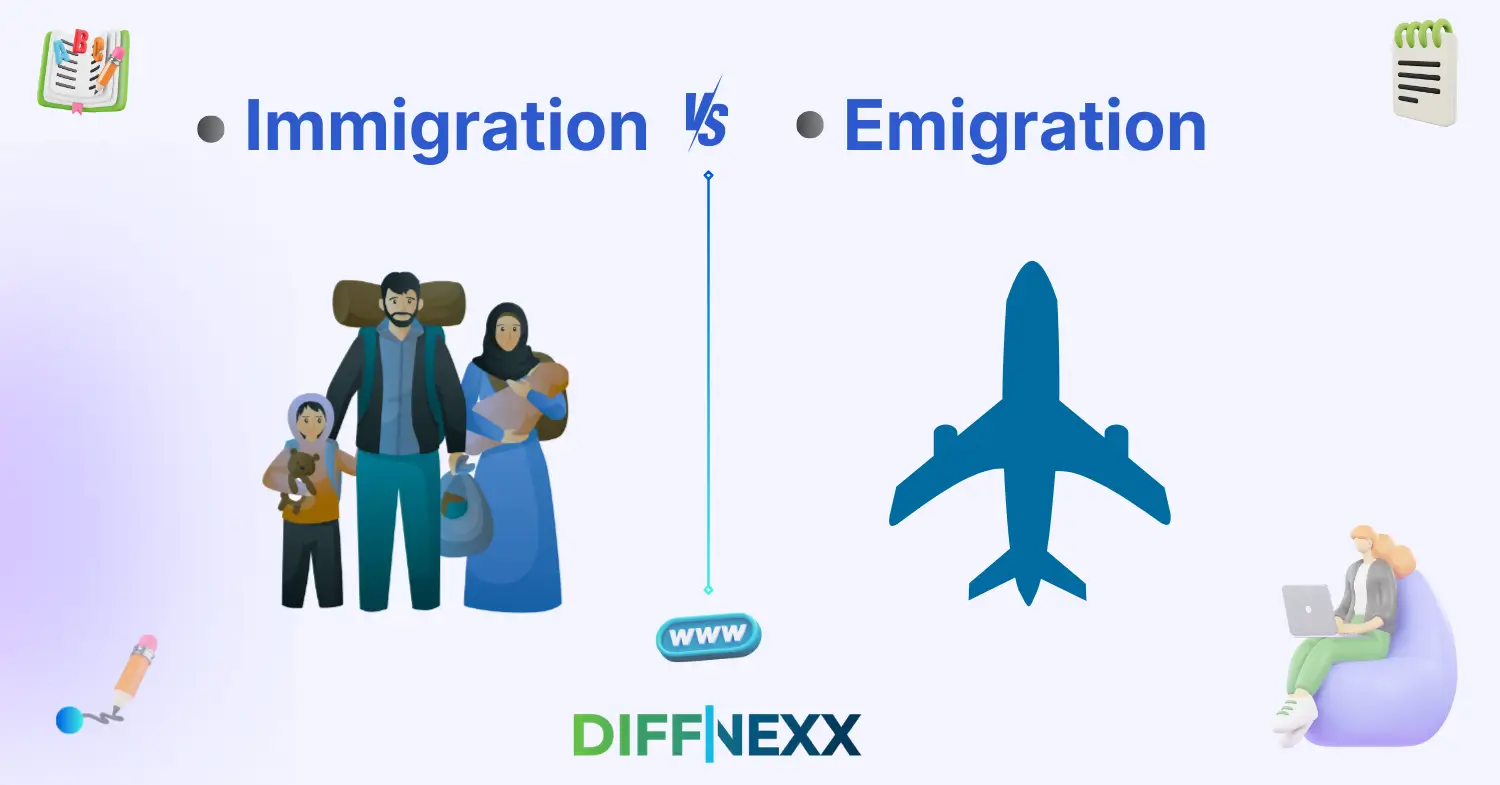
The key difference is direction.
Immigration focuses on entering a country.
Emigration focuses on leaving a country.
Think of it like this:
You immigrate into a place.
You emigrate from a place.
The action is the same movement. The viewpoint changes.
Why Is Their Difference Necessary to Know for Learners and Experts?
Understanding this difference matters in many fields.
Students must use the correct word in essays, exams, and academic writing. One wrong term can change meaning completely.
Experts in law, sociology, and public policy rely on accurate vocabulary. Immigration law and emigration statistics measure different things.
In society, political debates often use these words. Clear understanding prevents misunderstanding and emotional arguments. Accurate language supports respectful discussion and informed decision-making.
🔊 Pronunciation Section
Immigration
US: /ˌɪməˈɡreɪʃən/
UK: /ˌɪmɪˈɡreɪʃən/
Emigration
US: /ˌɛmɪˈɡreɪʃən/
UK: /ˌɛmɪˈɡreɪʃən/
Notice the small vowel difference at the beginning: “im” vs. “em.” Now let’s define both terms clearly before comparing them in detail.
Core Definitions
Immigration
Immigration means moving into a foreign country to live there permanently or for a long time. The focus is on arrival. The emotional tone can be hopeful because it often connects to new opportunities.
Example: She applied for immigration to Australia.
Emigration
Emigration means leaving your home country to settle in another country. The focus is on departure. The tone may feel emotional because it often involves leaving family and familiar places behind.
Example: His emigration from India happened in 2010.
10 Clear Differences Between Immigration and Emigration
1. Direction of Movement
Immigration highlights entry into a country.
Emigration highlights exit from a country.
- Example for Immigration: She immigrated to Canada.
- Example for Emigration: She emigrated from Pakistan.
2. Perspective
Immigration uses the viewpoint of the destination country.
Emigration uses the viewpoint of the origin country.
- Example for Immigration: Canada welcomed new immigrants.
- Example for Emigration: Many citizens considered emigration due to economic issues.
3. Emotional Intensity
Immigration often carries hopeful emotion about new beginnings.
Emigration may carry sadness about leaving home.
- Example for Immigration: He felt excited about immigrating to Germany.
- Example for Emigration: She cried during her emigration farewell party.
4. Policy Context
Immigration connects to border control and entry laws.
Emigration connects to exit rights and migration trends.
- Example for Immigration: The country changed its immigration policy.
- Example for Emigration: High emigration affected the nation’s workforce.
5. Data Measurement
Immigration statistics measure people entering a country.
Emigration statistics measure people leaving a country.
- Example for Immigration: The report showed rising immigration numbers.
- Example for Emigration: The study examined youth emigration rates.
6. Social Impact
Immigration affects cultural diversity in the new country.
Emigration affects population size in the home country.
- Example for Immigration: Immigration increased language diversity.
- Example for Emigration: Emigration reduced the local labor force.
7. Legal Documentation
Immigration requires visas and residence permits.
Emigration may require exit clearance in some countries.
- Example for Immigration: She completed immigration paperwork.
- Example for Emigration: He filed documents for legal emigration.
8. Media Framing
Media in receiving countries talk about immigration.
In sending countries media discuss emigration.
- Example for Immigration: News covered immigration reform.
- Example for Emigration: Articles discussed rising emigration trends.
9. Tone in Public Debate
Immigration debates often focus on integration.
Emigration debates focus on “brain drain.”
- Example for Immigration: Leaders debated immigration benefits.
- Example for Emigration: Experts worried about skilled worker emigration.
10. Expression Style
Immigration often appears in welcoming language.
Emigration often appears in reflective or analytical language.
- Example for Immigration: “We support fair immigration systems.”
- Example for Emigration: “The country faces high emigration levels.”
Why Knowing the Difference Matters
Students need precise vocabulary. Clear understanding improves academic writing and exam answers.
Professionals in law, journalism, and research must use the correct term. Wrong usage damages credibility and clarity.
In social discussions, accurate words reduce conflict. Language shapes public opinion. Careful word choice leads to respectful debate.
Real-World Consequences of Confusion
If a journalist mixes the terms, readers misunderstand migration trends. If a policymaker confuses them, data interpretation becomes flawed. In exams, using the wrong word may cost marks.
Why People Get Confused
Similar Spelling and Pronunciation
Both words share the root “migration.” Only the prefix changes.
Semantic Overlap
Both describe international movement. People assume they mean the same thing.
Context-Based Usage
In conversation, people shorten phrases and lose precision.
Influence of Informal Speech
Movies and media rarely explain the difference. Casual language spreads confusion.
Connotation & Emotional Tone
Connotation = the emotional meaning associated with a word.
Immigration
Positive: Suggests opportunity and growth.
Example: Immigration brought new skills to the country.
Negative: Sometimes linked to political tension.
Example: The debate over immigration became heated.
Neutral: Used in legal and academic contexts.
Emigration
Positive: Can suggest courage and ambition.
Example: Her emigration showed bravery.
Negative: May imply loss for the home country.
Example: High emigration worried economists.
Neutral: Common in research reports.
Usage in Metaphors, Similes & Idioms
These words are rarely used in idioms. However, they appear in metaphorical expressions about movement and change.
Example with immigration: “Digital immigration” describes people adapting to new technology.
Example with emigration: “Talent emigration” refers to skilled workers leaving a company.
Both terms symbolize transition and transformation.
Comparison Table
| Feature | Immigration | Emigration |
|---|---|---|
| Meaning | Entering a country | Leaving a country |
| Tone | Often hopeful | Often reflective |
| Usage | Entry policies | Exit trends |
| Context | Destination view | Origin view |
| Formality | Legal & academic | Legal & academic |
Which Is Better in What Situation?
When to Use Immigration
Use immigration when focusing on people entering a country. Example: The government updated its immigration rules.
When to Use Emigration
Use emigration when focusing on people leaving their homeland. Example: Rising emigration changed population data.
Situational Clarity
Always ask: Am I describing entry or exit?
Contextual Correctness
In academic writing, match the word to the correct national viewpoint. Accuracy improves credibility.
Literary or Cultural References
- Book: Americanah (Novel, Chimamanda Ngozi Adichie, 2013) – Explores immigration experiences in the United States.
- Movie: Brooklyn (Ireland/UK/Canada, 2015) – Tells a story of Irish emigration to America.
Both works show emotional realities behind migration.
FAQs
1. Can one person be both an immigrant and an emigrant?
Yes. A person emigrates from one country and immigrates to another. The same movement has two perspectives.
2. Is immigration always permanent?
Not always. It often suggests long-term residence, but some immigration may begin temporarily.
3. Does emigration mean giving up citizenship?
Not necessarily. Some emigrants keep dual citizenship depending on laws.
4. Which term is more common in news?
It depends on location. Destination countries often use “immigration,” while origin countries discuss “emigration.”
5. How can I remember the difference?
Remember: “I” in immigration = into.
“E” in emigration = exit.
🌍Conclusion
The difference between immigration and emigration is about direction and perspective. Immigration focuses on entering a new country. Emigration focuses on leaving one’s home country. The movement is the same, but the viewpoint changes.
Clear understanding strengthens academic writing, professional communication, and social discussion. Words shape how we see global movement and human stories.
Use each term carefully. Ask yourself which side of the journey you describe. With practice, the distinction becomes natural and precise.
Language grows clearer when we pay attention to small details. Keep learning.

Aamer Shahzad is the founder of Diffnexx.com, a fast-growing educational platform focused on high-intent “difference between” topics. With over 8 years of experience in English language education and analytical writing, I specialize in breaking down complex “difference between” topics into clear, structured, and easy-to-understand explanations. Diffnexx.com is your go-to resource for enhancing English skills and writing with confidence.
I specializes in building search-optimized, research-driven comparison content designed for clarity, authority, and long-term digital asset value.