Difference between lease and rent often appears when someone looks for a new place to live. Imagine a young professional searching for an apartment online. One listing says “apartment for rent,” while another says “available for lease.” The terms sound similar, so it’s easy to wonder if they mean the same thing.
The difference between lease and rent mainly relates to the type of agreement and the length of time you stay in a property. Both words describe paying money to use a home, office, or property owned by someone else.
Many people use these terms interchangeably. However, the difference between lease and rent becomes clearer when you look at legal agreements and time commitments.
Understanding the difference between lease and rent helps tenants, landlords, and learners communicate more clearly about housing and property agreements. Let’s begin with the key distinction.
Key Difference Between the Both
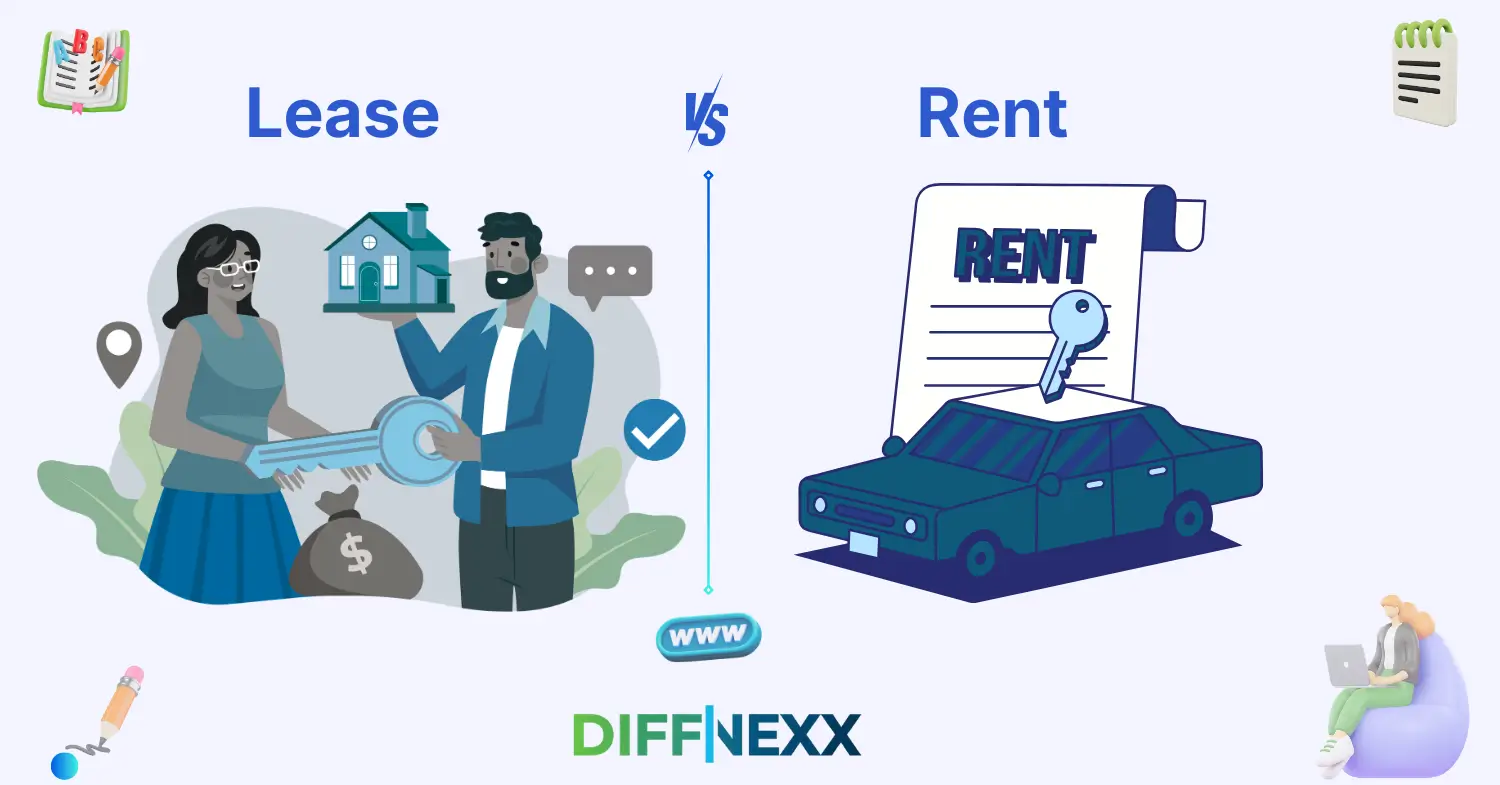
The main difference between lease and rent is duration and contract stability.
A lease usually refers to a long-term contract, often lasting six months or one year. During this period, the rent amount and conditions usually remain fixed.
Rent, on the other hand, often refers to a short-term or flexible agreement, usually month-to-month.
In simple terms:
- Lease = long-term contractual agreement
- Rent = short-term or flexible payment arrangement
Both involve paying money for property use, but the level of commitment differs.
Importance – Why Their Difference Matters in Society
Understanding the difference between lease and rent is important for both learners and professionals.
For students and language learners, the distinction helps build practical vocabulary related to housing and contracts.
Primarily for professionals, such as real estate agents, property managers, and lawyers, using the correct term ensures accurate communication in agreements.
For society, clear terminology helps tenants understand their rights and responsibilities. It also reduces misunderstandings between landlords and renters.
🔊 Pronunciation Section
Lease
US: /liːs/
UK: /liːs/
Rent
US: /rɛnt/
UK: /rent/
Both words are easy to pronounce, but their legal and practical meanings differ. Let’s define each term clearly before comparing them.
Core Definitions
Lease
A lease is a legal agreement between a property owner and a tenant for a fixed period of time. The contract usually outlines rent price, rules, and responsibilities.
The tone of the word is formal and often associated with legal documents.
Example:
She signed a one-year lease for her new apartment.
Rent
Rent refers to paying money regularly to use someone else’s property, often under a flexible or short-term arrangement.
The tone is more casual and commonly used in everyday conversation.
Example:
He rents a small apartment near his office.
10 Clear Differences Between Lease and Rent
1. Duration of Agreement
A lease usually lasts for a fixed period such as 6 or 12 months. Renting often operates month-to-month.
Example for lease:
They signed a one-year lease for the apartment.
Example for rent:
She rents the room on a monthly basis.
2. Contract Stability
Lease agreements usually lock the terms for the entire period. Rent agreements may allow easier changes.
Example for lease:
The rent price stayed the same during the lease.
Example for rent:
The landlord adjusted the rent after several months.
3. Level of Commitment
A lease requires stronger commitment from both tenant and landlord. Renting allows more flexibility.
Example for lease:
He committed to a 12-month lease.
Example for rent:
They rent the apartment temporarily.
4. Formality
Lease agreements are formal legal contracts. Renting may occur with simpler agreements.
Example for lease:
The lawyer reviewed the lease document.
Example for rent:
He rents the room with a simple agreement.
5. Focus of Agreement
A lease focuses on detailed contract terms. Renting focuses mainly on payment and occupancy.
Example for lease:
The lease listed maintenance responsibilities.
Example for rent:
She pays rent every month.
6. Flexibility
Leases usually limit changes until the contract ends. Renting allows easier relocation.
Example for lease:
Breaking the lease required a penalty.
Example for rent:
He moved out after one month of renting.
7. Context of Use
Lease appears frequently in real estate contracts. Rent appears in everyday housing conversations.
Example for lease:
The office building lease lasted three years.
Example for rent:
They rent a house near the city center.
8. Psychological Impact
Leasing often provides security and stability. Renting can feel more temporary.
Example for lease:
Signing the lease gave them peace of mind.
Example for rent:
Renting allowed them to move easily.
9. Tone in Language
Lease sounds professional and legal. Rent sounds casual and conversational.
Example for lease:
The lease agreement included strict rules.
Example for rent:
He pays rent on the first day of each month.
10. Expression Style
Lease often appears in legal documents. Rent appears frequently in daily speech.
Example for lease:
The lease contract outlines tenant obligations.
Example for rent:
She rents an apartment downtown.
Why Knowing the Difference Matters
Understanding the difference between lease and rent helps students and tenants interpret housing agreements correctly. Real estate vocabulary often appears in daily life.
For professionals such as property managers, lawyers, and real estate agents, using the correct term ensures clarity in contracts and negotiations.
Accurate language also prevents misunderstandings in housing arrangements.
Real-world consequences of confusion
If someone confuses a lease with renting, they might misunderstand their contract obligations. Breaking a lease early may involve legal penalties, while renting usually offers more flexibility.
Why People Get Confused
Similar Meaning
Both terms involve paying money to use property. This similarity leads many people to treat them as synonyms.
Semantic Overlap
Lease agreements often include rent payments, which adds to the confusion.
Context-Based Usage
Some people casually say “rent” even when they actually mean a lease agreement.
Influence of Informal Speech
In everyday conversation, rent is more common, so speakers often use it for all housing situations.
Connotation & Emotional Tone
(Connotation = the emotional meaning associated with a word.)
Lease
Positive:
Associated with stability and long-term planning.
Example:
Signing the lease helped them settle into the city.
Negative:
Sometimes linked with strict contracts.
Example:
Breaking the lease required paying extra fees.
Neutral:
Common in legal or real estate language.
Example:
The lease agreement lasted twelve months.
Rent
Positive:
Often associated with flexibility and freedom.
Example:
They rent apartments while traveling for work.
Negative:
Sometimes connected with financial responsibility.
Example:
Rising rent worried many tenants.
Neutral:
Common in everyday housing discussions.
Example:
She pays rent on the first of the month.
Usage in Metaphors, Similes & Idioms
The word rent appears in some idiomatic expressions.
Example with rent:
The loud noise nearly rent the air, meaning it filled the air strongly.
Example with lease:
He felt like he had a new lease on life, meaning a fresh start.
These expressions show how both words appear in figurative language.
Comparison Table
| Feature | Lease | Rent |
|---|---|---|
| Meaning | Long-term property agreement | Payment for short-term use of property |
| Tone | Formal and legal | Casual and everyday |
| Usage | Real estate contracts | Daily housing discussions |
| Context | Fixed time period | Flexible arrangement |
| Formality | High | Medium |
Which Is Better in What Situation?
When to use Lease
Use lease when discussing long-term property agreements. For example, a one-year apartment contract is typically called a lease.
When to use Rent
Use rent when referring to monthly payments or flexible housing arrangements.
Situational Clarity
Lease fits legal contracts and long-term commitments. Rent fits casual discussions about paying for housing.
Contextual Correctness
For example, a tenant signs a lease agreement but pays rent every month under that lease.
Literary or Cultural References
Book:
Evicted: Poverty and Profit in the American City – Matthew Desmond (Sociology, 2016)
Movie:
The Pursuit of Happyness (USA, 2006)
Both works explore housing challenges and the importance of stable living conditions.
FAQs
1. Is renting the same as leasing?
Not exactly. Renting usually refers to a short-term or flexible arrangement, while leasing involves a fixed long-term contract.
2. Can you rent without a lease?
Yes. Some landlords offer month-to-month rental agreements without a long-term lease.
3. Why do landlords prefer leases?
Leases provide stability and predictable income because tenants agree to stay for a set period.
4. Can you break a lease early?
It is possible, but it often involves penalties or fees depending on the contract.
5. Do renters still sign lease agreements?
Yes. Many renters sign lease contracts but continue paying rent monthly under that agreement.
Conclusion
Understanding the difference between lease and rent helps tenants, landlords, and learners communicate clearly about housing arrangements. While both terms involve paying for property use, they reflect different levels of commitment.
A lease usually represents a formal contract with a fixed duration, such as six months or a year. It provides stability but requires stronger commitment from both parties.
Rent, on the other hand, often refers to the act of paying for property use, usually with more flexibility and shorter time periods.
Knowing this distinction helps people interpret housing agreements, avoid misunderstandings, and make informed decisions about living arrangements. As you continue learning English and real-life vocabulary, recognizing these subtle differences will make your communication clearer and more confident. 🏡

Eliza Marlowe is a passionate content strategist and comparison writer at diffnexx.com. She specializes in breaking down complex “difference between” topics into clear, reader-friendly guides. With a background in linguistics and digital research, Eliza focuses on accuracy, clarity, and content that helps readers make informed decisions with confidence.