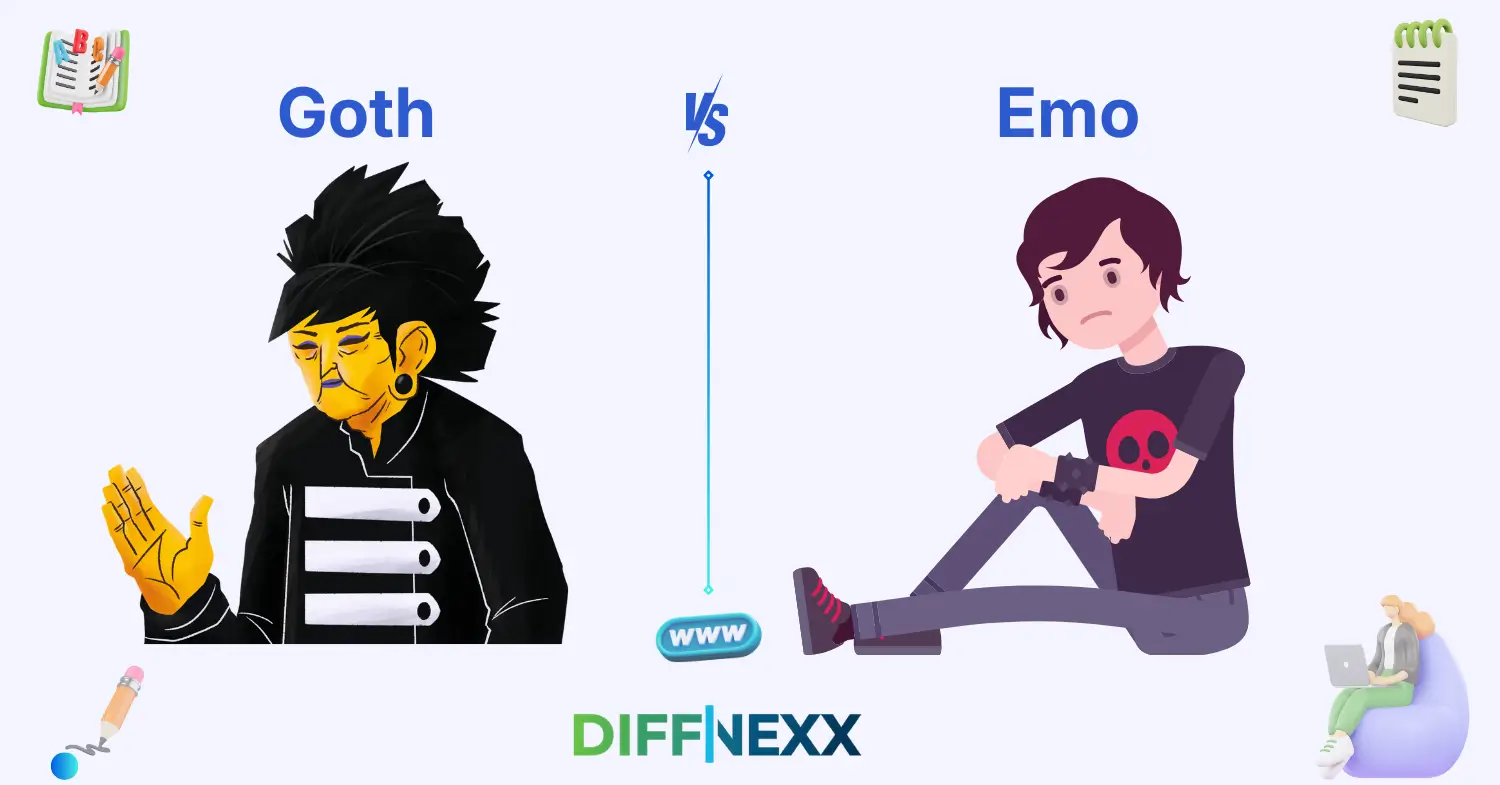
The difference between goth and emo is a topic that often confuses people because both subcultures share a love for dark clothing and alternative music. Imagine standing at a concert where half the crowd wears lace and velvet, while the other half wears skinny jeans and studded belts. While they might look similar from a distance, they represent two distinct histories.
Goth emerged from the late 1970s post-punk scene, focusing on a dark, mysterious, and often theatrical aesthetic. Emo, short for “emotional hardcore,” grew out of the 1980s punk scene with a focus on raw, personal expression. Understanding the difference between goth and emo helps you appreciate the unique art and music that define each group.
When you learn the difference between goth and emo, you realize that “wearing black” is not a single identity. It is a way for different people to express different parts of their personality. One group finds beauty in the macabre, while the other finds catharsis in vulnerability.
These communities provide a sense of belonging for those who feel like outsiders. Let’s dive into the specific details that set these two iconic styles apart. 🖤
Key difference between the both
The fundamental difference between goth and emo lies in their musical roots and emotional outlook. Goth is a subculture based on gothic rock and post-punk, emphasizing a romanticized view of death, mystery, and the supernatural. Emo is a subgenre of punk that focuses on intense, confessional lyrics and personal emotional struggles.
Importance: Why their difference is necessary to know
For learners, distinguishing between these terms is essential for cultural accuracy. It prevents the mistake of grouping everyone in dark clothes into one “scary” category. Knowing the difference between goth and emo allows you to show respect for the specific history each person identifies with.
For experts and professionals, this distinction is important for understanding youth trends and sociology. In our society, these labels often carry heavy stereotypes. By highlighting their unique importance, we can better support individuals who use these styles to navigate their mental and social health.
Pronunciation Section
Goth US: /ɡɑːθ/ UK: /ɡɒθ/
Emo US: /ˈiːmoʊ/ UK: /ˈiːməʊ/
Once you can say the names correctly, it becomes easier to explore the deep ideas behind them.
Core Definitions
Goth
Goth is a subculture that celebrates the “darker” side of life, including literature, architecture, and gothic rock music. It often has a sophisticated, artistic, or hauntingly beautiful tone.
- Example: A fan of the band Bauhaus wearing a silver ankh and heavy eyeliner.
Emo
Emo is a subculture centered on emotional transparency and the DIY spirit of the punk scene. It focuses on internal feelings, heartbreak, and the struggles of growing up.
- Example: A teenager listening to My Chemical Romance and wearing a band hoodie.
10 Clear Differences Between Goth and Emo
1. Musical Roots
Goth was born from British post-punk bands like Siouxsie and the Banshees. Emo started in the Washington D.C. hardcore punk scene with bands like Rites of Spring.
- Example for Goth: Listening to the atmospheric sounds of “A Forest” by The Cure.
- Example for Emo: Listening to the high-energy, raw vocals of Sunny Day Real Estate.
2. Emotional Intensity
Goth emotion is often seen as “distanced” or theatrical, focusing on universal themes like mortality. Emo is characterized by “direct” and urgent emotional intensity, often focusing on the individual’s current pain.
- Example for Goth: Writing a poem about the beauty of a crumbling castle.
- Example for Emo: Writing a song about a specific breakup that happened yesterday.
3. Focus of Interest
Goths are often interested in history, horror movies, and classical literature. Emos are more focused on modern social connections, self-reflection, and personal growth.
- Example for Goth: Reading Bram Stoker’s Dracula for its dark atmosphere.
- Example for Emo: Keeping a detailed journal about personal feelings and anxieties.
4. Duration and Evolution
Goth has remained fairly consistent in its look and sound since the late 70s. Emo changed significantly when it entered the mainstream in the early 2000s, adding more “pop” elements.
- Example for Goth: Wearing the same style of boots that fans wore in 1982.
- Example for Emo: The shift from 80s underground punk to the “mall emo” look of 2005.
5. Fashion Style
Goth fashion is often elaborate, using materials like velvet, lace, and leather. Emo fashion is more casual, featuring skinny jeans, hoodies, and flat-ironed hair with long bangs.
- Example for Goth: An intricate Victorian mourning dress with a corset.
- Example for Emo: A black-and-red striped shirt with a studded belt.
6. Rationality vs. Rawness
Goth tends to be more “rational” or intellectual about its darkness, treating it as an art form. Emo is about “rawness,” prioritizing the feeling over the technical polish of the art.
- Example for Goth: A carefully choreographed dance at a Goth club.
- Example for Emo: A singer screaming into the microphone because they are overwhelmed by feeling.
7. Context of Use
“Goth” is used to describe things that are spooky or macabre. “Emo” is often used to describe music or people that are being very expressive or sensitive.
- Example for Goth: Describing a dark, haunted-looking house as “very goth.”
- Example for Emo: Describing a sad, acoustic guitar song as “so emo.”
8. Psychological Impact
Goth encourages finding peace and beauty in things that others find frightening. Emo provides a safe way to release “angst” and sadness, helping people feel less alone.
- Example for Goth: Feeling empowered by wearing a “scary” look to the store.
- Example for Emo: Finding comfort in lyrics that describe exactly how you feel.
9. Tone of Voice
The Goth tone is often deep, echoing, and poetic. The Emo tone is usually higher-pitched, strained, and sounds like a “confession.”
- Example for Goth: The baritone vocals of Andrew Eldritch from The Sisters of Mercy.
- Example for Emo: The voice-cracking, emotional singing of a modern pop-punk band.
10. Social Structure
Goths often form tight-knit communities centered around “clubs” and festivals. Emo is often more of an individual experience or found in “scenes” at local all-ages music venues.
- Example for Goth: Attending the annual Whitby Goth Weekend in the UK.
- Example for Emo: Sharing a playlist with a few close friends who “get it.”
Why Knowing the Difference Matters
Students must know the difference to avoid using these terms as insults. When you understand the history, you see that these aren’t “weird” behaviors, but valid cultural movements. It helps students build empathy for people who express themselves differently.
Professionals, like teachers or marketers, must know the difference to communicate effectively. If you try to sell a “Goth” product to an “Emo” audience, it will likely fail. Knowing the nuances helps in building trust and showing that you truly understand your audience.
In social settings, confusing the two can cause mild offense to those who are proud of their subculture. Being able to correctly identify someone’s style shows that you are observant and culturally literate. It makes for much better conversations!
Real-world consequences of confusion
Confusion can lead to unfair stereotypes, such as thinking all Goths are “dangerous” or all Emos are “weak.” These myths can lead to social isolation or bullying. Using the right terms helps break down these barriers and promotes a more inclusive society.
Why People Get Confused
People get confused because both groups use black as their primary color. The visual similarities like dyed hair and eyeliner are the first things people see. Without listening to the music, it is hard to tell the two apart.
There is also “semantic overlap.” In casual speech, people use “emo” to mean “sad” and “goth” to mean “dark.” These words have been used in movies and TV shows interchangeably, which has made the true definitions blurry for the general public.
Connotation & Emotional Tone
(Connotation = the emotional meaning attached to a word.)
For Goth:
- Positive: Creative, sophisticated, mysterious.
- Negative: Morbid, spooky, unapproachable.
- Neutral: Interested in dark aesthetics.
- Example: “She has a very refined Goth style.”
For Emo:
- Positive: Sensitive, authentic, honest.
- Negative: Dramatic, whiny, moody.
- Neutral: Highly emotional or introspective.
- Example: “That song is really Emo but very powerful.”
Usage in Metaphors, Similes & Idioms
- Simile: “She was as Goth as a midnight graveyard.”
- Metaphor: “His social media feed is an Emo diary.”
- Usage: “Stop being so Emo” (Stop being overly dramatic about your feelings).
- Usage: “They went full Goth” (They committed to a very dark, alternative lifestyle).
Comparison Table
Which Is Better in What Situation?
When to use Goth
Use “Goth” when you are talking about someone who appreciates the artistic side of darkness. It is the right word for people into horror, Victorian style, or post-punk music. If you are describing a spooky movie or a dark fashion show, “Goth” is usually the correct term.
When to use Emo
Use “Emo” when you are describing a situation or a person focused on personal feelings. It is the better word for modern “angst” or music with very emotional, personal lyrics. If a friend is sharing their feelings through a sad song, “Emo” is the appropriate context.
Situational clarity
In most casual situations, people won’t mind if you mix them up. However, if you are at a music festival, it is very important to use the right one. It shows you know your music history!
Contextual correctness
In 2026, many styles have blended together. Some people call themselves “Goth-Emo” or “E-girls/E-boys.” Using the original terms correctly shows you understand where these new trends came from.
Literary or Cultural References
- “The Raven” (Poem, Edgar Allan Poe, 1845): The ultimate “Goth” literary inspiration.
- “My Chemical Romance” (Band, 2001-Present): The most famous face of 2000s “Emo.”
- “The Nightmare Before Christmas” (Movie, USA, 1993): A perfect example of the “Goth” aesthetic.
FAQs
1. Is Emo a type of Goth? No. They come from different musical families. Goth comes from post-punk, while Emo comes from hardcore punk.
2. Why do both wear black? Black represents a rebellion against “normal” bright colors. For Goths, it represents mystery and death. For Emos, it often represents a mood or a shield for their feelings.
3. Is Goth just for old people? No, but Goth is an older subculture. There are “Elder Goths” from the 80s and “Baby Bats” (new Goths) who are teenagers today.
4. Can Emo music be happy? Usually, no. The point of Emo is to express difficult or sad emotions. However, some Emo music can be energetic and empowering.
5. Do you have to be sad to be Emo? No. You just have to appreciate music that expresses deep emotions. Being Emo is about “authenticity,” not being unhappy all the time.
Conclusion
The difference between goth and emo shows us how music and fashion can help people find their voice. Goth provides a way to see beauty in the dark and the mysterious. Emo offers a way to be honest about the pain and joy of being human.
Both subcultures have rich histories that go far beyond just “wearing black.” They are about community, art, and the courage to be different. Understanding these differences helps us see the world in more colors than just black and white.
Clarifying these terms makes you a better communicator and a more informed observer of culture. Keep exploring the world of alternative styles there is always something new to learn! 🦇

Aamer Shahzad is the founder of Distinly.com, a fast-growing educational platform focused on high-intent “difference between” topics. With over 8 years of experience in English language education and analytical writing, I specialize in breaking down complex “difference between” topics into clear, structured, and easy-to-understand explanations. Distinly.com is your go-to resource for enhancing English skills and writing with confidence.
I specializes in building search-optimized, research-driven comparison content designed for clarity, authority, and long-term digital asset value.