Imagine feeling a cloud of sadness or anxiety hovering over your day. You visit a doctor, and they mention medications like SSRI and SNRI. Suddenly, it feels overwhelming to understand the difference.
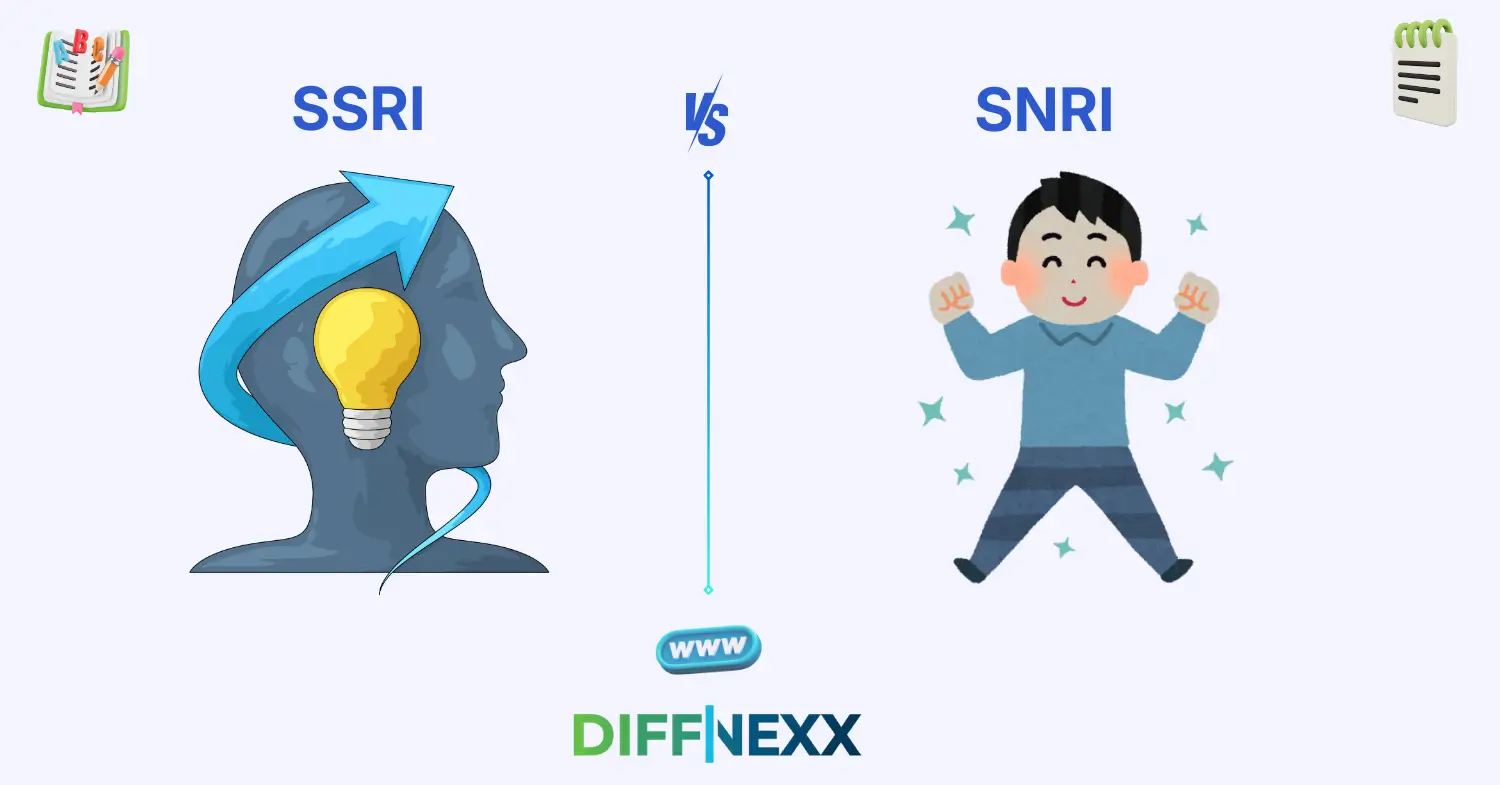
The difference between SSRI and SNRI is subtle yet important. Both are types of antidepressants, but they work in slightly different ways in the brain. SSRI stands for Selective Serotonin Reuptake Inhibitor, and SNRI means Serotonin–Norepinephrine Reuptake Inhibitor.
While they aim to improve mood and emotional balance, their chemical targets and effects differ. Knowing the difference between SSRI and SNRI can help patients, learners, and healthcare professionals make informed decisions.
Let’s explore these terms, how they sound, and the nuances that set them apart.
Key Difference Between the Both
The core difference lies in the neurotransmitters they affect. SSRIs focus on serotonin, while SNRIs target both serotonin and norepinephrine. This distinction affects emotional tone, energy levels, and sometimes side effects. Understanding this helps in selecting the right treatment for specific emotional or psychological needs.
Importance: Why Knowing Their Difference Matters
Knowing the difference isn’t just academic it has real-world consequences. For learners, it builds vocabulary, comprehension, and awareness of medical language. For healthcare professionals, it guides proper prescription and patient safety. In society, understanding these terms reduces stigma and encourages better mental health communication.
Pronunciation
SSRI
- US: /ˌɛsˌɛsˌɑːrˈaɪ/
- UK: /ˌɛsˌɛsˌɑːrˈaɪ/
SNRI
- US: /ˌɛsˌɛnˌɑːrˈaɪ/
- UK: /ˌɛsˌɛnˌɑːrˈaɪ/
Both sound similar at first, which adds to the confusion. But once you hear them carefully, the differences become clear. This understanding sets the stage for a deeper comparison.
Core Definitions
SSRI
Selective Serotonin Reuptake Inhibitors help the brain maintain higher serotonin levels. They often improve mood and reduce anxiety.
Example: Someone feeling anxious might feel calmer after SSRI treatment.
SNRI
Serotonin–Norepinephrine Reuptake Inhibitors boost both serotonin and norepinephrine levels. They can increase mood and energy simultaneously.
Example: A person with depression and fatigue might experience both emotional lift and increased energy.
10 Clear Differences Between SSRI and SNRI
1. Emotional Intensity
- SSRIs: Moderate mood improvement. Gentle emotional balance.
Example 1 (SSRI): Feeling calmer after taking fluoxetine. - SNRIs: Stronger emotional impact. Can boost energy alongside mood.
Example 2 (SNRI): Feeling both happier and more alert after taking venlafaxine.
2. Duration
- SSRIs: Effects may appear gradually, usually in 2–4 weeks.
- SNRIs: Can work slightly faster due to dual neurotransmitter effect.
3. Focus
- SSRIs: Primarily improve emotional clarity and reduce anxiety.
- SNRIs: Improve both focus and mood, helpful for fatigue-related depression.
4. Severity
- SSRIs: Often used for mild to moderate depression or anxiety.
- SNRIs: Preferred for moderate to severe depression or chronic pain.
5. Rationality
- SSRIs: Promote calm, reduce emotional overreaction.
- SNRIs: Increase both calm and alertness; may feel more “energetic rational.”
6. Formality
- SSRIs: Commonly prescribed, widely accepted first-line treatment.
- SNRIs: Slightly more specialized; sometimes prescribed when SSRIs are insufficient.
7. Context of Use
- SSRIs: Anxiety, panic disorders, OCD.
- SNRIs: Depression with fatigue, chronic pain, or neuropathic conditions.
8. Psychological Impact
- SSRIs: Gentle stabilization of mood.
- SNRIs: Stronger lift, may increase motivation and drive.
9. Tone
- SSRIs: Neutral, soothing, steady.
- SNRIs: Positive, energizing, active.
10. Expression Style
- SSRIs: Subtle, understated improvement.
- SNRIs: Noticeable, more active mood change.
Why Knowing the Difference Matters
For students, knowing the difference builds vocabulary and understanding of medical terminology.
For professionals, it guides precise prescription and avoids side effects.
Socially, it reduces confusion in discussions about mental health. Misunderstanding can lead to misuse, incorrect advice, or stigma.
Real-World Consequences of Confusion
Prescribing the wrong type could delay recovery. Miscommunication in education or health discussions can lead to unnecessary anxiety. Understanding clearly improves outcomes and reduces errors.
Why People Get Confused
Similar Spelling or Pronunciation
SSRIs and SNRIs sound alike, especially in casual speech.
Semantic Overlap
Both treat depression and anxiety, making them conceptually similar.
Context-Based Usage
Doctors may prescribe one type after the other, adding to learner confusion.
Influence of Informal Speech
Abbreviations and casual discussion often mix the terms.
Connotation & Emotional Tone
Connotation = the emotional meaning associated with a word.
SSRI
- Positive: Calm, steady relief (Example: “Fluoxetine gave me calm.”)
- Negative: Slow effect (Example: “Took weeks to notice a change.”)
- Neutral: Clinical, standard prescription
SNRI
- Positive: Energizing, active improvement (Example: “Venlafaxine lifted my mood and energy.”)
- Negative: Possible stronger side effects (Example: “I felt jittery at first.”)
- Neutral: Medical, professional treatment
Usage in Metaphors, Similes & Idioms
While rarely used metaphorically, you can relate:
- SSRI: “Like a gentle stream calming a rough river.”
- SNRI: “Like morning coffee energizing a sleepy mind.”
Comparison Table
| Feature | SSRI | SNRI |
|---|---|---|
| Meaning | Serotonin-focused antidepressant | Serotonin + norepinephrine antidepressant |
| Tone | Calm, neutral | Energizing, positive |
| Usage | Anxiety, mild depression | Severe depression, fatigue, pain |
| Context | First-line treatment | When SSRIs are insufficient |
| Formality | Widely prescribed | Specialized use |
Which Is Better in What Situation?
When to Use SSRI
Best for mild to moderate anxiety or depression. Works slowly but steadily.
When to Use SNRI
Ideal for severe depression, chronic fatigue, or pain-related depression. Effects are stronger and faster.
Situational Clarity
SSRI = gentle emotional lift. SNRI = active mood + energy improvement. Correct choice depends on individual symptoms.
Literary or Cultural References
- Book: Feeling Good (Self-Help, David D. Burns, 1980) – Discusses serotonin and mood improvement.
- Movie: Silver Linings Playbook (USA, 2012) – Depicts treatment for depression and mood disorders.
FAQs
1. Are SSRIs and SNRIs safe to take together?
Usually not unless supervised. Combining them can increase serotonin excessively, causing side effects.
2. Can SSRIs make you sleepy?
Yes, some SSRIs may cause fatigue initially but usually stabilize over time.
3. Are SNRIs better for energy?
SNRIs can improve both mood and energy due to norepinephrine effects.
4. Which works faster?
SNRIs may act slightly faster due to dual neurotransmitter effect. SSRIs take 2–4 weeks to show full benefit.
5. Can you switch from SSRI to SNRI?
Yes, doctors may switch if SSRIs are ineffective, adjusting dosage carefully.
Conclusion
The difference between SSRI and SNRI lies in the neurotransmitters they target, influencing mood, energy, and psychological impact. SSRIs are gentle and calming, perfect for mild depression or anxiety. SNRIs are stronger, boosting both mood and alertness.
Understanding this distinction helps students learn medical terminology, professionals prescribe accurately, and society communicate better about mental health. Clear knowledge reduces confusion, improves outcomes, and empowers informed decisions.
Remember: whether calm or energized, the right antidepressant can make a meaningful difference in everyday life. Learning the difference is your first step toward clarity and confidence in understanding mental health.

Anton Reyes is a contributing writer at DiffNexx.com, where he explores meaningful differences in language, culture, and everyday concepts. With a background in creative nonfiction, Anton brings clarity and balance to complex comparisons. His writing helps readers understand subtle distinctions in words and ideas, making learning both insightful and engaging.