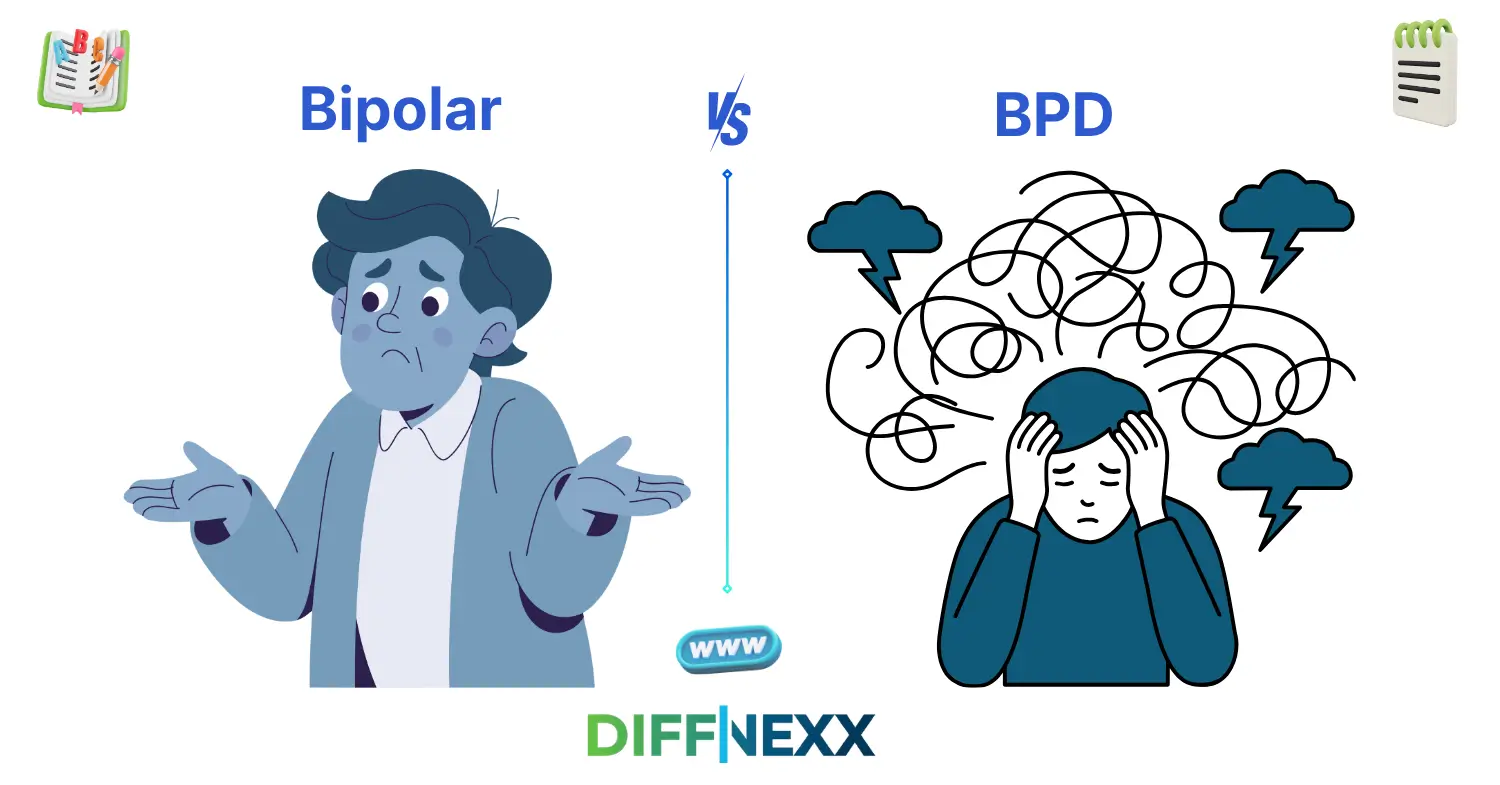
The difference between bipolar and bpd can feel confusing, especially when you hear both terms used in everyday conversations. Imagine a student who feels extreme mood changes one day full of energy, the next day very low. Someone says it might be bipolar. Another says it could be BPD. That confusion is common.
The difference between bipolar and bpd matters because both are mental health conditions, but they are not the same. Bipolar disorder mainly affects mood cycles over time. Borderline Personality Disorder (BPD) affects emotions, relationships, and self-image in a more constant way.
Many people mix them up because both involve emotional ups and downs. However, the causes, patterns, and treatments are different. Understanding the difference between bipolar and bpd helps people get the right support.
Let’s now explore the key differences step by step.
🔍 Key Difference Between the Both
The main difference is simple:
- Bipolar disorder = mood episodes (high and low) that last days or weeks
- BPD = fast emotional changes, often triggered by relationships or situations
In short, bipolar is more about long-term mood cycles, while BPD is about daily emotional instability and behavior patterns.
🌍 Importance – Why This Difference Matters
Knowing the difference is important for both learners and experts.
For students, it builds correct understanding and avoids misinformation. Mental health topics are sensitive, so clarity matters.
For professionals such as doctors and psychologists, an accurate diagnosis is critical. Treating bipolar as BPD or vice versa can lead to wrong treatment.
In society, understanding reduces stigma. People become more supportive and less judgmental when they know what each condition truly means.
🔊 Pronunciation Section
Bipolar
US: /ˌbaɪˈpoʊlər/
UK: /ˌbaɪˈpəʊlə/
BPD (Borderline Personality Disorder)
US: /ˌbɔːrdərˌlaɪn pɜːrsəˈnælɪti dɪsˈɔːrdər/
UK: /ˌbɔːdəlaɪn pɜːsəˈnælɪti dɪsˈɔːdə/
Now that you know how to say them, let’s clearly define both.
📚 Core Definitions
Bipolar Disorder
Bipolar disorder is a mental condition where a person experiences extreme mood swings. These include highs (mania) and lows (depression). These moods can last for days or even weeks.
Example:
A person feels extremely energetic and happy for a week, then suddenly becomes very sad and tired for another week.
Borderline Personality Disorder (BPD)
BPD is a personality disorder that affects how a person feels about themselves and others. It causes intense emotions, unstable relationships, and impulsive behavior.
Example:
A person feels happy in a relationship one moment but suddenly feels angry or abandoned the next.
📊 10 Clear Differences Between Bipolar and BPD
1. Emotional Intensity
Bipolar emotions are intense but come in episodes.
BPD emotions are intense and change quickly.
- Example (Bipolar): Feeling very high energy for days
- Example (BPD): Feeling happy, then angry within hours
2. Duration ⏳
Bipolar mood swings last longer (days or weeks).
BPD mood shifts happen quickly (minutes to hours).
- Example (Bipolar): Depression lasting 2 weeks
- Example (BPD): Mood changes within a single day
3. Focus 🎯
Bipolar focuses on mood states.
BPD focuses on relationships and identity.
- Example (Bipolar): Feeling extremely happy without reason
- Example (BPD): Feeling upset after a small relationship issue
4. Severity ⚖️
Bipolar episodes can be severe and require medication.
BPD symptoms are serious but often treated with therapy.
- Example (Bipolar): Hospitalization during mania
- Example (BPD): Emotional distress during arguments
5. Rationality 🧠
Bipolar mania may lead to irrational decisions.
BPD reactions are emotional but often triggered by real events.
- Example (Bipolar): Spending huge money impulsively
- Example (BPD): Reacting strongly to perceived rejection
6. Formal Diagnosis 🏥
Bipolar is classified as a mood disorder.
BPD is a personality disorder.
- Example (Bipolar): Diagnosed through mood patterns
- Example (BPD): Diagnosed through behavior and personality traits
7. Context of Use 🌍
Bipolar is discussed in medical contexts about mood cycles.
BPD is discussed in psychological and behavioral contexts.
- Example (Bipolar): Talking about depression and mania
- Example (BPD): Talking about relationships and self-image
8. Psychological Impact 💭
Bipolar affects energy and mood stability.
BPD affects identity and emotional control.
- Example (Bipolar): Loss of motivation during depression
- Example (BPD): Feeling empty or unsure of self
9. Tone 🎭
Bipolar has a clinical tone focused on episodes.
BPD has an emotional tone focused on instability.
- Example (Bipolar): “He is in a depressive episode”
- Example (BPD): “She feels abandoned easily”
10. Expression Style 🗣️
Bipolar shows clear mood phases.
BPD shows rapid emotional reactions.
- Example (Bipolar): Clear shift from high to low mood
- Example (BPD): Sudden anger or sadness in conversations
🎯 Why Knowing the Difference Matters
Students need this knowledge to avoid confusion in exams and discussions. Clear understanding improves communication and learning.
Professionals must know the difference for correct diagnosis and treatment. Bipolar often needs medication, while BPD responds well to therapy.
Socially, confusion can lead to stigma or wrong labeling. People may misunderstand someone’s behavior, which can harm relationships.
🔎 Real-world Consequences of Confusion
Mislabeling can delay proper treatment. It can also cause frustration for patients and families. Correct understanding leads to better care and empathy.
🧠 Why People Get Confused
Similar Names
Both terms sound medical and complex, which causes confusion.
Semantic Overlap
Both involve emotional instability, so people think they are the same.
Context-Based Usage
In casual speech, people use “bipolar” incorrectly to describe moodiness.
Informal Speech Influence
Social media often spreads incorrect meanings, increasing confusion.
🎭 Connotation & Emotional Tone
Connotation = the emotional meaning associated with a word.
Bipolar
- Neutral/Negative: Often used clinically, but sometimes wrongly used negatively
- Example: “He has bipolar disorder and is getting treatment.”
BPD
- Neutral/Negative: Often misunderstood, sometimes unfairly judged
- Example: “She is diagnosed with BPD and attends therapy.”
🗣 Usage in Metaphors, Similes & Idioms
These terms are rarely used in idioms because they are medical. However, people misuse them in casual speech.
- Incorrect: “Weather is bipolar today.”
- Correct: “The weather is unpredictable.”
- Incorrect: “He is so BPD.”
- Correct: Avoid using medical terms casually.
📊 Comparison Table
| Feature | Bipolar | BPD |
|---|---|---|
| Meaning | Mood disorder | Personality disorder |
| Tone | Clinical | Emotional/behavioral |
| Usage | Mood cycles | Relationships & identity |
| Context | Medical | Psychological |
| Formality | Formal | Formal |
⚖️ Which Is Better in What Situation?
When to Use Bipolar
Use it when talking about mood disorders with clear highs and lows.
Example: Medical discussions or diagnosis.
When to Use BPD
Use it when discussing emotional instability and relationship patterns.
Example: Therapy or psychological context.
Situational Clarity
Choose the correct term based on symptoms, not assumptions.
Contextual Correctness
Always use these terms carefully and respectfully.
📖 Literary or Cultural References
- Book: An Unquiet Mind (Memoir, Kay Redfield Jamison, 1995) – discusses bipolar disorder
- Movie: Silver Linings Playbook (USA, 2012) – shows bipolar condition
- Book: Girl, Interrupted (Memoir, Susanna Kaysen, 1993) – explores BPD
- Movie: Girl, Interrupted (USA, 1999) – highlights BPD experiences
❓ FAQs
1. Are bipolar and BPD the same?
No, they are different conditions. Bipolar is a mood disorder, while BPD is a personality disorder. They affect emotions in different ways.
2. Can a person have both?
Yes, it is possible. Some people are diagnosed with both conditions, but this requires professional evaluation.
3. Which one is more serious?
Both are serious. The impact depends on the individual and how well it is managed.
4. How are they treated?
Bipolar often needs medication and therapy. BPD is mainly treated with therapy like DBT (Dialectical Behavior Therapy).
5. Why do people misuse the term bipolar?
People often use it casually to describe mood swings. This is incorrect and can spread misunderstanding.
🏁 Conclusion
Understanding the difference between bipolar and bpd is essential for clear communication and better awareness. Bipolar disorder focuses on long-term mood episodes, while BPD involves fast emotional changes and unstable relationships.
This clarity helps students learn accurately and helps professionals provide proper care. It also reduces stigma and promotes empathy in society.
When you use these terms correctly, you show respect for mental health and those affected by it. Keep learning, stay informed, and always choose words carefully. Small understanding can make a big difference.

Aamer Shahzad is the founder of Distinly.com, a fast-growing educational platform focused on high-intent “difference between” topics. With over 8 years of experience in English language education and analytical writing, I specialize in breaking down complex “difference between” topics into clear, structured, and easy-to-understand explanations. Distinly.com is your go-to resource for enhancing English skills and writing with confidence.
I specializes in building search-optimized, research-driven comparison content designed for clarity, authority, and long-term digital asset value.