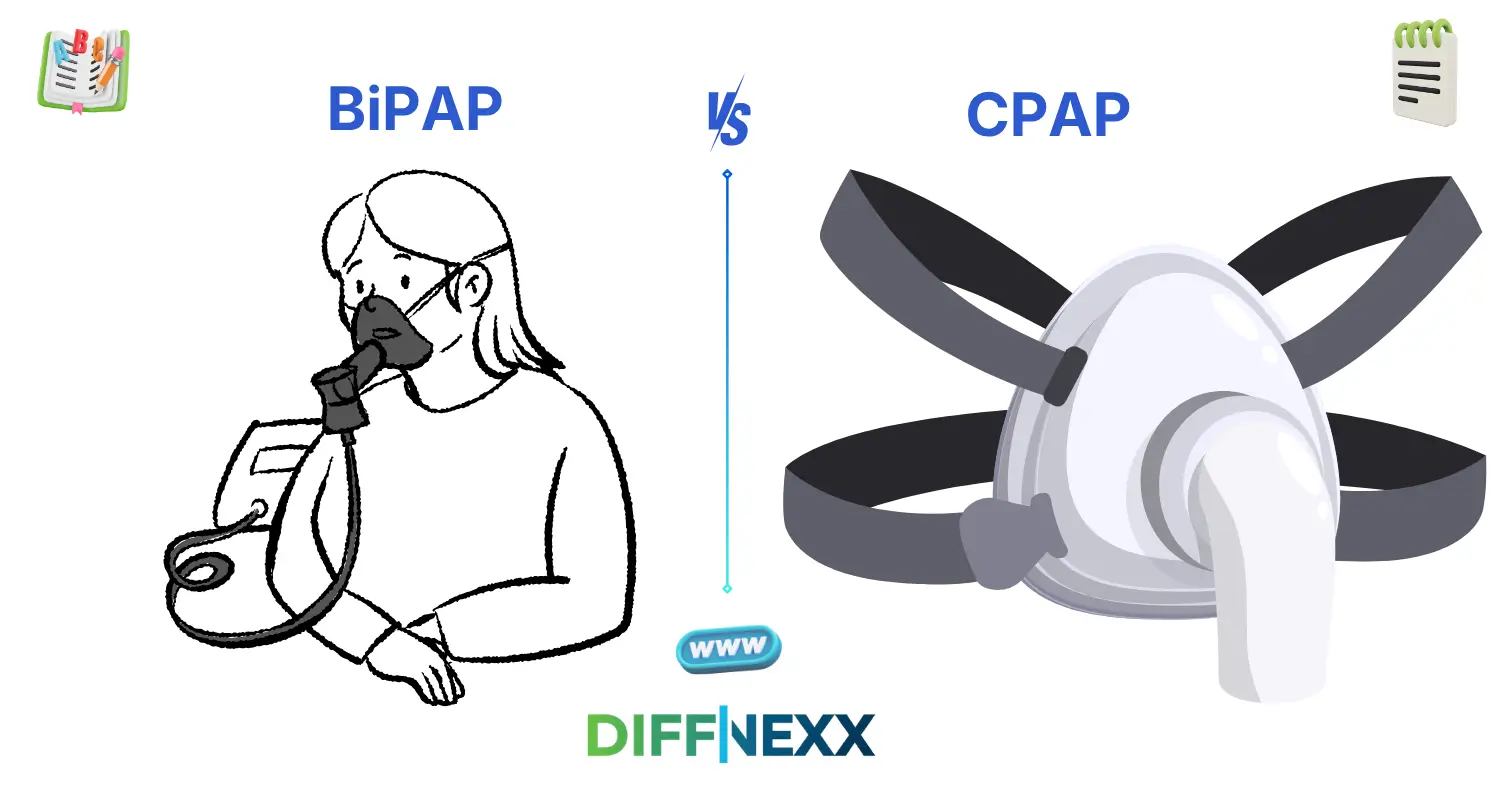
The difference between bipap and cpap often becomes important when someone is diagnosed with sleep apnea or breathing difficulty at night. A doctor suggests a machine, and confusion begins.
The difference between bipap and cpap lies in how they support breathing. One gives constant pressure, while the other adjusts pressure for easier breathing.
The difference between bipap and cpap is commonly discussed in hospitals, sleep clinics, and medical education because both devices look similar but work differently.
CPAP and BiPAP machines help patients breathe better during sleep. Let’s understand their real meaning in a simple and clear way.
🫁 Key Difference Between BiPAP and CPAP
CPAP delivers one steady air pressure, while BiPAP delivers two different pressure levels—one for breathing in and one for breathing out.
⚕️ Importance – Why Knowing the Difference Matters
Understanding this difference helps patients choose the right treatment for sleep apnea and breathing disorders.
Doctors and healthcare workers must clearly understand both machines to provide correct therapy and avoid complications.
For families and caregivers, knowing the difference improves care quality and ensures better sleep health support.
🧠 Real-world consequences of confusion
Using the wrong machine or incorrect settings can lead to discomfort, poor sleep, or ineffective breathing support.
🔊 Pronunciation Section
CPAP (Continuous Positive Airway Pressure)
US: /ˈsiːpæp/
UK: /ˈsiːpæp/
BiPAP (Bilevel Positive Airway Pressure)
US: /ˈbaɪpæp/
UK: /ˈbaɪpæp/
Now let’s move into how each device works in real life.
📚 Core Definitions
🫁 CPAP
CPAP is a machine that delivers constant air pressure to keep airways open during sleep. It is commonly used for sleep apnea patients. The tone is supportive and stabilizing.
- Example: A CPAP machine helps him sleep without breathing pauses.
🫁 BiPAP
BiPAP is a machine that provides two pressure levels, one for inhaling and one for exhaling. It is often used for more complex breathing conditions. The tone is more flexible and adaptive.
- Example: A BiPAP machine helps patients breathe comfortably at night.
📊 10 Clear Differences Between BiPAP and CPAP
1. Pressure Type
CPAP gives one constant pressure. BiPAP gives two different pressure levels.
- CPAP example: Steady air pressure throughout sleep.
- BiPAP example: Higher pressure in, lower pressure out.
2. Breathing Comfort
CPAP can feel strong for some users. BiPAP feels easier due to pressure change.
- CPAP: Some users feel air resistance.
- BiPAP: Breathing feels more natural.
3. Medical Use
CPAP is mainly for sleep apnea. BiPAP is for complex breathing disorders.
- CPAP: Sleep apnea treatment.
- BiPAP: COPD or severe breathing issues.
4. Exhalation Support
CPAP does not change pressure when exhaling. BiPAP reduces pressure for exhaling.
- CPAP: Same pressure always.
- BiPAP: Easier breathing out.
5. Machine Complexity
CPAP is simpler. BiPAP is more advanced.
- CPAP: Basic setup.
- BiPAP: Advanced settings.
6. Cost Factor
CPAP is usually cheaper. BiPAP is more expensive.
- CPAP: Affordable option.
- BiPAP: Higher cost due to features.
7. Patient Comfort Level
CPAP is effective but may feel strict. BiPAP feels more comfortable.
- CPAP: Fixed airflow.
- BiPAP: Flexible airflow.
8. Severity of Condition
CPAP is for mild to moderate cases. BiPAP is for severe cases.
- CPAP: Mild sleep apnea.
- BiPAP: Severe respiratory issues.
9. Usage Time
Both are used during sleep, but BiPAP may also be used during daytime in severe cases.
- CPAP: Night use only.
- BiPAP: Night or critical care use.
10. Adjustment Level
CPAP has limited settings. BiPAP allows more customization.
- CPAP: Fixed pressure setting.
- BiPAP: Adjustable inhalation/exhalation pressure.
🎯 Why Knowing the Difference Matters
Students in medical fields must understand both machines clearly. It helps in exams and clinical practice.
Healthcare professionals use this knowledge to choose correct respiratory therapy for patients.
For society, awareness improves patient care and reduces treatment errors in breathing disorders.
🧠 Real-world consequences of confusion
Wrong usage may cause discomfort, poor oxygen flow, or ineffective therapy, especially in sensitive patients.
🧠 Why People Get Confused
Many people confuse CPAP and BiPAP because both use masks and air pressure systems.
Their names sound similar and both are used for sleep-related breathing issues.
In informal discussions, people often say “sleep machine” without knowing the difference.
Medical complexity also adds to misunderstanding among non-experts.
🎭 Connotation & Emotional Tone
For CPAP
(Connotation = emotional meaning associated with a word)
- Positive: Stable, supportive treatment
- Negative: Can feel uncomfortable at first
- Neutral: Medical breathing support
Example: CPAP helps maintain steady breathing at night.
For BiPAP
- Positive: Comfortable and flexible support
- Negative: Used for serious conditions
- Neutral: Advanced breathing device
Example: BiPAP assists difficult breathing cases effectively.
🗣 Usage in Metaphors & Similes
- “Breathing like CPAP support” → steady and controlled
- “Breathing like BiPAP assistance” → adaptive and flexible
Example sentences:
- He sleeps like CPAP support keeps him stable.
- She breathes like BiPAP is helping every inhale.
📊 Comparison Table
| Feature | CPAP | BiPAP |
|---|---|---|
| Meaning | Single pressure machine | Dual pressure machine |
| Tone | Simple, steady | Advanced, flexible |
| Usage | Sleep apnea | Severe breathing issues |
| Context | Home sleep therapy | Clinical care |
| Formality | Standard | Medical advanced |
⚖️ Which Is Better in What Situation?
When to use CPAP
CPAP is best for mild to moderate sleep apnea. It is simple and effective for most patients.
When to use BiPAP
BiPAP is better for patients with severe breathing problems or difficulty exhaling against pressure.
Situational Clarity
Doctors decide based on condition severity and patient comfort needs.
Contextual Correctness
Using the right machine improves sleep quality and breathing support significantly.
📖 Literary or Cultural References
- The Sleep Solution (Book, W. Chris Winter, 2017)
- Awake: The Life of Yogananda (Documentary, USA, 2014)
- Medical documentaries on sleep apnea (Various countries, 2010s–2020s)
❓ FAQs
1. What is the main difference between CPAP and BiPAP?
CPAP gives constant air pressure, while BiPAP gives two pressure levels. This makes BiPAP more flexible for breathing support.
2. Which machine is easier to use?
CPAP is simpler to use because it has fewer settings. BiPAP is more advanced and needs medical adjustment.
3. Is BiPAP better than CPAP?
Not always. BiPAP is better for severe conditions, but CPAP is effective for common sleep apnea cases.
4. Can CPAP be used instead of BiPAP?
Only a doctor can decide. CPAP cannot replace BiPAP in severe breathing disorders.
5. Why do both machines look similar?
Both use masks and air pressure systems, but their internal pressure mechanisms are different.
🏁 Conclusion
The difference between bipap and cpap mainly lies in pressure delivery. CPAP gives constant airflow, while BiPAP adjusts pressure for comfort.
Understanding this difference is important for patients, students, and healthcare workers. It improves correct treatment decisions.
Both machines support breathing, but their usage depends on medical need and severity of condition.
Learning this topic helps avoid confusion and improves awareness of sleep health. Keep practicing such topics for clearer medical understanding.

Anton Reyes is a contributing writer at DiffNexx.com, where he explores meaningful differences in language, culture, and everyday concepts. With a background in creative nonfiction, Anton brings clarity and balance to complex comparisons. His writing helps readers understand subtle distinctions in words and ideas, making learning both insightful and engaging.