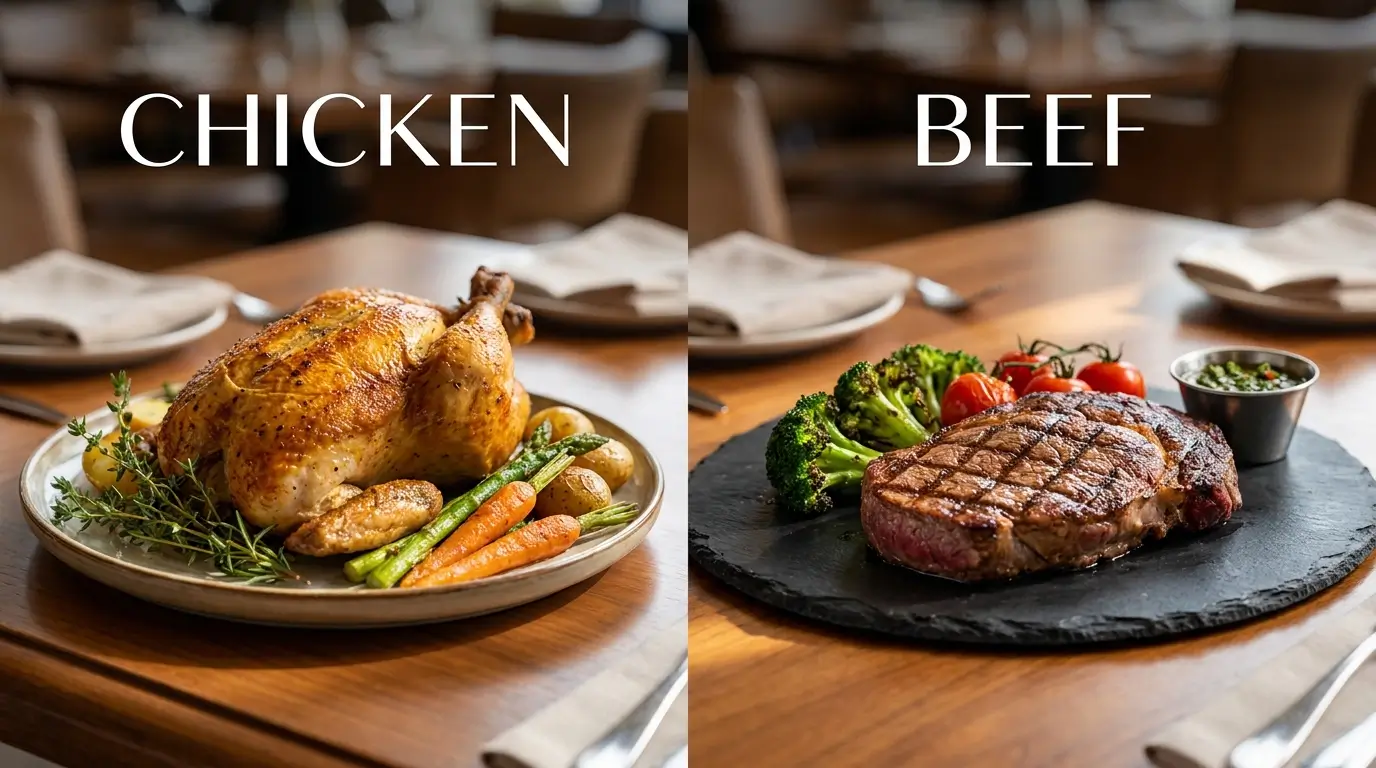
When you see “chicken or beef” on a menu, in a recipe, or in a food discussion, the question may look simple. But the choice can involve much more than taste. Chicken and beef differ in flavor, texture, cooking methods, nutrition, price, and the kinds of dishes where each works best.
People search for chicken or beef because they often want to know which meat is better for a certain meal, which has more protein, or which option is lighter. Others simply want to understand how the two foods compare before ordering at a restaurant.
The phrase chicken or beef does not describe two spellings of the same word. Instead, it compares two different meats. Chicken generally refers to the flesh of domesticated chickens, while beef refers to meat from adult domestic cattle.
Understanding chicken or beef can make everyday food choices easier. Whether you are writing about food, ordering dinner, planning a meal, or comparing recipes, knowing the practical difference helps you choose the right word and the right ingredient.
Quick Answer
Chicken is the meat of a chicken and is usually lighter in flavor and color. It is commonly used in dishes such as grilled chicken, fried chicken, chicken soup, curry, sandwiches, and stir-fries.
Beef is the meat of adult cattle. It usually has a richer, deeper flavor and is widely used for steaks, burgers, roasts, beef stew, meatballs, and many slow-cooked dishes. Merriam-Webster defines beef as the flesh of an adult domestic bovine, such as a steer or cow.
| Feature | Chicken | Beef |
|---|---|---|
| Animal | Chicken | Cattle |
| Meat type | Poultry | Red meat |
| Typical flavor | Mild | Rich and savory |
| Common texture | Tender, depending on cut | Firm to tender, depending on cut |
| Popular uses | Curry, soup, grilled dishes, sandwiches | Steak, burgers, roasts, stews |
| Word class | Noun | Noun |
| Pronunciation | “CHICK-en” | “BEEF” |
So, if you want a milder and more versatile meat, chicken is often the natural choice. If you want a stronger, richer meat flavor, beef may be better.
The Origin of Chicken or Beef
The words chicken and beef have very different histories.
The origin of “chicken”
Chicken is a noun when it refers to the bird or its meat. It can also be an adjective or verb in other contexts, but the food-related use is a noun.
Merriam-Webster traces the food noun to Middle English chiken, from Old English cicen, meaning a young chicken. Its first known use in this sense dates to before the 12th century.
The word has therefore been part of English for many centuries. Over time, chicken became the ordinary English word for both the domesticated bird and, in many contexts, its meat.
For example:
- We bought a chicken for dinner.
- She cooked chicken with rice.
- The restaurant serves grilled chicken.
The same noun can refer to the animal or the food, depending on context.
The origin of “beef”
Beef has a different linguistic path. Merriam-Webster traces it through Middle English from Anglo-French beof or bef, meaning ox or beef, with a connection to Latin bos, meaning cattle. Its first known English use as a noun is from the 13th century.
This history reflects an important feature of English vocabulary: words for animals and words for their meat sometimes developed along different linguistic paths.
Compare:
- cow → beef
- pig → pork
- sheep → mutton
- calf → veal
But chicken is different because chicken commonly serves as both the animal name and the name of the meat.
There is no British-versus-American spelling dispute between chicken and beef. Both varieties use the same spellings.
British English vs American English Spelling
There is no meaningful British English vs American English spelling difference for chicken or beef.
Both British and American English use:
- chicken
- beef
- chicken breast
- beef steak
- chicken soup
- beef burger
The words may appear in different food contexts because culinary habits and regional preferences can vary, but the spelling itself does not change.
For example:
| Expression | British English | American English |
|---|---|---|
| Chicken | chicken | chicken |
| Beef | beef | beef |
| Chicken breast | chicken breast | chicken breast |
| Beef steak | beef steak | beef steak |
| Chicken sandwich | chicken sandwich | chicken sandwich |
| Beef burger | beef burger | beef burger |
Some related food vocabulary does differ between British and American English. For example, burger is common in both varieties, while certain names for cuts or dishes may vary by region.
But it would be incorrect to claim that British English spells chicken or beef differently.
Pronunciation
The two words are also clearly different in pronunciation.
Chicken has two syllables and begins with the “ch” sound.
Beef has one syllable and begins with a “b” sound.
They are not homophones, so there is little risk of confusing them when speaking.
The main challenge is usually not pronunciation. It is knowing which word fits the food or animal being discussed.
Which Spelling Should You Use?
You do not need to choose between British and American spelling here.
Use chicken when referring to chicken meat or the chicken bird.
Use beef when referring to meat from adult cattle.
For American readers
Use the standard forms:
- chicken breast
- chicken wings
- ground chicken
- ground beef
- beef steak
- beef roast
For British and Commonwealth readers
The same spellings are correct:
- chicken breast
- chicken wings
- minced beef
- beef steak
- roast beef
The important regional differences are more likely to involve food terminology, not spelling.
For example, American English commonly uses ground beef, while British English commonly uses minced beef.
So if you are writing for a global audience, both chicken and beef are safe, standard spellings.
Common Mistakes with Chicken or Beef
Although chicken and beef are simple words, several mistakes can occur when learners use them.
1. Treating beef as the animal name
A cow is an animal. Beef is primarily the meat.
Incorrect:
I saw a beef in the field.
Better:
I saw a cow in the field.
Or:
We ate beef for dinner.
2. Using “beefs” for several cuts of meat
In normal food writing, beef is usually treated as an uncountable noun when referring to meat.
Natural:
We bought some beef.
Less natural in ordinary food contexts:
We bought three beefs.
However, beefs does have other dictionary uses, including as the plural of a different sense of beef, such as complaints.
3. Confusing chicken with poultry
Poultry is a broader term. It refers to domesticated birds kept for eggs or meat. Chicken is one type of poultry.
So:
Chicken is poultry.
But:
All poultry is chicken.
is incorrect.
4. Saying “a beef” when talking about food
When discussing meat, beef is normally uncountable.
Say:
I ordered beef.
Not:
I ordered a beef.
If you mean a specific dish, say:
I ordered a beef burger.
5. Assuming chicken always means white meat
Chicken includes different cuts, such as breast, thigh, drumstick, and wing. These parts can have different textures and fat levels.
Everyday Examples
The phrase chicken or beef appears naturally in many everyday situations.
In a restaurant
Would you like chicken or beef with your rice?
Here, the phrase presents two food choices.
In an email
Please let me know whether you prefer chicken or beef for the event meal.
This is a clear and polite way to ask someone about a meal preference.
In a recipe discussion
You can use chicken or beef in this recipe, depending on the flavor you want.
Here, chicken or beef introduces alternatives.
In social media
Chicken or beef tacos which one would you choose?
This style is common for casual food discussions and polls.
Within formal writing
The menu offers both chicken and beef dishes to accommodate different preferences.
In formal writing, chicken and beef is appropriate when both options are available rather than when the writer is asking the reader to choose one.
In everyday conversation
Do you want chicken or beef?
This is one of the simplest and most natural uses.
Chicken vs Beef: Taste, Texture, and Cooking
The difference between the two meats becomes clearer when you look at how they behave in the kitchen.
Flavor
Chicken generally has a mild flavor. This makes it useful with strong sauces, spices, marinades, and seasonings.
Beef tends to have a deeper and more pronounced savory flavor. The exact taste depends heavily on the cut, animal, fat content, aging, and cooking method.
Texture
Chicken texture varies by cut. Breast meat is relatively lean, while thighs are darker and often more tender and juicy.
Beef can range from very tender cuts, such as some steaks, to tougher cuts that benefit from long, slow cooking.
Cooking methods
Chicken works well with:
- Grilling
- Roasting
- Frying
- Baking
- Stir-frying
- Stewing
- Poaching
Beef works well with:
- Grilling
- Pan-searing
- Roasting
- Braising
- Stewing
- Slow cooking
- Broiling
The best choice depends on the specific cut, not simply whether the meat is chicken or beef.
Nutrition and Practical Choice
There is no universal winner between chicken and beef because nutrition depends on the cut, portion size, preparation method, and overall diet.
Chicken is often chosen as a lean protein option, especially when skinless cuts are used.
Beef can also provide substantial protein and important nutrients, and lean cuts can fit into many balanced diets.
Preparation matters. A grilled lean cut and a heavily fried or highly processed meat product are not nutritionally equivalent simply because they come from the same animal.
When comparing the two, consider:
- The cut
- The portion size
- Cooking method
- Added sauces or oils
- Your overall dietary needs
For a simple everyday meal, chicken may be attractive when you want a mild protein that takes on other flavors easily. Beef may be preferable when you want a stronger, more substantial flavor.
Comparison Table
| Category | Chicken | Beef |
|---|---|---|
| Source | Domestic chicken | Adult domestic cattle |
| General meat category | Poultry | Red meat |
| Flavor | Mild and versatile | Rich and savory |
| Common cuts | Breast, thigh, wing, drumstick | Rib, loin, chuck, brisket, round |
| Popular dish | Roast chicken | Roast beef |
| Fast cooking | Many cuts cook quickly | Tender cuts can cook quickly |
| Slow cooking | Useful for some dishes | Excellent for many tougher cuts |
| Common ground form | Ground chicken | Ground beef |
| Spelling in US English | Chicken | Beef |
| Spelling in UK English | Chicken | Beef |
| Part of speech | Noun | Noun |
FAQs
1. Is chicken healthier than beef?
Neither is automatically healthier in every situation. The nutritional difference depends on the cut, portion, cooking method, and the rest of the diet.
2. Is beef chicken?
No. Chicken comes from domesticated chickens, while beef comes from adult domestic cattle. They are completely different meats.
3. Is chicken or beef better for protein?
Both can provide substantial protein. The better choice depends on the specific cut, serving size, preparation, and your dietary goals.
4. Is chicken white meat and beef red meat?
Chicken is commonly classified as poultry and is often described as white meat, although chicken contains both lighter and darker meat. Beef is classified as red meat.
5. Do British people spell chicken or beef differently?
No. British and American English use the same spellings: chicken and beef.
6. Why is cow meat called beef?
The English word beef entered Middle English through Anglo-French beof/bef, with a deeper connection to Latin bos, meaning cattle.
7. Is “chicken or beef” grammatically correct?
Yes. Chicken or beef is a normal noun phrase used to present two food choices. For example: “Would you like chicken or beef?”
Conclusion
Chicken and beef are simple food words, but knowing their differences makes everyday English clearer. Chicken comes from poultry, while beef comes from adult cattle.
There is no British-American spelling conflict here. Both varieties use chicken and beef, so focus on meaning and context instead.
Whether you are writing a menu, email, essay, or social post, choose the word that matches the meat you mean. Practice makes it natural.
Keep using these words in daily conversations and writing. A little practice with real examples can make your English more confident and precise.

Aamer Shahzad is the founder of Diffnexx.com, a fast-growing educational platform focused on high-intent “difference between” topics. With over 8 years of experience in English language education and analytical writing, I specialize in breaking down complex “difference between” topics into clear, structured, and easy-to-understand explanations. Diffnexx.com is your go-to resource for enhancing English skills and writing with confidence.
I specializes in building search-optimized, research-driven comparison content designed for clarity, authority, and long-term digital asset value.







