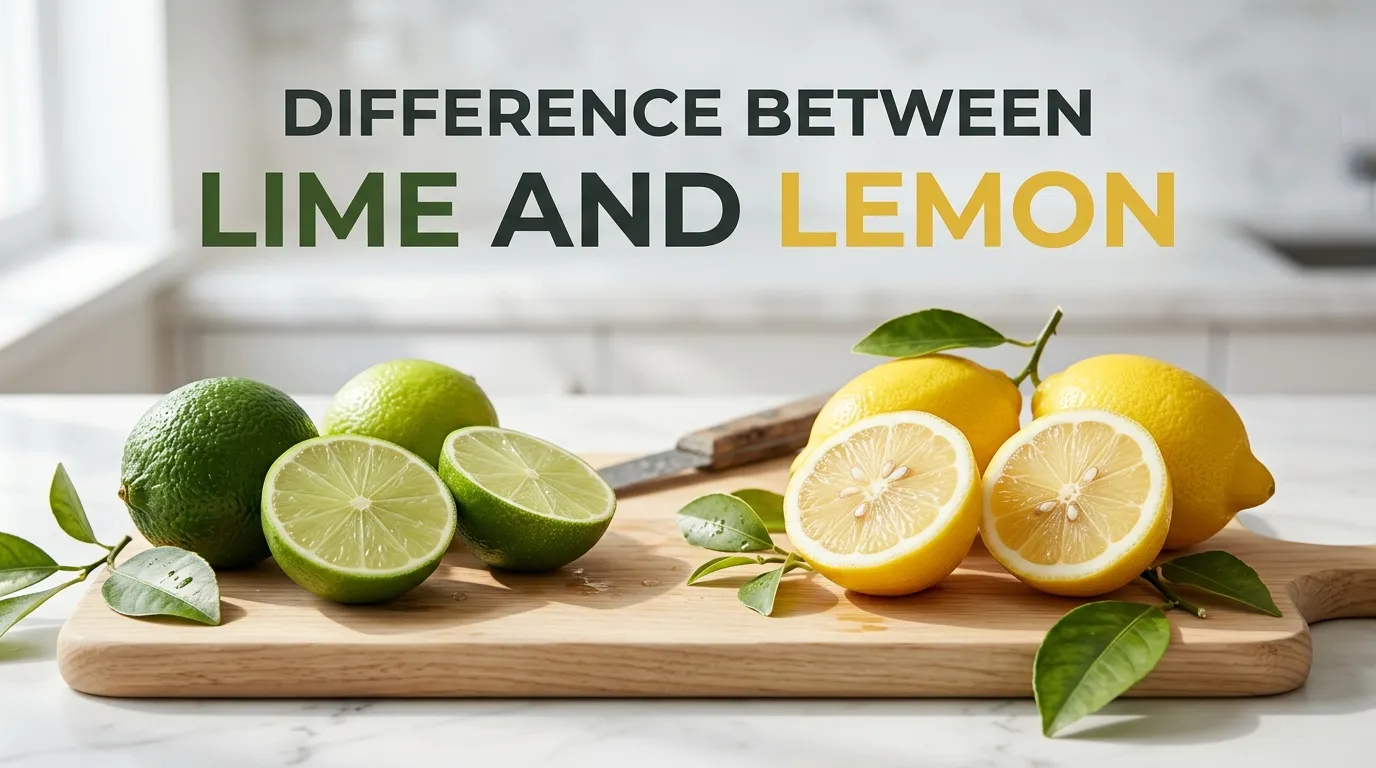
The main difference between lime and lemon is their color, flavor, size, and common culinary uses. Limes are typically small, green, and slightly more bitter, while lemons are usually larger, yellow, and have a bright, tangy flavor. Both fruits belong to the citrus family and are widely used in cooking, drinks, and household applications.
Understanding the difference between lime and lemon can help you choose the right fruit for recipes, beverages, and everyday use. Although they may look similar and provide comparable nutrients, their flavors can affect the taste of a dish in different ways.
Another important difference between lime and lemon is that not all varieties follow the same appearance or flavor profile. Some limes turn yellow when ripe, and some lemons can have a slightly greenish appearance. Therefore, color alone is not always enough to identify them.
In this guide, you’ll learn how limes and lemons compare in taste, nutrition, health benefits, varieties, and practical uses, so you can decide which one best suits your needs.
Lime vs. Lemon: Quick Comparison
| Feature | Lime | Lemon |
|---|---|---|
| Typical color | Green | Yellow |
| Average size | Usually smaller | Usually larger |
| Flavor | Tart, sometimes bitter or aromatic | Tart, bright, and often less bitter |
| Shape | Round or oval | Usually oval with tapered ends |
| Juice | Often aromatic and strongly acidic | Bright, acidic, and refreshing |
| Common uses | Mexican, Thai, and South Asian dishes | Baking, lemonade, sauces, and seafood |
| Vitamin C | Good source | Good source |
| Skin | Usually thin and green | Usually thicker and yellow |
| Common varieties | Persian lime, Key lime | Eureka lemon, Lisbon lemon, Meyer lemon |
| Culinary role | Adds sharp, distinctive citrus flavor | Adds bright citrus flavor and aroma |
Both fruits offer acidity and freshness, but their distinctive aromas and flavor profiles make them better suited to certain recipes.
What Is a Lime?
A lime is a citrus fruit known for its green skin, acidic juice, and distinctive aroma. Common varieties include Persian limes and Key limes. Limes are widely used in beverages, marinades, sauces, desserts, and savory dishes.
Although many limes are green when sold, their appearance and flavor vary by variety and maturity. Some types can turn yellow as they ripen.
Common Types of Limes
Persian Lime
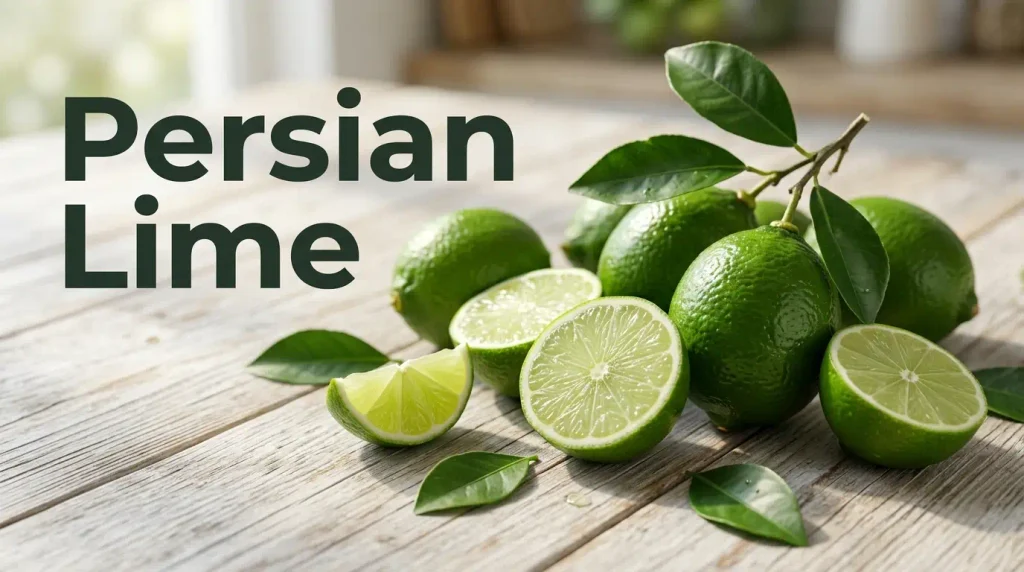
Persian limes are relatively large, usually seedless or nearly seedless, and have a tart flavor. They are common in grocery stores and work well in drinks, dressings, and marinades.
Key Lime
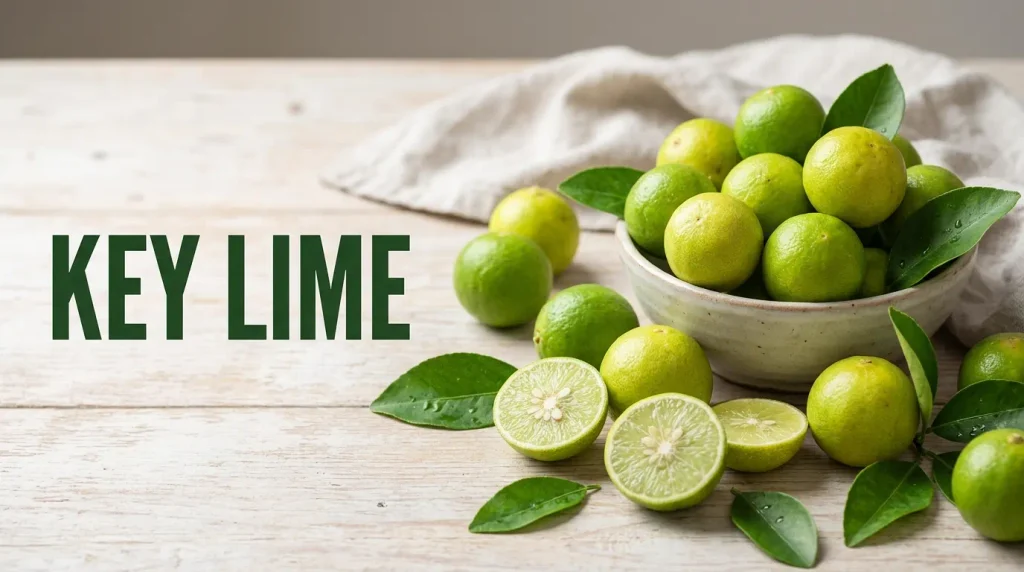
Key limes are smaller than Persian limes and have an intense, aromatic flavor. Their juice is traditionally used in Key lime pie and other desserts.
Benefits of Limes
Limes offer several nutritional and culinary benefits:
- Vitamin C: They provide vitamin C, which supports normal immune function and collagen production.
- Flavor enhancement: Their acidic juice brightens the flavor of food without requiring additional salt.
- Low calorie content: Fresh lime juice can add flavor to meals and drinks with relatively few calories.
- Versatility: Lime juice and zest work in beverages, salads, marinades, sauces, and desserts.
Limitations of Limes
Limes also have a few drawbacks:
- Their sharp acidity may aggravate acid reflux symptoms in some people.
- Frequent exposure to acidic juice can contribute to tooth enamel erosion.
- Some varieties produce relatively little juice because of their small size.
- Their strong flavor may overpower delicate recipes if too much is added.
Limes are nutritious fruits, but they are not a cure for illness or a substitute for a balanced diet.
What Is a Lemon?
A lemon is another popular citrus fruit, typically recognized by its yellow skin, oval shape, and tart juice. It is commonly used in lemonade, baked goods, seafood, sauces, salad dressings, and tea.
Lemons are valued for their juice and fragrant peel. The outer yellow layer, called the zest, contains aromatic oils that can add citrus flavor to recipes without introducing as much acidity as the juice.
Common lemons include Eureka, Lisbon, and Meyer varieties. Meyer lemons are generally sweeter and less sharply acidic than conventional lemons.
Common Types of Lemons
Eureka Lemon

Eureka lemons are a common commercial variety with yellow skin, juicy flesh, and a pronounced tart flavor. They are suitable for everyday cooking, juice, and baking.
Lisbon Lemon

Lisbon lemons are another familiar variety with acidic juice and a traditional lemon flavor. They are useful for cooking, drinks, and general household food preparation.
Meyer Lemon

Meyer lemons are usually rounder, with thinner skin and a sweeter, less acidic flavor than standard lemons. They are especially useful in desserts, sauces, and recipes that benefit from a milder citrus taste.
Benefits of Lemons
Lemons provide several practical and nutritional benefits:
- Vitamin C: Lemon juice contributes vitamin C to the diet.
- Cooking versatility: It works in sweet and savory dishes, including fish, salads, cakes, and sauces.
- Flavor balance: Lemon juice can balance sweetness and add brightness to rich foods.
- Useful zest: Lemon peel adds fragrance to baked goods, dressings, and marinades.
Limitations of Lemons
- Their acidity can aggravate reflux or stomach discomfort in susceptible individuals.
- Frequent or prolonged contact with lemon juice can damage tooth enamel.
- Their strong sourness may require sweetening when making beverages.
- Thick-skinned or lightweight lemons may yield less juice than expected.
The Biggest Difference Between Lime and Lemon
The biggest difference between lime and lemon is their typical flavor profile and how they are used in recipes.
Limes often have a sharper, more distinctive aroma that complements spicy foods, fresh herbs, and bold savory flavors. Lemons generally provide a familiar bright citrus flavor that works especially well in lemonade, baked goods, seafood, and sauces.
Their differences become clearer in everyday examples:
- Making guacamole: Lime juice is a traditional choice because its flavor complements avocado, cilantro, and chili.
- Making lemonade: Conventional lemons are usually the preferred option because they provide the classic lemonade flavor.
- Making a citrus marinade: Either fruit can work, depending on the cuisine and desired flavor.
- Baking a tart: Lemon is useful for traditional lemon desserts, while Key lime is ideal for Key lime pie.
These are preferences rather than strict rules. Either fruit can be substituted for the other in many recipes, although the final flavor may change.
Lime vs. Lemon: Nutrition and Vitamin C
Both fruits provide vitamin C and other citrus compounds. However, their nutritional content varies according to variety, serving size, and whether you consume the juice or the whole fruit.
| Nutritional feature | Lime | Lemon |
|---|---|---|
| Vitamin C | Good source | Good source |
| Calories | Low | Low |
| Carbohydrates | Relatively low | Relatively low |
| Fiber | Present mainly in pulp | Present mainly in pulp |
| Fat | Very little | Very little |
| Natural acidity | Generally high | Generally high |
It is not accurate to assume that one fruit is always more nutritious than the other. The comparison depends on the amount consumed and the particular varieties being compared.
For the best nutritional benefit, consider using fresh juice alongside the pulp or zest where appropriate, rather than relying entirely on sweetened bottled beverages.
Which Has More Vitamin C?
Both lemons and limes contain vitamin C, but the exact amount varies by fruit and serving size. You should not assume that a lime always contains more vitamin C than a lemon, or vice versa.
If vitamin C intake is your main concern, compare nutrition information for the actual serving you plan to consume. Neither fruit needs to be treated as a miracle food to be a useful part of a healthy diet.
Lime vs. Lemon: Which Is Better for Cooking?
Neither fruit is universally better. The right choice depends on the flavor you want and the type of dish you’re preparing.
| Food or Drink | Better Choice | Why |
|---|---|---|
| Lemonade | Lemon | Provides the classic lemonade flavor |
| Guacamole | Lime | Complements avocado and fresh herbs |
| Fish and seafood | Either | Both add acidity and freshness |
| Key lime pie | Key lime | Provides its characteristic flavor |
| Lemon cake | Lemon | Works well in cake batter, frosting, and zest |
| Tacos and salsa | Lime | Complements spicy and savory ingredients |
| Salad dressing | Either | Both provide acidity and citrus aroma |
| Tea | Lemon | A familiar choice for hot and iced tea |
| Marinades | Either | The choice depends on the recipe’s flavor profile |
Can You Substitute Lime for Lemon?
Yes. In many recipes, lime juice can replace lemon juice, and lemon juice can replace lime juice in similar quantities as a starting point.
However, the substitution may change the final flavor. Lime can give a dish a sharper, more aromatic taste, while lemon can create a brighter, more familiar citrus profile.
For baking, be especially careful when a recipe depends on acidity for a chemical reaction or a specific texture. Follow the original recipe when precision matters.
Lime vs. Lemon for Health
Both fruits can contribute to a balanced diet, and neither is automatically healthier than the other.
Which Is Better for Vitamin C?
Both provide vitamin C, which helps support normal immune function, collagen formation, and iron absorption. The amount you obtain depends on the fruit, its variety, and the quantity consumed.
Which Is Better for Digestion?
There is no universal winner. Both fruits are acidic, and their juice may make certain foods more appealing, but neither should be considered a proven treatment for digestive problems.
People who experience acid reflux may find that citrus fruits trigger symptoms. In that case, reducing or avoiding the fruit that causes discomfort may be more useful than switching from lime to lemon.
Can Lime or Lemon Damage Your Teeth?
Yes. Frequent exposure to acidic fruit juices can contribute to tooth enamel erosion. The American Dental Association identifies acidic foods and beverages as potential contributors to erosive tooth wear.
To reduce exposure, avoid sipping acidic drinks continuously throughout the day. Rinsing your mouth with plain water after consuming citrus juice can also help.
Common Mistakes to Avoid
1. Assuming All Limes Are Green
Most familiar limes are green when sold, but some varieties change color as they ripen. Use the fruit’s variety and other characteristics rather than relying on color alone.
2. Treating Lime and Lemon as Identical
Both fruits are acidic, but their aromas and flavors differ. Consider the intended flavor before substituting one for the other.
3. Assuming One Always Contains More Vitamin C
Vitamin C content varies with fruit variety, serving size, and preparation. Avoid making broad nutritional comparisons without reliable data.
4. Ignoring the Difference Between Juice and Zest
Juice adds acidity, while zest contributes aromatic oils and citrus flavor. They serve different purposes in cooking and should not automatically be substituted for each other.
5. Believing Citrus Juice Cures Illness
Limes and lemons supply useful nutrients, but they do not cure infections or replace appropriate medical treatment. Include them as part of a balanced diet instead.
Frequently Asked Questions
What is the main difference between lime and lemon?
Limes are typically smaller and green, with a distinctive, sometimes bitter citrus flavor. Lemons are usually larger and yellow, with a bright, tart flavor. Both are acidic citrus fruits used in cooking and beverages.
Is lime more sour than lemon?
Not always. The perceived sourness depends on the variety, acidity, ripeness, and aroma. Some limes taste particularly sharp, while some lemons are equally or more acidic.
Which is healthier, lime or lemon?
Neither is universally healthier. Both provide vitamin C and other citrus compounds. The nutritional difference depends on the variety and amount consumed.
Can I use lime instead of lemon in a recipe?
Yes, in many recipes. Lime can replace lemon in drinks, dressings, marinades, and some desserts, although the flavor will change. For baking, follow the recipe carefully if acidity affects texture or rising.
Which fruit has more vitamin C?
The answer depends on the varieties and serving sizes being compared. Both are sources of vitamin C, so avoid assuming that one always provides more.
Are lime and lemon the same fruit?
No. They are different types of citrus fruit, although they belong to the same broader citrus group. Their typical appearance, flavor, and culinary applications differ.
Which is better for weight loss?
Neither fruit independently causes weight loss. Unsweetened lime or lemon juice can add flavor to water and meals with relatively few calories, but overall dietary habits and energy balance matter more.
Can I drink lime or lemon water every day?
Many people can include citrus water in their daily routine. However, frequent exposure to acidic drinks may affect tooth enamel, and citrus may trigger reflux symptoms in some people. Plain water is also an excellent everyday choice.
Final Takeaway
The difference between lime and lemon comes down to their typical appearance, flavor, and culinary uses. Limes are usually green, smaller, and known for their distinctive flavor, while lemons are typically yellow, larger, and widely used in lemonade, baking, and seafood dishes.
Both fruits provide vitamin C and can add freshness to a balanced diet. Choose lime for recipes that benefit from its characteristic sharp aroma, and choose lemon for classic lemon-flavored drinks, desserts, and sauces.
Ultimately, the best fruit depends on your recipe and personal preference. In many dishes, either one will work, but the final flavor will be slightly different.
External Sources
- University of Arizona Cooperative Extension — Low Desert Citrus Varieties
- University of Florida IFAS Extension — Lemon Growing in the Florida Home Landscape
- North Carolina State University Extension — Citrus × limon (Lemon)
- National Institutes of Health, Office of Dietary Supplements — Vitamin C: Fact Sheet for Health Professionals
- American Dental Association — Nutrition and Oral Health

Aamer Shahzad is the founder of Diffnexx.com, a fast-growing educational platform focused on high-intent “difference between” topics. With over 8 years of experience in English language education and analytical writing, I specialize in breaking down complex “difference between” topics into clear, structured, and easy-to-understand explanations. Diffnexx.com is your go-to resource for enhancing English skills and writing with confidence.
I specializes in building search-optimized, research-driven comparison content designed for clarity, authority, and long-term digital asset value.