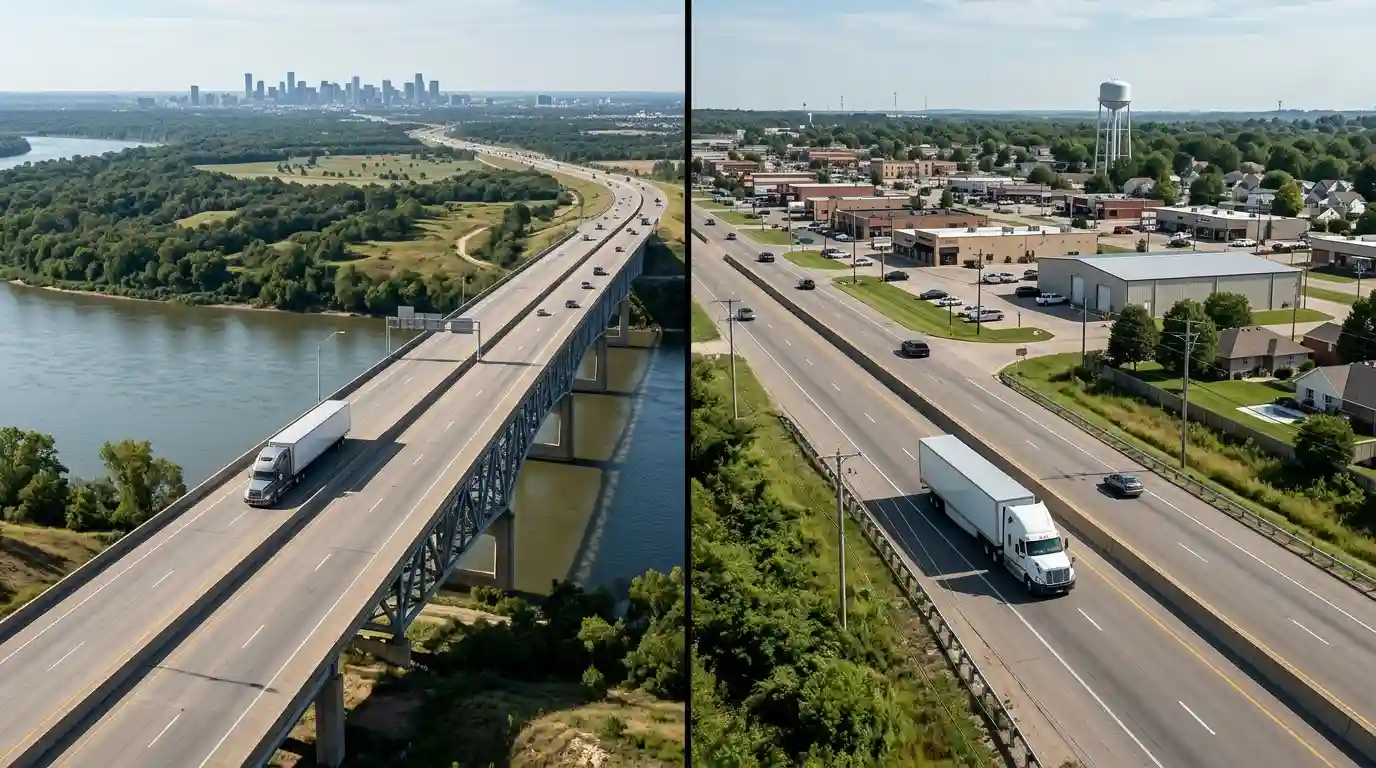
The main difference between interstate and intrastate is that interstate generally involves activities, commerce, or transportation connected to more than one state, while intrastate refers to activities that take place within a single state without qualifying as interstate commerce. These terms are commonly used in trucking, shipping, business operations, transportation regulations, and legal discussions in the United States.
Understanding the difference between interstate and intrastate is particularly important for commercial truck drivers, transportation companies, business owners, and anyone involved in moving goods across state lines. The classification can affect which registration requirements, safety rules, and regulatory authorities apply to a particular operation.
For example, a trucking company transporting furniture from Texas to Oklahoma is generally engaged in interstate commerce. A company delivering furniture from one city to another within Texas may be engaged in intrastate commerce, provided the delivery is not part of a larger interstate shipment.
However, crossing a state border is not the only factor that matters. Under federal motor carrier regulations, a trip that stays within one state can still qualify as interstate commerce if it forms part of a shipment originating or terminating outside that state. Understanding this distinction helps drivers and businesses determine their responsibilities more accurately.
Quick Comparison: Interstate vs. Intrastate
The following table summarizes the major differences between interstate and intrastate activities, especially in transportation and commercial trucking.
| Feature | Interstate | Intrastate |
|---|---|---|
| Basic meaning | Involving more than one state or qualifying interstate commerce | Taking place within one state without qualifying as interstate commerce |
| Geographic scope | Across state lines or part of an interstate movement | Within a single state |
| Common example | Shipping goods from California to Nevada | Delivering goods between two cities in California |
| Transportation | May involve interstate freight or passenger movement | Generally involves local or in-state transportation |
| Regulatory oversight | Applicable federal and state rules | Applicable state rules and any relevant federal requirements |
| Trucking requirements | May require federal operating authority, registration, or compliance depending on the operation | May require state permits, registration, and compliance with state-specific rules |
| Route | May cross state borders or remain within one state | Usually stays within one state |
| Shipment origin and destination | May be in different states or part of a broader interstate shipment | Generally originates and ends within the same state |
| Common users | Long-haul truckers, interstate carriers, national businesses | Local delivery companies, regional service providers, in-state carriers |
| Main consideration | The nature and scope of the movement | Whether the activity is entirely intrastate under applicable definitions |
The most important point is that interstate and intrastate classifications depend on the nature of the activity, not just the physical route. Specific requirements vary according to the type of business, vehicle, cargo, and applicable law.
What Is Interstate?
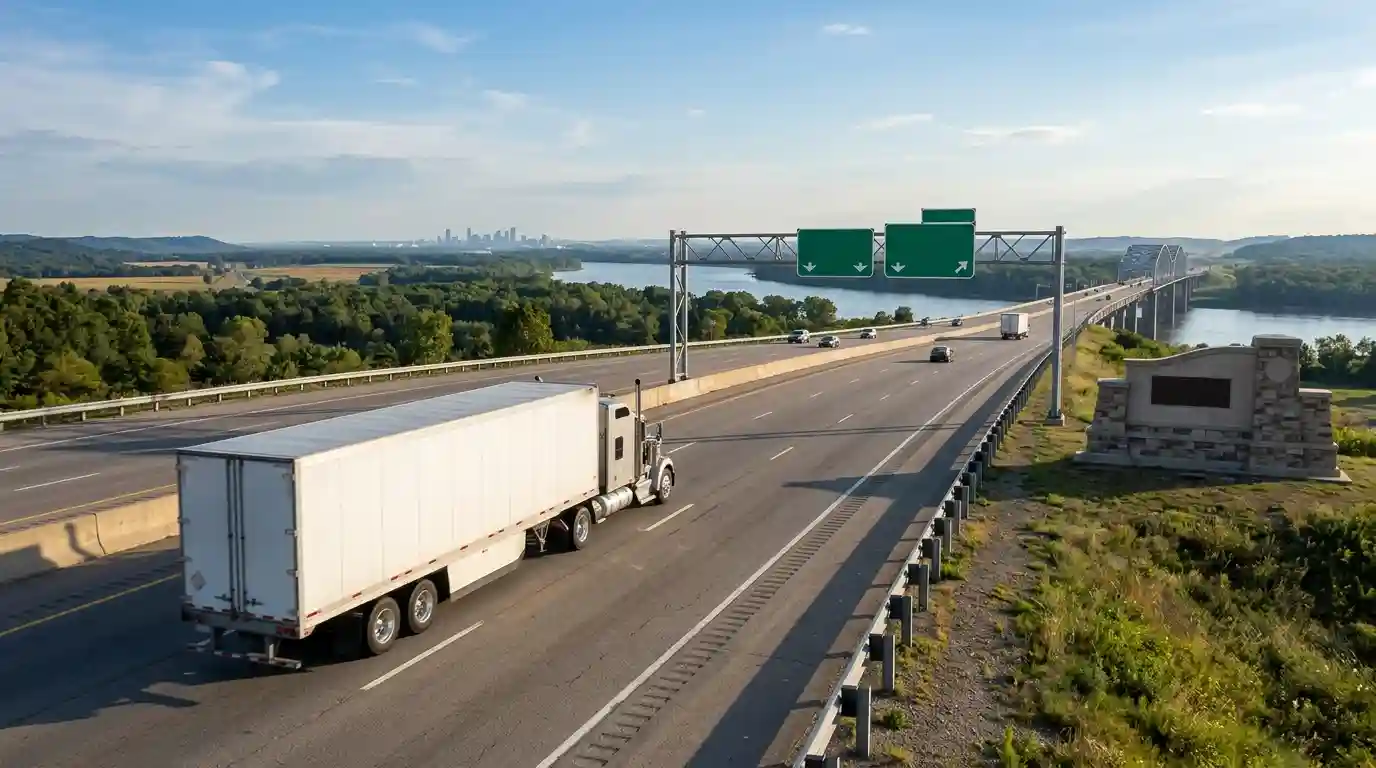
Interstate refers to activities that cross state boundaries or involve commerce connected to different states. In the United States, the term is especially important in trucking, freight transportation, passenger services, and business transactions.
In commercial transportation, interstate commerce is not limited to vehicles physically crossing state lines. The movement of goods, passengers, or services may qualify as interstate even when the vehicle remains within one state for a particular part of the journey.
How Does Interstate Commerce Work?
Interstate commerce typically involves a movement between states or a shipment that is part of a larger interstate transaction.
For example, a manufacturer in Ohio sells equipment to a customer in Pennsylvania. A carrier transports the equipment from the manufacturer’s facility to the customer’s warehouse. Because the shipment crosses state lines, it generally qualifies as interstate commerce.
The process may involve:
- Coordinating shipments between states.
- Complying with applicable federal transportation requirements.
- Obtaining the necessary registrations or operating authority.
- Maintaining required vehicle and driver documentation.
- Following applicable safety, insurance, and cargo regulations.
The precise obligations depend on the operation. Not every interstate business activity requires the same licenses or permits.
Benefits of Interstate Operations
Interstate transportation and commerce provide several advantages:
- Larger markets: Businesses can reach customers across state boundaries.
- Broader customer bases: Companies can sell products and provide services to more locations.
- Expanded shipping networks: Carriers can connect manufacturers, warehouses, retailers, and consumers.
- Business growth: Companies can explore new markets and establish regional or national operations.
- Supply chain flexibility: Businesses can obtain products and materials from suppliers in different states.
Limitations of Interstate Operations
Interstate operations can also create challenges:
- More complex regulatory and documentation requirements.
- Higher fuel, travel, and vehicle maintenance expenses for long-distance transportation.
- Greater coordination needs across multiple jurisdictions.
- Additional scheduling challenges due to traffic, weather, and delivery distances.
- Potential requirements for federal registration or operating authority, depending on the activity.
Common Types of Interstate Activities
Interstate activities can take several forms.
| Type | Example |
|---|---|
| Interstate trucking | Transporting goods from Arizona to Utah |
| Interstate passenger transportation | Operating a bus service between two states |
| Interstate shipping | Sending commercial products from one state to another |
| Interstate business transactions | Selling and shipping products to customers in another state |
| Interstate logistics | Moving freight through a network of warehouses across multiple states |
These examples illustrate common uses of the term. The legal classification of a particular transaction depends on its circumstances and the applicable rules.
What Is Intrastate?
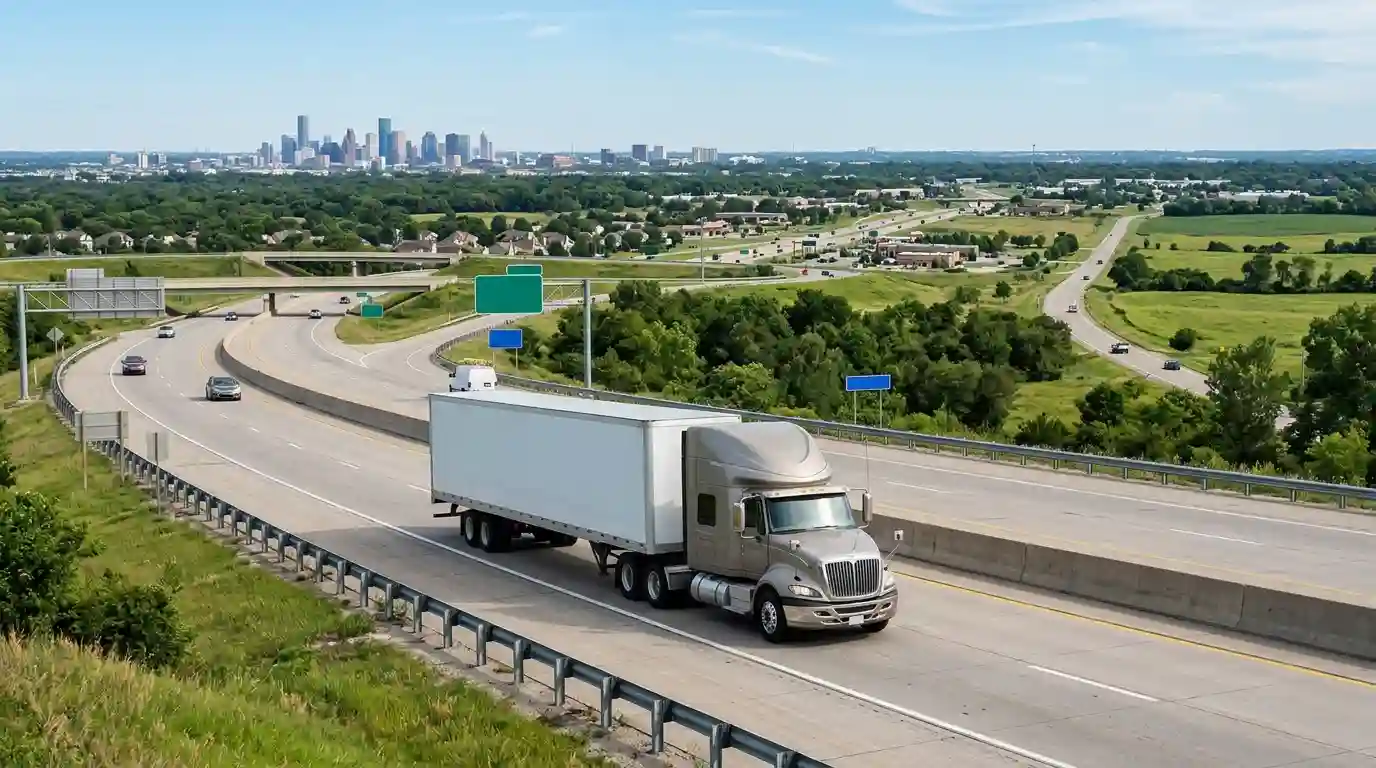
Intrastate refers to activities that take place within a single state and do not meet the applicable definition of interstate commerce.
In trucking, intrastate commerce generally involves transporting goods or passengers entirely within one state as an independent, in-state movement rather than as part of a broader interstate shipment.
For example, a delivery company transports groceries from a warehouse in Dallas to stores in Austin, Texas. If the transportation is genuinely intrastate and is not part of an interstate movement, it may be classified as intrastate commerce.
How Does Intrastate Commerce Work?
Intrastate operations generally focus on transportation, business activities, or services within one state’s boundaries.
A company conducting intrastate trucking may need to:
- Register its vehicles according to state requirements.
- Obtain any required state permits or operating authority.
- Follow applicable state transportation and safety rules.
- Maintain required driver and vehicle records.
- Comply with relevant insurance and cargo requirements.
State rules differ, so companies should check the requirements of the state where they operate.
An important distinction is that remaining within state boundaries does not automatically make a trip intrastate. If the shipment forms part of an interstate movement, federal motor carrier rules may apply.
Benefits of Intrastate Operations
Intrastate activities can offer practical advantages for businesses that serve local or regional markets.
- Shorter delivery distances: Local routes may reduce travel time and fuel consumption.
- Simpler route planning: Operations within one state can be easier to coordinate.
- Local market expertise: Businesses can build stronger relationships with nearby customers and suppliers.
- Regional specialization: Companies can focus on particular communities or service areas.
- Potentially fewer cross-border administrative tasks: Operations may avoid certain requirements associated with crossing state lines, although state regulations still apply.
These benefits are not guaranteed. Traffic, state rules, business size, and delivery requirements can significantly affect costs and complexity.
Limitations of Intrastate Operations
Intrastate operations also have limitations:
- A business may have a smaller geographic customer base.
- Growth opportunities may be limited if the company serves only one state’s market.
- State-specific licensing and safety requirements can still be demanding.
- Local demand may fluctuate with regional economic conditions.
- Expanding into other states can require additional registrations, permissions, and operational planning.
Common Types of Intrastate Activities
| Type | Example |
|---|---|
| Intrastate trucking | Moving furniture between cities within one state |
| Local freight delivery | Delivering supplies from an in-state warehouse to local businesses |
| Intrastate passenger transport | Providing qualifying passenger services within one state |
| Regional distribution | Supplying stores across a single state |
| Local service operations | Providing commercial services exclusively within one state |
Whether an activity qualifies as intrastate depends on more than the location of the vehicle or business. The overall movement and applicable legal definitions matter.
Difference Between Interstate and Intrastate in Trucking
Trucking is one of the areas where the distinction has the most practical consequences.
Interstate and intrastate trucking can involve similar vehicles, cargo, and routes. The main difference is the legal nature of the transportation movement and the rules that apply to it.
Interstate Trucking
Interstate trucking may involve:
- Transporting cargo across state lines.
- Carrying goods within one state as part of an interstate shipment.
- Transporting freight that originates or terminates outside the state.
- Operating under applicable federal and state motor carrier requirements.
For example, a truck transports a shipment from New York to New Jersey. This is generally an interstate movement.
Intrastate Trucking
Intrastate trucking generally involves transportation that begins and ends within the same state and is not part of an interstate movement.
For example, a carrier delivers construction materials from one warehouse in Florida to a building site elsewhere in Florida. If the shipment is an independent in-state movement, it may qualify as intrastate commerce.
Do Interstate and Intrastate Truckers Follow Different Rules?
Yes, the applicable requirements can differ. Interstate commercial motor carrier operations may be subject to federal rules administered by the Federal Motor Carrier Safety Administration (FMCSA), alongside relevant state laws.
Intrastate carriers are generally subject to state requirements. However, states may adopt rules similar to federal regulations, and some federal requirements can apply depending on the activity, vehicle, cargo, or other circumstances.
Drivers should not assume that intrastate operations are automatically exempt from federal requirements or that interstate operations always require precisely the same credentials.
Practical Comparison: When Should You Choose Interstate or Intrastate?
The appropriate classification depends on the actual business activity, not simply which option seems easier.
| Situation | Likely Classification | Key Consideration |
|---|---|---|
| A truck carries a shipment from Ohio to Indiana | Interstate | The shipment crosses state lines |
| A truck delivers independently sourced goods between cities in Ohio | Intrastate | Confirm that the movement is not part of an interstate shipment |
| A truck moves imported goods from a port to a warehouse in the same state | Potentially interstate | The broader shipment and transportation arrangement matter |
| A passenger bus operates between two states | Interstate | Applicable passenger carrier rules must be considered |
| A delivery company serves local customers within one state | Often intrastate | Confirm the nature of each shipment |
| A carrier makes an in-state delivery that is one leg of an out-of-state shipment | Potentially interstate | The shipment’s overall movement matters |
Example 1: A Small Delivery Business
Suppose a company delivers office furniture exclusively to customers within Georgia.
If its shipments are independent in-state movements, its operations may qualify as intrastate. The company should review Georgia’s registration, licensing, insurance, and safety requirements.
If it begins transporting furniture to customers in Alabama, its operations may involve interstate commerce and additional federal requirements.
Example 2: A Long-Distance Truck Driver
A driver picks up a shipment in Illinois and delivers it to Wisconsin. This is generally interstate transportation because the cargo crosses state lines.
Even if the driver later performs a delivery entirely within Illinois, that trip could still be considered interstate if it forms part of a larger shipment originating or terminating outside Illinois.
The driver and carrier should classify the operation based on the actual shipment and applicable regulations.
Example 3: A Regional Distribution Center
A retailer operates a warehouse in North Carolina and distributes products to stores throughout the state.
Some deliveries may qualify as intrastate commerce. However, if a particular load is part of a continuous shipment originating in another state, it may qualify as interstate commerce even when the truck’s immediate route remains within North Carolina.
The retailer and carrier should examine shipping arrangements, destinations, and the nature of the movement before determining the applicable requirements.
Common Mistakes to Avoid
Understanding the difference between interstate and intrastate helps prevent compliance errors. Here are five common mistakes and ways to avoid them.
1. Assuming Every In-State Trip Is Intrastate
A truck may remain within one state while carrying goods that are part of an interstate shipment.
How to avoid it: Review the shipment’s origin, destination, and overall transportation arrangement rather than looking only at the vehicle’s route.
2. Believing Interstate Commerce Always Requires Crossing a State Border
Interstate commerce can include an in-state segment of a broader interstate movement.
How to avoid it: Evaluate the nature of the shipment and the applicable federal definition.
3. Assuming Intrastate Operations Have No Regulations
Intrastate carriers may still need state permits, registrations, insurance, and safety compliance.
How to avoid it: Check the relevant state’s transportation agency requirements before starting operations.
4. Confusing Interstate Commerce With Interstate Travel
A person crossing a state line for personal reasons is not automatically engaged in interstate commerce. The context and purpose of the activity matter.
How to avoid it: Distinguish ordinary travel from transportation or commercial activity subject to specific legal definitions.
5. Choosing a Classification Based Only on Convenience
Selecting intrastate status simply because it appears to involve fewer requirements can create compliance risks.
How to avoid it: Base the classification on the facts of the operation and consult a qualified transportation compliance professional when the circumstances are unclear.
Frequently Asked Questions
1. What is the main difference between interstate and intrastate?
Interstate generally involves activities crossing state boundaries or forming part of interstate commerce. Intrastate refers to activities within one state that do not qualify as interstate commerce under the applicable definition.
2. Is interstate the same as out of state?
Not exactly. Interstate often involves out-of-state movement, but a shipment can qualify as interstate commerce even when a particular transportation segment stays within one state.
3. What is an example of intrastate commerce?
A delivery company transporting independently shipped goods from a warehouse in Houston to a customer in San Antonio may be engaged in intrastate commerce, provided the movement is not part of an interstate shipment.
4. What is an example of interstate commerce?
A trucking company transporting commercial products from California to Arizona is a straightforward example of interstate commerce.
5. Do intrastate truck drivers need a CDL?
Some intrastate commercial drivers must hold a Commercial Driver’s License (CDL), depending on vehicle characteristics and applicable state and federal requirements. Intrastate status does not automatically eliminate CDL requirements.
6. Do interstate truck drivers need a DOT number?
Many interstate commercial motor carriers must obtain a U.S. Department of Transportation (USDOT) number, but exemptions and specific requirements depend on the operation. Businesses should confirm which registration rules apply to their vehicles and activities.
7. Can a truck operate in both interstate and intrastate commerce?
Yes. A carrier may perform both types of transportation. The applicable classification and compliance requirements should be determined for the relevant operations, and certain driver self-certification rules may require interstate classification when a driver operates in both categories.
8. Who regulates interstate and intrastate trucking?
The FMCSA administers applicable federal motor carrier safety regulations, while state transportation and licensing agencies enforce relevant state requirements. Other federal or state authorities may also have jurisdiction depending on the activity.
Conclusion:
The difference between interstate and intrastate primarily concerns the scope and legal nature of an activity. Interstate commerce involves movement across state boundaries or transportation that forms part of a broader interstate shipment. Intrastate commerce generally involves independent commercial activity within a single state.
For trucking companies, drivers, and business owners, understanding this distinction is important because it can affect registration, licensing, safety requirements, and operating authority.
The easiest way to remember the difference is that interstate commerce can involve more than the physical route a vehicle takes, while intrastate commerce is limited to qualifying in-state activity.
Before classifying a shipment or choosing an operating status, review the full transportation arrangement and the applicable requirements. When a situation is unclear, consult the relevant state agency or a qualified compliance professional.
External Source

Anton Reyes is a contributing writer at DiffNexx.com, where he explores meaningful differences in language, culture, and everyday concepts. With a background in creative nonfiction, Anton brings clarity and balance to complex comparisons. His writing helps readers understand subtle distinctions in words and ideas, making learning both insightful and engaging.