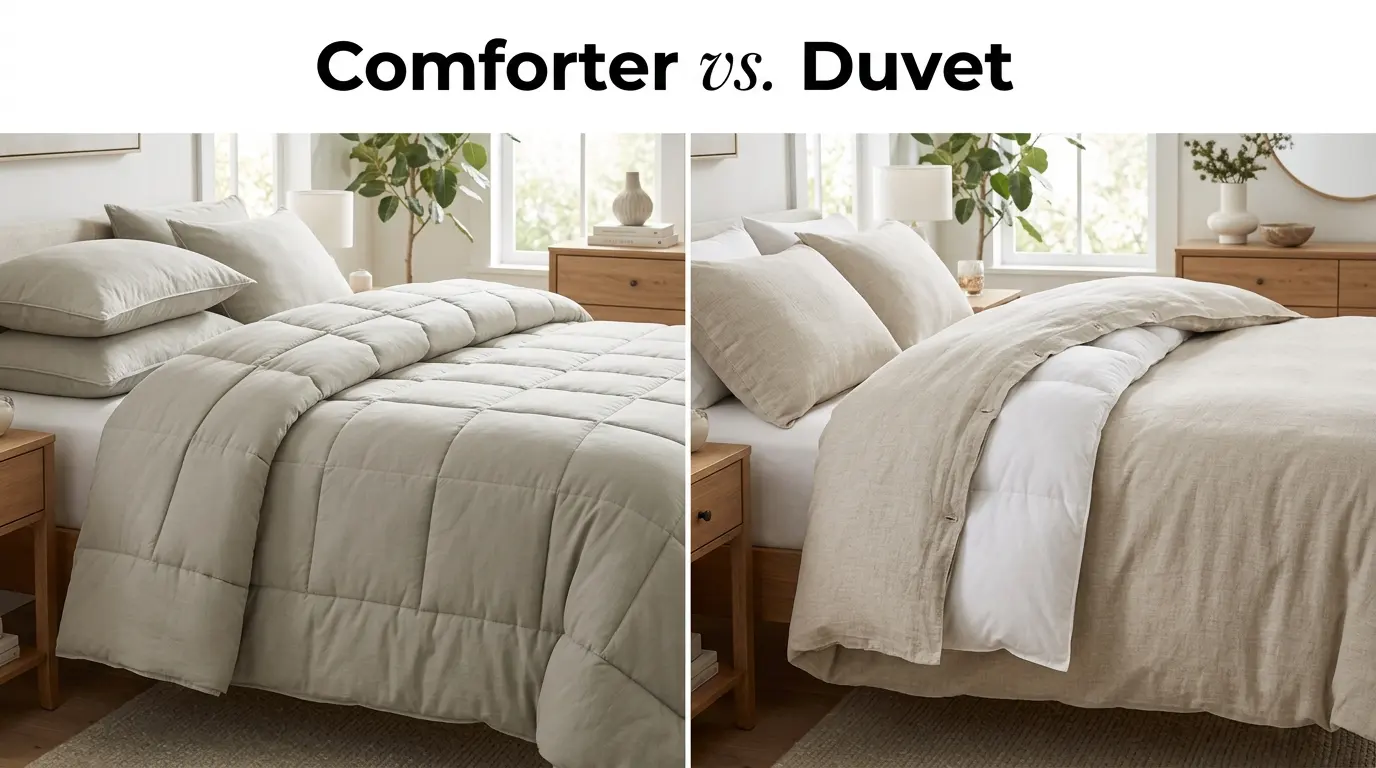
The main difference between comforter and duvet is that a comforter is typically a single, finished piece of bedding with its own outer fabric, while a duvet is an insert designed to fit inside a removable duvet cover. Both provide warmth and comfort, but they differ in appearance, maintenance, versatility, and how you make your bed.
A comforter usually comes ready to use. Its outer fabric and filling are stitched together, often in a quilted or decorative pattern. You can place it directly over your sheets and pillows without buying an additional cover, although some people use a top sheet or lightweight blanket underneath.
A duvet generally consists of two separate parts: a soft, filled insert and a cover that protects it. The cover can be removed for washing or replaced when you want a different bedroom style. This makes a duvet especially appealing to people who like changing their bedding or prefer to wash the cover rather than the entire insert.
Understanding the difference between comforter and duvet can help you choose bedding that suits your sleeping habits, climate, budget, and laundry routine. Neither option is automatically better; the right choice depends on how you want your bed to look and how much care you want to give it.
Quick Comparison: Comforter vs. Duvet
| Feature | Comforter | Duvet |
|---|---|---|
| Design | Finished blanket with attached outer fabric | Filled insert used with a separate cover |
| Construction | Filling is usually stitched between fabric layers | Insert is placed inside a removable cover |
| Appearance | Often decorative and ready to display | Appearance depends on the duvet cover |
| Ease of use | Simple to spread over a bed | May require fastening the cover and insert |
| Cleaning | Usually requires washing the entire comforter | Cover can be washed separately; insert needs occasional cleaning |
| Style changes | May require a new comforter | Change the cover to update the look |
| Warmth | Depends on filling, thickness, and construction | Depends on insert filling, thickness, and construction |
| Cost | Often sold as a single item or bedding set | Insert and cover may be purchased separately |
| Best for | Convenient, straightforward bedding | Flexible styling and removable-cover convenience |
One important detail: the words comforter and duvet are sometimes used interchangeably by retailers. Product descriptions can vary, so check whether the item includes a removable cover or is a finished blanket before purchasing.
Short verdict: Choose a comforter if you want simplicity. Choose a duvet if you want changeable covers and easier routine washing. Warmth depends on the filling, not on the name.
What Is a Comforter?
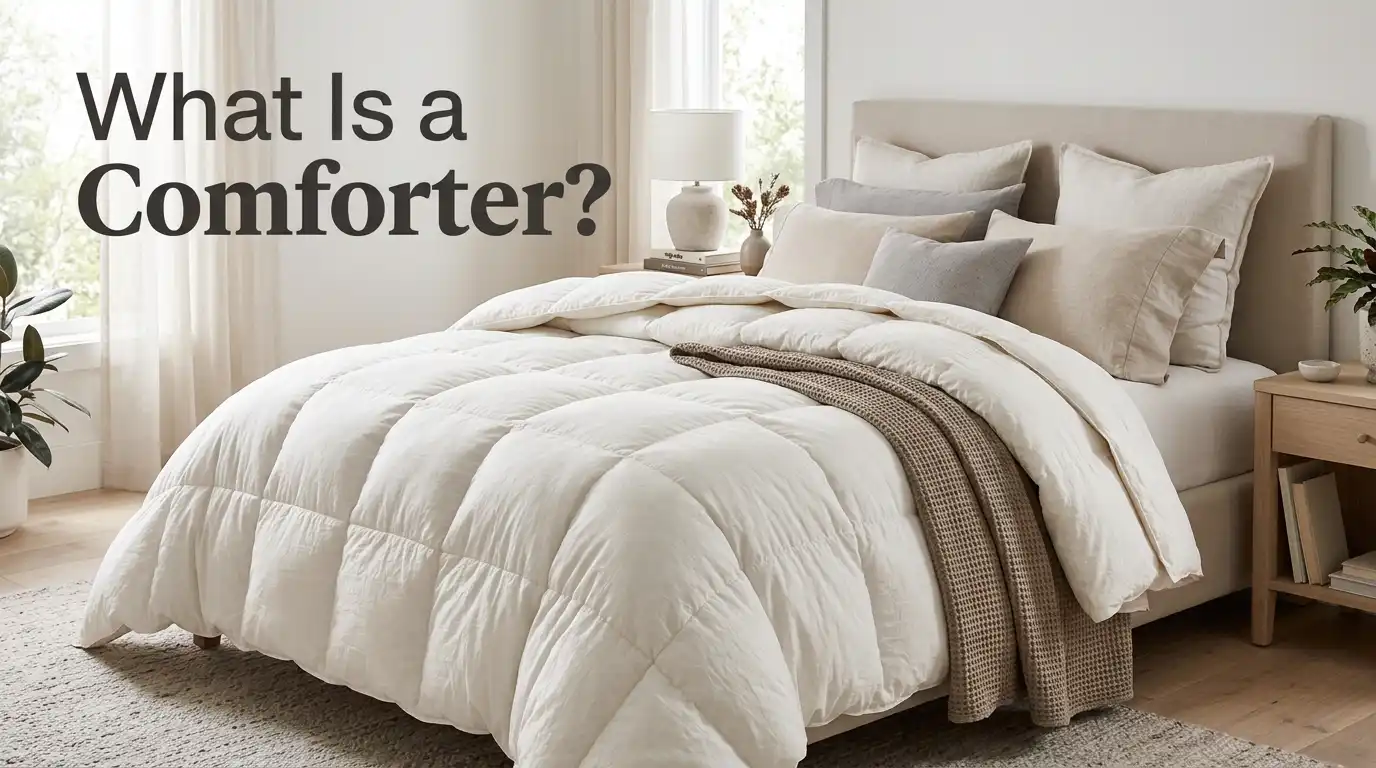
A comforter is a thick, padded bed covering made by placing insulating material between two layers of fabric. The layers are stitched or quilted together to keep the filling distributed throughout the blanket.
Unlike a duvet insert, a comforter is generally designed to be used as a complete product. It does not need a separate cover, although you can use one if you prefer extra protection or a different appearance.
Comforters are common in American homes because they are easy to use and widely available in coordinated bedding sets.
How Does a Comforter Work?
A comforter traps air within its filling, creating insulation that helps retain body heat while you sleep. The level of warmth depends on the type and amount of filling, the fabric, and the overall construction.
Common filling materials include:
- Down: Soft clusters from waterfowl that provide lightweight insulation.
- Down alternative: Synthetic fibers designed to imitate the loft and softness of down.
- Cotton: Used in some comforters for a different feel and weight.
- Wool: Provides insulation and can help manage moisture, depending on its construction.
- Polyester fiberfill: A common synthetic option available in a wide range of prices.
The stitching may form squares, channels, or decorative patterns. These seams help hold the filling in place and contribute to the comforter’s appearance.
Benefits of a Comforter
1. Easy to use: A comforter is ready to spread over your bed. You do not need to insert it into another layer of fabric.
2. Simple bedding setup: Many comforters are sold with matching pillow shams or other accessories, making it easier to coordinate a bedroom.
3. Wide range of styles: Comforters come in solid colors, prints, textured fabrics, and decorative designs.
4. Straightforward purchasing: You can often buy a comforter as one main item rather than selecting an insert and cover separately.
5. Suitable for everyday use: A comforter works well for guest rooms, family bedrooms, and homes where convenience is a priority.
Limitations of a Comforter
A comforter also has some disadvantages.
- Cleaning can be less convenient: Because the outer fabric and filling are joined, the entire comforter may need washing when it becomes dirty. Large models may not fit in a standard home washing machine.
- Changing styles can cost more: If you want a new color or pattern, you may need to replace the whole comforter.
- Wear may be harder to address: If the outer fabric becomes stained or damaged, replacing it is generally less straightforward than changing a duvet cover.
- Warmth may be less adaptable: You can add blankets, but the comforter itself is not usually designed to let you swap the filling.
Types of Comforters
Comforters are available in several common styles:
- Down comforters: Filled with down clusters for lightweight warmth and loft.
- Down-alternative comforters: Made with synthetic filling, often appealing to people who prefer to avoid animal-derived insulation.
- All-season comforters: Designed to provide moderate warmth across a range of indoor temperatures.
- Lightweight comforters: Useful in warmer climates or for people who tend to sleep hot.
- Heavyweight comforters: Better suited to colder rooms or sleepers who prefer substantial bedding.
The label alone does not guarantee a particular temperature level. Check the filling, construction, care instructions, and product specifications before buying.
What Is a Duvet?
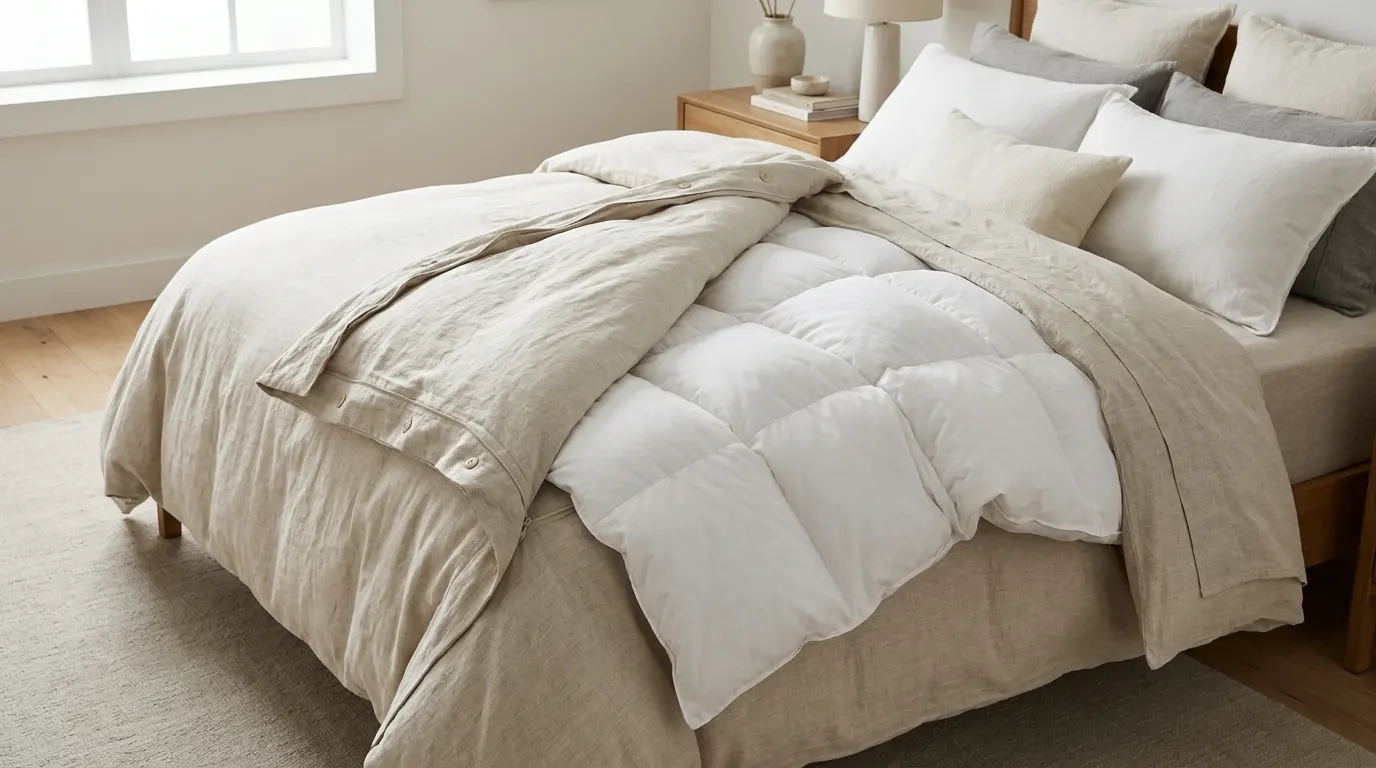
A duvet is a soft, filled bed covering designed to be used inside a separate fabric cover. The filled inner layer is called a duvet insert, while the outer layer is called a duvet cover. The insert provides most of the insulation, and the cover protects it while adding color, texture, and style.
Duvets are popular with people who want a fluffy, layered bed and the flexibility to change their bedroom decor without replacing the entire bed covering.
How Does a Duvet Work?
The duvet insert contains insulating material inside a fabric shell. When you place it inside the duvet cover, the cover acts as a removable protective layer. Small ties, buttons, snaps, or zippers may hold the insert in place and help prevent it from shifting.
The insert’s warmth depends on its fill material, construction, thickness, and loft. The cover also affects how the duvet feels against your skin: cotton and linen, for example, feel different from flannel or microfiber. Cover fabric changes the feel completely for example, see the difference between silk and satin before choosing a glossy cover.
Duvet insert fillings are the same as comforter fillings down, down alternative, wool, cotton or silk the difference is the removable cover system, not the filling.
Not all duvet inserts have the same warmth level. If you sleep hot, look for a lightweight insert and a breathable cover. If you feel cold at night, a higher-loft or warmer-rated insert may be more suitable.
Benefits of a Duvet
1. Easy style changes: You can replace the duvet cover to change the color or pattern of your bedroom without buying a new insert.
2. Convenient routine washing: The cover can usually be removed and washed separately, making regular care simpler. Always check the care label for the cover and insert.
3. Flexible warmth options: You can choose an insert suited to your climate and sleeping preferences, then use different covers as seasons or tastes change.
4. Protection for the insert: A cover helps shield the inner filling from everyday dirt, body oils, and spills.
5. A customizable bed: You can mix and match covers, sheets, and pillows to create a coordinated or layered look.
Limitations of a Duvet
Duvets are versatile, but there are a few things to consider before buying one.
- Extra setup: You need to place the insert inside the cover, which can take time, especially with a large bed.
- Potential shifting: If the insert is not secured properly, it may bunch up inside the cover.
- Additional upfront cost: The insert and cover may be sold separately, so the total price can be higher than a basic comforter.
- Insert care still matters: A removable cover does not eliminate the need to clean the insert according to its care instructions.
- Sizing can be tricky: An insert that is too small may not fill the cover evenly, while an oversized insert may bunch or feel bulky.
Types of Duvets
Duvets are available in several configurations.
- Down duvet: A good option for people who want lightweight loft and warmth.
- Down-alternative duvet: Often chosen by shoppers who prefer synthetic filling or want an alternative to down.
- All-season duvet: Designed for use across a range of temperatures, although comfort depends on the individual and bedroom climate.
- Lightweight duvet: Suitable for warm weather or sleepers who prefer less insulation.
- Heavyweight or winter duvet: Designed to provide more insulation in colder conditions.
- Duvet sets: May include an insert and matching cover, though you should confirm exactly what the package contains.
A duvet is not automatically warmer than every comforter. Filling, fabric, construction, and the amount of insulation matter more than the product name alone.
Difference Between Comforter and Duvet: Key Factors Compared
The biggest distinction is the construction: a comforter is usually ready to use on its own, while a duvet is typically designed to work with a removable cover. Other differences affect cleaning, cost, style, and daily convenience.
1. Design and appearance
A comforter often has a finished color, print, or quilted pattern. It is designed to look complete when placed on the bed.
A duvet insert is usually simpler in appearance because the cover provides the visible design. This is useful if you like changing your bedroom style regularly.
2. Warmth and comfort
Neither type guarantees a specific level of warmth. A thick down comforter can be warmer than a lightweight duvet, while a high-loft duvet can be warmer than a thin comforter.
When choosing either option, check the filling, weight, construction, and product description. Consider whether you tend to sleep hot or cold, as well as the temperature of your bedroom. As a guide, look for tog ratings where available: around 4.5 tog for summer, 10.5 tog for all-season use, and 13.5 tog for winter. A higher tog means more insulation, whichever type you choose.
3. Cleaning and maintenance
A comforter generally needs to be cleaned as a whole item when it becomes dirty, unless you use a separate cover. Its size may make home washing difficult.
With a duvet, you can usually remove the cover and wash it separately. This makes routine maintenance easier, but the insert still needs occasional cleaning according to its label.
4. Cost and long-term value
A comforter can be less expensive at the start, especially when sold as part of a coordinated bedding set. A duvet may require two purchases: the insert and the cover.
However, a duvet cover can be replaced independently if it becomes worn or if you want a new look. The best value depends on material quality, durability, how often you change styles, and the cost of replacement covers.
5. Everyday convenience
A comforter is usually easier for people who want to make the bed quickly without dealing with a separate cover.
A duvet may be more convenient for people who prefer to wash the outer layer regularly or want different covers for different seasons. The trade-off is the time needed to put the cover back on after washing.
When Should You Choose a Comforter or a Duvet?
The best bedding choice depends on your lifestyle, climate, sleeping preferences, and willingness to maintain it.
Choose a comforter if you want simplicity
A comforter is a practical option if you prefer making the bed quickly, want a finished design, or are furnishing a guest room. For example, someone moving into a new apartment might choose a comforter set that includes matching pillow shams to keep the setup simple.
Choose a duvet if you want flexibility
A duvet is a good choice if you like switching decor, washing the cover separately, or selecting different inserts for different seasons. For example, you could use a lightweight insert in summer and a warmer one in winter while keeping the same cover style.
Which Is Better for Hot Sleepers?
Neither option is automatically cooler. A lightweight comforter made with breathable materials may suit a hot sleeper, but so can a lightweight duvet with a breathable cotton or linen cover.
Look for a lower level of insulation, consider the fabric touching your skin, and avoid choosing based on the label alone.
Which Is Better for Cold Weather?
Both can work well in cold weather. Choose a comforter with enough insulation or a duvet insert designed for colder conditions. If your room temperature changes considerably through the year, a duvet system may make it easier to adjust the insert.
Which Is Easier to Clean?
A duvet often has an advantage for routine cleaning because its cover can usually be removed and washed separately. However, the insert still needs proper care, and some comforters are also machine-washable.
Before buying, check the care label and confirm that your washing machine and dryer can accommodate the item.
Comforter and Duvet Sizes
Use the actual dimensions, not only the label on the packet. A duvet insert should be 1 to 2 inches larger than its cover so the corners stay filled and do not bunch up.
| Bed Size | Comforter Size | Duvet Insert Size |
|---|---|---|
| Twin | 68″ x 86″ | 68″ x 86″ |
| Twin XL | 68″ x 90″ | 68″ x 90″ |
| Full / Double | 81″ x 86″ | 80″ x 80″ |
| Queen | 88″ x 92″ | 90″ x 90″ |
| King | 108″ x 92″ | 106″ x 90″ |
| Cal King | 102″ x 96″ | 106″ x 90″ |
Common Mistakes to Avoid
1. Buying a duvet insert without checking the cover size
An insert that is too small can leave empty corners, while one that is too large can bunch up.
How to avoid it: Match the insert dimensions to the duvet cover and check the manufacturer’s sizing recommendations.
2. Assuming a duvet is always warmer
Warmth depends on the filling, thickness, construction, and cover material—not simply whether the item is called a duvet.
How to avoid it: Compare the product’s insulation or warmth guidance and choose according to your bedroom temperature and sleep habits.
3. Forgetting the cost of a duvet cover
A low-priced insert may look like a bargain until you add the cost of a suitable cover.
How to avoid it: Compare the total price of the insert and cover with the price of a comforter or comforter set.
4. Ignoring care instructions
Some filled bedding cannot safely be washed in a standard home machine. Incorrect washing or drying can damage the fabric or cause filling to clump.
How to avoid it: Read the care label before purchase. Check whether the item needs a large-capacity machine, spot cleaning, or professional cleaning.
5. Choosing the wrong size for the bed
A bed covering may fit the mattress but fail to provide the side or foot coverage you want.
How to avoid it: Check the actual dimensions of the comforter or duvet rather than relying only on labels such as queen or king. Mattress depth and personal styling preferences can affect the fit. If you are unsure about sizing, see the difference between queen and king bed sizes before you buy. For smaller rooms, also check the difference between full and twin mattresses to match your bedding size.
Frequently Asked Questions
1. What is the main difference between a comforter and a duvet?
A comforter is generally a finished bed covering used on its own. A duvet is typically a filled insert designed to fit inside a removable duvet cover.
2. Is a comforter the same as a duvet?
No, not technically. They serve a similar purpose, but their construction differs. Retailers sometimes use the terms interchangeably, so check the product details before buying.
3. Do you need a duvet cover for a comforter?
No. A comforter is designed to be used without a separate cover. You can add one for protection or a different appearance, provided the comforter fits properly.
4. Can you use a duvet without a cover?
Some people use a duvet insert on its own, but it is generally designed to be used with a cover. Using a cover protects the insert and usually makes routine cleaning easier.
5. Is a duvet warmer than a comforter?
Not always. A thick comforter may provide more warmth than a lightweight duvet. Compare the fill material, loft, thickness, and warmth rating to determine which is suitable for you.
6. Which lasts longer, a comforter or a duvet?
Durability depends on the quality of the materials, construction, and care. A duvet cover can protect the insert from everyday dirt and wear, while a well-made comforter can also last for years when maintained correctly.
7. Is a comforter or duvet cheaper?
A comforter is often cheaper upfront, particularly when sold in a bedding set. A duvet requires an insert and cover, which may increase the initial cost. Long-term value depends on quality and replacement needs.
8. Can you put a comforter inside a duvet cover?
Yes, if the comforter fits inside the cover. However, comforters may be bulkier or have different dimensions from duvet inserts, so the fit may not be ideal. Secure the layers if possible and avoid forcing an oversized comforter into a smaller cover.
Conclusion:
The main difference between comforter and duvet is their construction and how they are maintained. A comforter is typically a ready-to-use, one-piece bed covering, while a duvet consists of a filled insert used with a separate, removable cover.
Choose a comforter if you value convenience, a finished appearance, and a simple bedding setup. Choose a duvet if you prefer changeable covers, easier routine washing of the outer layer, and more flexibility in your bedroom style.
Before making your decision, compare warmth, fabric, size, care instructions, and total cost. The best option is the one that keeps you comfortable and fits your daily routine.
External Sources
1. Duvet vs. Comforter — Sleep Foundation Explains the differences in construction, warmth, cost, cleaning, and style.

Aamer Shahzad is the founder of Diffnexx.com, a fast-growing educational platform focused on high-intent “difference between” topics. With over 8 years of experience in English language education and analytical writing, I specialize in breaking down complex “difference between” topics into clear, structured, and easy-to-understand explanations. Diffnexx.com is your go-to resource for enhancing English skills and writing with confidence.
He specializes in building search-optimized, research-driven comparison content designed for clarity, authority, and long-term digital asset value.