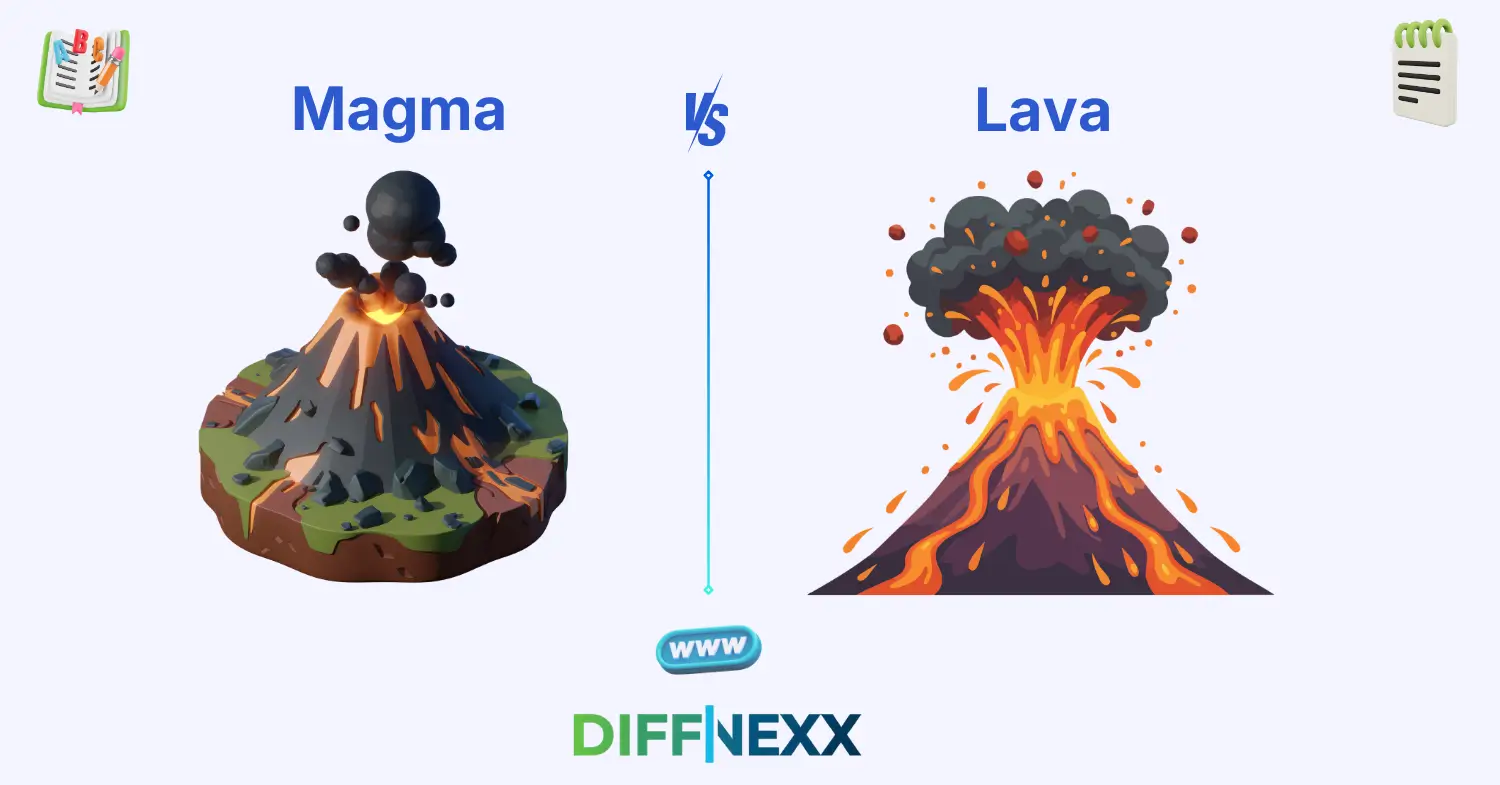
Difference between magma and lava often comes up when watching a volcano erupt on TV. You see glowing red rock flowing, but what is it really called?
Many people use these words the same way. But the truth is, magma and lava are not exactly the same. They describe the same substance in different places.
Understanding the difference between magma and lava helps you learn how volcanoes work. It also makes science easier to follow in school and daily life.
In this guide, we will clearly explain the difference between magma and lava step by step. Let’s begin with the basics.
🔍 Key Difference Between the Both
The main difference is simple.
Magma is molten rock inside the Earth.
Lava is molten rock that has reached the Earth’s surface.
Magma stays underground under pressure.
Lava flows freely after a volcanic eruption.
This location difference changes temperature, gas content, and behavior.
🌍 Importance – Why This Difference Matters
Knowing this difference helps students understand geology better. It builds strong basic knowledge of Earth science.
Experts use these terms to study volcanoes and predict eruptions. Clear terms help avoid confusion in research and reports.
In society, this knowledge improves awareness of natural disasters. It helps people understand volcanic risks and safety.
🔊 Pronunciation Section
Magma
US: /ˈmæɡmə/
UK: /ˈmæɡmə/
Lava
US: /ˈlɑːvə/
UK: /ˈlɑːvə/
Now that you know how to say them, let’s explore what each word really means.
📚 Core Definitions
Magma
Magma is hot, melted rock found beneath the Earth’s surface. It contains gases and minerals under high pressure.
It feels powerful and hidden. You cannot see it until it rises.
Example:
- Magma builds up inside a volcano before eruption.
Lava
Lava is magma that has come out onto the Earth’s surface. It flows like thick liquid rock.
It feels intense and visible. People often see it during eruptions.
Example:
- Lava flowed down the mountain after the eruption.
📚 10 Clear Differences Between Magma and Lava
1. Location
Magma exists underground. Lava is found on the surface.
- Example for magma: Magma forms deep inside the Earth.
- Example for lava: Lava flows outside the volcano.
2. Pressure
Magma is under high pressure. Lava has less pressure.
- Example for magma: Magma stays compressed below ground.
- Example for lava: Lava spreads freely on land.
3. Gas Content
Magma contains trapped gases. Lava loses most gases.
- Example for magma: Magma bubbles with gas.
- Example for lava: Lava releases gas into the air.
4. Visibility
Magma is hidden. Lava is visible.
- Example for magma: Scientists study magma indirectly.
- Example for lava: Lava glows bright during eruptions.
5. Temperature Change
Magma is hotter. Lava cools quickly.
- Example for magma: Magma stays very hot underground.
- Example for lava: Lava cools when exposed to air.
6. Movement
Magma moves slowly. Lava flows more freely.
- Example for magma: Magma shifts inside chambers.
- Example for lava: Lava moves down slopes.
7. Environment
Magma exists in closed spaces. Lava interacts with air and water.
- Example for magma: Magma stays inside Earth layers.
- Example for lava: Lava meets air and cools.
8. Role in Eruption
Magma causes eruptions. Lava is the result.
- Example for magma: Magma pressure builds up.
- Example for lava: Lava pours out during eruption.
9. Chemical Changes
Magma keeps original gases. Lava changes after release.
- Example for magma: Magma holds minerals.
- Example for lava: Lava changes as it cools.
10. Surface Impact
Magma shapes underground features. Lava shapes landforms.
- Example for magma: Magma forms rock below Earth.
- Example for lava: Lava creates new land.
🎯 Why Knowing the Difference Matters
Students need this knowledge to understand science lessons clearly. It builds strong concepts and avoids confusion in exams.
Professionals like geologists must use correct terms. It helps in research, safety planning, and communication.
In daily life, confusion can lead to misunderstanding natural events. Clear knowledge improves awareness of volcanic hazards.
Real-world Consequences of Confusion
If people confuse magma and lava, they may misunderstand warnings. This can affect safety during eruptions.
🧠 Why People Get Confused
Similar Words
“Magma” and “lava” sound related. This makes people think they are the same.
Semantic Overlap
Both refer to molten rock. This creates confusion in meaning.
Context Usage
People often use “lava” for everything. This weakens correct understanding.
Informal Speech
In movies and media, terms are used loosely. This spreads confusion.
🎭 Connotation & Emotional Tone
(Connotation = the emotional meaning associated with a word.)
Magma
Positive: Scientific and powerful
- Example: Magma shows Earth’s energy
Negative: Dangerous if unstable
- Example: Rising magma can cause eruptions
Neutral: Geological term
- Example: Magma exists underground
Lava
Positive: Fascinating and natural beauty
- Example: Lava flows look amazing
Negative: Destructive and dangerous
- Example: Lava destroys homes
Neutral: Natural volcanic material
- Example: Lava cools into rock
🗣 Usage in Metaphors, Similes & Idioms
- “His anger was like magma building inside.”
- “Her emotions flowed like lava.”
Magma suggests hidden buildup.
Lava suggests visible release.
📊 Comparison Table
| Feature | Magma | Lava |
|---|---|---|
| Meaning | Molten rock underground | Molten rock on surface |
| Tone | Hidden, intense | Visible, active |
| Usage | Scientific context | Everyday and science |
| Context | Inside Earth | Outside Earth |
| Formality | More technical | More common |
⚖️ Which Is Better in What Situation?
When to use Magma
Use magma when talking about underground processes. It fits science discussions and academic writing.
When to use Lava
Use lava when describing eruptions or visible flows. It is common in daily speech.
Situational Clarity
Choose magma for hidden stages. Choose lava for visible events.
Contextual Correctness
Using the right term improves accuracy. It shows strong understanding of the topic.
📖 Literary or Cultural References
- Book: Volcanoes (Science, National Geographic, 2017)
- Movie: Dante’s Peak (USA, 1997)
Both show magma buildup and lava flow during eruptions.
❓ FAQs
1. Is magma the same as lava?
No. Magma is underground molten rock, while lava is the same material after it reaches the surface.
2. Why does magma turn into lava?
Magma becomes lava when it erupts from a volcano. It loses pressure and gases.
3. Which is hotter, magma or lava?
Magma is usually hotter because it is under pressure. Lava cools when exposed to air.
4. Can lava go back to magma?
No. Once lava cools, it becomes solid rock. It cannot return to magma.
5. Why is lava dangerous?
Lava is extremely hot and can destroy buildings and land. It also releases harmful gases.
🏁 Conclusion
The difference between magma and lava is simple but important. Magma stays underground, while lava flows on the surface after an eruption.
Understanding this difference helps you learn science clearly. It also improves how you talk about natural events.
Using the right word shows accuracy and confidence. It makes communication clearer in both school and daily life.
Keep practicing these terms in real situations. The more you use them, the easier they become to understand and remember.

Aamer Shahzad is the founder of Diffnexx.com, a fast-growing educational platform focused on high-intent “difference between” topics. With over 8 years of experience in English language education and analytical writing, I specialize in breaking down complex “difference between” topics into clear, structured, and easy-to-understand explanations. Diffnexx.com is your go-to resource for enhancing English skills and writing with confidence.
I specializes in building search-optimized, research-driven comparison content designed for clarity, authority, and long-term digital asset value.