Difference between nice and kind often appears in everyday conversations. Imagine a student describing a new teacher. One student says, “She’s really nice,” while another says, “She’s very kind.” The words sound similar, but do they mean the same thing?
The difference between nice and kind is subtle but important. Both words describe positive behavior toward others. However, they focus on slightly different attitudes and actions.
Many English learners use these words interchangeably. Yet the difference between nice and kind becomes clearer when we look at intention and depth of behavior.
Understanding the difference between nice and kind helps students communicate more precisely and describe people’s character more accurately. Let’s explore the key distinctions.
Key Difference Between the Both
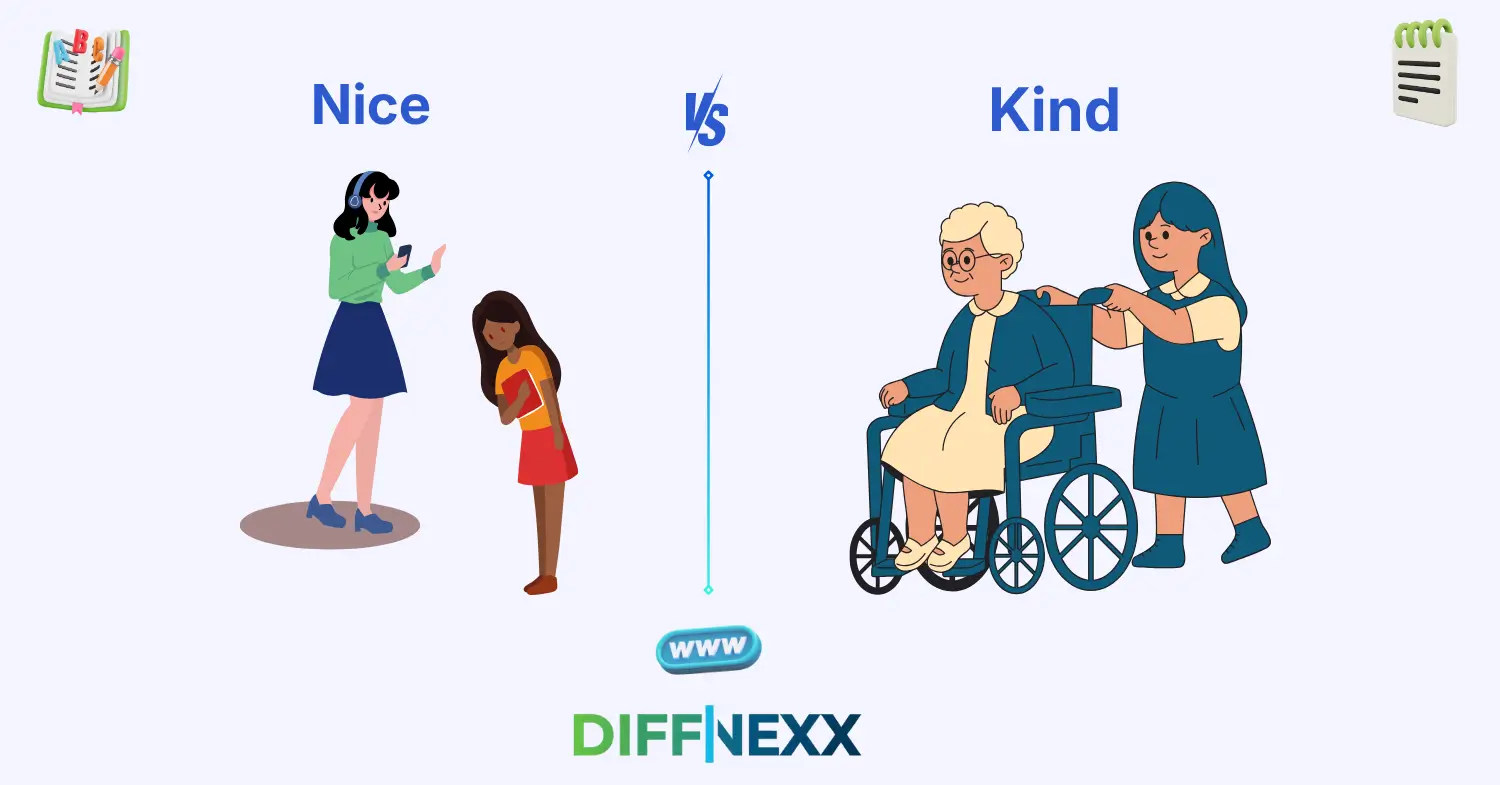
The main difference between nice and kind lies in depth of intention.
Nice often describes someone who behaves politely or pleasantly in social situations.
Kind describes someone who shows genuine care, empathy, and willingness to help others.
In simple terms:
- Nice = pleasant behavior
- Kind = caring and compassionate behavior
Both are positive traits, but kindness usually shows deeper concern for others.
Importance – Why Their Difference Matters in Society
Understanding the difference between nice and kind improves communication and emotional awareness.
For learners, the distinction helps build richer vocabulary. English often uses similar words with different emotional meanings.
For professionals, such as teachers, counselors, or leaders, choosing the right word helps describe character traits accurately.
For society, the difference encourages deeper values. Being nice creates pleasant interactions, while being kind supports empathy, cooperation, and social harmony.
🔊 Pronunciation Section
Nice
US: /naɪs/
UK: /naɪs/
Kind
US: /kaɪnd/
UK: /kaɪnd/
The pronunciation is simple for both words, yet their meanings carry different emotional shades. Let’s clarify the definitions.
Core Definitions
Nice
Nice describes someone who is friendly, polite, or pleasant in behavior. It often refers to social manners or a positive attitude in everyday interactions.
The tone is casual and widely used in daily conversation.
Example:
She was nice and welcomed the new student warmly.
Kind
Kind describes someone who shows genuine care, compassion, and willingness to help others. It reflects empathy and thoughtful actions.
The tone often feels deeper and more sincere.
Example:
He was kind and helped the older people carry groceries.
10 Clear Differences Between Nice and Kind
1. Emotional Depth
Nice often describes surface-level friendliness. Kindness usually reflects deeper emotional care.
Example for nice:
The waiter was nice and smiled politely.
Example for kind:
The volunteer was kind and helped homeless families.
2. Duration of Behavior
Nice behavior may appear briefly in social interactions. Kindness often shows consistently over time.
Example for nice:
She was nice during the meeting.
Example for kind:
He has always been kind to his friends.
3. Focus of Action
Nice focuses on politeness and pleasant behavior. Kind focuses on helping or supporting others.
Example for nice:
The receptionist spoke nicely to visitors.
Example for kind:
The doctor showed kindness to worried patients.
4. Severity of Effort
Nice behavior usually requires little effort. Kindness sometimes requires sacrifice or extra effort.
Example for nice:
He gave a nice compliment.
Example for kind:
She stayed late to help a colleague finish work.
5. Rationality vs Emotion
Nice behavior often follows social expectations. Kindness often comes from empathy and emotional understanding.
Example for nice:
He acted nice during the interview.
Example for kind:
She comforted a friend after bad news.
6. Formality in Language
Nice is common in casual conversation. Kind often appears in more meaningful descriptions of character.
Example for nice:
That shop owner is very nice.
Example for kind:
Her teacher is known as a kind person.
7. Context of Use
Nice can describe people, objects, or experiences. Kind usually describes people or their actions.
Example for nice:
That was a nice movie.
Example for kind:
He is a kind neighbor.
8. Psychological Impact
Nice interactions create pleasant feelings. Kind actions can create deeper emotional gratitude.
Example for nice:
The cashier was nice and helpful.
Example for kind:
The stranger showed kindness during a difficult moment.
9. Tone
Nice sounds light and friendly. Kind sounds sincere and compassionate.
Example for nice:
She said something nice about the presentation.
Example for kind:
His kind words encouraged the team.
10. Expression Style
Nice often appears in everyday casual language. Kind expresses deeper moral character.
Example for nice:
They were nice to the guests.
Example for kind:
She is known for her kind heart.
Why Knowing the Difference Matters
Understanding the difference between nice and kind helps students describe people more clearly. Vocabulary accuracy improves communication skills.
For professionals such as teachers, leaders, or counselors, the distinction helps when discussing personality traits and behavior.
In social relationships, recognizing kindness encourages empathy and stronger connections.
Real-world consequences of confusion
If people confuse nice and kind, they might misjudge someone’s character. A person may appear nice in public but not truly act with kindness.
Why People Get Confused
Similar Meaning
Nice and kind both describe positive behavior, so learners often treat them as synonyms.
Semantic Overlap
Both words relate to friendliness and good treatment of others.
Context-Based Usage
People sometimes use nice when they actually mean kind, especially in casual speech.
Influence of Informal Speech
In everyday English, nice is extremely common, so speakers often use it for many different meanings.
Connotation & Emotional Tone
(Connotation = the emotional meaning associated with a word.)
Nice
Positive:
Often suggests friendliness and politeness.
Example:
The host was nice to every guest.
Negative:
Sometimes it can sound weak or superficial.
Example:
He seemed nice but did not help when needed.
Neutral:
Commonly used to describe pleasant experiences.
Example:
We had a nice evening together.
Kind
Positive:
Strongly associated with empathy and compassion.
Example:
She showed kindness to everyone in need.
Negative:
Rarely negative, though sometimes linked with vulnerability.
Example:
Some people worry that being too kind invites exploitation.
Neutral:
Often used in moral or character descriptions.
Example:
He is a kind and thoughtful teacher.
Usage in Metaphors, Similes & Idioms
These words appear in everyday expressions.
Example with nice:
She gave him a nice warm welcome.
Example with kind:
He has a heart as kind as gold.
These expressions emphasize friendliness or generosity.
Comparison Table
| Feature | Nice | Kind |
|---|---|---|
| Meaning | Pleasant and friendly behavior | Compassionate and caring behavior |
| Tone | Light and casual | Warm and sincere |
| Usage | People, objects, experiences | People and actions |
| Context | Social politeness | Genuine empathy |
| Formality | Casual | Slightly deeper moral tone |
Which Is Better in What Situation?
When to use Nice
Use nice when describing polite behavior, pleasant experiences, or friendly attitudes. For example, you might say someone gave a nice greeting or planned a nice event.
When to use Kind
Use kind when describing genuine care or compassion. The word fits situations where someone helps or supports others.
Situational Clarity
Nice fits casual social situations. Kind fits emotional or compassionate situations.
Contextual Correctness
For instance, a polite waiter may be nice, but someone who helps a struggling stranger shows kindness.
Literary or Cultural References
Book:
Wonder – R. J. Palacio (Children’s Fiction, 2012)
The story emphasizes kindness and empathy in everyday life.
Movie:
Pay It Forward (USA, 2000)
The film highlights the impact of kind actions on society.
These works show how kindness can influence people and communities.
FAQs
1. Are nice and kind the same?
They are similar but not identical. Nice often describes polite behavior, while kind describes genuine care and compassion.
2. Can someone be nice but not kind?
Yes. A person may behave politely in public but may not show real concern for others’ needs.
3. Which word sounds stronger?
Kind usually sounds stronger because it suggests deeper empathy and moral character.
4. Is kind more formal than nice?
Kind often feels slightly more meaningful and thoughtful, while nice is casual and widely used.
5. Which word should learners use more?
Both words are useful. However, using kind when describing compassionate actions makes your communication clearer.
Conclusion
Understanding the difference between nice and kind helps learners express ideas with greater precision. While both words describe positive behavior, they highlight different aspects of human interaction.
Nice usually refers to pleasant, polite, or friendly behavior in everyday situations. It often describes social manners and casual friendliness.
Kind, however, goes deeper. It reflects empathy, compassion, and genuine concern for others. Kind actions often require effort and emotional understanding.
Recognizing this difference improves communication and emotional awareness. It also encourages people to value true kindness, not just polite behavior.
As you continue learning English, pay attention to these subtle word choices. Small vocabulary distinctions can make your communication clearer and more meaningful. 😊

Anton Reyes is a contributing writer at DiffNexx.com, where he explores meaningful differences in language, culture, and everyday concepts. With a background in creative nonfiction, Anton brings clarity and balance to complex comparisons. His writing helps readers understand subtle distinctions in words and ideas, making learning both insightful and engaging.