Difference between bail and bond often becomes urgent when someone gets that late-night phone call: “I’ve been arrested.” Family members rush to the police station. They hear new legal terms. The officer mentions bail. A friend suggests getting a bond. Confusion begins.
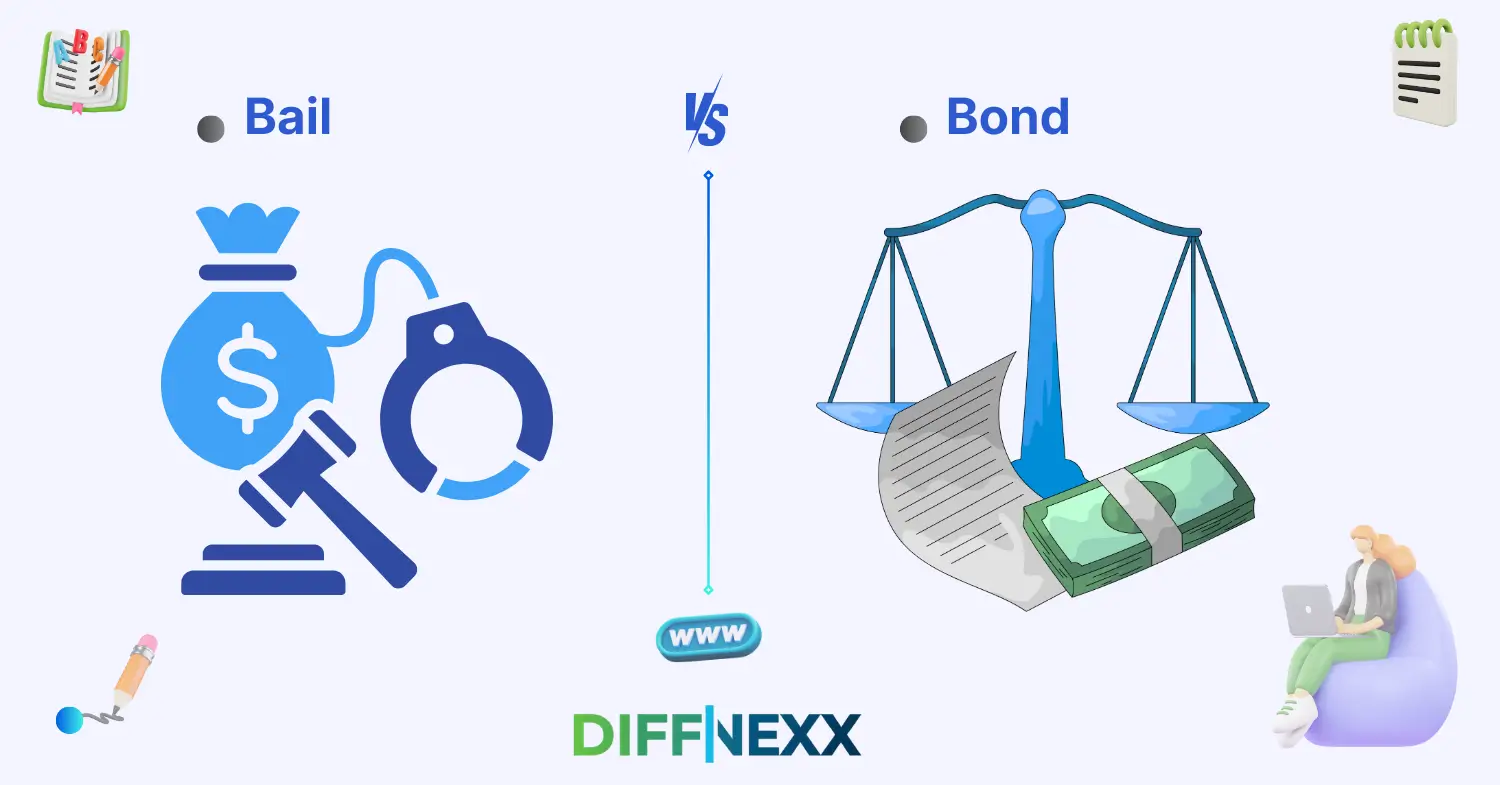
The difference between bail and bond is simple in theory but confusing in practice. Bail is the money set by a court to allow a person to leave jail while waiting for trial. A bond is a financial guarantee, often arranged through a third party, to pay that bail amount.
Many people search for the difference between bail and bond because the terms seem interchangeable. However, they are not the same. Understanding the distinction can save time, stress, and even money.
Let’s break it down clearly and step by step.
Key Difference Between the Two
The key difference is this:
Bail is the amount of money the court sets for release.
Bond is the method used to pay or guarantee that bail.
In short, bail is the requirement. Bond is the solution.
Why Is Their Difference Necessary to Know
Students studying law or criminal justice must understand these terms clearly. Exams and case studies often test this distinction.
Legal professionals use precise vocabulary. A mistake in terminology can create confusion in court discussions or legal documents.
In society, knowing the difference helps families make fast decisions during stressful moments. It prevents financial misunderstandings and unrealistic expectations.
Now, let’s clarify pronunciation before we go deeper.
🔊 Pronunciation
Bail
US: /beɪl/
UK: /beɪl/
Bond
US: /bɑːnd/
UK: /bɒnd/
Both words sound simple. Yet their legal meanings differ significantly. Let’s define them clearly.
📚 Core Definitions
Bail
Bail is a specific amount of money that a judge sets to allow an accused person to leave jail while waiting for trial. It acts as a promise that the person will return to court. The tone is formal and legal.
Example:
Court Order – “The judge set bail at $10,000.”
Bond
A bond is a financial agreement used to secure release when someone cannot pay the full bail amount. Often, a bail bond agent guarantees payment to the court for a fee. The tone is also formal but more practical.
Example:
Financial Arrangement – “They contacted a bond agent to secure release.”
📚 10 Clear Differences Between Bail and Bond
1. Nature
Bail is a court-set amount.
Bond is a financial arrangement.
Example for Bail: “The bail is $5,000.”
Example for Bond: “They used a bond to cover the bail.”
2. Who Sets It
A judge sets bail.
A bond involves a private company or agent.
Example for Bail: “The judge decided the bail.”
Example for Bond: “The bond agent filed paperwork.”
3. Financial Structure
Bail requires full payment upfront.
A bond requires a percentage fee.
Example for Bail: “They paid the full bail in cash.”
Example for Bond: “They paid 10% for the bond.”
4. Refund Policy
Bail money is refunded if court rules are followed.
Bond fees are usually non-refundable.
Example for Bail: “They got bail money back.”
Example for Bond: “The bond fee was not returned.”
5. Risk Responsibility
The person posting bail risks losing their money.
The bond agent assumes financial risk.
Example for Bail: “If he skips court, bail is lost.”
Example for Bond: “The agent must pay if he fails to appear.”
6. Accessibility
Bail requires enough personal funds.
Bond helps those without full funds.
Example for Bail: “They had savings for bail.”
Example for Bond: “They needed help from a bond company.”
7. Legal Control
Courts control bail conditions.
Bond agreements include private contract terms.
Example for Bail: “Bail conditions restrict travel.”
Example for Bond: “The bond contract required weekly check-ins.”
8. Psychological Impact
Paying bail directly feels empowering.
Using a bond can feel dependent on a third party.
Example for Bail: “They handled bail themselves.”
Example for Bond: “They relied on an agent.”
9. Duration
Bail remains until case resolution.
Bond remains active until bail obligations end.
Example for Bail: “Bail lasted through trial.”
Example for Bond: “The bond stayed valid until court closed the case.”
10. Expression Style
Bail is often used in legal judgments.
Bond appears in financial and service discussions.
Example for Bail: “The court set bail.”
Example for Bond: “They arranged a bond.”
🎯 Why Knowing the Difference Matters
Students must understand these terms to interpret legal news and court procedures accurately. Precision builds confidence.
Professionals, especially journalists and paralegals, need clarity to avoid reporting errors. One wrong word can mislead readers.
Families facing arrest situations make better decisions when they know the options. Clear understanding reduces panic and improves planning.
Real-World Consequences of Confusion
Confusing bail and bond may cause someone to expect a refund when none is available. It may also delay release due to misunderstanding payment methods.
🧠 Why People Get Confused
Similar Sound
Both words are short and simple. They appear often in crime-related news.
Semantic Overlap
Both relate to temporary release from jail.
Context-Based Usage
Media sometimes uses them loosely.
Informal Speech
People say “post bond” or “post bail” without knowing the legal distinction.
🎭 Connotation & Emotional Tone
Connotation = emotional meaning attached to a word.
Connotation (bold) = the emotional meaning associated with a word.
Bail
Positive: Freedom, temporary relief.
Example: “He was granted bail.”
Negative: Financial pressure.
Example: “They struggled to pay bail.”
Neutral: Legal procedure.
Example: “Bail was discussed in court.”
Bond
Positive: Assistance, solution.
Example: “The bond helped secure release.”
Negative: Debt or obligation.
Example: “They owed money on the bond.”
Neutral: Financial mechanism.
Example: “The bond guaranteed payment.”
🗣 Usage in Metaphors, Similes & Idioms
The word “bond” appears in phrases like “family bond.”
“Bail” appears in “bail out,” meaning rescue from trouble.
Example Sentence:
“He needed financial bail, but his family bond stayed strong.”
📊 Comparison Table
| Feature | Bail | Bond |
|---|---|---|
| Meaning | Court-set money for release | Financial guarantee for bail |
| Tone | Legal | Legal & financial |
| Usage | Court decision | Payment method |
| Context | Criminal procedure | Financial agreement |
| Formality | Highly formal | Formal |
⚖️ Which Is Better in What Situation?
When to Use Bail
Use “bail” when referring to the amount set by a judge. For example, “The court reduced bail.”
When to Use Bond
Use “bond” when discussing how someone pays or guarantees that bail. For example, “They secured a bond.”
Situational Clarity
If discussing courtroom procedure, say bail. If discussing payment methods, say bond.
Contextual Correctness
In legal writing, always match the word to its technical meaning.
📖 Literary or Cultural References
- “The New Jim Crow” (Nonfiction, Michelle Alexander, 2010) discusses bail systems and inequality.
- “Law & Order” (USA, 1990– ) frequently portrays bail hearings and bond arrangements in courtroom scenes.
These works highlight how bail and bond affect real lives.
❓ FAQs
1. Is bail the same as bond?
No. Bail is the money required for release. A bond is one way to pay or guarantee that bail.
2. Do you get bail money back?
Yes, if you pay bail directly and follow court rules. However, bond fees are usually not refunded.
3. Who sets bail?
A judge sets bail during a hearing. The judge considers risk and severity.
4. Why use a bond instead of bail?
People use a bond when they cannot afford full bail. It allows release with a smaller upfront payment.
5. What happens if someone skips court?
If bail was paid directly, the court keeps it. If a bond was used, the bond agent may pursue repayment.
🏁 Conclusion
The difference between bail and bond is clear once you separate the court requirement from the payment method. Bail is the amount ordered by a judge for temporary release. Bond is the financial tool used to meet that requirement when full payment is not possible.
Understanding this distinction empowers students, professionals, and families alike. It reduces confusion during stressful legal situations and supports accurate communication.
Legal language may sound complex, but clear learning makes it manageable. Keep building your legal vocabulary with confidence. ⚖️

Eliza Marlowe is a passionate content strategist and comparison writer at diffnexx.com. She specializes in breaking down complex “difference between” topics into clear, reader-friendly guides. With a background in linguistics and digital research, Eliza focuses on accuracy, clarity, and content that helps readers make informed decisions with confidence.