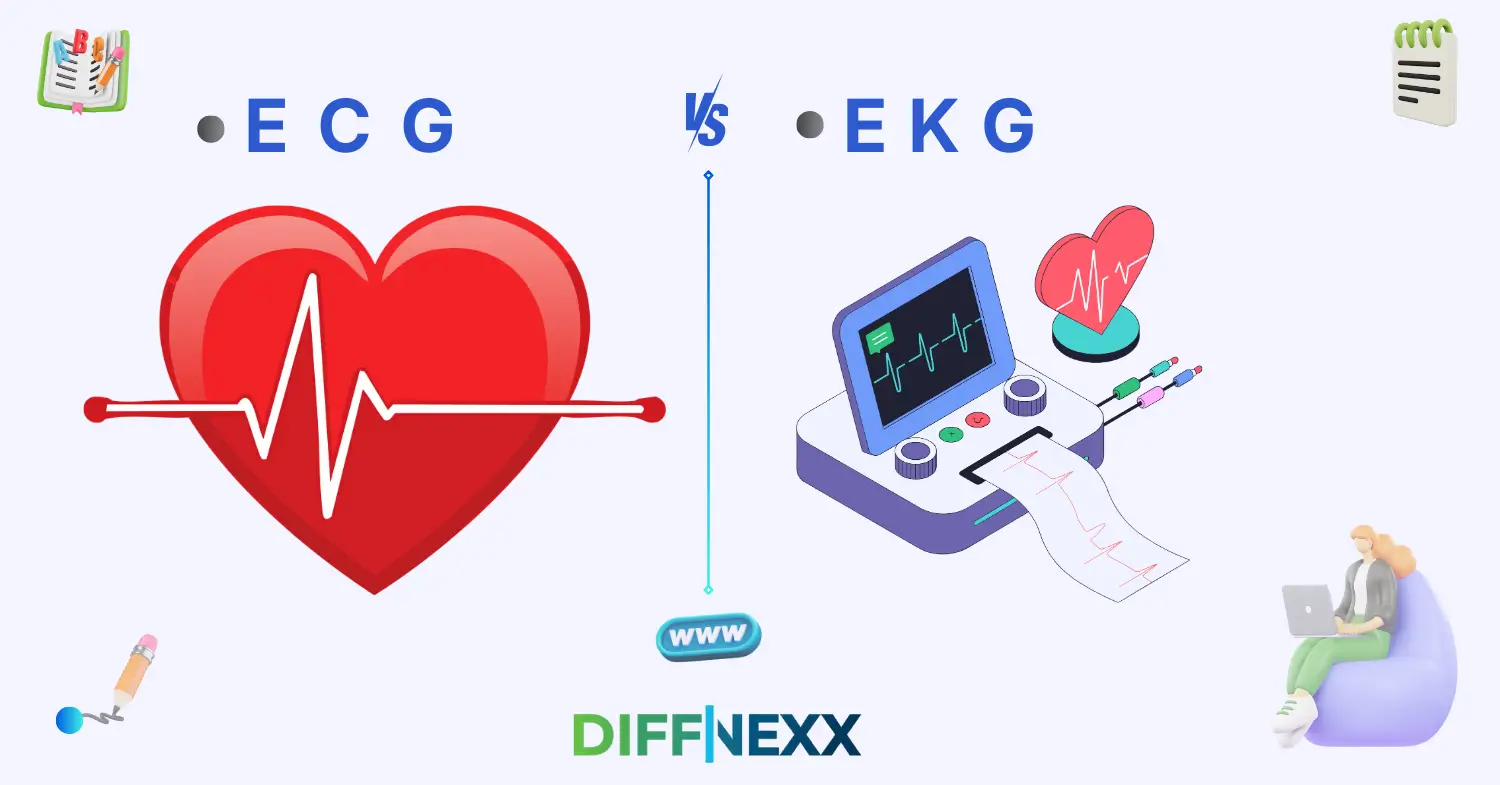
Difference between ECG and EKG often confuses patients in a hospital room. A nurse says, “We’ll do an ECG.” A doctor later mentions an EKG. You may wonder: Are these two different heart tests?
The difference between ECG and EKG sounds serious, especially when heart health is involved. Both terms refer to a test that records the electrical activity of the heart. Yet the spelling changes from ECG to EKG depending on language and tradition.
Many students and patients search for the difference between ECG and EKG because medical vocabulary feels complex. The truth is simple and reassuring.
Let’s explore the facts clearly and step by step. ❤️
Key Difference Between the Two
There is no medical difference in the test itself.
ECG and EKG refer to the same diagnostic procedure. The difference lies only in spelling and language origin.
ECG comes from the English word electrocardiogram.
EKG comes from the German word Elektrokardiogramm.
Why Is Their Difference Necessary to Know
Students in biology or nursing must understand that ECG and EKG describe the same test. This avoids confusion during exams or clinical training.
Healthcare professionals often use EKG in the United States to prevent confusion with EEG (a brain test). Accuracy matters in hospitals.
In society, patients feel less anxious when they know both terms mean the same heart test. Clear understanding improves trust in medical care.
Now, let’s review pronunciation before defining each term carefully.
🔊 Pronunciation
ECG
US: /ˌiː siː ˈdʒiː/
UK: /ˌiː siː ˈdʒiː/
EKG
US: /ˌiː keɪ ˈdʒiː/
UK: /ˌiː keɪ ˈdʒiː/
Although pronunciation differs slightly in the middle letter, both terms describe the same heart recording test. Let’s define them clearly.
📚 Core Definitions
ECG
An ECG stands for electrocardiogram. It is a medical test that measures the electrical signals of the heart. Doctors use it to check heart rhythm and detect problems.
The tone is clinical and scientific.
Example:
Medical Check – “The doctor ordered an ECG to examine chest pain.”
EKG
An EKG also stands for electrocardiogram, but the spelling reflects German origin. It records the same heart activity using the same equipment.
The tone is equally clinical.
Example:
Hospital Procedure – “The nurse prepared the patient for an EKG.”
📚 10 Clear Differences Between ECG and EKG
Technically, there is no functional difference. However, we can compare usage dimensions.
1. Language Origin
ECG comes from English.
EKG comes from German.
Example for ECG: “The ECG showed normal rhythm.”
Example for EKG: “The EKG reading was clear.”
2. Geographic Preference
ECG is common worldwide.
EKG is more common in the United States.
Example for ECG: “The UK clinic scheduled an ECG.”
Example for EKG: “The US hospital performed an EKG.”
3. Academic Usage
Medical textbooks often use ECG.
US training programs may use EKG.
Example for ECG: “The ECG chapter explained heart waves.”
Example for EKG: “The instructor discussed EKG patterns.”
4. Spelling Structure
ECG uses “C” from cardio.
EKG uses “K” from the German spelling.
Example for ECG: “ECG stands for electrocardiogram.”
Example for EKG: “EKG reflects German spelling.”
5. Risk of Confusion
ECG may be confused with EEG.
EKG avoids that confusion.
Example for ECG: “ECG and EEG sound similar.”
Example for EKG: “EKG prevents mix-ups.”
6. Formality
ECG appears in research papers.
EKG appears in clinical conversation.
Example for ECG: “The ECG results were published.”
Example for EKG: “The doctor reviewed the EKG.”
7. International Standardization
ECG aligns with global terminology.
EKG aligns with American practice.
Example for ECG: “WHO guidelines mention ECG.”
Example for EKG: “US charts label it EKG.”
8. Psychological Impact
ECG sounds more scientific to some learners.
EKG sounds more practical in US hospitals.
Example for ECG: “The ECG test seems technical.”
Example for EKG: “The EKG feels routine.”
9. Documentation Style
ECG appears in academic citations.
EKG appears in patient charts.
Example for ECG: “The ECG study lasted five minutes.”
Example for EKG: “The EKG showed arrhythmia.”
10. Expression Style
ECG dominates formal writing.
EKG dominates spoken medical English in the US.
Example for ECG: “Researchers analyzed ECG data.”
Example for EKG: “She needs an EKG today.”
🎯 Why Knowing the Difference Matters
Students must know the difference to avoid thinking they are separate tests. This builds confidence in exams and medical reading.
Healthcare professionals must communicate clearly across countries. Using the correct term avoids misunderstanding.
Patients benefit from clarity. When doctors explain that ECG and EKG are identical, fear decreases.
Real-World Consequences of Confusion
Some patients worry they need two different tests. In reality, ECG and EKG are the same procedure.
🧠 Why People Get Confused
Similar Sound
Both terms sound nearly identical except for one letter.
Semantic Overlap
They refer to the exact same medical test.
Context-Based Usage
Different countries prefer different spellings.
Influence of Informal Speech
Hospitals use whichever term is traditional in their region.
🎭 Connotation & Emotional Tone
Connotation = emotional meaning attached to a word.
Connotation (bold) = the emotional meaning associated with a word.
ECG
Positive: Scientific accuracy.
Example: “The ECG confirmed good heart health.”
Negative: Fear of heart problems.
Example: “He felt nervous before the ECG.”
Neutral: Routine test.
Example: “An ECG takes a few minutes.”
EKG
Positive: Familiar hospital term.
Example: “The EKG showed stable rhythm.”
Negative: Anxiety before testing.
Example: “She worried about her EKG results.”
Neutral: Standard checkup tool.
Example: “The nurse prepared the EKG machine.”
🗣 Usage in Metaphors, Similes & Idioms
Medical terms rarely appear in idioms. However, ECG may symbolize monitoring.
Example Sentence:
“The project’s progress needed constant monitoring, almost like an ECG tracking a heartbeat, while the team called it an EKG out of habit.”
📊 Comparison Table
| Feature | ECG | EKG |
|---|---|---|
| Meaning | Heart electrical recording | Same heart recording |
| Tone | Scientific | Clinical |
| Usage | Global term | Common in US |
| Context | Research & medicine | US hospitals |
| Formality | Academic | Clinical |
⚖️ Which Is Better in What Situation?
When to Use ECG
Use ECG in international or academic writing. It aligns with global medical terminology.
When to Use EKG
Use EKG in US clinical settings. It avoids confusion with EEG.
Situational Clarity
Choose based on audience and region.
Contextual Correctness
Both are correct. Match the spelling to the environment.
📖 Literary or Cultural References
- “Rapid Interpretation of EKG’s” (Medical Guide, Dale Dubin, 1972) uses EKG terminology.
- “Grey’s Anatomy” (USA, 2005– ) often mentions EKG in hospital scenes.
These examples show how spelling varies by region.
❓ FAQs
1. Are ECG and EKG different tests?
No. They are exactly the same test. Only the spelling differs.
2. Why do Americans say EKG?
American hospitals adopted the German-based spelling to avoid confusion with EEG.
3. Which term is more correct?
Both are correct. ECG is globally standard. EKG is common in the US.
4. Does the machine differ?
No. The equipment and procedure remain identical.
5. Should patients worry about the term?
No. Whether your doctor says ECG or EKG, the test measures heart activity.
🏁 Conclusion
The difference between ECG and EKG is purely linguistic, not medical. Both terms describe the same heart test that records electrical activity and helps doctors detect rhythm problems.
ECG reflects English spelling and global standards. EKG reflects German origin and American usage. Understanding this distinction prevents confusion and reduces unnecessary worry.
Clear medical vocabulary builds trust and confidence. When you hear either term, you can now respond calmly and knowledgeably. Keep learning clarity always protects your peace of mind. ❤️

Eliza Marlowe is a passionate content strategist and comparison writer at diffnexx.com. She specializes in breaking down complex “difference between” topics into clear, reader-friendly guides. With a background in linguistics and digital research, Eliza focuses on accuracy, clarity, and content that helps readers make informed decisions with confidence.