Imagine Sarah just started a new job. Her manager handed her a form to fill out and mentioned two options: a 1099 or W2. She froze. “What’s the difference?” she wondered.
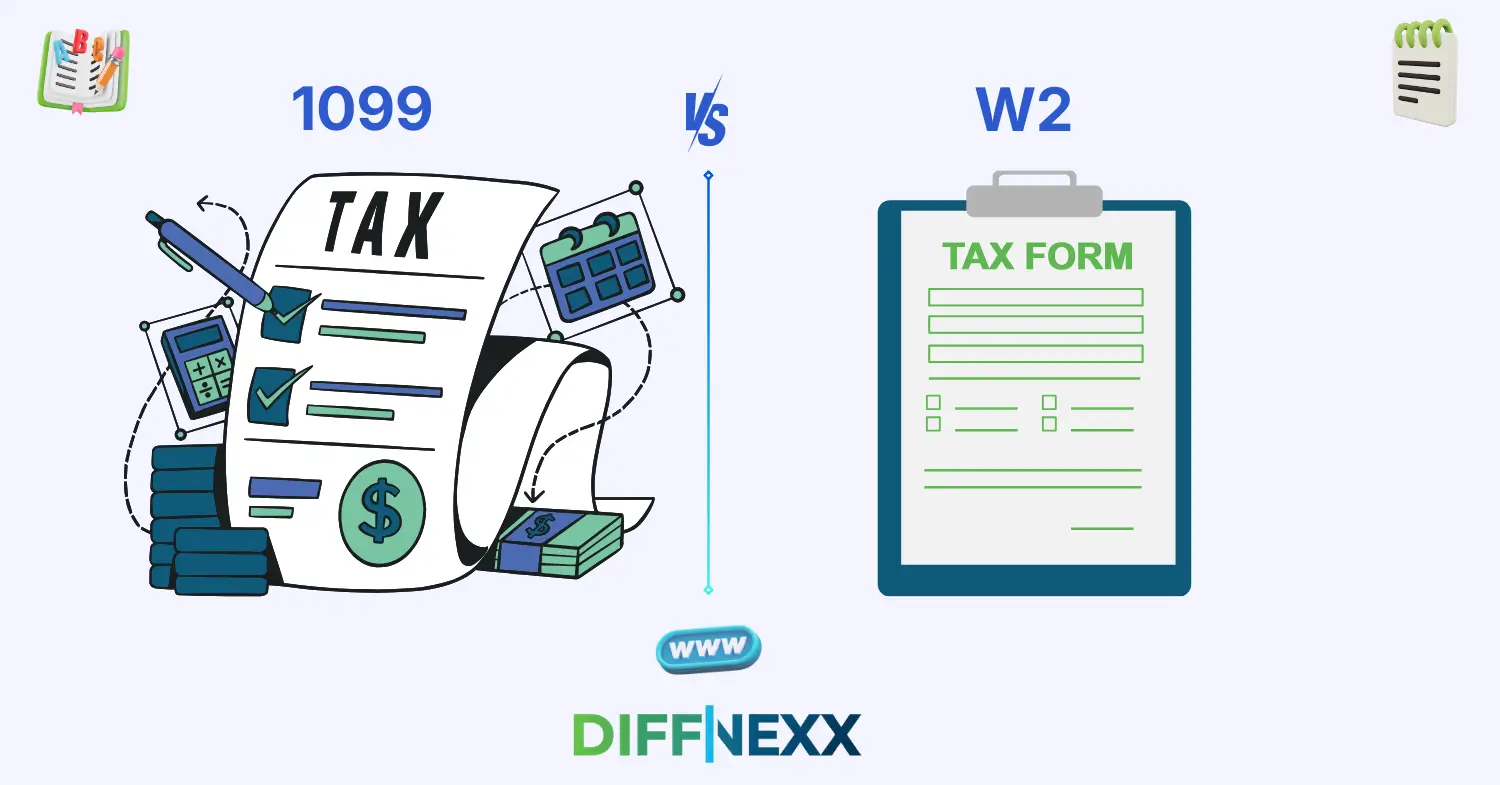
The difference between 1099 and W2 matters because these forms affect how you pay taxes, get benefits, and report income. A W2 typically represents a traditional employee, while a 1099 often applies to independent contractors.
Understanding the difference between 1099 and W2 helps you make informed career decisions. Knowing this also prevents surprises at tax time and ensures you receive the correct legal protections.
By the end of this guide, you’ll clearly see how a 1099 and W2 differ and why it matters for both employees and employers. Let’s break it down step by step.
Key Difference Between the Both
At a glance, the key difference is simple: W2 employees are officially employed by a company, while 1099 workers are independent contractors. This distinction affects taxes, benefits, work flexibility, and legal responsibilities.
Importance – Why Their Difference Matters
Knowing the difference is essential for both learners and professionals. For employees, it affects income reporting, tax obligations, and benefits eligibility. For employers, it ensures compliance with labor laws and prevents legal penalties.
Socially, understanding the distinction avoids confusion when negotiating contracts or discussing employment terms. It also helps workers plan finances responsibly and avoid unexpected liabilities.
Pronunciation
1099
- US: /ˌwʌn.oʊ.naɪn.naɪn/
- UK: /ˌwʌn.oʊ.naɪn.naɪn/
W2
- US: /ˌdʌb.əl.juːˈtuː/
- UK: /ˌdʌb.əl.juːˈtuː/
With pronunciation clarified, let’s move into a deeper comparison to understand their core meanings and implications.
Core Definitions
1099
A 1099 form is for independent contractors who handle their own taxes. It’s flexible but requires personal responsibility.
Example: Jane earns $500 a week designing websites for clients and files a 1099 at the end of the year.
W2
A W2 form is for employees whose taxes are automatically withheld by their employer. It often comes with benefits like health insurance.
Example: Mark works full-time at a marketing firm and receives a W2 each January.
10 Clear Differences Between 1099 and W2
1. Employment Status
1099: Independent contractor, self-employed.
W2: Employee, company-controlled.
- Example 1099: Freelance photographer managing own clients.
- Example W2: Office manager working 9–5 for a company.
2. Tax Responsibilities
1099: Handles all taxes, including self-employment tax.
W2: Employer withholds income, Social Security, and Medicare taxes.
- Example 1099: Pays quarterly estimated taxes.
- Example W2: Receives a paycheck with taxes already deducted.
3. Benefits
1099: No company benefits; responsible for own insurance.
W2: Eligible for health insurance, retirement plans, paid leave.
- Example 1099: Buys personal health plan.
- Example W2: Enrolled in employer’s 401(k) plan.
4. Work Flexibility
1099: Flexible schedule; sets own hours.
W2: Fixed schedule; employer dictates hours.
- Example 1099: Chooses when and where to work.
- Example W2: Required to work Monday–Friday, 9–5.
5. Job Security
1099: Contracts can end anytime; less secure.
W2: More stable; employment protected by labor laws.
- Example 1099: One-month contract with a client.
- Example W2: Full-time permanent position.
6. Legal Protections
1099: Limited protection; responsible for own compliance.
W2: Protected by labor laws, minimum wage, and anti-discrimination rules.
- Example 1099: Must handle disputes alone.
- Example W2: Can report workplace issues to HR.
7. Payment Structure
1099: Paid per project or invoice.
W2: Paid regular wages or salary.
- Example 1099: $1,000 per completed website.
- Example W2: $4,000 monthly salary.
8. Record-Keeping
1099: Must track expenses for deductions.
W2: Employer tracks income; employee keeps a copy for taxes.
- Example 1099: Maintains spreadsheets of expenses.
- Example W2: Receives annual W2 from employer.
9. IRS Reporting
1099: IRS receives a copy from client if paid $600+.
W2: IRS receives a copy from employer automatically.
- Example 1099: Files Schedule C for business income.
- Example W2: Reports wages directly from W2 form.
10. Independence Level
1099: High independence; client controls result, not method.
W2: Low independence; employer controls tasks and methods.
- Example 1099: Designs marketing material in own style.
- Example W2: Follows company-approved marketing guidelines.
Why Knowing the Difference Matters
Students need to know this for internships or freelance work. Understanding the difference ensures proper tax filing and career planning.
Professionals must understand the distinction for negotiating contracts and knowing rights. Misclassification can lead to lost benefits or legal issues.
Socially, clarity prevents miscommunication when discussing pay or work arrangements. For example, telling someone you’re a W2 employee vs. a 1099 contractor can change expectations.
Real-world consequences of confusion
Filing the wrong tax form or misclassifying a worker can lead to IRS penalties, missed benefits, and legal disputes. Clear understanding ensures smoother professional and financial life.
Why People Get Confused
Similar Spelling or Pronunciation
Both terms involve numbers and letters, making them visually and verbally similar.
Semantic Overlap
Both relate to work income and taxes, causing overlap in casual conversation.
Context-based Usage
Some employers use “contractor” loosely, blurring the lines with W2 employees.
Influence of Informal Speech
People often say “I’m W2” or “I do 1099 work,” creating casual ambiguity.
Connotation & Emotional Tone
Connotation = the emotional meaning associated with a word.
1099:
- Positive: Freedom and flexibility. Example: Enjoys being their own boss.
- Negative: Risky, uncertain. Example: Worried about tax compliance.
- Neutral: Simply indicates self-employment.
W2:
- Positive: Stability, benefits. Example: Secure paycheck and insurance.
- Negative: Less autonomy. Example: Feels micromanaged.
- Neutral: Standard employment designation.
Usage in Metaphors, Similes & Idioms
While there are no classic idioms for 1099 or W2, they often appear in business metaphors:
- “He’s flying solo like a 1099 contractor” (independence).
- “She’s a W2 anchor” (stability at work).
Comparison Table
| Feature | 1099 | W2 |
|---|---|---|
| Meaning | Independent contractor | Employee |
| Tone | Flexible, self-reliant | Stable, structured |
| Usage | Freelance, project-based work | Regular, salaried employment |
| Context | Short-term contracts, gig economy | Long-term employment, company |
| Formality | Informal, contract-driven | Formal, HR-driven |
Which Is Better in What Situation?
When to use 1099
Ideal for freelancers, side gigs, or independent projects. Allows control over schedule and work methods.
When to use W2
Best for full-time employees who want job security, benefits, and legal protections.
Situational Clarity
Choosing depends on lifestyle, financial goals, and risk tolerance. Freelancers enjoy freedom but carry more responsibility, whereas W2 employees trade flexibility for stability.
Literary or Cultural References
- Book: “Gig Economy: The Ultimate Guide” (Nonfiction, Diane Mulcahy, 2016) – explains 1099 work life.
- Movie: The Intern (US, 2015) – shows W2 employment stability vs. entrepreneurial projects.
FAQs
1. Can a worker be both 1099 and W2?
Yes, some individuals have a full-time W2 job and freelance on a 1099 basis. Each income is reported separately.
2. Do 1099 workers get paid more?
Not necessarily. 1099 pay can be higher per project but lacks benefits, which may reduce overall value.
3. Who decides 1099 vs W2?
The employer or client determines it based on work type and IRS guidelines.
4. Is a 1099 easier for taxes?
No, 1099 workers must calculate and pay their own taxes, often quarterly. W2 taxes are automatically withheld.
5. Can misclassifying cause legal trouble?
Yes, employers misclassifying W2 employees as 1099 can face fines, penalties, and back taxes.
Conclusion
The difference between 1099 and W2 is more than paperwork it affects taxes, benefits, independence, and legal rights. Understanding these distinctions helps workers and employers make informed decisions.
For freelancers, 1099 offers freedom but greater responsibility. W2 employment ensures security, steady income, and benefits. Clear knowledge avoids tax mistakes and workplace confusion.
Stay informed, know your classification, and manage your work life confidently. Accurate understanding today saves stress tomorrow.

Eliza Marlowe is a passionate content strategist and comparison writer at diffnexx.com. She specializes in breaking down complex “difference between” topics into clear, reader-friendly guides. With a background in linguistics and digital research, Eliza focuses on accuracy, clarity, and content that helps readers make informed decisions with confidence.