Difference between probation and parole often appears in courtroom dramas and news reports. Imagine a person who commits a minor crime. Instead of going to prison, the judge allows them to live in the community under supervision. In another case, someone serves time in prison but later leaves early with certain conditions. These two situations may sound similar, but they are legally different.
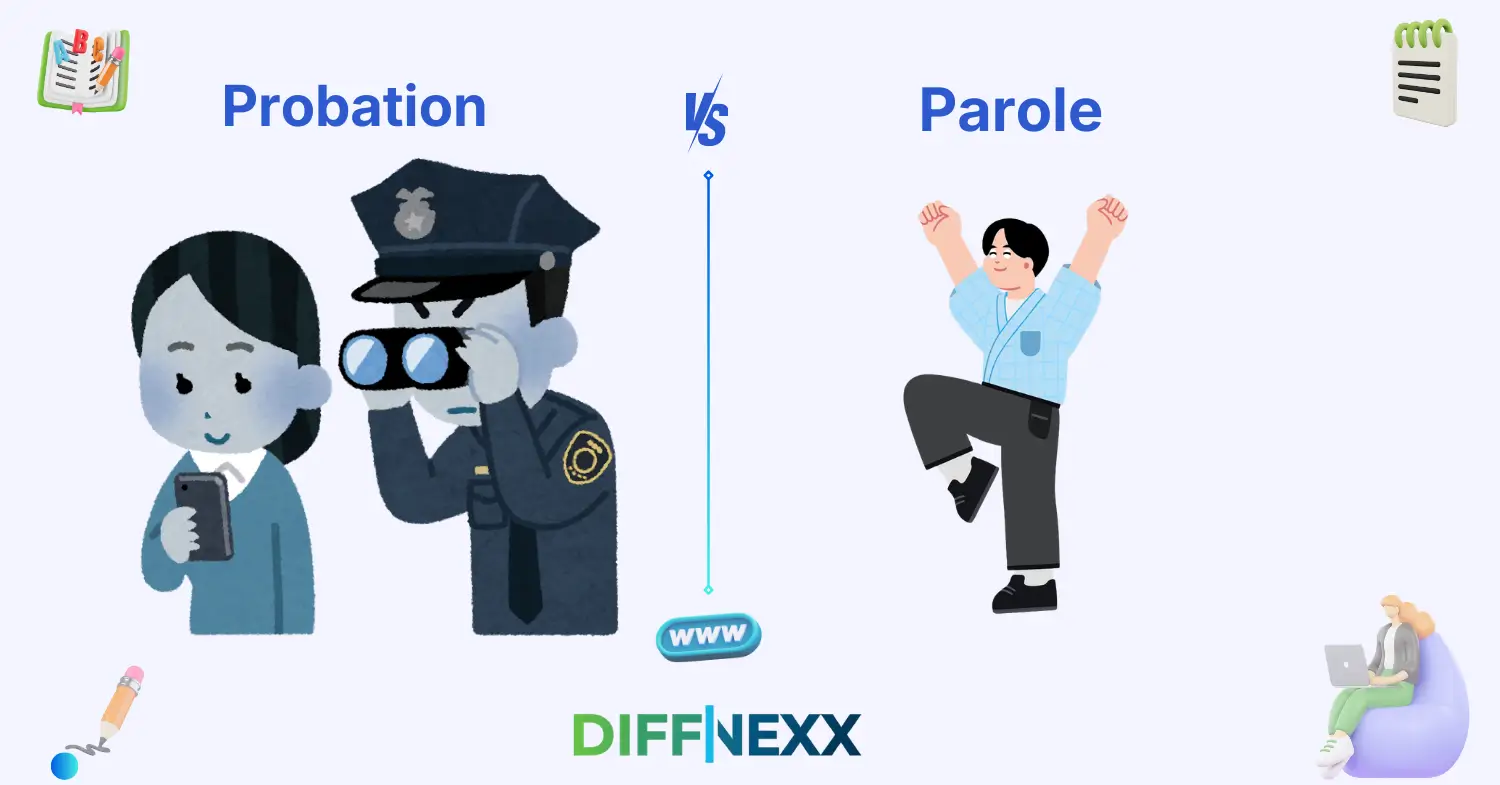
The difference between probation and parole lies in when and how the legal system applies them. Probation usually replaces a prison sentence. Parole happens after someone has already served part of a prison sentence.
Understanding the difference between probation and parole helps students, legal learners, and citizens understand how the justice system works. Both are forms of supervised freedom, but they operate at different stages of a criminal sentence.
To see how these legal terms truly differ, let’s explore their key distinctions step by step.
Key Difference Between the Both
The main difference between probation and parole involves timing in the criminal justice process.
Probation is an alternative to prison. A judge allows a person convicted of a crime to remain in the community under supervision instead of serving time in jail.
Parole, however, happens after a person has already served part of a prison sentence. A parole board may release the individual early, but the person must follow strict rules while living outside prison.
In simple terms:
- Probation = Supervision instead of prison
- Parole = Supervision after prison
Both involve monitoring by authorities and strict conditions that must be followed.
Importance – Why Knowing Their Difference Matters
Understanding the difference between probation and parole is important for both learners and professionals in the legal field.
For law students and criminal justice learners, knowing these terms helps interpret legal documents and court decisions accurately. The two concepts represent different stages in sentencing.
For legal professionals such as lawyers, judges, and probation officers, distinguishing between probation and parole helps ensure the correct legal process is followed.
In society, awareness of these legal terms improves public understanding of justice systems. When citizens understand how supervision works outside prison, they can better evaluate legal policies and criminal justice reforms.
🔊 Pronunciation Section
Probation
US: /proʊˈbeɪ.ʃən/
UK: /prəʊˈbeɪ.ʃən/
Parole
US: /pəˈroʊl/
UK: /pəˈrəʊl/
Both terms are common in legal discussions and media reports. Learning their pronunciation helps students recognize them in lectures, news coverage, and courtroom contexts.
Now that we know how to say these terms, let’s define them clearly.
Core Definitions
Probation
Probation is a court-ordered period of supervision in the community instead of serving time in prison. The person must follow certain conditions such as reporting to an officer and avoiding further crimes.
Example:
A first-time offender receives probation instead of a six-month jail sentence.
Parole
Parole is the conditional release of a prisoner before completing the full prison sentence. The individual must follow strict rules and remain under supervision.
Example:
After serving five years of a ten-year sentence, the prisoner receives parole and continues the sentence in the community.
10 Clear Differences Between Probation and Parole
1. Timing in the Legal Process
Probation happens instead of jail time.
Parole happens after part of a prison sentence is served.
Example for Probation:
A judge sentences a defendant to two years of probation.
Example for Parole:
A prisoner is released after completing half of the sentence.
2. Decision Authority
A judge usually grants probation during sentencing.
A parole board decides whether to grant parole.
Example for Probation:
The court orders probation during the trial’s final decision.
Example for Parole:
A parole board reviews behavior in prison before release.
3. Prison Involvement
Probation avoids prison completely.
Parole requires serving some time in prison first.
Example for Probation:
The offender never enters jail.
Example for Parole:
The prisoner completes several years behind bars.
4. Purpose of the Program
Probation aims to rehabilitate offenders without imprisonment.
Parole focuses on reintegrating prisoners back into society.
Example for Probation:
The court encourages rehabilitation through supervision.
Example for Parole:
Authorities support the transition from prison life to society.
5. Severity of Crimes
Probation often applies to less serious crimes.
Parole typically applies to more serious offenses that involve prison sentences.
Example for Probation:
A minor theft case results in probation.
Example for Parole:
A long prison sentence may eventually lead to parole.
6. Monitoring Process
Probation officers supervise individuals in the community.
Parole officers monitor individuals released from prison.
Example for Probation:
A probation officer checks the offender’s employment status.
Example for Parole:
A parole officer monitors behavior after prison release.
7. Legal Context
Probation occurs in court sentencing decisions.
Parole occurs during correctional system decisions.
Example for Probation:
A judge announces probation in court.
Example for Parole:
A parole board reviews eligibility.
8. Psychological Impact
Probation allows individuals to avoid prison trauma.
Parole helps prisoners adjust gradually to life outside prison.
Example for Probation:
The offender maintains family connections.
Example for Parole:
Former prisoners slowly reintegrate into society.
9. Public Perception
Probation often appears as a lighter legal penalty.
Parole may seem like early release after punishment.
Example for Probation:
People see probation as a second chance.
Example for Parole:
Parole sometimes sparks debate about public safety.
10. Expression in Legal Language
Probation appears frequently in sentencing discussions.
Parole appears in correctional and prison release contexts.
Example for Probation:
The court granted probation for two years.
Example for Parole:
The inmate was eligible for parole after five years.
Why Knowing the Difference Matters
Students studying law or criminal justice benefit from understanding the difference between probation and parole. Accurate terminology helps them interpret legal cases and policies correctly.
Legal professionals rely on these distinctions daily. Judges, attorneys, and corrections officers must understand how sentencing and supervision processes operate.
For the general public, understanding these terms promotes informed discussion about criminal justice systems.
Real-World Consequences of Confusion
Confusing probation with parole can create misunderstandings about legal outcomes. Someone might assume a person avoided prison when they actually served time before release.
Clear knowledge improves public trust in the justice system and supports informed civic discussion.
Why People Get Confused
Similar Sound and Structure
Both words appear in legal contexts and involve supervised freedom, which makes them seem similar.
Semantic Overlap
Probation and parole both require monitoring and compliance with rules outside prison.
Context-Based Usage
News reports sometimes mention both terms without detailed explanation.
Influence of Informal Speech
In everyday conversations, people often use these terms interchangeably, even though their legal meanings differ.
Connotation & Emotional Tone
Connotation refers to the emotional meaning associated with a word.
Probation
Positive:
Probation suggests rehabilitation and a second chance.
Example:
A judge grants probation to encourage reform.
Neutral:
In legal contexts, probation simply refers to supervised freedom.
Negative:
Some people may view probation as lenient punishment.
Parole
Positive:
Parole can represent successful rehabilitation and trust in the individual.
Example:
The parole board approves early release after good behavior.
Neutral:
Legally, parole means conditional release from prison.
Negative:
Some critics believe parole may risk public safety.
Usage in Metaphors, Similes & Idioms
Probation and parole are legal terms, so they rarely appear in idioms. However, they sometimes appear metaphorically in everyday speech.
Examples:
- “The project is on probation until we see better results.”
- “His reputation is on parole after the scandal.”
These metaphors use legal ideas to describe conditional trust.
Comparison Table
| Feature | Probation | Parole |
|---|---|---|
| Meaning | Supervision instead of prison | Supervision after prison |
| Tone | Rehabilitation opportunity | Conditional early release |
| Usage | Court sentencing | Prison release process |
| Context | Criminal court system | Correctional system |
| Formality | Legal term | Legal term |
Which Is Better in What Situation?
When to Use Probation
Use probation when discussing court decisions that allow offenders to remain in the community instead of going to prison.
When to Use Parole
Use parole when describing the conditional release of prisoners who have already served part of their sentence.
Situational Clarity
Probation applies during sentencing, while parole applies during prison release decisions.
Contextual Correctness
Using the correct term helps ensure legal accuracy and avoids misunderstanding in discussions about criminal justice.
Literary or Cultural References
Book:
Just Mercy (Legal Memoir, Bryan Stevenson, 2014)
The book explores the criminal justice system and rehabilitation.
Movie:
The Shawshank Redemption (USA, 1994)
The film famously portrays the parole process during a prisoner’s release hearings.
FAQs
1. What is the main difference between probation and parole?
Probation replaces prison time, while parole occurs after a person has served part of a prison sentence.
2. Can someone violate probation or parole?
Yes. Violating conditions such as missing meetings with an officer or committing another crime may lead to imprisonment.
3. Who supervises probation and parole?
Probation officers supervise individuals on probation, while parole officers supervise individuals released from prison.
4. Is probation considered a punishment?
Yes. Although it allows freedom in the community, probation includes strict rules and supervision.
5. Can parole be denied?
Yes. A parole board reviews the prisoner’s behavior and may deny early release if requirements are not met.
Conclusion
The difference between probation and parole mainly relates to timing within the criminal justice process. Probation allows individuals to remain in the community instead of serving time in prison, while parole releases prisoners early after they have served part of their sentence.
Both systems aim to balance punishment, rehabilitation, and public safety. They provide structured supervision while helping individuals reintegrate into society.
Understanding these distinctions improves legal literacy and helps people interpret criminal justice decisions accurately. By learning the meaning of terms like probation and parole, citizens can engage more thoughtfully in discussions about law, fairness, and rehabilitation.

Anton Reyes is a contributing writer at DiffNexx.com, where he explores meaningful differences in language, culture, and everyday concepts. With a background in creative nonfiction, Anton brings clarity and balance to complex comparisons. His writing helps readers understand subtle distinctions in words and ideas, making learning both insightful and engaging.