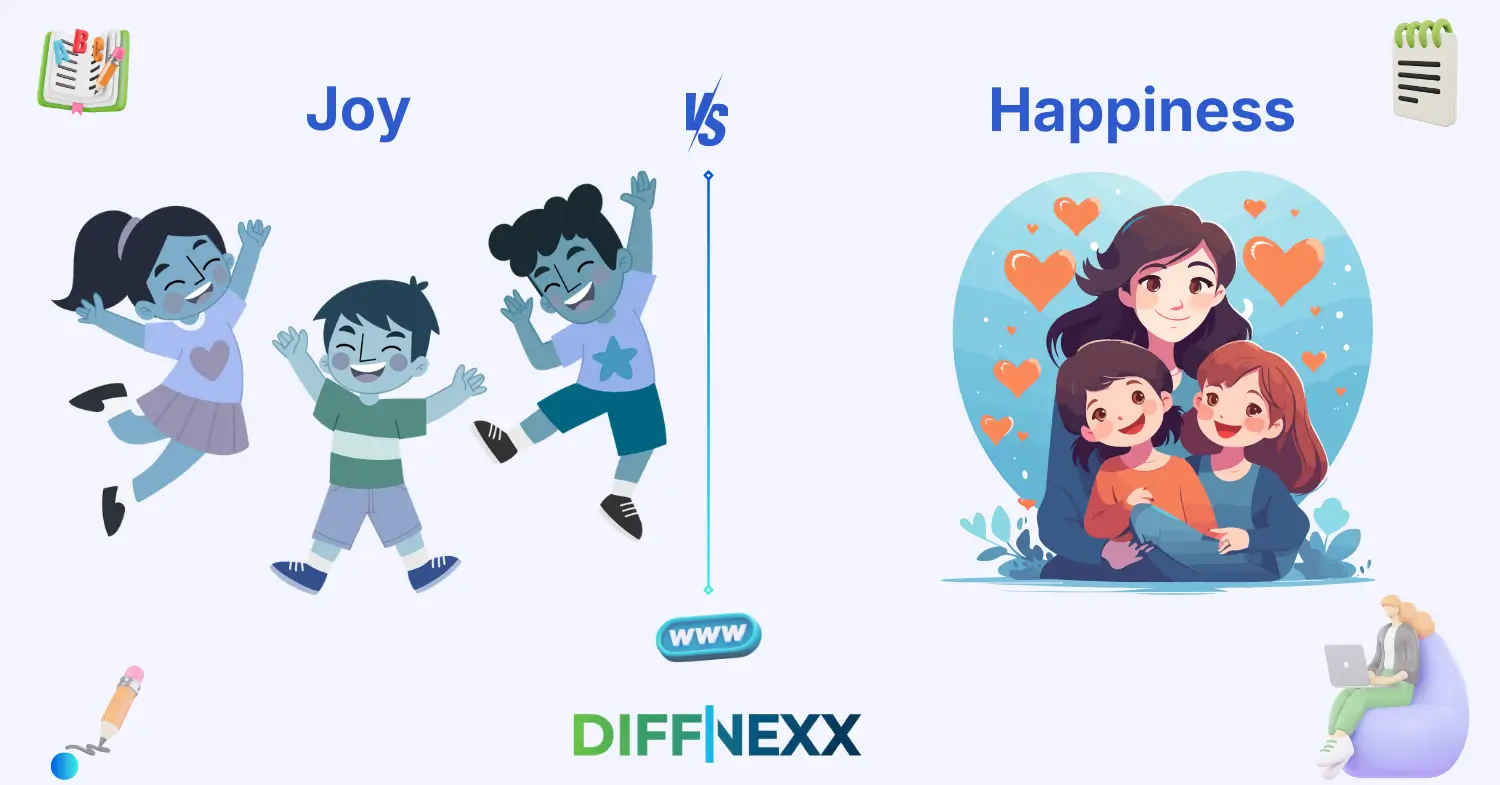
Difference between joy and happiness often appears in everyday conversations, yet many people use these words as if they mean exactly the same thing. Imagine a child opening a birthday gift. The child laughs and smiles with excitement. Later that evening, the child sits quietly with family, feeling peaceful and content. Both moments feel good but they are slightly different emotions.
The difference between joy and happiness lies in depth and experience. Joy usually feels deeper and more lasting. It often comes from meaningful moments or inner peace. Happiness, on the other hand, often appears when something pleasant happens in the moment.
Understanding the difference between joy and happiness helps learners express emotions more clearly. These two words describe positive feelings, but they carry slightly different meanings and emotional tones.
Before exploring the details, let’s look at the key distinction between these two powerful emotions.
Key Difference Between the Both
The core difference between joy and happiness is emotional depth and origin.
Happiness usually comes from external events. It appears when something good happens, such as receiving good news, eating delicious food, or achieving a goal.
Joy, however, often grows from deeper inner feelings. It may appear during meaningful moments such as helping others, connecting with loved ones, or experiencing gratitude.
In simple terms:
- Happiness = Pleasure from external events
- Joy = Deep inner emotional fulfillment
Both emotions are positive, but joy often feels more profound and lasting than happiness.
Importance – Why Knowing Their Difference Matters
Understanding the difference between joy and happiness benefits both learners and professionals.
For language learners, these words help express emotional nuance. Using the correct word improves communication and storytelling. It allows speakers to describe feelings more accurately.
For psychologists, educators, and writers, the distinction helps analyze human emotions. Researchers often study happiness as a measurable emotional state, while joy is seen as a deeper psychological experience.
In society, emotional vocabulary strengthens communication. When people understand these differences, they can express gratitude, satisfaction, and well-being more clearly in relationships and conversations.
🔊 Pronunciation Section
Joy
US: /dʒɔɪ/
UK: /dʒɔɪ/
Happiness
US: /ˈhæp.i.nəs/
UK: /ˈhæp.i.nəs/
Both words sound very different, but they often appear together in emotional discussions. Understanding their pronunciation helps learners recognize and use them confidently in speech and writing.
Now let’s define these emotions more clearly before comparing them in detail.
Core Definitions
Joy
Joy is a deep feeling of delight, peace, or emotional fulfillment. It often comes from meaningful experiences, gratitude, or inner satisfaction.
Example:
A mother feels joy when she sees her child succeed in school.
Happiness
Happiness is a pleasant emotional state that appears when something positive happens. It often relates to comfort, pleasure, or satisfaction.
Example:
A person feels happiness after receiving a promotion at work.
10 Clear Differences Between Joy and Happiness
1. Emotional Intensity
Joy often feels deeper and more profound. It touches a person’s inner emotional state.
Happiness feels lighter and more immediate.
Example for Joy:
She felt deep joy while volunteering at the shelter.
Example for Happiness:
He felt happy after watching a funny movie.
2. Duration
Joy tends to last longer. It can remain even during difficult times.
Happiness usually lasts for a shorter period.
Example for Joy:
The joy of becoming a parent stayed with her for years.
Example for Happiness:
He felt happy after eating his favorite dessert.
3. Focus
Joy often focuses on meaning and connection.
Happiness focuses more on pleasant experiences.
Example for Joy:
She found joy in helping her community.
Example for Happiness:
He felt happy after buying a new phone.
4. Emotional Depth
Joy reaches deeper emotional layers.
Happiness usually stays on the surface of daily feelings.
Example for Joy:
Meditation brought him deep joy and calm.
Example for Happiness:
Winning a small prize made her happy.
5. Rationality
Joy often grows slowly through reflection and gratitude.
Happiness can appear instantly when something enjoyable happens.
Example for Joy:
He felt joy after realizing how much his family supported him.
Example for Happiness:
She felt happy when her team won the game.
6. Formality
Joy sometimes appears in literature, poetry, and spiritual writing.
Happiness appears frequently in everyday conversation.
Example for Joy:
The poem described the joy of nature.
Example for Happiness:
People often say, “I just want to be happy.”
7. Context of Use
Joy appears in emotional or meaningful contexts.
Happiness appears in casual daily experiences.
Example for Joy:
Graduation brought her family great joy.
Example for Happiness:
A sunny day made him happy.
8. Psychological Impact
Joy can support long-term well-being and life satisfaction.
Happiness usually reflects a temporary mood.
Example for Joy:
Acts of kindness created lasting joy in her life.
Example for Happiness:
Buying new clothes made him happy for a day.
9. Tone
Joy often sounds deeper and more heartfelt.
Happiness sounds light and cheerful.
Example for Joy:
The reunion filled her heart with joy.
Example for Happiness:
He felt happy during the holiday party.
10. Expression Style
Joy may appear quietly or emotionally.
Happiness often appears through visible excitement.
Example for Joy:
She smiled softly, feeling joy in the peaceful moment.
Example for Happiness:
He jumped with happiness after winning the prize.
Why Knowing the Difference Matters
Students benefit from understanding the difference between joy and happiness because it improves vocabulary precision. Emotional language becomes richer and more expressive.
Professionals such as writers, counselors, and teachers also benefit. These words help them describe emotional states more accurately when communicating ideas or analyzing experiences.
In everyday communication, clear emotional language builds stronger relationships. People can express gratitude, fulfillment, and contentment more thoughtfully.
Real-World Consequences of Confusion
When people confuse these words, emotional meaning may become unclear. For example, describing a deep life experience as simple happiness may reduce the emotional depth of the moment.
Similarly, writers and speakers may miss the chance to communicate powerful feelings with greater clarity.
Why People Get Confused
Similar Meaning in Everyday Language
Joy and happiness both describe positive emotions. Because of this overlap, many speakers treat them as synonyms.
Semantic Overlap
Both emotions involve pleasure, satisfaction, and positive feelings. This similarity creates confusion for language learners.
Context-Based Usage
In casual conversation, people rarely separate emotional nuances. They often say “happy” even when describing deeper feelings.
Influence of Informal Speech
Informal language simplifies emotional vocabulary. As a result, happiness often replaces joy in daily speech.
Connotation & Emotional Tone
Connotation refers to the emotional meaning associated with a word.
Joy
Positive:
Joy strongly suggests deep fulfillment and warmth.
Example: “The birth of their child brought immense joy.”
Neutral:
In neutral contexts, joy simply describes a strong positive feeling.
Negative:
Rarely negative, but sometimes used ironically.
Example: “He said with fake joy.”
Happiness
Positive:
Happiness suggests pleasure and satisfaction.
Example: “Traveling brings her happiness.”
Neutral:
In neutral contexts, it describes a pleasant emotional state.
Negative:
Occasionally used sarcastically.
Example: “That mistake certainly didn’t bring happiness.”
Usage in Metaphors, Similes & Idioms
Both words appear in figurative language.
Idioms and expressions
- “Jump for joy”
- “Tears of joy”
- “Spread happiness”
Example sentences:
She jumped for joy after hearing the good news.
The teacher worked hard to spread happiness in the classroom.
These expressions show how both emotions appear in everyday language and storytelling.
Comparison Table
| Feature | Joy | Happiness |
|---|---|---|
| Meaning | Deep emotional fulfillment | Pleasant emotional state |
| Tone | Deep, heartfelt | Light, cheerful |
| Usage | Meaningful life moments | Daily positive experiences |
| Context | Emotional or spiritual | Casual and everyday |
| Formality | Often literary or reflective | Common in conversation |
Which Is Better in What Situation?
When to Use Joy
Use joy when describing deep emotional experiences or meaningful moments. For example, someone may feel joy while reconnecting with family or helping others.
When to Use Happiness
Use happiness when describing everyday pleasure or satisfaction. It works well for casual conversations about mood or enjoyable experiences.
Situational Clarity
Joy fits emotional storytelling, literature, and reflective discussions.
Contextual Correctness
Happiness suits daily conversations and simple descriptions of positive feelings.
Both words are valuable, but their meaning changes depending on emotional depth and context.
Literary or Cultural References
Book:
The Book of Joy (Non-fiction, Dalai Lama & Desmond Tutu, 2016)
The book explores the deeper meaning of joy and human well-being.
Movie:
Inside Out (USA, 2015)
The animated film explores emotions and highlights the role of happiness in human experience.
FAQs
1. Are joy and happiness the same emotion?
No. Both are positive emotions, but joy usually feels deeper and more meaningful, while happiness often relates to pleasant experiences.
2. Which emotion lasts longer?
Joy generally lasts longer because it connects to deeper life meaning. Happiness may appear briefly when something enjoyable happens.
3. Can someone feel joy without happiness?
Yes. A person may feel joy through gratitude or purpose even during challenging times.
4. Why do people use happiness more often?
Happiness is simpler and common in everyday speech. Joy often appears in emotional, literary, or reflective contexts.
5. Is joy stronger than happiness?
Many psychologists consider joy a deeper emotional experience, though both emotions are valuable and positive.
Conclusion
The difference between joy and happiness lies mainly in emotional depth and origin. Happiness usually comes from enjoyable moments, such as achievements, entertainment, or pleasant experiences. Joy, however, often grows from deeper feelings like gratitude, connection, and meaning.
Both emotions play important roles in human life. Happiness adds brightness to daily moments, while joy offers lasting emotional fulfillment. Understanding their difference helps learners communicate feelings more clearly and thoughtfully.
By choosing the right word, speakers and writers can describe emotions with greater precision and emotional richness. As you continue learning English, pay attention to how these words appear in conversations, books, and stories. Each one carries its own beautiful shade of positive emotion.

Aamer Shahzad is the founder of Distinly.com, a fast-growing educational platform focused on high-intent “difference between” topics. With over 8 years of experience in English language education and analytical writing, I specialize in breaking down complex “difference between” topics into clear, structured, and easy-to-understand explanations. Distinly.com is your go-to resource for enhancing English skills and writing with confidence.
I specializes in building search-optimized, research-driven comparison content designed for clarity, authority, and long-term digital asset value.