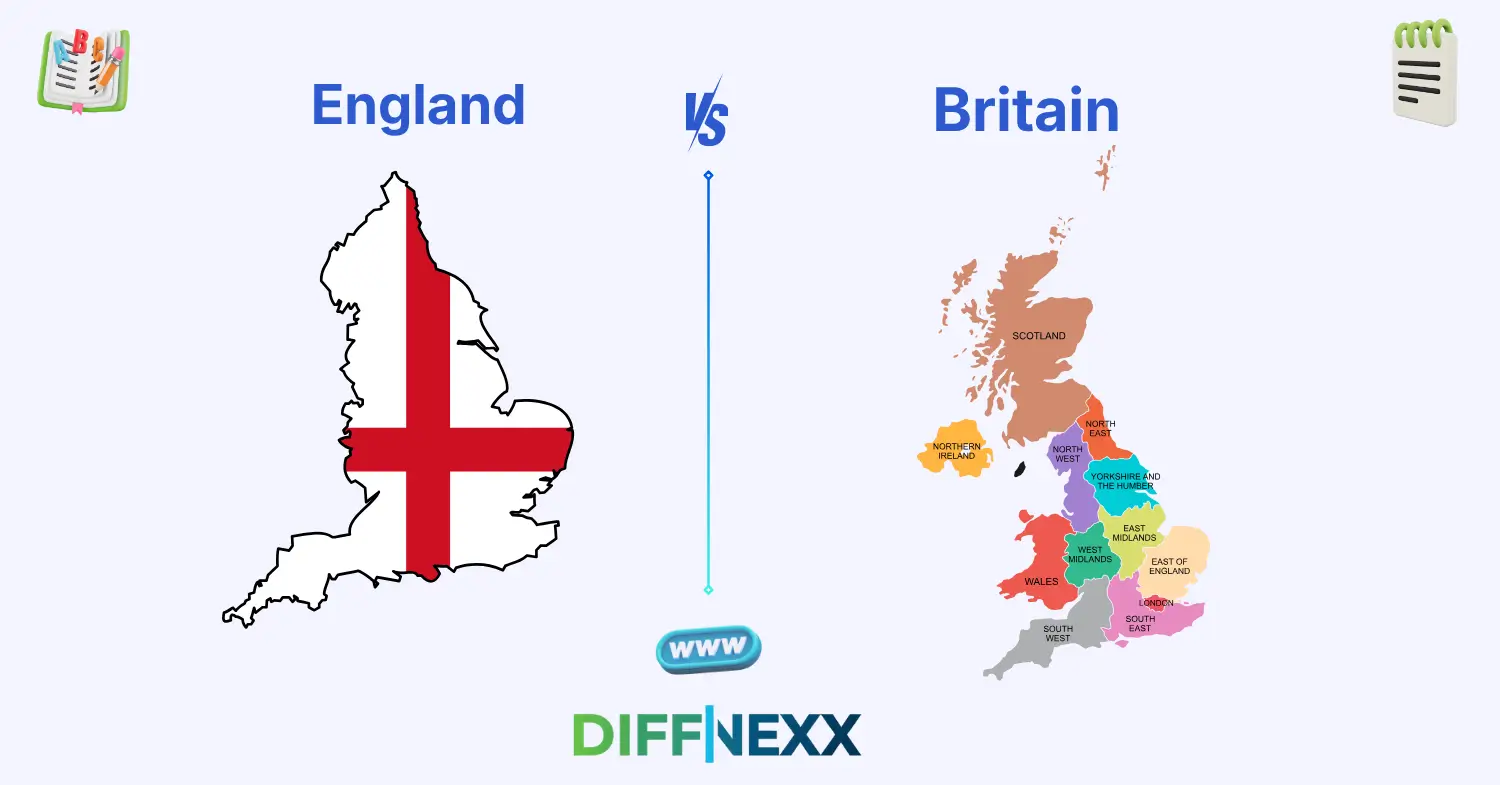
Difference between England and Britain is a common question, especially when people talk about travel, history, or sports. Imagine someone saying they visited “Britain,” while another says “England” are they the same place?
The difference between England and Britain is about geography and meaning. These terms are related, but they are not identical. Many people use them interchangeably, which leads to confusion.
Understanding the difference between England and Britain helps you speak accurately and avoid mistakes, especially in global conversations.
Let’s explore this in a simple and clear way 🌍
Key Difference Between the Both
The main difference is:
- England is a country.
- Great Britain (often called Britain) is a large island that includes multiple countries.
In short, England is part of Britain, but Britain is bigger than England.
Importance – Why Knowing the Difference Matters
Knowing this difference improves communication and avoids confusion.
Students learn geography more clearly and use correct terms in exams and discussions.
Professionals, especially in travel, education, and media, must use accurate language to avoid misinformation.
In society, using the right terms shows cultural awareness and respect for different regions.
🔊 Pronunciation Section
England
US: /ˈɪŋ.ɡlənd/
UK: /ˈɪŋ.ɡlənd/
Britain (Great Britain)
US: /ˈbrɪt.ən/
UK: /ˈbrɪt.ən/
Now that you know how to say them, let’s define them clearly.
📚 Core Definitions
England
England is one of the four countries in the United Kingdom. It has its own culture, cities, and government system within the UK.
Example: London is in England.
Britain (Great Britain)
Great Britain is the name of the island that includes three countries: England, Scotland, and Wales.
Example: Someone traveling across England, Scotland, and Wales is traveling across Britain.
📚 10 Clear Differences Between England and Britain
1. Geographical Scope
England is one country. Britain is a large island.
- Example (England): Visiting London only.
- Example (Britain): Traveling across three countries.
2. Political Meaning
England has a local identity. Britain is a broader regional term.
- Example (England): English laws.
- Example (Britain): Shared island identity.
3. Number of Countries
England is one country. Britain includes three countries.
- Example (England): One nation.
- Example (Britain): England + Scotland + Wales.
4. Usage in Daily Language
People often misuse “England” for all regions. Britain is more accurate in broader context.
- Example (England): “I live in England.”
- Example (Britain): “I live in Britain.”
5. Cultural Identity
England has English culture. Britain includes multiple cultures.
- Example (England): English traditions.
- Example (Britain): English, Scottish, Welsh cultures.
6. Formal vs Informal Use
England is specific. Britain is more general.
- Example (England): Formal geographic reference.
- Example (Britain): Broader term.
7. Map Representation
England is a smaller part of the map. Britain covers the entire island.
- Example (England): Southern part of island.
- Example (Britain): Whole island area.
8. Historical Context
England has its own history. Britain refers to shared history.
- Example (England): English monarchy.
- Example (Britain): Combined historical events.
9. Psychological Perception
England feels specific and local. Britain feels larger and inclusive.
- Example (England): Narrow identity.
- Example (Britain): Broader identity.
10. Expression Style
England is precise. Britain is collective.
- Example (England): “English football team.”
- Example (Britain): “British culture.”
🎯 Why Knowing the Difference Matters
Students need this knowledge for geography, exams, and global awareness.
Professionals must use correct terms in writing, travel, journalism, and education.
For everyday communication, it prevents misunderstandings and shows respect for regional identities.
Real-world consequences of confusion
Calling someone from Scotland “English” can offend them. Using correct terms avoids such mistakes.
🧠 Why People Get Confused
Similar Names
The terms sound related and are often used together.
Semantic Overlap
Both refer to the same general region.
Context-Based Usage
Media sometimes uses them interchangeably.
Informal Speech
People often say “England” when they mean Britain.
🎭 Connotation & Emotional Tone
Connotation = the emotional meaning associated with a word.
England
- Neutral to specific
- Suggests identity and precision
- Example: “She is proud of her English roots.”
Britain
- Broader and inclusive
- Suggests unity and diversity
- Example: “British culture is diverse.”
🗣 Usage in Metaphors, Similes & Idioms
- “He focused like England—precise and clear.”
- “Her ideas were like Britain—broad and inclusive.”
These expressions highlight specificity vs inclusiveness.
📊 Comparison Table
| Feature | England | Britain |
|---|---|---|
| Meaning | A country | A large island |
| Tone | Specific | Broad |
| Usage | Local identity | Regional identity |
| Context | One nation | Multiple nations |
| Formality | Precise | General |
⚖️ Which Is Better in What Situation?
When to use England
Use England when referring to the specific country, its cities, or its culture. For example, talk about English football or London.
When to use Britain
Use Britain when discussing the whole island or multiple countries together. It fits discussions about geography or shared culture.
Situational clarity
Choose England for precision. Choose Britain for broader meaning.
Contextual correctness
Using the right term avoids confusion and shows knowledge of geography.
📖 Literary or Cultural References
- Book: Notes from a Small Island (Travel, Bill Bryson, 1995) – explores Britain
- Movie: The King’s Speech (UK, 2010) – focuses on British history and monarchy
❓ FAQs
1. Is England the same as Britain?
No, England is one country, while Britain is a larger island that includes multiple countries.
2. What countries are in Britain?
Britain includes England, Scotland, and Wales.
3. Is Britain the same as the United Kingdom?
Not exactly. The United Kingdom includes Britain plus Northern Ireland.
4. Why do people mix up these terms?
They are often used informally and sound similar, which causes confusion.
5. Which term should I use?
Use England for the country and Britain for the island.
🏁 Conclusion
The difference between England and Britain is simple but important. England is a single country, while Britain is a larger island that includes England, Scotland, and Wales.
Understanding this distinction helps you communicate clearly and avoid common mistakes. It also shows respect for different cultures and identities within the region.
As you continue learning, remember that small differences in words can carry big meanings. Keep exploring geography you’ll gain confidence and clarity in your language.

Eliza Marlowe is a passionate content strategist and comparison writer at diffnexx.com. She specializes in breaking down complex “difference between” topics into clear, reader-friendly guides. With a background in linguistics and digital research, Eliza focuses on accuracy, clarity, and content that helps readers make informed decisions with confidence.