Difference between phenotype and genotype often comes up when you look at family traits. Imagine two siblings. They share the same parents, yet one has curly hair while the other has straight hair. Why does this happen?
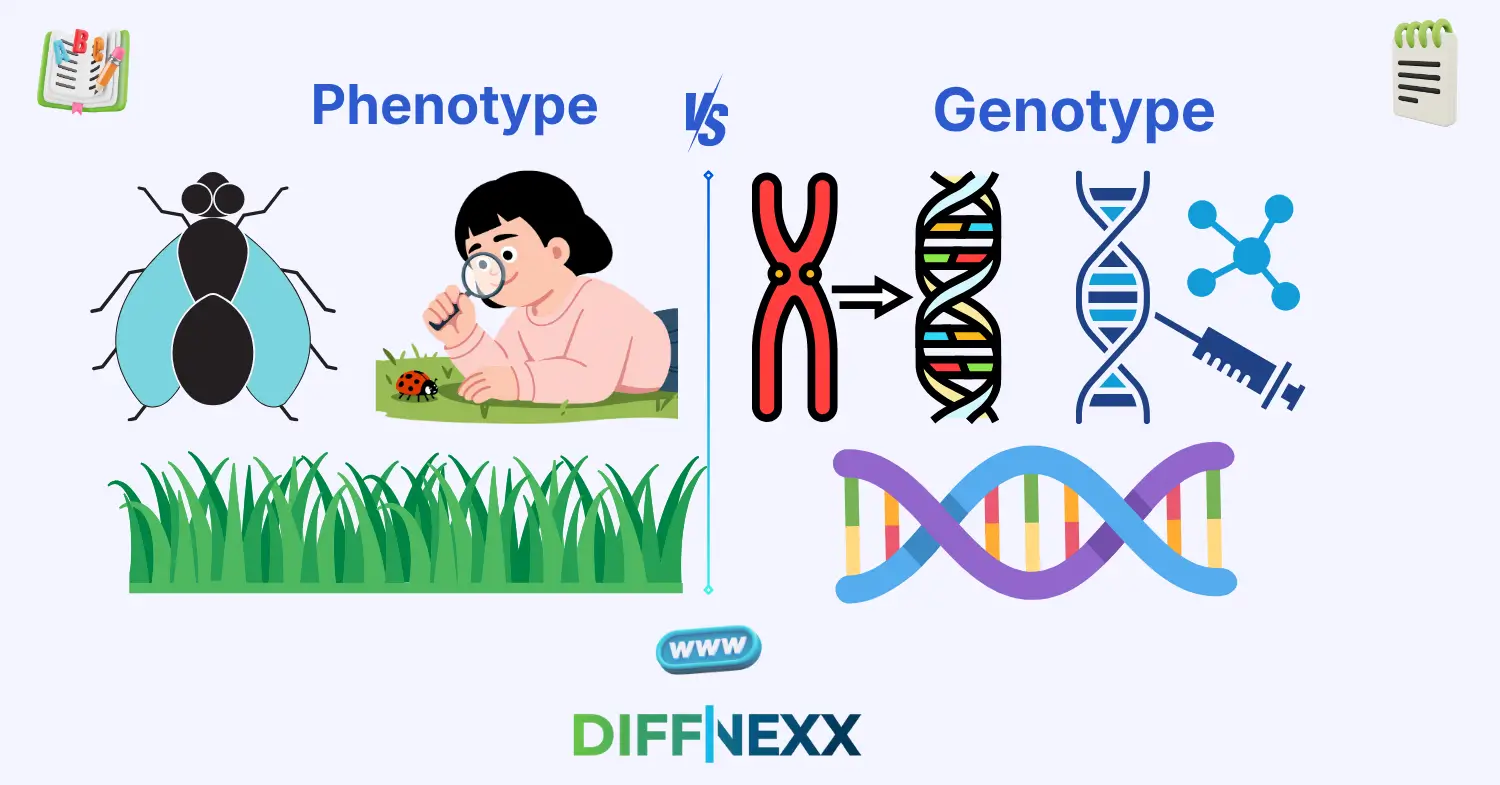
The difference between phenotype and genotype helps explain this. In simple terms, genotype is your genetic code, while phenotype is what you actually see. Your DNA carries instructions, but not all of them show up the same way.
People often confuse these terms because they are closely linked. Still, the difference between phenotype and genotype is important in biology, medicine, and everyday understanding of traits.
Let’s break it down clearly so you can understand how they work together but remain different.
Key Difference Between the Both
The key difference is simple:
- Genotype refers to the genetic makeup (your DNA).
- Phenotype refers to the observable traits (what you see).
In short, genotype is the cause, and phenotype is the result. However, the environment can also influence the phenotype, which makes the relationship more interesting.
Importance – Why This Difference Matters
Understanding the difference between phenotype and genotype is essential for both learners and experts.
For students, it builds a strong base in biology. It helps explain inheritance, variation, and evolution in simple terms.
For scientists and medical experts, this difference is crucial. It helps in studying genetic diseases, developing treatments, and predicting health risks.
In society, this knowledge improves awareness about genetics. It helps people understand that not all traits are purely inherited environment plays a role too.
🔊 Pronunciation Section
Phenotype
US: /ˈfiːnəˌtaɪp/
UK: /ˈfiːnətaɪp/
Genotype
US: /ˈdʒiːnəˌtaɪp/
UK: /ˈdʒiːnətaɪp/
Now that you know how to say them, let’s define them clearly before comparing.
📚 Core Definitions
Phenotype
Phenotype means the physical or observable traits of an organism. These include height, eye color, and behavior. It is influenced by both genes and environment.
Example: A person having brown eyes.
Genotype
Genotype refers to the genetic makeup of an organism. It is the set of genes inherited from parents. It determines the potential traits.
Example: A gene combination that codes for brown eyes.
📚 10 Clear Differences Between Phenotype and Genotype
1. Nature
Phenotype is visible and physical. Genotype is hidden inside DNA.
- Example for Phenotype: Tall height
- Example for Genotype: Genes responsible for height
2. Observability
Phenotype can be seen or measured. Genotype cannot be seen directly.
- Example for Phenotype: Blue eyes
- Example for Genotype: Alleles controlling eye color
3. Influence of Environment
Phenotype is affected by environment. Genotype is not.
- Example for Phenotype: Skin tanning due to sunlight
- Example for Genotype: Genes for skin color
4. Role
Phenotype shows the result. Genotype stores the instructions.
- Example for Phenotype: Curly hair
- Example for Genotype: DNA coding for hair texture
5. Change Over Time
Phenotype can change during life. Genotype remains mostly constant.
- Example for Phenotype: Weight gain
- Example for Genotype: Genetic structure remains the same
6. Study Method
Phenotype is studied through observation. Genotype is studied using genetic tests.
- Example for Phenotype: Measuring height
- Example for Genotype: DNA sequencing
7. Expression
Phenotype is the expression of genes. Genotype is the gene itself.
- Example for Phenotype: Freckles on skin
- Example for Genotype: Gene responsible for freckles
8. Complexity
Phenotype is more complex due to environment. Genotype is simpler as a code.
- Example for Phenotype: Intelligence influenced by learning
- Example for Genotype: Genetic potential for intelligence
9. Stability
Phenotype can vary. Genotype is stable across life.
- Example for Phenotype: Hair color changes with age
- Example for Genotype: Genetic code stays the same
10. Role in Evolution
Phenotype interacts with the environment. Genotype passes traits to the next generation.
- Example for Phenotype: Camouflage color
- Example for Genotype: Genes for camouflage
🎯 Why Knowing the Difference Matters
Students need this knowledge to understand genetics clearly. It helps in exams, research, and basic science learning.
Professionals like doctors and geneticists rely on this difference. It helps them diagnose diseases and study inherited conditions.
In society, knowing this difference avoids confusion. People understand that not all traits are fixed by genes alone.
Real-world consequences of confusion
If people confuse genotype with phenotype, they may misunderstand genetic diseases. They might think visible traits always reflect genetic truth, which is not correct.
🧠 Why People Get Confused
Similar Terms
Both words sound alike. This creates confusion, especially for beginners.
Semantic Overlap
They are closely related. One leads to the other, so people mix them up.
Context Usage
In biology discussions, both are often used together, which adds to confusion.
Informal Speech
People simplify terms in daily talk, making the meanings unclear.
🎭 Connotation & Emotional Tone
Connotation = the emotional meaning associated with a word.
Phenotype
- Neutral: Used in scientific context.
- Example: “Her phenotype includes tall height.”
Genotype
- Neutral: Purely scientific and technical.
- Example: “The genotype determines traits.”
🗣 Usage in Metaphors, Similes & Idioms
These terms are rarely used in idioms, but they appear in comparisons.
- “Your phenotype is like the final product.”
- “Your genotype is like a blueprint.”
Example sentences:
- Phenotype: “His phenotype shows strong physical traits.”
- Genotype: “His genotype carries those traits.”
📊 Comparison Table
| Feature | Phenotype | Genotype |
|---|---|---|
| Meaning | Observable traits | Genetic makeup |
| Tone | Neutral | Neutral |
| Usage | Physical appearance | Genetic analysis |
| Context | Daily observation | Scientific study |
| Formality | Medium | High |
⚖️ Which Is Better in What Situation?
When to use Phenotype
Use phenotype when talking about visible traits. For example, describing eye color or height.
When to use Genotype
Use genotype in scientific or genetic discussions. It explains inherited traits and DNA.
Situational clarity
Choose based on what you describe appearance or genetic code.
Contextual correctness
In casual talk, phenotype fits better. In research, genotype is more accurate.
📖 Literary or Cultural References
- Book: The Selfish Gene (Science, Richard Dawkins, 1976)
- Movie: Gattaca (USA, 1997) – explores genetic identity and traits
❓ FAQs
1. What is the main difference between phenotype and genotype?
The main difference is that genotype is the genetic code, while phenotype is the visible result of that code. Phenotype is influenced by both genes and environment.
2. Can phenotype change over time?
Yes, phenotype can change. Factors like diet, climate, and lifestyle can affect it. However, genotype remains the same.
3. Is genotype visible?
No, genotype is not visible. It exists in DNA and can only be studied through genetic testing.
4. Do all genotypes produce the same phenotype?
No, the same genotype can produce different phenotypes due to environmental factors. This is why identical twins can have slight differences.
5. Why is phenotype important?
Phenotype helps us understand how genes are expressed. It also helps in studying evolution, health, and physical traits.
🏁 Conclusion
The difference between phenotype and genotype is simple but powerful. Genotype is your genetic blueprint, while phenotype is how that blueprint appears in real life. Both are closely connected, yet they serve different roles.
Understanding this difference helps you grasp how traits are inherited and expressed. It also shows how environment shapes what we see.
For students, this builds a strong science foundation. For professionals, it supports deeper research and medical insights.
Keep learning and observing. The more you understand these concepts, the clearer biology becomes. 🌱

Aamer Shahzad is the founder of Distinly.com, a fast-growing educational platform focused on high-intent “difference between” topics. With over 8 years of experience in English language education and analytical writing, I specialize in breaking down complex “difference between” topics into clear, structured, and easy-to-understand explanations. Distinly.com is your go-to resource for enhancing English skills and writing with confidence.
I specializes in building search-optimized, research-driven comparison content designed for clarity, authority, and long-term digital asset value.