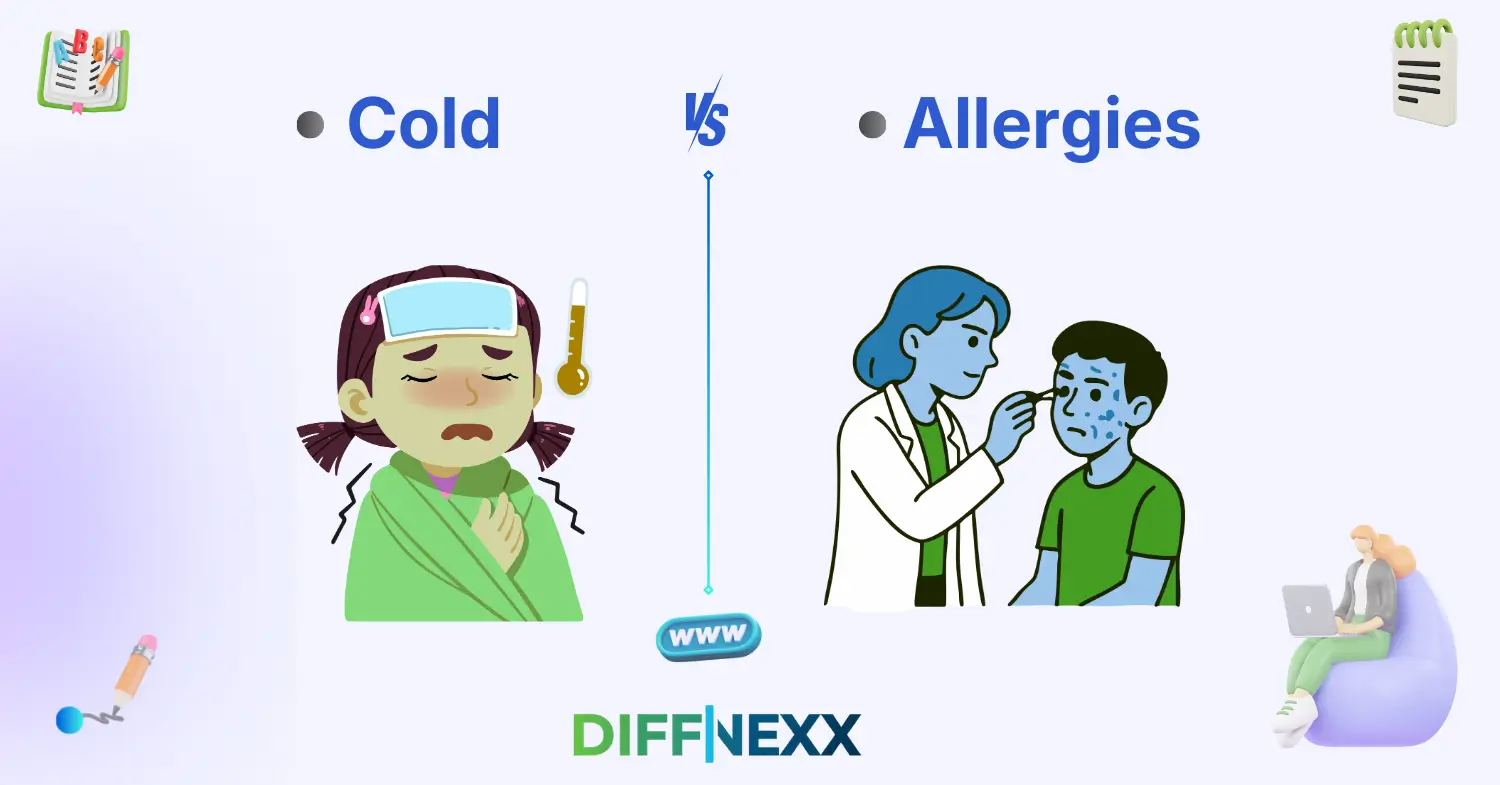
Difference between cold and allergies becomes confusing when you wake up with a runny nose and watery eyes. You ask yourself, “Am I sick, or is it just pollen?” Many people face this question every year, especially during seasonal changes.
The difference between cold and allergies is not always obvious at first. Both can cause sneezing, congestion, and tiredness. However, they have different causes and require different responses.
A cold is caused by a virus. Allergies happen when your immune system overreacts to harmless substances like dust or pollen. Understanding the difference between cold and allergies helps you choose the right treatment and avoid unnecessary worry.
Let’s explore the key facts clearly and simply.
Key Difference Between the Both
The main difference is the cause.
A cold comes from a viral infection.
Allergies come from your immune system reacting to allergens.
Colds spread from person to person. Allergies do not. This single fact already helps you understand a big part of the difference.
Why Is Their Difference Necessary to Know for Learners and Experts?
Knowing the difference protects your health.
Students need clear knowledge for biology classes and health education. Accurate understanding builds scientific thinking.
Medical professionals must identify symptoms correctly. Treatment for a cold focuses on rest and symptom relief. Allergy treatment may include antihistamines or avoiding triggers.
In society, confusion can lead to misuse of medicine. People may take unnecessary antibiotics for a cold, even though antibiotics do not kill viruses. Clear knowledge supports responsible healthcare decisions.
🔊 Pronunciation Section
Cold
US: /koʊld/
UK: /kəʊld/
Allergies
US: /ˈælɚdʒiz/
UK: /ˈælədʒiz/
Now that we can pronounce both terms clearly, let’s define them before comparing them in detail.
Core Definitions
Cold
A cold is a mild viral infection that affects the nose and throat. It spreads through coughs, sneezes, or contact. The emotional tone is usually temporary discomfort.
Example: She caught a cold after being in a crowded room.
Allergies
Allergies occur when the immune system reacts to substances like pollen, dust, or pet dander. The reaction is not caused by infection. The tone often relates to irritation rather than illness.
Example: His allergies worsen every spring.
10 Clear Differences Between Cold and Allergies
1. Cause
A cold is caused by viruses.
Allergies are caused by immune reactions to allergens.
- Example for Cold: He developed a cold after exposure to someone coughing.
- Example for Allergies: She sneezed because of dust allergies.
2. Contagious Nature
Colds are contagious.
Allergies are not contagious.
- Example for Cold: The cold spread through the classroom.
- Example for Allergies: Her allergies did not affect anyone else.
3. Duration
Colds usually last 7–10 days.
Allergies can last weeks or months if exposure continues.
- Example for Cold: His cold cleared within a week.
- Example for Allergies: Her allergies continued all spring.
4. Fever Presence
Colds may cause a mild fever.
Allergies do not cause fever.
- Example for Cold: The child had a slight fever with his cold.
- Example for Allergies: She had sneezing but no fever from allergies.
5. Body Aches
Colds sometimes cause body aches.
Allergies rarely cause body pain.
- Example for Cold: He felt tired and achy during his cold.
- Example for Allergies: She felt itchy but not sore.
6. Nasal Discharge
Cold mucus often becomes thick and yellow.
Allergy mucus is usually clear and watery.
- Example for Cold: Thick mucus appeared after two days.
- Example for Allergies: Clear nasal discharge lasted for weeks.
7. Eye Symptoms
Colds may cause mild eye irritation.
Allergies often cause itchy, watery eyes.
- Example for Cold: His eyes felt slightly uncomfortable.
- Example for Allergies: Her eyes itched constantly due to pollen.
8. Seasonal Pattern
Colds occur any time of year but increase in winter.
Allergies often follow seasonal patterns.
- Example for Cold: Many people catch colds in winter.
- Example for Allergies: Tree pollen triggered her allergies in spring.
9. Treatment Approach
Cold treatment focuses on rest and fluids.
Allergy treatment focuses on avoiding triggers and using antihistamines.
- Example for Cold: He rested and drank warm soup.
- Example for Allergies: She took antihistamines daily.
10. Onset Speed
Cold symptoms develop gradually.
Allergy symptoms appear quickly after exposure.
- Example for Cold: Symptoms worsened over two days.
- Example for Allergies: Sneezing started immediately after entering the garden.
Why Knowing the Difference Matters
Students benefit from clear health knowledge. It improves exam answers and personal awareness.
Healthcare workers must diagnose accurately. Correct diagnosis leads to correct care.
Families need to know whether isolation is necessary. If it is a cold, others may catch it. If it is allergies, there is no risk of spreading.
Real-World Consequences of Confusion
Taking antibiotics for a cold wastes medicine. Ignoring allergies may lead to chronic discomfort. Misunderstanding symptoms can delay proper treatment.
Why People Get Confused
Similar Symptoms
Both conditions cause sneezing, runny nose, and congestion.
Semantic Overlap
People use “cold” casually for any sniffle.
Context-Based Usage
Seasonal changes bring both viruses and pollen.
Influence of Informal Speech
Friends may say, “It’s just a cold,” without checking symptoms.
Connotation & Emotional Tone
Connotation = the emotional meaning associated with a word.
Cold
Positive: Sometimes used humorously.
Example: “I only have a small cold.”
Negative: Suggests infection and weakness.
Example: “He missed work because of a bad cold.”
Neutral: Medical discussions.
Allergies
Positive: Rarely positive, but often manageable.
Example: “Her allergies are mild.”
Negative: Suggests chronic irritation.
Example: “His allergies ruin outdoor plans.”
Neutral: Clinical usage.
Usage in Metaphors, Similes & Idioms
- “Cold shoulder” – ignoring someone.
- “Cold as ice” – emotionally distant.
Example with cold: He gave her the cold shoulder.
Allergies appear less in idioms but appear metaphorically.
Example with allergies: “I’m allergic to drama” means avoiding trouble.
These expressions show how language expands meaning.
Comparison Table
| Feature | Cold | Allergies |
|---|---|---|
| Meaning | Viral infection | Immune reaction |
| Tone | Temporary illness | Irritating condition |
| Usage | Winter sickness | Seasonal reaction |
| Context | Contagious illness | Non-contagious |
| Formality | Medical & casual | Medical & casual |
Which Is Better in What Situation?
When to Use Cold
Use “cold” when symptoms follow viral exposure and include mild fever or body aches. Example: He caught a cold after traveling.
When to Use Allergies
Use “allergies” when symptoms repeat during specific seasons and include itchy eyes. Example: She suffers from spring allergies.
Situational Clarity
Check for fever and body pain.
Contextual Correctness
Consider exposure history before labeling symptoms.
Literary or Cultural References
- Book: Love in the Time of Cholera (Novel, Gabriel Garcia Marquez, 1985) – Explores illness metaphorically.
- Movie: Contagion (USA, 2011) – Shows how infectious diseases spread.
Though not about colds directly, these works highlight how society reacts to illness.
FAQs
1. Can allergies turn into a cold?
No. Allergies do not transform into viral infections. However, irritated nasal passages may make you more sensitive to viruses.
2. Do colds cause itching?
Rarely. Itchy eyes usually suggest allergies rather than a cold.
3. How long should symptoms last?
If symptoms last more than two weeks without fever, allergies are more likely.
4. Should I stay home with allergies?
You do not need isolation because allergies are not contagious.
5. Can both happen at the same time?
Yes. A person with allergies can also catch a cold.
🌿Conclusion
The difference between cold and allergies mainly lies in cause, contagion, and duration. A cold is a viral infection that spreads between people and usually lasts about a week. Allergies result from immune reactions to triggers and may continue as long as exposure remains.
Understanding this distinction helps you choose the right response. It prevents unnecessary medicine use and reduces anxiety. Clear knowledge supports better health decisions for families, schools, and workplaces.
Listen to your symptoms carefully. Observe patterns. When in doubt, consult a healthcare professional.
Small knowledge can protect big health. Stay informed and stay well.

Aamer Shahzad is the founder of Distinly.com, a fast-growing educational platform focused on high-intent “difference between” topics. With over 8 years of experience in English language education and analytical writing, I specialize in breaking down complex “difference between” topics into clear, structured, and easy-to-understand explanations. Distinly.com is your go-to resource for enhancing English skills and writing with confidence.
I specializes in building search-optimized, research-driven comparison content designed for clarity, authority, and long-term digital asset value.