Difference between whose and who’s often confuses even confident English learners. Imagine you’re writing a message: “Who’s book is this?” It looks fine at first but something feels off. That small apostrophe can change everything.
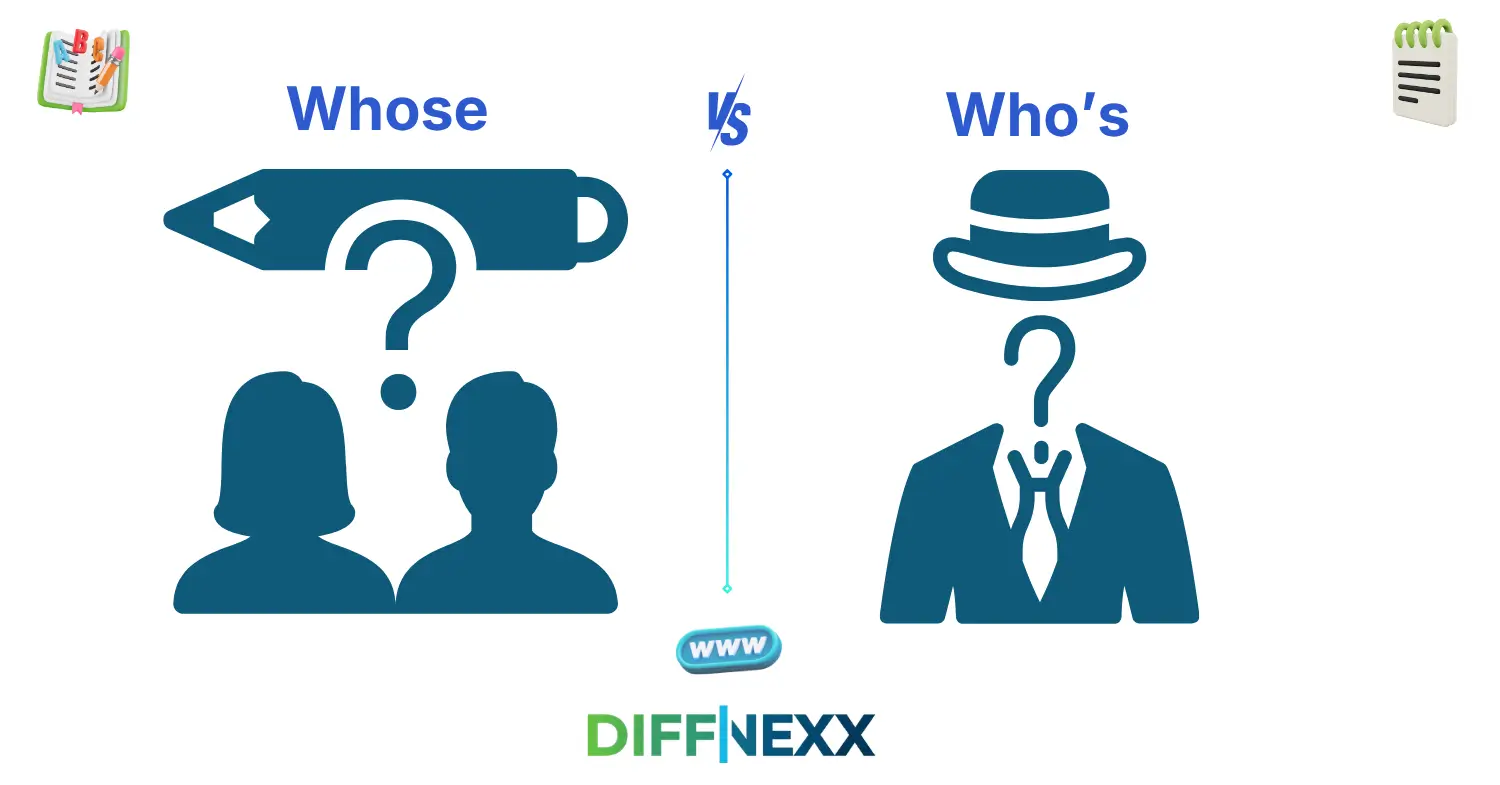
The difference between whose and who’s is simple but important. “Whose” shows possession. “Who’s” is a short form of “who is” or “who has.” These two words sound the same, but they work very differently in sentences.
Many learners mix them up because they look similar and sound identical. That’s why understanding the difference between whose and who’s helps you write clearly and correctly.
Let’s explore their meanings and uses step by step so you never confuse them again ✍️.
🔍 Key Difference Between the Both
The key difference is grammar function.
- Whose shows ownership.
- Who’s is a contraction of “who is” or “who has.”
🌍 Importance
Knowing this difference is essential for learners. It improves writing accuracy and avoids common grammar mistakes.
For professionals, correct usage builds credibility. In emails, reports, or content writing, small errors can affect trust.
In society, proper grammar supports clear communication. It helps people understand your message without confusion.
🔊 Pronunciation Section
Whose
US: /huːz/
UK: /huːz/
Who’s
US: /huːz/
UK: /huːz/
They sound the same. That’s why context not sound helps you choose the correct word. Now, let’s define them clearly.
📚 Core Definitions
Whose
“Whose” is a possessive word. It asks or tells who owns something. The tone is neutral and grammatical.
Example: Whose bag is on the table?
Who’s
“Who’s” is a contraction. It means “who is” or “who has.” The tone is informal and conversational.
Example: Who’s coming to the party?
📚 10 Clear Differences Between Whose and Who’s
1. Function
“Whose” shows possession. “Who’s” replaces two words.
- Example (Whose): Whose phone is ringing?
- Example (Who’s): Who’s calling you?
2. Grammar Type
“Whose” is a determiner or pronoun. “Who’s” is a contraction.
- Example: Whose idea was this?
- Example: Who’s ready to start?
3. Meaning
“Whose” refers to ownership. “Who’s” refers to identity or action.
- Example: Whose car is parked outside?
- Example: Who’s driving the car?
4. Sentence Role
“Whose” modifies a noun. “Who’s” acts as a subject + verb.
- Example: Whose jacket is this?
- Example: Who’s wearing that jacket?
5. Formality
“Whose” fits both formal and informal writing. “Who’s” is more informal.
- Example: Please tell me whose file this is.
- Example: Who’s joining the meeting?
6. Expansion Test
“Whose” cannot expand into two words. “Who’s” can expand easily.
- Example: Whose book is this?
- Example: Who’s (who is) your teacher?
7. Context of Use
“Whose” appears in questions about ownership. “Who’s” appears in statements or questions about people.
- Example: Whose shoes are these?
- Example: Who’s at the door?
8. Writing Accuracy
“Whose” errors often confuse ownership. “Who’s” errors affect sentence clarity.
- Example: Whose turn is it?
- Example: Who’s going next?
9. Tone
“Whose” feels neutral and descriptive. “Who’s” feels conversational.
- Example: Whose responsibility is this?
- Example: Who’s responsible here?
10. Expression Style
“Whose” focuses on objects or ownership. “Who’s” focuses on people or actions.
- Example: Whose house is that?
- Example: Who’s living there?
🎯 Why Knowing the Difference Matters
Students need this distinction to improve grammar skills. It helps them write clearly in exams and assignments.
Professionals must use correct grammar in emails and reports. It shows attention to detail and builds trust.
In everyday life, correct usage avoids confusion. It ensures your message is clear and easy to understand.
Real-world consequences of confusion
Using “who’s” instead of “whose” can change meaning. For example, “Who’s book is this?” sounds incorrect and may confuse readers.
🧠 Why People Get Confused
Similar Spelling or Pronunciation
Both words sound identical. This makes them easy to mix up in writing.
Semantic Overlap
They both relate to “who,” which adds confusion. But their roles differ.
Context-Based Usage
Writers often focus on meaning, not grammar structure. This leads to mistakes.
Influence of Informal Speech
In speech, we don’t see spelling. So learners rely on sound, which is misleading.
🎭 Connotation & Emotional Tone
Connotation = the emotional meaning associated with a word.
Whose
- Positive: Clear, precise
- Neutral: Informational
- Negative: Rarely negative
Example: Whose idea helped the team succeed?
Who’s
- Positive: Friendly, conversational
- Neutral: Everyday use
- Negative: Can seem informal in formal writing
Example: Who’s ready for the celebration?
🗣 Usage in Metaphors, Similes & Idioms
These words rarely appear in idioms, but they can be used creatively:
- “Whose story shapes your life?” (metaphorical ownership)
- “Who’s leading the way in success?” (figurative action)
These uses help express ideas in a deeper way.
📊 Comparison Table
| Feature | Whose | Who’s |
|---|---|---|
| Meaning | Shows possession | Means “who is” / “who has” |
| Tone | Neutral | Conversational |
| Usage | Ownership questions | Identity or action |
| Context | Formal & informal | Mostly informal |
| Formality | More formal | Less formal |
⚖️ Which Is Better in What Situation?
When to use Whose
Use “whose” when asking about ownership. For example, “Whose laptop is this?” It works well in both formal and informal writing.
When to use Who’s
Use “who’s” when you mean “who is” or “who has.” For example, “Who’s coming to dinner?” It fits casual and spoken English.
Situational clarity
If you can replace the word with “who is,” use “who’s.” If not, use “whose.”
Contextual correctness
Always check the sentence meaning. This simple test ensures accuracy every time.
📖 Literary or Cultural References
- Book: Eats, Shoots & Leaves (Grammar, Lynne Truss, 2003) – explains punctuation and common errors
- Book: The Elements of Style (Writing, William Strunk Jr., 1918) – classic grammar guide
- Movie: Finding Forrester (USA, 2000) – highlights writing and grammar importance
- Movie: Dead Poets Society (USA, 1989) – shows language and expression
❓ FAQs
1. Is “who’s” always short for “who is”?
Not always. It can also mean “who has.” For example, “Who’s finished the work?” means “Who has finished the work?” Always check the sentence meaning.
2. Can “whose” refer to things or only people?
“Whose” can refer to both. For example, “Whose book is this?” and “A house whose roof is red.” It works for objects too.
3. Why do people confuse these words?
They sound exactly the same. Also, both relate to “who,” which adds confusion. Writing requires careful attention to grammar rules.
4. Is it okay to use “who’s” in formal writing?
It depends. Contractions are often avoided in very formal writing. In casual or semi-formal writing, “who’s” is acceptable.
5. What is the easiest way to remember the difference?
Try the expansion trick. Replace “who’s” with “who is.” If the sentence still makes sense, it’s correct. If not, use “whose.”
🏁 Conclusion
The difference between whose and who’s is small but powerful. “Whose” shows ownership, while “who’s” is a short form of “who is” or “who has.” This simple rule can prevent many writing mistakes.
By understanding this difference, you improve clarity and confidence in English. It helps you write correctly in both casual and formal situations.
Keep practicing with real sentences. Over time, choosing the right word will feel natural. Small grammar skills like this make a big impact so keep learning and growing every day.

Anton Reyes is a contributing writer at DiffNexx.com, where he explores meaningful differences in language, culture, and everyday concepts. With a background in creative nonfiction, Anton brings clarity and balance to complex comparisons. His writing helps readers understand subtle distinctions in words and ideas, making learning both insightful and engaging.