Difference between weathering and erosion becomes easier to notice when you see rocks breaking apart on a mountain or soil being carried away by flowing water. These changes happen slowly, but they shape the Earth around us every day.
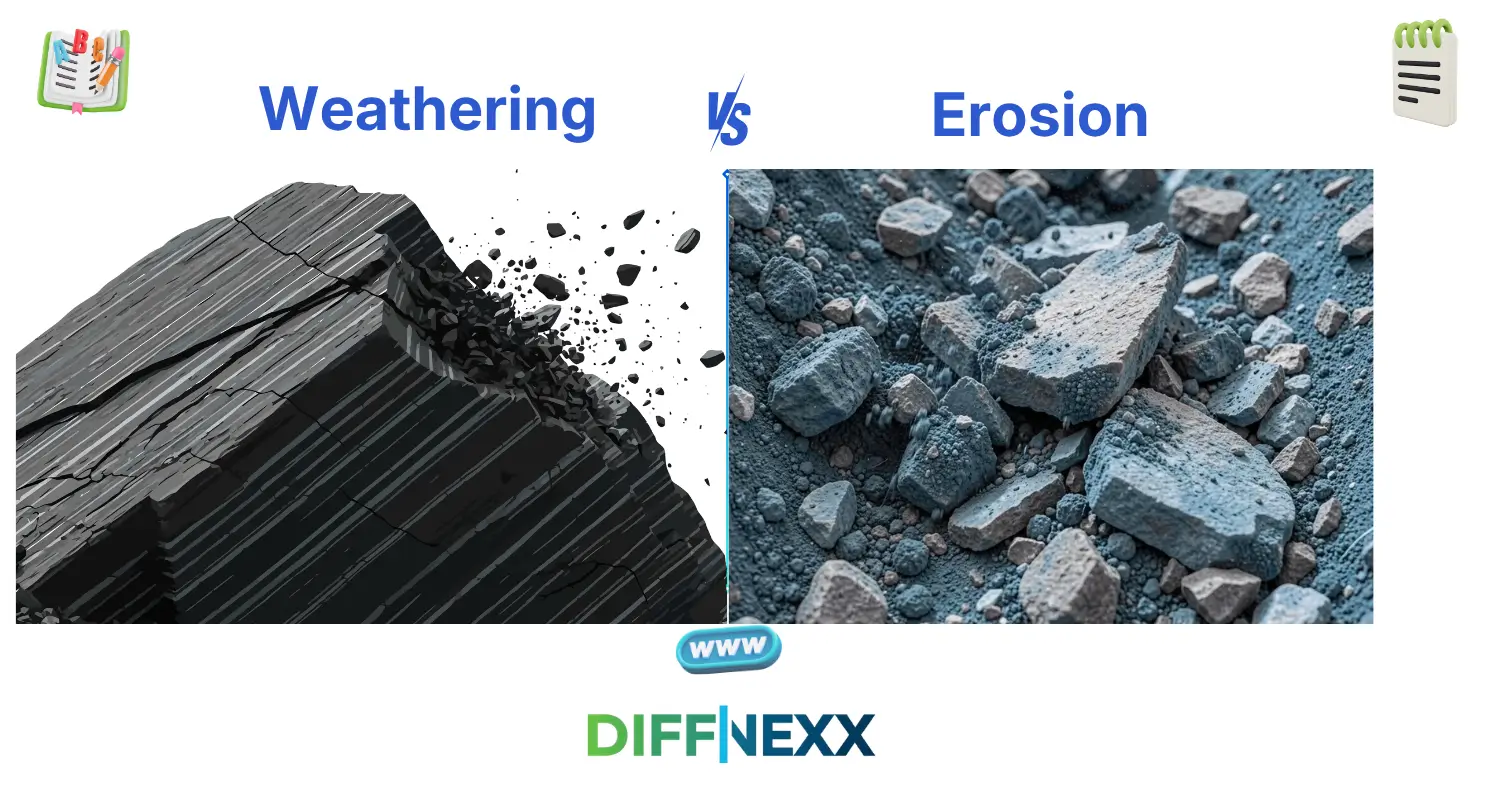
The difference between weathering and erosion lies in how rocks and soil change. Weathering breaks rocks into smaller pieces, while erosion moves those pieces from one place to another.
Many learners struggle with the difference between weathering and erosion because both processes often happen together. However, each has its own role in shaping landscapes.
Let’s explore these processes step by step to understand them clearly.
Key Difference Between the Both 🧠
The main difference is simple: weathering breaks down rocks, while erosion transports those broken materials.
Weathering happens in one place without movement. Erosion involves movement by wind, water, ice, or gravity.
Importance – Why Their Difference Matters 🌍
Understanding the difference between weathering and erosion is essential for both learners and experts.
For students, it builds a strong foundation in geography and earth science. It helps them understand how landforms develop.
For professionals like geologists and environmental scientists, this knowledge helps in studying soil formation, natural hazards, and climate effects.
In society, it helps people understand natural changes like landslides, floods, and soil loss, which can affect daily life.
🔊 Pronunciation Section
Weathering
US: /ˈweð.ɚ.ɪŋ/
UK: /ˈweð.ər.ɪŋ/
Erosion
US: /ɪˈroʊ.ʒən/
UK: /ɪˈrəʊ.ʒən/
Now that you know how to pronounce them, let’s define them clearly.
📚 Core Definitions
Weathering
Weathering is the process of breaking down rocks into smaller pieces without moving them. It can happen due to physical, chemical, or biological factors. It has a gradual and quiet impact.
Example: Rain and temperature changes slowly break a rock into smaller fragments.
Erosion
Erosion is the process of moving broken rock or soil from one place to another. It usually involves natural forces like water, wind, or ice. It creates visible changes in landscapes.
Example: A river carries soil from a hill down to a valley.
📚 10 Clear Differences Between Weathering and Erosion
1. Process Type
Weathering is a breakdown process. Erosion is a movement process.
- Example for weathering: Rock cracks into pieces.
- Example for erosion: Pieces are carried away by water.
2. Movement
Weathering does not involve movement. Erosion always involves movement.
- Example for weathering: Stone breaks but stays in place.
- Example for erosion: Soil moves downstream.
3. Agents Involved
Weathering uses temperature, water, and organisms. Erosion uses wind, water, ice, and gravity.
- Example for weathering: Heat expands rock.
- Example for erosion: Wind blows sand away.
4. Speed of Change
Weathering is usually slow and gradual. Erosion can be slow or fast.
- Example for weathering: Rocks break over years.
- Example for erosion: Flood moves soil quickly.
5. Location Effect
Weathering occurs at the original location. Erosion changes locations.
- Example for weathering: Rock breaks on a mountain.
- Example for erosion: Soil moves to a riverbed.
6. Result
Weathering creates smaller particles. Erosion redistributes them.
- Example for weathering: Pebbles form from rock.
- Example for erosion: Pebbles move to beaches.
7. Energy Requirement
Weathering requires less energy. Erosion needs energy to move materials.
- Example for weathering: Rainwater slowly breaks rock.
- Example for erosion: Strong currents carry sediment.
8. Environmental Impact
Weathering prepares soil formation. Erosion can remove soil.
- Example for weathering: Soil begins forming.
- Example for erosion: Soil gets washed away.
9. Visibility
Weathering is less visible daily. Erosion is often noticeable.
- Example for weathering: Small cracks form.
- Example for erosion: Riverbanks change shape.
10. Role in Landscape
Weathering shapes surfaces. Erosion reshapes entire landscapes.
- Example for weathering: Rock surface changes.
- Example for erosion: Valleys and canyons form.
🎯 Why Knowing the Difference Matters
Students need this knowledge to understand how Earth’s surface changes over time. It improves their understanding of geography and science concepts.
Professionals use this difference to predict natural disasters and manage land resources. It helps in planning construction and agriculture.
In daily life, people benefit by understanding environmental changes. It helps them make safer and smarter decisions.
Real-world Consequences of Confusion
If people confuse weathering with erosion, they may misunderstand environmental problems. This can lead to poor planning or ignoring risks like soil loss or flooding.
🧠 Why People Get Confused
Similar Terms
Both words are often used together, making them seem similar.
Semantic Overlap
Both processes involve rocks and soil, which creates confusion.
Context-Based Usage
In textbooks, they often appear in the same examples.
Informal Speech Influence
People use them interchangeably without focusing on accuracy.
🎭 Connotation & Emotional Tone
Connotation = the emotional meaning associated with a word.
Weathering
- Neutral: Natural breakdown process
- Positive: Helps create soil (e.g., “Weathering supports plant growth.”)
Erosion
- Negative: Often linked to damage (e.g., “Erosion destroyed farmland.”)
- Neutral: Natural movement process
🗣 Usage in Metaphors, Similes & Idioms
- “Weathering the storm” → surviving difficulty
- Example: She is weathering the storm of challenges.
- “Erosion of trust” → gradual loss
- Example: There was an erosion of trust in the team.
These expressions show how both terms extend beyond science.
📊 Comparison Table
| Feature | Weathering | Erosion |
|---|---|---|
| Meaning | Breaking down rocks | Moving materials |
| Tone | Neutral/positive | Neutral/negative |
| Usage | Scientific | Scientific & general |
| Context | Same location | Different location |
| Formality | Neutral | Neutral |
⚖️ Which Is Better in What Situation?
When to use Weathering
Use “weathering” when describing the breakdown of rocks in place.
When to use Erosion
Use “erosion” when describing movement of soil or rock.
Situational Clarity
If no movement occurs, it is weathering. If materials move, it is erosion.
Contextual Correctness
Choose the correct term based on whether the focus is breaking or moving.
📖 Literary or Cultural References
- Book: A Short History of Nearly Everything (Science, Bill Bryson, 2003)
- Movie: Interstellar (USA, 2014) – shows environmental changes affecting Earth
These works highlight natural processes and environmental understanding.
❓ FAQs
1. Can weathering and erosion happen together?
Yes, they often occur together. Weathering breaks rocks, and erosion moves the pieces away.
2. Which comes first, weathering or erosion?
Weathering usually comes first because rocks must break before they can move.
3. What are the main agents of erosion?
Water, wind, ice, and gravity are the main agents.
4. Is erosion harmful?
It can be harmful when it removes soil or damages land, but it is also a natural process.
5. How can humans reduce erosion?
Planting trees, controlling water flow, and protecting soil can help reduce erosion.
🏁 Conclusion
The difference between weathering and erosion is clear when you focus on their roles. Weathering breaks rocks into smaller pieces, while erosion moves those pieces to new locations. Together, they shape the Earth’s surface over time.
Understanding this difference helps students learn better, professionals work more effectively, and society respond to environmental changes wisely.
By observing nature closely, you can see these processes in action. Keep learning and exploring because even small natural changes tell powerful stories about our planet.

Aamer Shahzad is the founder of Distinly.com, a fast-growing educational platform focused on high-intent “difference between” topics. With over 8 years of experience in English language education and analytical writing, I specialize in breaking down complex “difference between” topics into clear, structured, and easy-to-understand explanations. Distinly.com is your go-to resource for enhancing English skills and writing with confidence.
I specializes in building search-optimized, research-driven comparison content designed for clarity, authority, and long-term digital asset value.