Difference between W2 and 1099 often becomes important when you start a new job or begin freelancing. Imagine getting paid for your work and then receiving a tax form but you’re not sure what it means or how it affects your income.
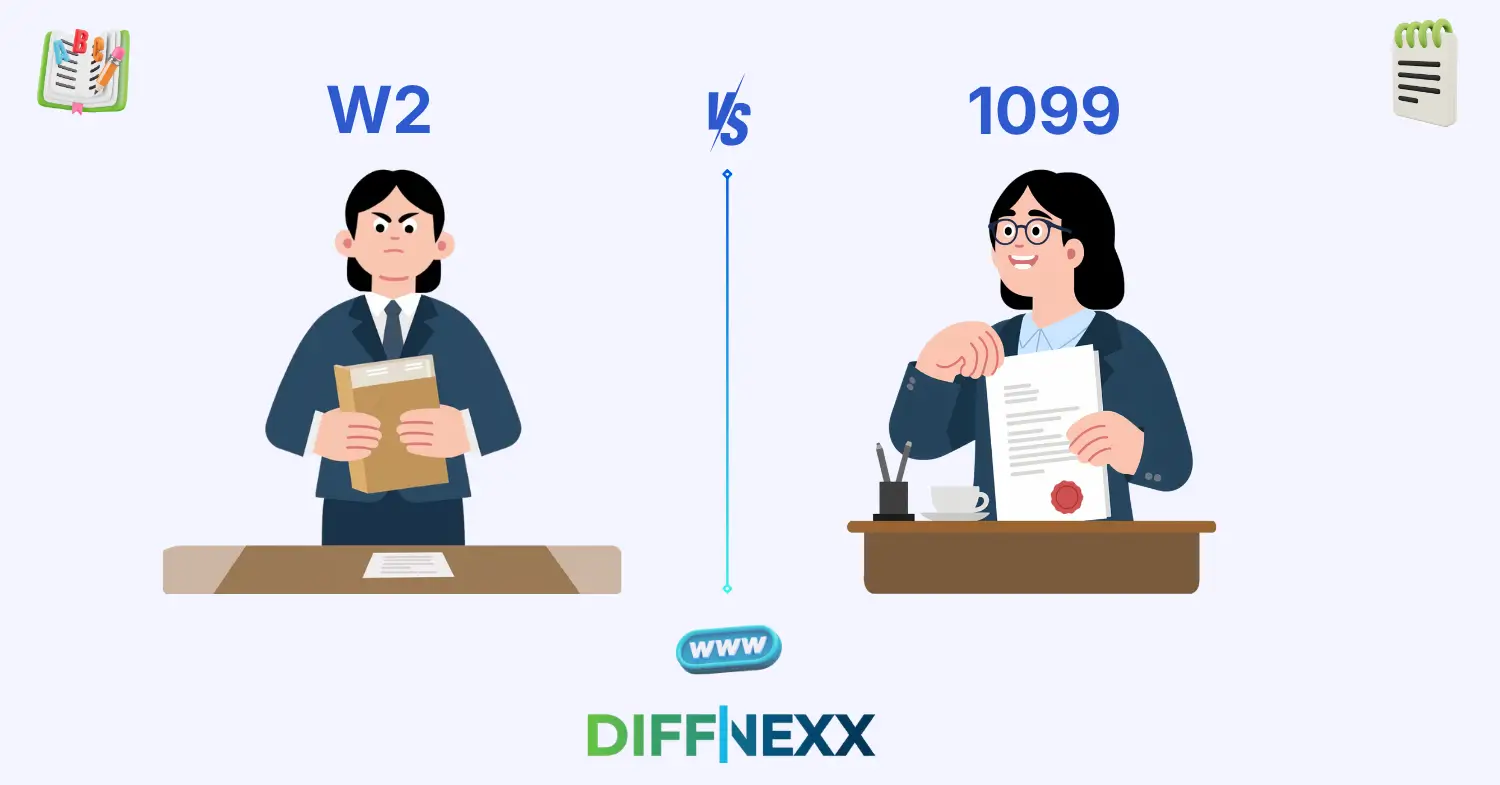
The difference between W2 and 1099 is about how you are classified for work and taxes. A W2 form is for employees, while a 1099 form is for independent contractors or freelancers.
Many people feel confused because both forms relate to income. However, the difference between W2 and 1099 impacts taxes, benefits, and job responsibilities.
Let’s break it down in a simple and clear way.
Key Difference Between the Both ⚡
The main difference between W2 and 1099 is that W2 workers are employees with taxes withheld by employers, while 1099 workers are independent contractors responsible for their own taxes.
Importance – Why Knowing the Difference Matters 📚
Understanding the difference between W2 and 1099 is important for financial and career decisions.
For learners, it helps build basic knowledge about income and taxes. It prepares them for real-world work situations.
For professionals, especially business owners and accountants, this difference is critical. It helps in legal compliance and proper tax reporting.
In society, correct classification prevents tax issues and ensures fair work practices.
🔊 Pronunciation Section
W2
US: /ˈdʌb.əl.juː tuː/
UK: /ˈdʌb.əl.juː tuː/
1099
US: /ˌwʌnˈθaʊ.zənd naɪnˈnaɪn.ti naɪn/
UK: /ˌwʌnˈθaʊ.zənd naɪnˈnaɪn.ti naɪn/
Now that you know how to say them, let’s define them clearly.
📚 Core Definitions
W2
A W2 form is given to employees by their employer. It shows wages earned and taxes already deducted. Employees usually receive benefits like health insurance.
Example:
She works full-time and receives a W2 at the end of the year.
1099
A 1099 form is given to independent contractors. It shows total earnings, but taxes are not deducted. Contractors manage their own taxes.
Example:
He freelances online and receives a 1099 form.
📚 10 Clear Differences Between W2 and 1099
1. Employment Status
W2 workers are employees. 1099 workers are independent contractors.
- Example for W2: I work under a company contract.
- Example for 1099: I work independently for clients.
2. Tax Responsibility
W2 taxes are handled by the employer. 1099 workers handle their own taxes.
- Example for W2: Taxes are deducted from my paycheck.
- Example for 1099: I pay taxes myself.
3. Benefits
W2 workers often get benefits. 1099 workers usually do not.
- Example for W2: I get health insurance.
- Example for 1099: I arrange my own benefits.
4. Job Control
W2 employees follow company rules. 1099 workers have more control.
- Example for W2: I follow a fixed schedule.
- Example for 1099: I choose my work hours.
5. Income Stability
W2 jobs offer stable income. 1099 income can vary.
- Example for W2: I get a regular salary.
- Example for 1099: My income changes monthly.
6. Work Flexibility
W2 workers have less flexibility. 1099 workers have more freedom.
- Example for W2: I work fixed hours.
- Example for 1099: I work when I want.
7. Expenses
W2 workers cannot deduct many expenses. 1099 workers can deduct business costs.
- Example for W2: I cannot claim work expenses easily.
- Example for 1099: I deduct tools and travel costs.
8. Legal Relationship
W2 workers are legally tied to the employer. 1099 workers are separate entities.
- Example for W2: I am part of the company.
- Example for 1099: I am an independent service provider.
9. Paperwork
W2 forms are simple for employees. 1099 requires more tax paperwork.
- Example for W2: Filing taxes is easier.
- Example for 1099: I complete detailed tax forms.
10. Risk Level
W2 jobs have lower financial risk. 1099 work involves higher risk.
- Example for W2: My income is secure.
- Example for 1099: My income depends on clients.
🎯 Why Knowing the Difference Matters
Students must understand this difference to make informed career choices. It helps them plan their future.
Professionals need this knowledge to manage taxes and legal responsibilities correctly.
In daily life, the difference affects income, benefits, and financial planning.
Real-world consequences of confusion
If someone is wrongly classified, they may face tax penalties or lose benefits. It can also lead to legal issues.
🧠 Why People Get Confused
Similar Purpose
Both forms relate to income reporting.
Technical Language
Tax terms can be difficult to understand.
Context-Based Usage
People hear these terms in jobs but don’t learn their meaning.
Informal Speech
Some people use them interchangeably, which is incorrect.
🎭 Connotation & Emotional Tone
Connotation = the emotional meaning associated with a word.
W2
- Positive: Stable, secure
- Neutral: Standard employment
- Negative: Less flexibility
Example: A W2 job feels safe and steady.
1099
- Positive: Flexible, independent
- Neutral: Freelance work
- Negative: Unstable income
Example: A 1099 job offers freedom but uncertainty.
🗣 Usage in Metaphors, Similes & Idioms
- “W2 is like a steady paycheck road.”
- “1099 is like a freelance adventure.”
These comparisons help explain their nature.
📊 Comparison Table
| Feature | W2 | 1099 |
|---|---|---|
| Meaning | Employee income form | Contractor income form |
| Tone | Stable | Flexible |
| Usage | Full-time jobs | Freelance work |
| Context | Employer-based | Independent work |
| Formality | Standard employment | Contract-based |
⚖️ Which Is Better in What Situation?
When to Use W2
Choose W2 when you want job stability, benefits, and steady income. It is ideal for long-term employment.
When to Use 1099
Choose 1099 when you prefer flexibility and independence. It suits freelancers and entrepreneurs.
Situational Clarity
W2 works best for security. 1099 works best for freedom.
Contextual Correctness
Your choice depends on your career goals and lifestyle.
📖 Literary or Cultural References
- Book: Rich Dad Poor Dad by Robert Kiyosaki (Finance, 1997) – discusses income types
- Movie: The Intern (USA, 2015) – shows workplace structure and employment roles
These reflect different work styles and financial thinking.
❓ FAQs
1. Is W2 better than 1099?
It depends on your needs. W2 offers stability, while 1099 offers flexibility.
2. Do 1099 workers pay more taxes?
They may pay more upfront because taxes are not deducted automatically. They must manage their own payments.
3. Can I switch from W2 to 1099?
Yes, but it depends on your job and employer. You may need a new contract.
4. Do W2 employees get benefits?
Yes, most W2 employees receive benefits like health insurance and paid leave.
5. Is 1099 work risky?
It can be, because income is not guaranteed. However, it offers independence.
🏁 Conclusion
The difference between W2 and 1099 is about employment type, tax responsibility, and work style. W2 jobs provide stability, benefits, and structured work. 1099 work offers freedom, flexibility, and independence.
Understanding this difference helps you make smarter career and financial decisions. It also helps you avoid tax problems and choose the right path for your goals.
As work trends evolve, both options remain valuable. The key is to know what suits your needs. Keep learning, stay informed, and make choices that support your future.

Eliza Marlowe is a passionate content strategist and comparison writer at diffnexx.com. She specializes in breaking down complex “difference between” topics into clear, reader-friendly guides. With a background in linguistics and digital research, Eliza focuses on accuracy, clarity, and content that helps readers make informed decisions with confidence.