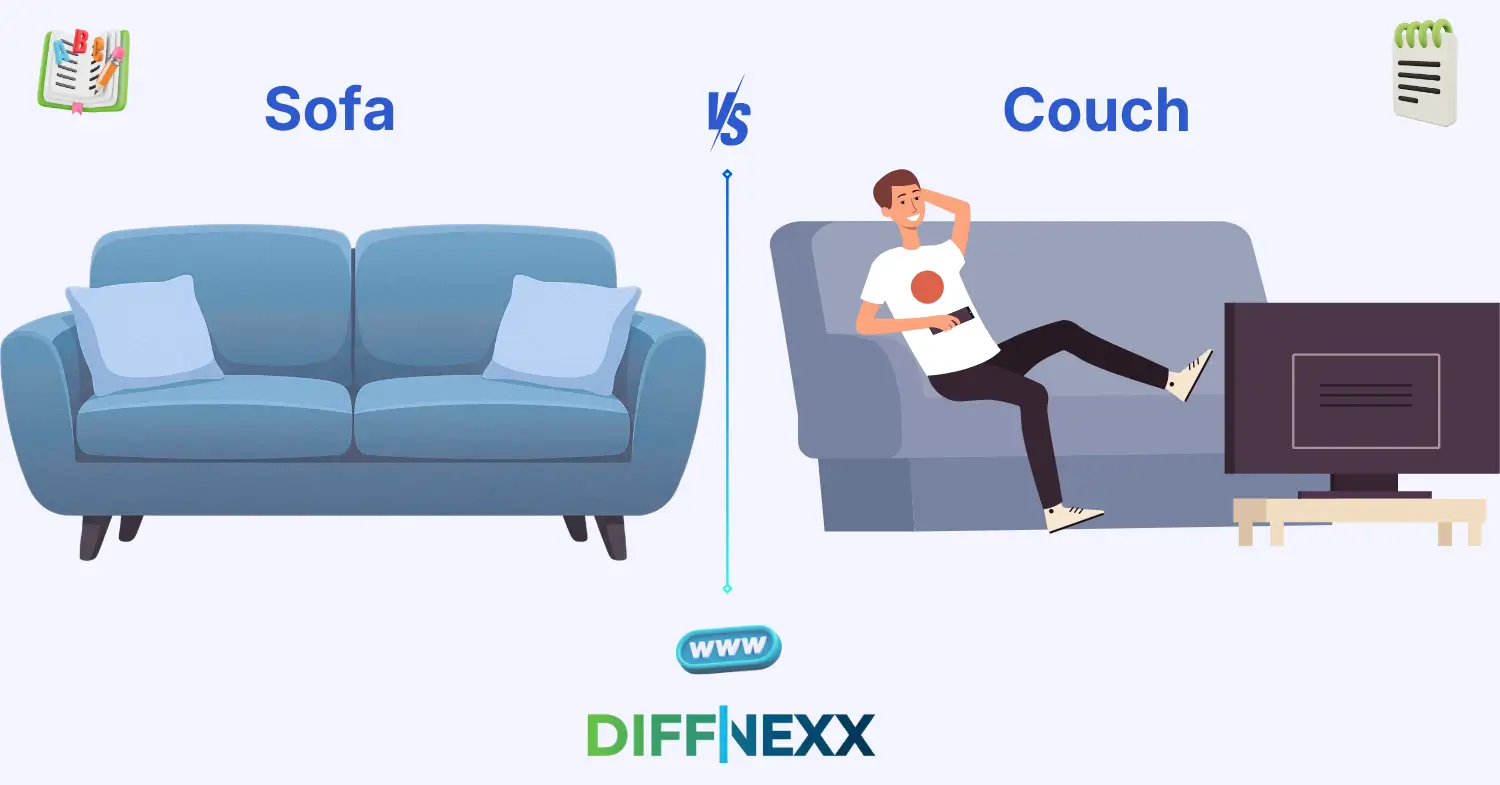
Difference between sofa and couch is something many people think about when shopping for furniture or describing their living room. Imagine visiting a friend’s house one person says, “Sit on the couch,” while another says, “Take a seat on the sofa.” Are they the same?
The difference between sofa and couch is subtle but interesting. Both refer to comfortable seating furniture, but their usage, tone, and style can vary depending on context.
Many people use these words interchangeably, but understanding the difference between sofa and couch helps you communicate more clearly, especially in formal or design-related settings.
Let’s explore what makes them slightly different and when to use each one.
Key Difference Between the Both
The main difference is:
- A sofa is considered more formal and structured seating furniture.
- A couch is seen as more casual and relaxed seating.
So, both refer to similar furniture, but sofa sounds more formal, while couch feels informal and everyday.
Importance – Why Knowing the Difference Matters
Understanding this difference is useful in both everyday and professional life.
For learners, it improves vocabulary and communication skills. It helps them choose the right word in the right situation.
For professionals like interior designers or writers, word choice matters. Using “sofa” or “couch” can change the tone of a description.
In society, this knowledge helps in clear communication. It also reflects awareness of language nuances and style.
🔊 Pronunciation Section
Sofa
US: /ˈsoʊ.fə/
UK: /ˈsəʊ.fə/
Couch
US: /kaʊtʃ/
UK: /kaʊtʃ/
Now that you know how to pronounce them, let’s define them clearly.
📚 Core Definitions
Sofa
A sofa is a long, upholstered seat designed for multiple people. It often has armrests and a structured design.
Example: A modern sofa placed in a formal living room.
Couch
A couch is a comfortable piece of seating furniture used for relaxing or lying down. It is often associated with casual settings.
Example: A couch where people relax while watching TV.
📚 10 Clear Differences Between Sofa and Couch
1. Formality
Sofa is more formal. Couch is informal.
- Example (Sofa): Used in formal settings.
- Example (Couch): Used in casual conversation.
2. Tone
Sofa sounds professional. Couch sounds friendly.
- Example (Sofa): “We bought a new sofa.”
- Example (Couch): “Let’s sit on the couch.”
3. Design Style
Sofas often have structured designs. Couches are more relaxed.
- Example (Sofa): Straight, elegant lines.
- Example (Couch): Soft, cozy shape.
4. Usage Context
Sofa is used in design and retail. Couch is used in daily speech.
- Example (Sofa): Furniture catalogs.
- Example (Couch): Everyday talk.
5. Comfort Perception
Couch feels more about comfort. Sofa feels balanced.
- Example (Sofa): Stylish and comfortable.
- Example (Couch): Pure relaxation.
6. Cultural Usage
Sofa is common in British English. Couch is more common in American English.
- Example (Sofa): UK usage.
- Example (Couch): US usage.
7. Historical Origin
Sofa comes from Arabic “suffah.” Couch comes from French “coucher.”
- Example (Sofa): Formal historical term.
- Example (Couch): Informal origin.
8. Professional Use
Sofa is preferred in professional language. Couch is casual.
- Example (Sofa): Used by designers.
- Example (Couch): Used in daily life.
9. Psychological Feel
Sofa feels elegant. Couch feels cozy.
- Example (Sofa): Formal environment.
- Example (Couch): Relaxed atmosphere.
10. Expression Style
Sofa is used in descriptive writing. Couch is used in casual speech.
- Example (Sofa): “A luxury sofa in the room.”
- Example (Couch): “I fell asleep on the couch.”
🎯 Why Knowing the Difference Matters
Students benefit by improving vocabulary and communication clarity. It helps them understand subtle differences in English.
Professionals use this distinction in writing, design, and marketing. It helps create the right tone for the audience.
In everyday life, it improves communication. People can choose words that match the situation.
Real-world consequences of confusion
Using the wrong word in formal settings may sound unprofessional. In casual settings, using “sofa” may sound too formal.
🧠 Why People Get Confused
Similar Meaning
Both words refer to the same type of furniture.
Semantic Overlap
Their functions are identical, so differences seem unclear.
Context-Based Usage
Different regions use different terms.
Informal Speech
People often treat them as exact synonyms.
🎭 Connotation & Emotional Tone
Connotation = the emotional meaning associated with a word.
Sofa
- Positive and formal
- Suggests elegance and style
- Example: “The sofa adds beauty to the room.”
Couch
- Neutral and casual
- Suggests comfort and relaxation
- Example: “I relaxed on the couch all day.”
🗣 Usage in Metaphors, Similes & Idioms
These words appear in everyday expressions:
- “Couch potato” (someone lazy)
- “Sofa-style comfort” (relaxed luxury)
Examples:
- “He became a couch potato during holidays.”
- “The hotel offered sofa-style comfort.”
📊 Comparison Table
| Feature | Sofa | Couch |
|---|---|---|
| Meaning | Formal seating furniture | Casual seating furniture |
| Tone | Formal | Informal |
| Usage | Professional/design | Everyday speech |
| Context | Elegant settings | Relaxed settings |
| Formality | High | Low |
⚖️ Which Is Better in What Situation?
When to use Sofa
Use “sofa” in formal settings, writing, or design discussions. It sounds more professional and polished.
When to use Couch
Use “couch” in casual conversations. It feels natural and friendly in everyday speech.
Situational clarity
Choose based on tone. Formal situations need “sofa,” while casual ones suit “couch.”
Contextual correctness
In a furniture store, “sofa” is better. At home with friends, “couch” sounds more natural.
📖 Literary or Cultural References
- Book: At Home: A Short History of Private Life (Non-fiction, Bill Bryson, 2010)
- TV Show: Friends (USA, 1994) – famous for scenes around a couch in a café.
❓ FAQs
1. Are sofa and couch the same?
Yes, they refer to similar furniture, but differ in tone and usage.
2. Which word is more formal?
“Sofa” is more formal than “couch.”
3. Is couch used in professional settings?
Not usually. “Sofa” is preferred in formal writing.
4. Do different countries use different terms?
Yes, British English prefers “sofa,” while American English often uses “couch.”
5. Which is more comfortable?
Both can be equally comfortable. The difference is in perception, not design.
🏁 Conclusion
The difference between sofa and couch is mainly about tone, usage, and context. While both refer to the same type of furniture, “sofa” sounds more formal and elegant, while “couch” feels casual and relaxed.
Understanding this difference helps you communicate more effectively. It allows you to match your language to the situation, whether formal or informal.
Small vocabulary differences like this can make a big impact. Keep learning and refining your language skills you’ll notice the improvement in everyday communication.

Eliza Marlowe is a passionate content strategist and comparison writer at diffnexx.com. She specializes in breaking down complex “difference between” topics into clear, reader-friendly guides. With a background in linguistics and digital research, Eliza focuses on accuracy, clarity, and content that helps readers make informed decisions with confidence.