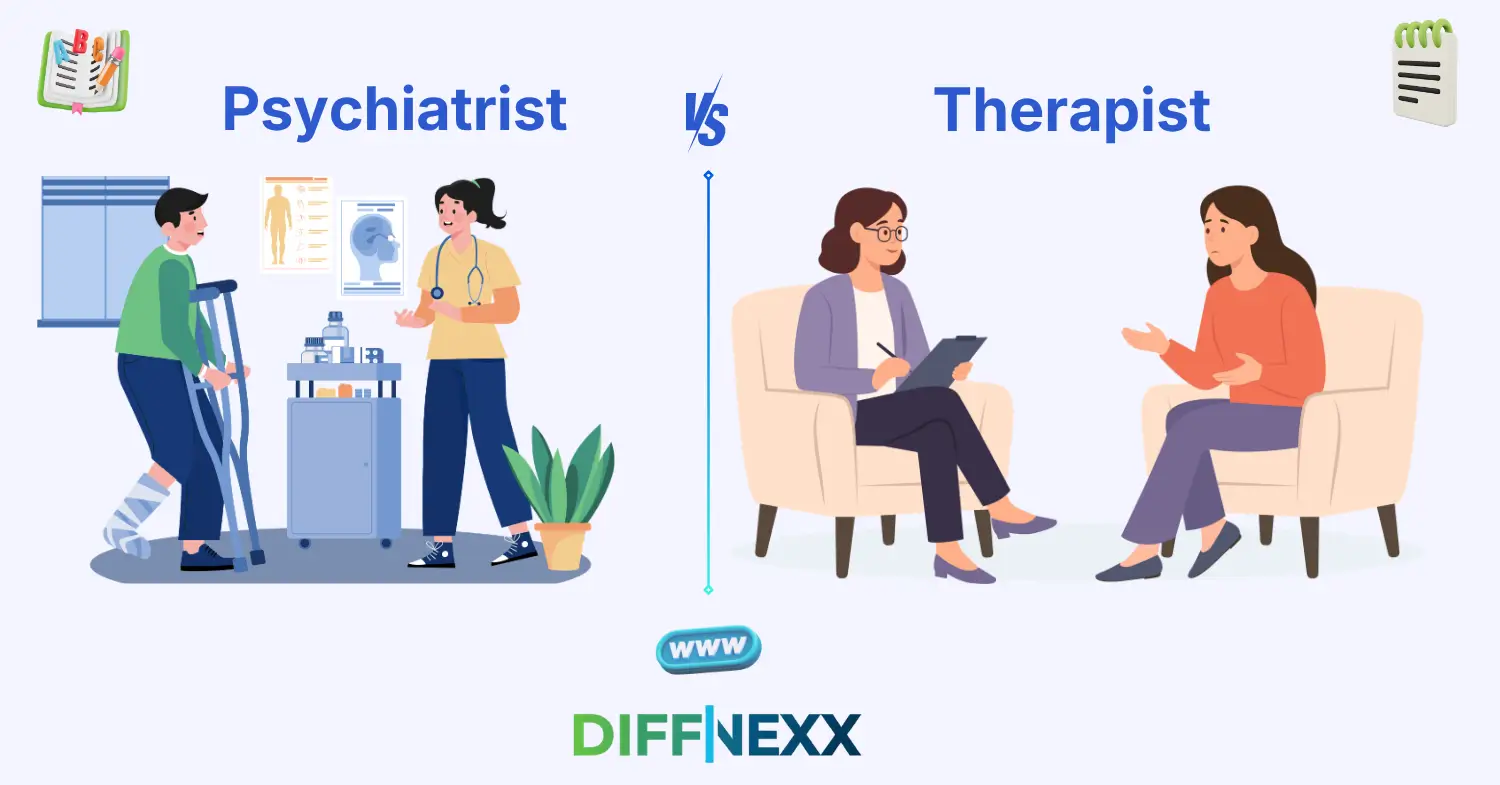
Difference between psychiatrist and therapist often comes up when someone decides to seek help for mental health. Imagine a person feeling anxious and unsure whether to visit a doctor or talk to a counselor. This confusion is very common.
The difference between psychiatrist and therapist lies mainly in their training, treatment methods, and roles. Both help with mental health, but they work in different ways.
Understanding the difference between psychiatrist and therapist can help you make better decisions about care and support.
Let’s break it down in a simple and clear way 🧠
Key Difference Between the Both
The main difference is:
- A psychiatrist is a medical doctor who can diagnose conditions and prescribe medication.
- A therapist is a mental health professional who provides talk therapy and emotional support.
In short, psychiatrists treat with medicine, while therapists treat through conversation.
Importance – Why Knowing the Difference Matters
Knowing this difference helps people choose the right type of help.
Students benefit by understanding mental health roles clearly and reducing confusion.
Professionals in healthcare use this distinction to provide proper treatment and referrals.
In society, this knowledge improves mental health awareness and encourages people to seek the right support.
🔊 Pronunciation Section
Psychiatrist
US: /saɪˈkaɪə.trɪst/
UK: /saɪˈkaɪə.trɪst/
Therapist
US: /ˈθer.ə.pɪst/
UK: /ˈθer.ə.pɪst/
Now that you can say them correctly, let’s define them clearly.
📚 Core Definitions
Psychiatrist
A psychiatrist is a medical doctor who specializes in mental health. They can diagnose disorders and prescribe medications.
Example: A psychiatrist may prescribe medicine for depression.
Therapist
A therapist is a trained professional who helps people manage emotions through conversation and techniques.
Example: A therapist helps someone talk through stress and anxiety.
📚 10 Clear Differences Between Psychiatrist and Therapist
1. Medical Training
Psychiatrists have medical degrees. Therapists do not.
- Example (Psychiatrist): Attends medical school.
- Example (Therapist): Studies psychology or counseling.
2. Treatment Method
Psychiatrists use medication. Therapists use talk therapy.
- Example (Psychiatrist): Prescribes antidepressants.
- Example (Therapist): Uses counseling sessions.
3. Focus
Psychiatrists focus on biological issues. Therapists focus on emotional and behavioral issues.
- Example (Psychiatrist): Brain chemistry.
- Example (Therapist): Thoughts and feelings.
4. Session Style
Psychiatrist visits are shorter. Therapy sessions are longer.
- Example (Psychiatrist): 15–30 minutes.
- Example (Therapist): 45–60 minutes.
5. Severity of Cases
Psychiatrists handle severe disorders. Therapists handle mild to moderate issues.
- Example (Psychiatrist): Bipolar disorder.
- Example (Therapist): Stress or anxiety.
6. Medication Authority
Psychiatrists can prescribe medicine. Therapists cannot.
- Example (Psychiatrist): Writes prescriptions.
- Example (Therapist): Suggests coping strategies.
7. Approach
Psychiatrists use a medical approach. Therapists use psychological approaches.
- Example (Psychiatrist): Diagnoses illness.
- Example (Therapist): Explores emotions.
8. Cost
Psychiatrists are usually more expensive. Therapists are often more affordable.
- Example (Psychiatrist): Higher fees.
- Example (Therapist): Lower session cost.
9. Frequency
Psychiatrists are visited less often. Therapists are visited regularly.
- Example (Psychiatrist): Monthly visits.
- Example (Therapist): Weekly sessions.
10. Expression Style
Psychiatrists focus on symptoms. Therapists focus on personal stories.
- Example (Psychiatrist): Clinical questions.
- Example (Therapist): Open conversations.
🎯 Why Knowing the Difference Matters
Students learn how to seek help properly and understand mental health systems.
Professionals use this knowledge to guide patients toward correct treatment paths.
For society, it reduces stigma and encourages better communication about mental health.
Real-world consequences of confusion
Choosing the wrong professional may delay proper treatment. For example, someone needing medication may only receive talk therapy.
🧠 Why People Get Confused
Similar Terms
Both deal with mental health.
Semantic Overlap
Both help with emotional problems.
Context-Based Usage
People often use “therapist” as a general term.
Informal Speech
In daily talk, roles are not clearly separated.
🎭 Connotation & Emotional Tone
Connotation = the emotional meaning associated with a word.
Psychiatrist
- Neutral to serious
- Suggests medical treatment
- Example: “He visited a psychiatrist for clinical help.”
Therapist
- Warm and supportive
- Suggests emotional care
- Example: “She talks to her therapist every week.”
🗣 Usage in Metaphors, Similes & Idioms
- “He acted like a therapist, listening carefully.”
- “She needed a psychiatrist-level solution for her condition.”
These uses show emotional vs clinical roles.
📊 Comparison Table
| Feature | Psychiatrist | Therapist |
|---|---|---|
| Meaning | Medical mental health doctor | Talk-based mental health professional |
| Tone | Clinical | Supportive |
| Usage | Medication and diagnosis | Counseling and guidance |
| Context | Severe mental conditions | Emotional and behavioral issues |
| Formality | Highly formal | Semi-formal |
⚖️ Which Is Better in What Situation?
When to use Psychiatrist
Choose a psychiatrist when symptoms are severe or medication is needed. This includes conditions like depression, anxiety disorders, or bipolar disorder.
When to use Therapist
Choose a therapist for emotional support, stress management, or personal growth. Therapy works well for everyday challenges.
Situational clarity
If you need medical treatment, go to a psychiatrist. If you need someone to talk to, choose a therapist.
Contextual correctness
Use the correct term based on treatment type. This ensures clear communication and proper care.
📖 Literary or Cultural References
- Book: The Body Keeps the Score (Psychology, Bessel van der Kolk, 2014)
- Movie: Good Will Hunting (USA, 1997) – shows therapy sessions and emotional healing
❓ FAQs
1. Can a therapist prescribe medication?
No, therapists cannot prescribe medication. Only psychiatrists or medical doctors can do that.
2. Do I need both a psychiatrist and a therapist?
Sometimes yes. A psychiatrist manages medication, while a therapist provides emotional support.
3. Which is better for anxiety?
It depends on severity. Mild anxiety may need therapy, while severe anxiety may need medication.
4. Are psychiatrists more qualified than therapists?
They are trained differently. Psychiatrists have medical training, while therapists specialize in counseling.
5. How do I choose between them?
Start with your needs. If you need medication, see a psychiatrist. If you need guidance, see a therapist.
🏁 Conclusion
The difference between psychiatrist and therapist is clear when you understand their roles. Psychiatrists are medical doctors who treat mental illness with medication, while therapists focus on emotional healing through conversation.
Both play important roles in mental health care. Choosing the right one depends on your needs and situation. Sometimes, using both together gives the best results.
By learning this difference, you can make smarter decisions and support your mental well-being with confidence. Keep learning and take care of your mind it matters just as much as your body.

Aamer Shahzad is the founder of Distinly.com, a fast-growing educational platform focused on high-intent “difference between” topics. With over 8 years of experience in English language education and analytical writing, I specialize in breaking down complex “difference between” topics into clear, structured, and easy-to-understand explanations. Distinly.com is your go-to resource for enhancing English skills and writing with confidence.
I specializes in building search-optimized, research-driven comparison content designed for clarity, authority, and long-term digital asset value.