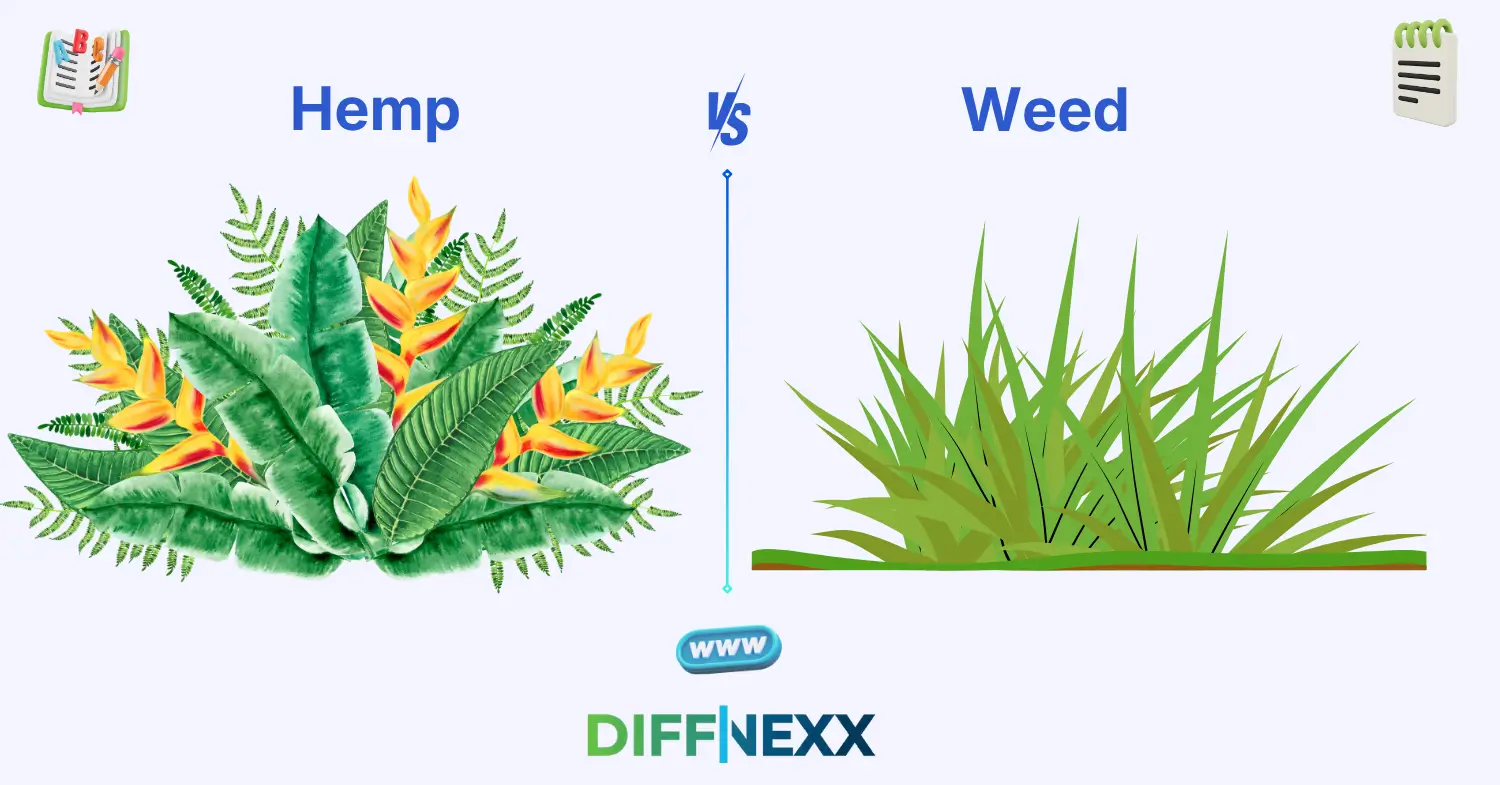
Difference between hemp and weed often confuses people, especially when they hear both come from the same plant family. Imagine someone buying a skincare product made from hemp and wondering if it has the same effects as weed. That’s where clarity matters.
The difference between hemp and weed is mainly about chemical content and purpose. Both come from the species Cannabis sativa, but they are grown and used in very different ways.
Many people think they are the same, but the difference between hemp and weed lies in their THC levels, uses, and effects on the body. Hemp is mostly used for industrial and health products, while weed is known for its psychoactive effects.
Let’s break it down step by step so you clearly understand how they differ.
Key Difference Between the Both
The key difference is simple:
- Hemp contains very low levels of Tetrahydrocannabinol (THC), usually less than 0.3%.
- Weed contains higher levels of THC, which causes a “high” effect.
So, hemp is non-intoxicating, while weed is psychoactive.
Importance – Why Knowing the Difference Matters
Understanding this difference is important for both everyday users and professionals.
For learners, it helps avoid confusion about legality and health effects. Many people wrongly assume all cannabis products are harmful or illegal.
For experts like doctors or policymakers, the difference guides safe use and regulation. Hemp is widely used in textiles, food, and medicine, while weed has controlled use in many places.
In society, this knowledge reduces stigma and misinformation. It helps people make informed choices and understand laws correctly.
🔊 Pronunciation Section
Hemp
US: /hemp/
UK: /hemp/
Weed
US: /wiːd/
UK: /wiːd/
Now that you can say them correctly, let’s understand what each term really means.
📚 Core Definitions
Hemp
Hemp is a variety of cannabis grown for industrial and commercial use. It contains very low THC and does not produce a “high.”
Example: Hemp is used to make ropes, fabrics, and oils.
Weed
Weed refers to cannabis grown for its psychoactive effects. It contains higher THC levels and is used recreationally or medically in some places.
Example: Weed is used to relieve pain or for relaxation.
📚 10 Clear Differences Between Hemp and Weed
1. THC Content
Hemp has very low THC. Weed has high THC.
- Example (Hemp): Used in non-intoxicating oils.
- Example (Weed): Causes a high when consumed.
2. Purpose of Use
Hemp is used for industrial products. Weed is used for recreational or medical purposes.
- Example (Hemp): Making clothing.
- Example (Weed): Used for relaxation.
3. Psychoactive Effects
Hemp does not affect the mind. Weed changes mood and perception.
- Example (Hemp): Safe for daily use in products.
- Example (Weed): Alters mental state.
4. Legal Status
Hemp is legal in many countries. Weed is often restricted.
- Example (Hemp): Sold in markets freely.
- Example (Weed): Controlled by law.
5. Cultivation Style
Hemp is grown densely for fibers. Weed is grown with space for flowers.
- Example (Hemp): Tall, thin plants.
- Example (Weed): Short, bushy plants.
6. Chemical Focus
Hemp focuses on Cannabidiol (CBD). Weed focuses on THC.
- Example (Hemp): Used in wellness oils.
- Example (Weed): Used for psychoactive effects.
7. Medical Use
Hemp products are used for general wellness. Weed is used for specific treatments.
- Example (Hemp): CBD oil for stress.
- Example (Weed): Pain management in patients.
8. Economic Role
Hemp supports industries like textiles and paper. Weed supports medical and recreational markets.
- Example (Hemp): Used in eco-friendly products.
- Example (Weed): Sold in licensed dispensaries.
9. Public Perception
Hemp has a neutral or positive image. Weed often has mixed opinions.
- Example (Hemp): Seen as natural and healthy.
- Example (Weed): Sometimes seen as controversial.
10. Appearance
Hemp plants are taller and thinner. Weed plants are shorter and bushier.
- Example (Hemp): Grown in fields like crops.
- Example (Weed): Grown carefully for buds.
🎯 Why Knowing the Difference Matters
Students must understand this difference to avoid confusion in biology and social studies. It builds accurate knowledge about plants and substances.
Professionals need this knowledge for safe recommendations. Doctors, farmers, and lawmakers rely on it for correct decisions.
Socially, it helps reduce myths. People can better understand laws, health effects, and product labels.
Real-world consequences of confusion
Confusing hemp with weed can lead to legal trouble or wrong product use. For example, someone may avoid safe hemp products due to misunderstanding.
🧠 Why People Get Confused
Similar Names
Both terms relate to cannabis, which creates confusion.
Semantic Overlap
They come from the same species, so people assume they are identical.
Context-Based Usage
In casual talk, people often use “weed” for all cannabis products.
Influence of Informal Speech
Slang terms blur the difference, making it harder to understand.
🎭 Connotation & Emotional Tone
Connotation = the emotional meaning associated with a word.
Hemp
- Positive/Neutral
- Seen as eco-friendly and useful
- Example: “Hemp products are good for the environment.”
Weed
- Mixed (positive or negative)
- Seen as relaxing by some, risky by others
- Example: “Weed helps me relax after stress.”
🗣 Usage in Metaphors, Similes & Idioms
While not common in idioms, they appear in comparisons:
- “This solution is like hemp practical and useful.”
- “This idea spreads like weed fast and uncontrolled.”
These examples show usefulness vs uncontrolled growth.
📊 Comparison Table
| Feature | Hemp | Weed |
|---|---|---|
| Meaning | Industrial cannabis | Psychoactive cannabis |
| Tone | Neutral/positive | Mixed |
| Usage | Products, textiles | Recreational, medical |
| Context | Legal industries | Controlled use |
| Formality | Formal/scientific | Informal/common |
⚖️ Which Is Better in What Situation?
When to use Hemp
Use hemp for products like clothing, oils, and eco-friendly materials. It is safe and non-intoxicating.
When to use Weed
Use weed only where it is legal and for medical or controlled recreational purposes.
Situational clarity
Choose hemp for daily products. Choose weed only when its effects are needed and allowed.
Contextual correctness
Always check local laws and purpose before using either. For example, hemp oil is safe for skincare, but weed is not used that way.
📖 Literary or Cultural References
- Book: The Cannabis Encyclopedia (Educational, Jorge Cervantes, 2015)
- Movie: Pineapple Express (USA, 2008) – shows cultural use of weed in entertainment.
❓ FAQs
1. Is hemp the same as weed?
No, they come from the same plant species but have different THC levels and uses. Hemp is non-psychoactive, while weed is psychoactive.
2. Can hemp make you high?
No, hemp contains very low THC. It does not produce a “high” effect.
3. Is weed legal everywhere?
No, weed laws vary by country and region. Some places allow it, while others restrict it.
4. What is CBD, and where does it come from?
CBD is a compound found mainly in hemp. It is used for wellness and does not cause a high.
5. Why is hemp used in products?
Hemp is strong, versatile, and eco-friendly. It is used in textiles, food, and skincare products.
🏁 Conclusion
The difference between hemp and weed mainly comes down to THC content, purpose, and effects. Hemp is non-intoxicating and widely used in industries, while weed is psychoactive and used for medical or recreational purposes.
Understanding this difference helps you make informed choices. It also prevents confusion about legality and health effects.
As knowledge grows, people can better appreciate the benefits and limits of both. Stay informed, read labels carefully, and always consider context when dealing with cannabis-related products.
Learning these distinctions is a simple step toward smarter, safer decisions.

Anton Reyes is a contributing writer at DiffNexx.com, where he explores meaningful differences in language, culture, and everyday concepts. With a background in creative nonfiction, Anton brings clarity and balance to complex comparisons. His writing helps readers understand subtle distinctions in words and ideas, making learning both insightful and engaging.