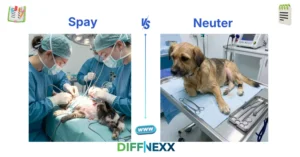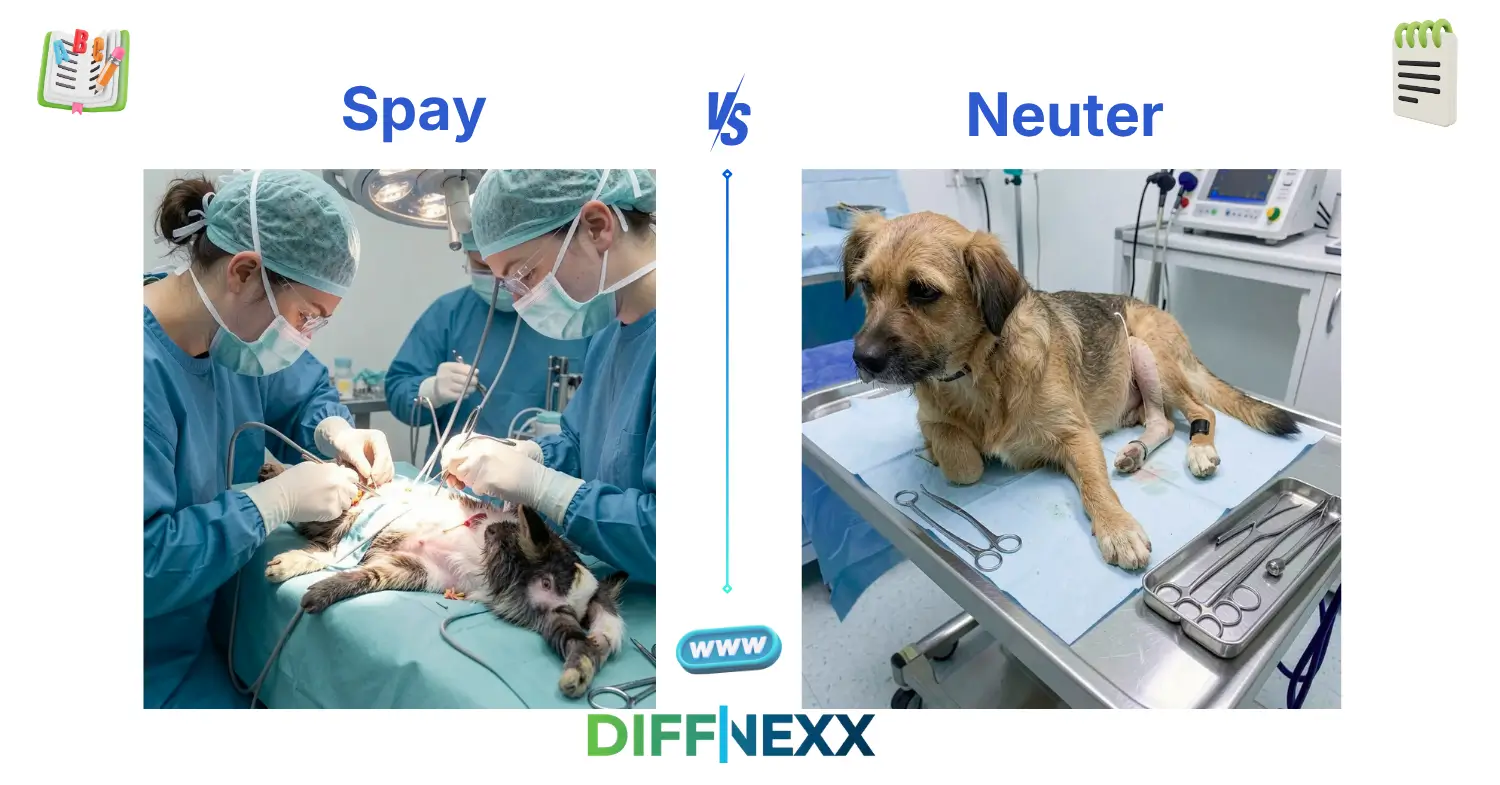
The Difference between spay and neuter is something many pet owners first hear at the vet clinic. Imagine bringing home a playful puppy or kitten. Soon, your veterinarian asks, “Have you thought about spaying or neutering?” You pause, unsure what each term really means.
The difference between spay and neuter can seem confusing at first. Both are common surgical procedures. Both help control pet populations. But they are not the same.
In simple terms, spay is for female animals, while neuter is usually for males. Still, the details go deeper. Understanding the difference between spay and neuter helps you make better decisions for your pet’s health and behavior.
Let’s explore how these procedures differ and why it matters.
Key Difference Between the Both ⚖️
The main difference is based on gender and procedure:
- Spay involves removing the ovaries (and often the uterus) of a female animal.
- Neuter involves removing the testicles of a male animal.
Both prevent reproduction. However, they affect hormones, behavior, and health in slightly different ways.
Importance – Why Knowing the Difference Matters 🌍
Understanding the difference between spay and neuter is important for both beginners and experts.
For pet owners, it helps you make informed decisions about your animal’s health. It also prevents unwanted litters, which reduces stray populations.
For veterinarians and animal care professionals, clarity ensures proper treatment and communication. Misunderstanding can lead to incorrect advice or delayed procedures.
In society, these procedures help control overpopulation. This reduces the number of homeless animals and improves overall animal welfare.
🔊 Pronunciation Section
Spay
US: /speɪ/
UK: /speɪ/
Neuter
US: /ˈnuːtər/
UK: /ˈnjuːtə/
Now that you know how to say them, let’s understand what they really mean.
📚 Core Definitions
Spay
Spay is a surgical procedure done on female animals. The vet removes the ovaries and usually the uterus. This stops reproduction and heat cycles.
- Example: “We decided to spay our cat to prevent future health issues.”
Neuter
Neuter is a surgical procedure for male animals. The vet removes the testicles. This reduces mating behavior and prevents reproduction.
- Example: “The dog became calmer after we neutered him.”
📚 10 Clear Differences Between Spay and Neuter
1. Gender Target
Spay is for females, while neuter is for males.
- Example for Spay: “The female rabbit was spayed.”
- Example for Neuter: “The male rabbit was neutered.”
2. Surgical Procedure
Spaying is more complex. It involves internal organs. Neutering is simpler and external.
- Example for Spay: “The surgery took longer for the female dog.”
- Example for Neuter: “The male dog recovered quickly.”
3. Recovery Time
Spay often requires longer healing. Neuter usually heals faster.
- Example for Spay: “She needed two weeks to recover.”
- Example for Neuter: “He was active again in a few days.”
4. Hormonal Impact
Spaying removes female hormones completely. Neutering reduces male hormone levels.
- Example for Spay: “She no longer goes into heat.”
- Example for Neuter: “He shows less aggression.”
5. Behavior Changes
Spay reduces heat-related behavior. Neuter reduces roaming and marking.
- Example for Spay: “No more loud mating calls.”
- Example for Neuter: “Less marking inside the house.”
6. Health Benefits
Spay prevents uterine infections and some cancers. Neuter lowers risk of testicular cancer.
- Example for Spay: “It protects against ovarian disease.”
- Example for Neuter: “It reduces prostate issues.”
7. Complexity
Spaying is more invasive. Neutering is less invasive.
- Example for Spay: “It requires abdominal surgery.”
- Example for Neuter: “It’s a quick outpatient procedure.”
8. Cost
Spay is usually more expensive. Neuter costs less.
- Example for Spay: “The surgery cost more due to complexity.”
- Example for Neuter: “It was affordable and quick.”
9. Risk Level
Spay carries slightly higher risk due to internal surgery. Neuter has lower risk.
- Example for Spay: “Careful monitoring was needed.”
- Example for Neuter: “Minimal risk was involved.”
10. Timing
Spay is often done before the first heat cycle. Neuter can be done earlier.
- Example for Spay: “The vet advised early spaying.”
- Example for Neuter: “The puppy was neutered at six months.”
🎯 Why Knowing the Difference Matters
Students need to understand these terms for basic biology and animal care knowledge. It builds awareness and responsibility.
Professionals, like vets and shelter workers, must use these terms correctly. Clear communication avoids mistakes and ensures proper care.
In daily life, knowing the difference helps pet owners make better choices. It also supports animal welfare efforts.
Real-world Consequences of Confusion
Confusion can lead to wrong decisions. For example, delaying the correct procedure can cause health issues or unwanted breeding.
🧠 Why People Get Confused
Similar Terms
Both words relate to animal surgery, so people mix them up easily.
Semantic Overlap
They share the same goal preventing reproduction.
Context-Based Usage
People often use “neuter” as a general term for both.
Informal Speech
Casual language blurs the distinction.
🎭 Connotation & Emotional Tone
Connotation = the emotional meaning associated with a word.
Spay
Neutral to slightly clinical. It sounds more technical.
- Example: “The vet recommended spaying for health reasons.”
Neuter
Neutral and more commonly used. It feels less technical.
- Example: “We neutered our dog last month.”
🗣 Usage in Metaphors, Similes & Idioms
These terms are mostly medical, but sometimes used metaphorically:
- “The policy was neutered” (meaning weakened).
- “The plan was spayed of all risks” (rare usage).
Examples:
- “The committee neutered the proposal.”
- “They spayed the idea of unnecessary parts.”
📊 Comparison Table
| Feature | Spay | Neuter |
|---|---|---|
| Meaning | Surgery for females | Surgery for males |
| Tone | Clinical | Neutral/common |
| Usage | Female animals | Male animals |
| Context | Veterinary care | Veterinary care |
| Formality | Formal | Slightly less formal |
⚖️ Which Is Better in What Situation?
When to Use Spay
Use “spay” when referring to female animals. It is the correct and precise term.
When to Use Neuter
Use “neuter” for male animals. It is widely accepted and commonly used.
Situational Clarity
Always match the term with the animal’s gender. This avoids confusion.
Contextual Correctness
In professional settings, accuracy is important. In casual speech, people may generalize, but correct usage is still best.
📖 Literary or Cultural References
- Book: The Incredible Journey (Adventure, Sheila Burnford, 1961) – Highlights responsible pet care.
- Movie: Homeward Bound (USA, 1993) – Shows human-animal relationships and care responsibilities.
❓ FAQs
1. Is spaying or neutering painful for pets?
Both procedures are done under anesthesia, so pets do not feel pain during surgery. Afterward, there may be mild discomfort, but vets provide pain relief. Most pets recover quickly.
2. Can a female pet be neutered?
Technically, “neuter” can be a general term, but “spay” is the correct word for females. Using the right term improves clarity.
3. What is the best age for spaying or neutering?
It depends on the animal and breed. Many vets recommend around 4–6 months. Always consult your veterinarian.
4. Does neutering change a pet’s personality?
It may reduce aggression or roaming. However, your pet’s core personality stays the same. Positive traits remain unchanged.
5. Are there risks involved?
All surgeries carry some risk. Spaying has slightly higher risk due to complexity. Still, both are considered safe when done by professionals.
🏁 Conclusion
The difference between spay and neuter is simple yet important. Spaying refers to female animals, while neutering applies to males. Both procedures help control population, improve health, and support responsible pet ownership.
Understanding this difference allows you to communicate clearly and make better decisions. It also helps reduce confusion in both casual and professional settings.
In the end, knowledge leads to better care. When you understand these terms, you become a more responsible and informed pet owner. Keep learning, and your pets will benefit from it 🐶🐱.

Aamer Shahzad is the founder of Distinly.com, a fast-growing educational platform focused on high-intent “difference between” topics. With over 8 years of experience in English language education and analytical writing, I specialize in breaking down complex “difference between” topics into clear, structured, and easy-to-understand explanations. Distinly.com is your go-to resource for enhancing English skills and writing with confidence.
I specializes in building search-optimized, research-driven comparison content designed for clarity, authority, and long-term digital asset value.