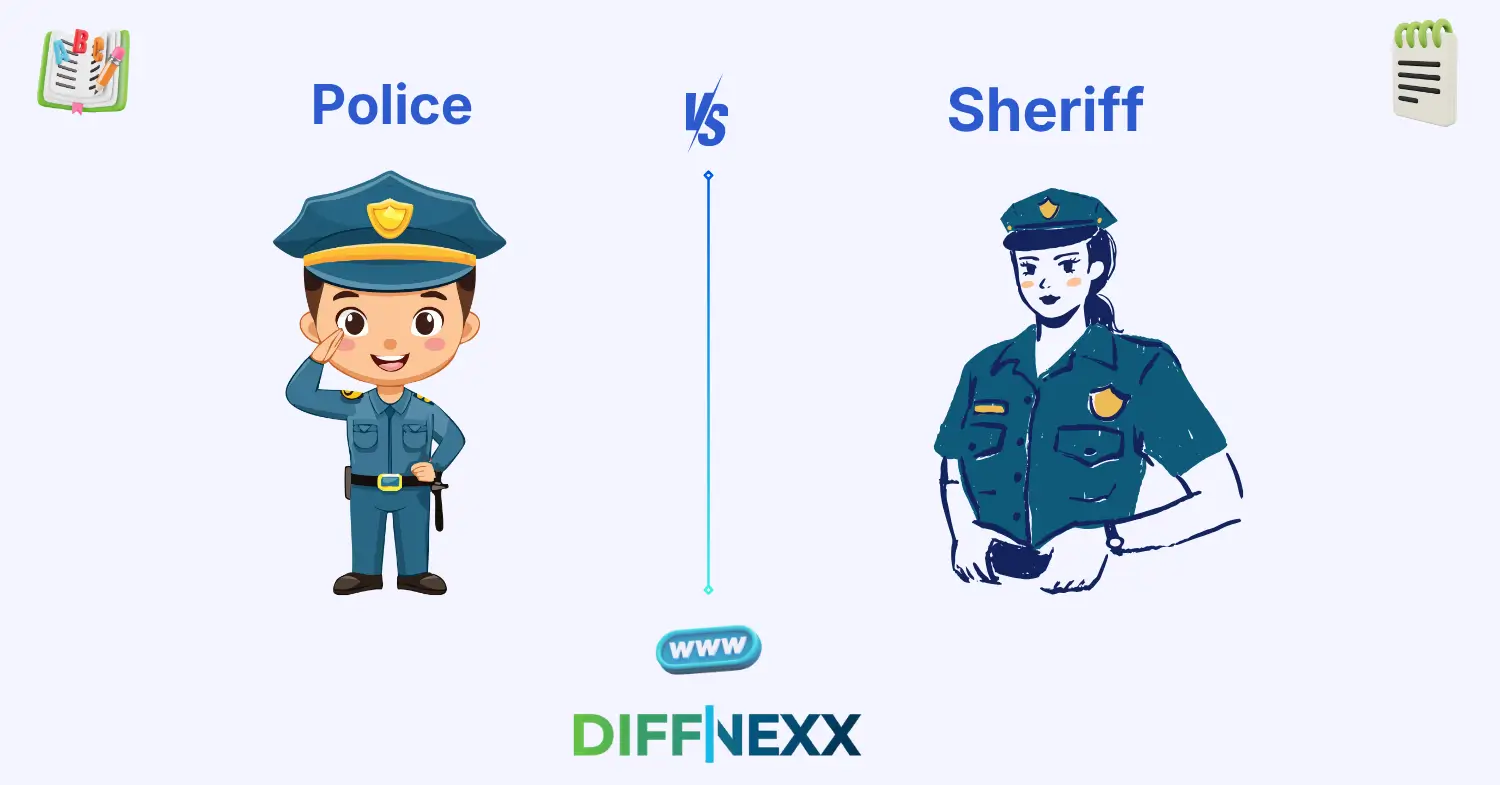
Difference between police and sheriff often confuses people when watching crime shows or reading news. You may hear both terms used, but they don’t always mean the same thing.
The difference between police and sheriff lies in their roles, authority, and areas of work. Police officers usually work in cities, while sheriffs often serve counties and manage jails.
Many people think they are the same, but the difference between police and sheriff is important in understanding how law enforcement works, especially in countries like the United States.
Let’s explore their roles clearly so you can understand how each one functions in real life.
Key Difference Between the Both
The key difference is:
- Police are appointed officers who enforce laws in cities or towns.
- Sheriffs are usually elected officials who oversee law enforcement at the county level.
In simple terms, police serve local areas, while sheriffs have broader authority in counties and often manage jails.
Importance – Why This Difference Matters
Understanding the difference between police and sheriff helps learners understand how law systems are organized.
For students, it improves general knowledge about governance and law enforcement structures.
For professionals like journalists or legal experts, this distinction ensures accurate communication and reporting.
In society, this knowledge avoids confusion. People know who to contact depending on the situation, especially in regions where both exist.
🔊 Pronunciation Section
Police
US: /pəˈliːs/
UK: /pəˈliːs/
Sheriff
US: /ˈʃerɪf/
UK: /ˈʃerɪf/
Now that you can pronounce both clearly, let’s define them before comparing further.
📚 Core Definitions
Police
Police are trained law enforcement officers who maintain public order and enforce laws in cities or towns. They respond to emergencies, investigate crimes, and protect citizens.
Example: A police officer responding to a traffic accident.
Sheriff
A sheriff is a county-level law enforcement official, often elected by the public. They manage county jails, provide security for courts, and enforce laws in rural areas.
Example: A sheriff overseeing a county jail.
📚 10 Clear Differences Between Police and Sheriff
1. Authority Source
Police are appointed by government agencies. Sheriffs are often elected by citizens.
- Example for Police: Hired by city administration
- Example for Sheriff: Elected in county elections
2. Area of Work
Police operate in cities and towns. Sheriffs work across entire counties.
- Example for Police: City patrol
- Example for Sheriff: Rural county patrol
3. Responsibilities
Police focus on crime prevention and response. Sheriffs also manage jails and courts.
- Example for Police: Investigating theft
- Example for Sheriff: Managing inmates
4. Leadership Structure
Police departments have chiefs. Sheriffs lead their own offices.
- Example for Police: Police chief supervises officers
- Example for Sheriff: Sheriff is the head authority
5. Jurisdiction
Police jurisdiction is limited to city limits. Sheriffs cover broader county areas.
- Example for Police: City boundaries
- Example for Sheriff: Entire county
6. Election vs Appointment
Police are hired through formal processes. Sheriffs are chosen by voters.
- Example for Police: Job application
- Example for Sheriff: Public election
7. Role in Courts
Police may support investigations. Sheriffs provide court security.
- Example for Police: Presenting evidence
- Example for Sheriff: Guarding courtrooms
8. Jail Management
Police do not run jails. Sheriffs are responsible for county jails.
- Example for Police: Arresting suspects
- Example for Sheriff: Running detention facilities
9. Public Interaction
Police interact daily with urban populations. Sheriffs interact more in rural settings.
- Example for Police: City patrol duty
- Example for Sheriff: Rural law enforcement
10. Historical Role
Police developed as modern urban forces. Sheriffs have older historical roots.
- Example for Police: Modern city policing
- Example for Sheriff: Traditional county law enforcement
🎯 Why Knowing the Difference Matters
Students need this knowledge to understand civic systems and law enforcement roles clearly. It helps in exams and real-life awareness.
Professionals like lawyers and journalists must know the difference to communicate accurately. It prevents errors in legal and public reporting.
In society, this clarity helps people contact the right authority. It improves trust and reduces confusion during emergencies.
Real-world consequences of confusion
If people confuse police with sheriffs, they may contact the wrong department. This can delay help during emergencies or legal matters.
🧠 Why People Get Confused
Similar Terms
Both are law enforcement roles, so people assume they are the same.
Semantic Overlap
Their duties sometimes overlap, especially in crime control.
Context-Based Usage
Media often uses terms loosely, adding to confusion.
Informal Speech
People use “police” for all officers, ignoring the sheriff’s role.
🎭 Connotation & Emotional Tone
Connotation = the emotional meaning associated with a word.
Police
- Neutral: Seen as everyday law enforcers
- Example: “The police arrived quickly.”
Sheriff
- Slightly formal or traditional tone
- Example: “The sheriff handled the case.”
🗣 Usage in Metaphors, Similes & Idioms
- “Like a sheriff in town” (authority figure)
- “Call the police” (seek help)
Examples:
- Police: “He acted like the police of the group.”
- Sheriff: “She became the sheriff of the team.”
📊 Comparison Table
| Feature | Police | Sheriff |
|---|---|---|
| Meaning | City law enforcement | County law enforcement |
| Tone | Neutral | Formal/traditional |
| Usage | Daily policing | Broader duties |
| Context | Urban areas | Rural/counties |
| Formality | Medium | High |
⚖️ Which Is Better in What Situation?
When to use Police
Use police when referring to city-based law enforcement. For example, reporting crimes in urban areas.
When to use Sheriff
Use sheriff when discussing county-level authority, jails, or elections.
Situational clarity
Choose based on location—city or county.
Contextual correctness
In formal or legal contexts, use the correct title for accuracy.
📖 Literary or Cultural References
- Book: In Cold Blood (True Crime, Truman Capote, 1966)
- Movie: No Country for Old Men (USA, 2007) – features a county sheriff
❓ FAQs
1. Are police and sheriffs the same?
No, they are different. Police work in cities, while sheriffs serve counties. Their roles and authority differ.
2. Who has more power, police or sheriff?
It depends on the area. Sheriffs often have broader authority in counties, but both have important roles.
3. Are sheriffs elected?
Yes, in many places like the United States, sheriffs are elected by the public.
4. Do police officers work under sheriffs?
Not usually. Police and sheriff departments are separate organizations.
5. Why do we need both police and sheriffs?
Both serve different areas and roles. Together, they ensure law and order across regions.
🏁 Conclusion
The difference between police and sheriff is clear once you understand their roles. Police officers serve cities and focus on daily law enforcement. Sheriffs operate at the county level and handle broader duties like managing jails and courts.
This distinction matters for students, professionals, and everyday citizens. It helps you understand who does what and where to go for help.
By learning this difference, you improve your knowledge of law systems and communication. Keep exploring such concepts they make real-world systems easier to understand. 🚔

Anton Reyes is a contributing writer at DiffNexx.com, where he explores meaningful differences in language, culture, and everyday concepts. With a background in creative nonfiction, Anton brings clarity and balance to complex comparisons. His writing helps readers understand subtle distinctions in words and ideas, making learning both insightful and engaging.