Difference between moth and butterfly is something many people notice during a quiet evening or a sunny afternoon. You might see a delicate butterfly fluttering in a garden or a moth circling a light at night. At first glance, they seem similar, but they are not the same.
The difference between moth and butterfly lies in their behavior, appearance, and even lifestyle. Both belong to the same insect order, Lepidoptera, yet they show clear distinctions that make them unique.
Understanding the difference between moth and butterfly helps learners and nature lovers appreciate how diverse insects can be. It also helps avoid common mix-ups when describing these fascinating creatures.
Let’s now explore what truly sets them apart.
Key Difference Between the Both 🧠
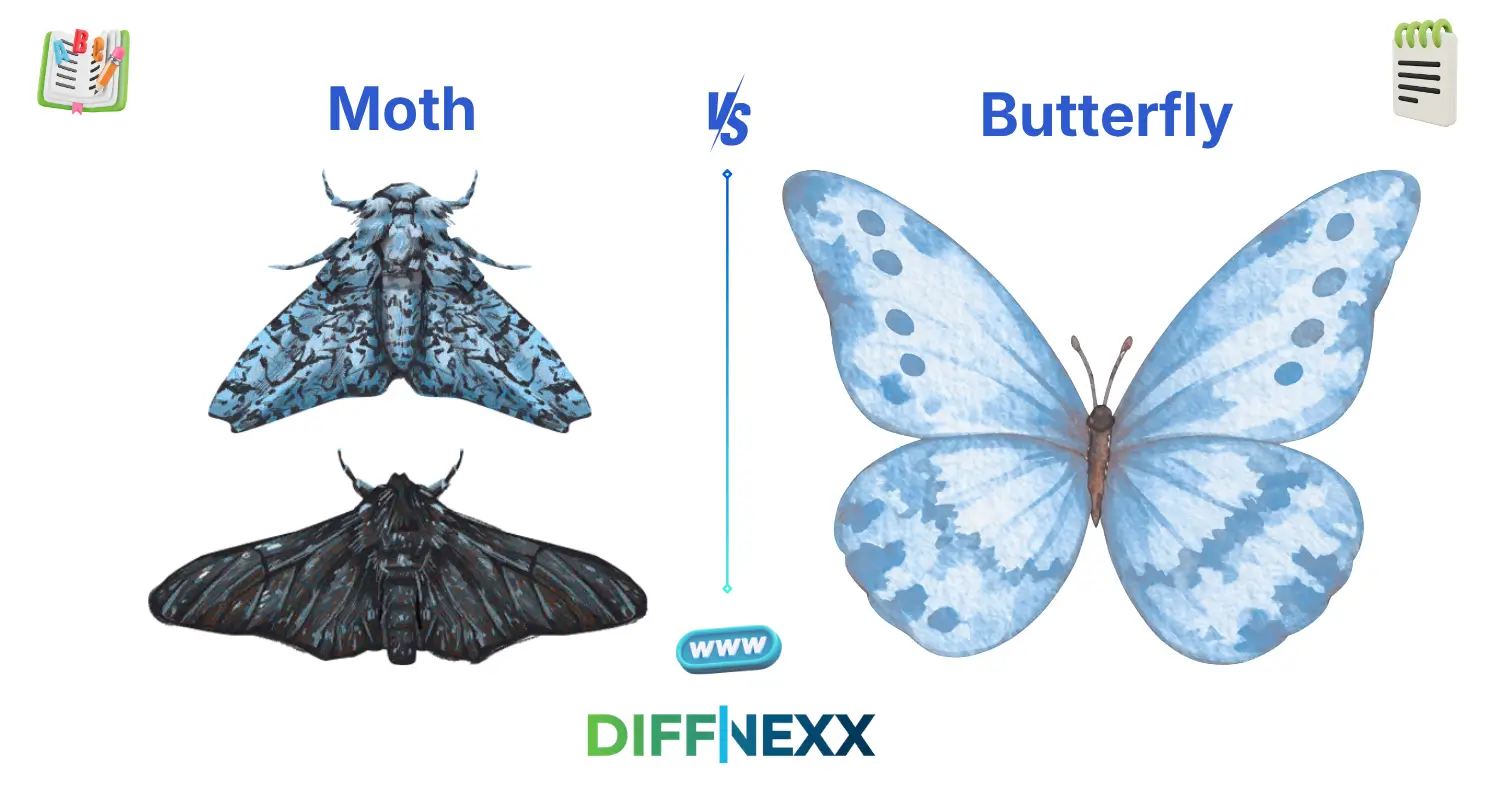
The main difference is simple: butterflies are usually active during the day, while moths are mostly active at night.
Butterflies often have bright colors and slim bodies. Moths, on the other hand, tend to have dull colors and thicker, fuzzier bodies. Their antennae and resting positions also differ significantly.
Importance – Why Their Difference Matters 🌍
Knowing the difference between moths and butterflies is important for both learners and experts.
For students, it builds a strong foundation in biology and observation skills. It teaches how small details can define species.
For experts, especially in ecology and environmental science, this distinction helps in studying pollination, biodiversity, and ecosystem balance.
In society, understanding these insects helps people appreciate nature more and avoid unnecessary fear or confusion about harmless creatures.
🔊 Pronunciation Section
Moth
US: /mɔːθ/
UK: /mɒθ/
Butterfly
US: /ˈbʌt̬.ɚ.flaɪ/
UK: /ˈbʌt.ə.flaɪ/
Now that you can say them correctly, let’s understand what they mean.
📚 Core Definitions
Moth
A moth is an insect usually active at night. It often has dull-colored wings and a furry body. Moths are attracted to light and rest with wings spread flat.
Example: A moth flew around the lamp in the dark room.
Butterfly
A butterfly is a daytime insect known for its bright, colorful wings. It has a slender body and rests with wings folded upright.
Example: A butterfly landed gently on a flower in the garden.
📚 10 Clear Differences Between Moth and Butterfly
1. Activity Time
Moths are mostly active at night, while butterflies are active during the day.
- Example for moth: The moth appeared after sunset.
- Example for butterfly: The butterfly flew in bright sunlight.
2. Color Appearance
Moths usually have dull or earthy colors. Butterflies often have bright and vibrant patterns.
- Example for moth: The moth had brown wings.
- Example for butterfly: The butterfly showed bright orange and black colors.
3. Body Structure
Moths have thick, fuzzy bodies. Butterflies have slim and smooth bodies.
- Example for moth: The moth looked fluffy.
- Example for butterfly: The butterfly looked light and delicate.
4. Antennae Shape
Moths have feathery or comb-like antennae. Butterflies have thin antennae with small clubs at the ends.
- Example for moth: The moth’s antennae looked like feathers.
- Example for butterfly: The butterfly had neat, straight antennae.
5. Resting Position
Moths rest with wings spread flat. Butterflies fold their wings upright.
- Example for moth: The moth rested flat on the wall.
- Example for butterfly: The butterfly closed its wings while resting.
6. Cocoon vs Chrysalis
Moths spin cocoons. Butterflies form a chrysalis.
- Example for moth: The caterpillar built a cocoon.
- Example for butterfly: The caterpillar formed a chrysalis.
7. Light Attraction
Moths are attracted to artificial light. Butterflies are not.
- Example for moth: The moth circled the bulb.
- Example for butterfly: The butterfly stayed near flowers.
8. Wing Texture
Moths often have dusty-looking wings. Butterflies have smoother and more colorful wings.
- Example for moth: The wings looked powdery.
- Example for butterfly: The wings looked shiny and patterned.
9. Feeding Habits
Moths may feed at night on nectar or other sources. Butterflies feed on nectar during the day.
- Example for moth: The moth fed quietly at night.
- Example for butterfly: The butterfly drank nectar from flowers.
10. Public Perception
Moths are often seen as plain or unnoticed. Butterflies are admired for beauty.
- Example for moth: People ignored the moth.
- Example for butterfly: People admired the butterfly.
🎯 Why Knowing the Difference Matters
Students need this knowledge to understand insect classification and biology. It improves observation and scientific thinking.
Professionals, such as biologists and environmentalists, rely on this difference when studying ecosystems and pollination patterns.
In daily life, using the correct term avoids confusion and improves communication about nature.
Real-world Consequences of Confusion
If someone confuses moths with butterflies, it can lead to incorrect scientific observations or misunderstandings in education. Even simple nature discussions can become inaccurate.
🧠 Why People Get Confused
Similar Appearance
Both insects have wings and belong to the same group, which makes them look alike at first.
Semantic Overlap
People often use “butterfly” loosely for any winged insect, especially in casual speech.
Context-Based Usage
In dim light, it’s hard to tell if it’s a moth or a butterfly.
Informal Speech Influence
In everyday language, people don’t always focus on accuracy, which increases confusion.
🎭 Connotation & Emotional Tone
Connotation = the emotional meaning associated with a word.
Moth
- Neutral: A simple night insect (e.g., “A moth flew in.”)
- Slightly Negative: Sometimes linked to dullness or damage (e.g., clothes moths).
Butterfly
- Positive: Beauty, transformation, and freedom (e.g., “She felt like a butterfly.”)
- Neutral: A garden insect (e.g., “A butterfly landed nearby.”)
🗣 Usage in Metaphors, Similes & Idioms
- “Like a moth to a flame” → attracted to something risky
- Example: He rushed into trouble like a moth to a flame.
- “Social butterfly” → a very outgoing person
- Example: She is a social butterfly at parties.
These expressions show how both words carry symbolic meanings.
📊 Comparison Table
| Feature | Moth | Butterfly |
|---|---|---|
| Meaning | Night-active insect | Day-active insect |
| Tone | Neutral/slightly dull | Positive/beautiful |
| Usage | Scientific/general | Common and symbolic |
| Context | Night, indoors, light sources | Daytime, gardens |
| Formality | Neutral | Neutral |
⚖️ Which Is Better in What Situation?
When to use Moth
Use “moth” when referring to insects seen at night or around lights. It fits scientific or neutral descriptions.
When to use Butterfly
Use “butterfly” when describing colorful insects seen during the day or in positive imagery.
Situational Clarity
If the insect is bright and active in daylight, it is likely a butterfly. If it appears at night near light, it is likely a moth.
Contextual Correctness
Choose the word based on time, behavior, and appearance for accurate communication.
📖 Literary or Cultural References
- Book: The Butterfly Lion (Children’s Fiction, Michael Morpurgo, 1996)
- Movie: The Silence of the Lambs (USA, 1991) – famously features moth symbolism
These references show how both insects appear in storytelling and symbolism.
❓ FAQs
1. Are moths and butterflies the same?
No, they belong to the same group but differ in behavior, appearance, and activity time.
2. Why are moths attracted to light?
Moths use natural light like the moon for navigation. Artificial lights confuse them, so they fly toward them.
3. Can moths be colorful like butterflies?
Yes, some moths are colorful, but most are dull compared to butterflies.
4. Do both insects help in pollination?
Yes, both moths and butterflies help pollinate plants, though butterflies are more visible in this role.
5. Is it harmful to have moths indoors?
Most moths are harmless, but some can damage clothes or stored food.
🏁 Conclusion
The difference between moth and butterfly may seem small at first, but it becomes clear when you look closely. Moths are mostly night-active, dull-colored, and attracted to light, while butterflies are daytime insects known for their beauty and vibrant wings.
Understanding this difference helps improve knowledge, communication, and appreciation of nature. It also supports learning in science and everyday observation.
Next time you see a winged insect, take a moment to notice its behavior and features. You’ll quickly know whether it’s a moth or a butterfly and that small detail makes a big difference in understanding the natural world. 🌿

Eliza Marlowe is a passionate content strategist and comparison writer at diffnexx.com. She specializes in breaking down complex “difference between” topics into clear, reader-friendly guides. With a background in linguistics and digital research, Eliza focuses on accuracy, clarity, and content that helps readers make informed decisions with confidence.