Difference between manslaughter and homicide often becomes important in real-life situations. Imagine hearing a news report about a tragic death. One case is called “homicide,” while another is labeled “manslaughter.” At first, both may sound the same but legally, they are not.
The difference between manslaughter and homicide lies in intent, circumstances, and legal meaning. Homicide is a broad term that includes all cases where one person causes the death of another. Manslaughter, however, is a specific type of homicide with less intent or different circumstances.
Understanding the difference between manslaughter and homicide helps avoid confusion. It also helps people understand legal discussions, news reports, and even courtroom decisions.
Let’s now explore their differences in detail so you can clearly tell them apart.
Key Difference Between the Both
The key difference is simple:
- Homicide is a general term for any killing of one person by another.
- Manslaughter is a type of homicide where the killing happens without premeditation or intent to kill.
In short, all manslaughter cases are homicide, but not all homicide cases are manslaughter.
Importance – Why Their Difference Matters
Understanding this difference is important for both learners and professionals.
For students, it builds strong vocabulary and legal awareness. It helps in exams, essays, and general knowledge.
For professionals like lawyers, journalists, and law students, this distinction is critical. It affects legal charges, punishments, and case outcomes.
In society, clear understanding prevents misinformation. People can better interpret legal news and avoid spreading incorrect ideas.
🔊 Pronunciation Section
Manslaughter
US: /ˈmænˌslɔːtər/
UK: /ˈmænˌslɔːtə/
Homicide
US: /ˈhɑːməˌsaɪd/
UK: /ˈhɒmɪˌsaɪd/
Now that you know how to say them, let’s understand what they truly mean.
📚 Core Definitions
Manslaughter
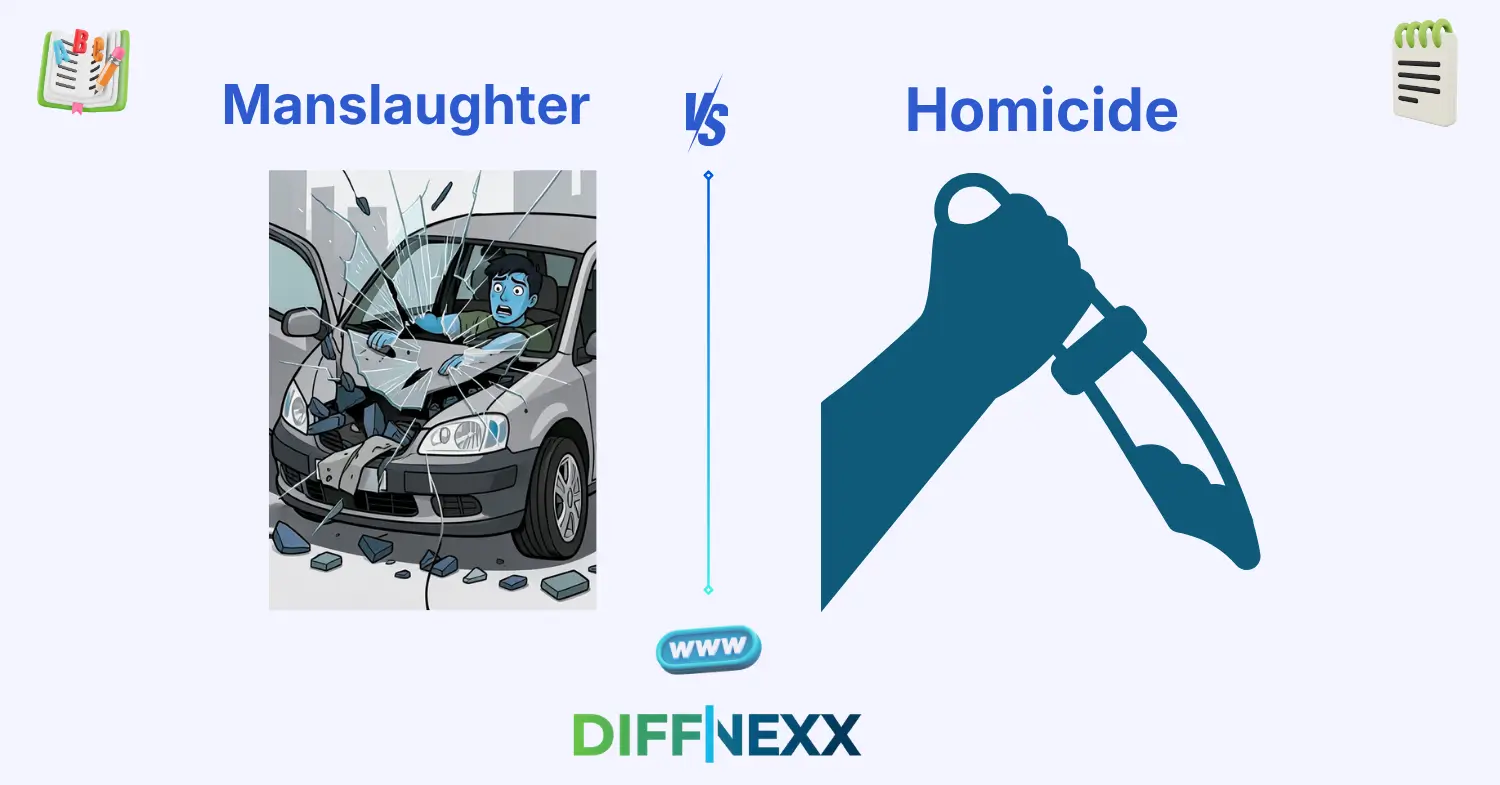
Manslaughter is the unlawful killing of a person without prior intent or planning. It often happens due to sudden anger, recklessness, or negligence.
Example: A driver causes a fatal accident due to careless driving.
Homicide
Homicide means one person causing the death of another. It includes both legal and illegal killings, such as murder, manslaughter, or even self-defense.
Example: A person intentionally kills someone; this is homicide.
📚 10 Clear Differences Between Manslaughter and Homicide
1. Intent
Manslaughter usually has no intent to kill.
Homicide may or may not involve intent.
- Example for Manslaughter: A fight suddenly turns deadly.
- Example for Homicide: A planned killing.
2. Scope
Manslaughter is a specific category.
Homicide is a broad umbrella term.
- Example for Manslaughter: Accidental death during negligence.
- Example for Homicide: Includes murder, manslaughter, and more.
3. Severity
Manslaughter is considered less severe than murder.
Homicide can range from minor to severe cases.
- Example for Manslaughter: Unplanned fatal mistake.
- Example for Homicide: Includes the most serious crimes like murder.
4. Legal Classification
Manslaughter is a defined legal charge.
Homicide is a general classification.
- Example for Manslaughter: Charged in court as manslaughter.
- Example for Homicide: Used to describe the act broadly.
5. Premeditation
Manslaughter lacks planning.
Homicide may involve planning.
- Example for Manslaughter: Sudden emotional reaction.
- Example for Homicide: Carefully planned crime.
6. Emotional Intensity
Manslaughter often involves strong emotions.
Homicide may be emotional or calculated.
- Example for Manslaughter: Killing in sudden anger.
- Example for Homicide: Cold, calculated act.
7. Legal Consequences
Manslaughter usually carries lighter punishment than murder.
Homicide penalties vary widely.
- Example for Manslaughter: Shorter prison sentence.
- Example for Homicide: Can include life imprisonment.
8. Context of Use
Manslaughter is used in specific legal cases.
Homicide is used in general discussions and reports.
- Example for Manslaughter: Court verdict.
- Example for Homicide: News headline.
9. Type of Act
Manslaughter often involves negligence or recklessness.
Homicide includes all types of killing.
- Example for Manslaughter: Drunk driving death.
- Example for Homicide: Any killing situation.
10. Legal Examples
Manslaughter cases are usually accidental or emotional.
Homicide cases include both lawful and unlawful acts.
- Example for Manslaughter: Workplace accident causing death.
- Example for Homicide: Self-defense killing.
🎯 Why Knowing the Difference Matters
Students benefit by improving their legal vocabulary and understanding. It helps in writing and exams.
Professionals must know the difference to avoid legal mistakes. A wrong term can change the meaning of a case.
In daily life, people can better understand crime reports and avoid confusion in serious discussions.
Real-world Consequences of Confusion
Using the wrong term can mislead others. It may also create panic or spread misinformation. In legal settings, it can even affect justice.
🧠 Why People Get Confused
Similar Meaning
Both words relate to killing, so they seem identical at first.
Context-Based Usage
News reports often use “homicide” broadly, which adds confusion.
Informal Speech
People use both terms loosely in everyday conversation.
🎭 Connotation & Emotional Tone
Connotation = the emotional meaning associated with a word.
Manslaughter
- Negative: Suggests a tragic mistake or loss of control.
- Example: “It was ruled as manslaughter after the accident.”
Homicide
- Neutral to Negative: Can be neutral in legal context, but often sounds serious or criminal.
- Example: “Police are investigating a homicide.”
🗣 Usage in Metaphors, Similes & Idioms (If Applicable)
These words are rarely used in idioms, but they appear in strong figurative language.
- “His actions were like emotional manslaughter.”
- “The policy caused economic homicide.”
Such uses exaggerate harm for dramatic effect.
📊 Comparison Table
| Feature | Manslaughter | Homicide |
|---|---|---|
| Meaning | Unintentional killing | Any killing of a person |
| Tone | Negative, emotional | Neutral to serious |
| Usage | Legal charge | General term |
| Context | Specific cases | Broad discussions |
| Formality | Formal legal | Formal/legal/general |
⚖️ Which Is Better in What Situation?
When to Use Manslaughter
Use it when the killing is unintentional or caused by negligence. For example, in legal discussions about accidents or emotional incidents.
When to Use Homicide
Use it when referring to any kind of killing in general. It works well in reports, studies, or broad descriptions.
Situational Clarity
If you are unsure about intent, use “homicide.” It is safer and more general.
Contextual Correctness
Always choose the term based on legal meaning. This avoids confusion and ensures accuracy.
📖 Literary or Cultural References
- Book: “Crime and Punishment” (Psychological Fiction, Fyodor Dostoevsky, 1866)
Explores moral responsibility in homicide cases. - Movie: “The Fugitive” (USA, 1993)
Focuses on a man wrongly accused of homicide.
❓ FAQs
1. Is manslaughter the same as homicide?
No. Manslaughter is a type of homicide. Homicide is a broader term that includes many kinds of killing.
2. Does homicide always mean murder?
No. Homicide includes both legal and illegal killings. Murder is just one type of homicide.
3. Is manslaughter accidental?
Often yes. It usually involves accidents, negligence, or sudden emotional actions.
4. Which is more serious, manslaughter or homicide?
Homicide can be more serious because it includes severe crimes like murder. Manslaughter is generally less severe.
5. Can homicide be legal?
Yes. For example, killing in self-defense can be considered a lawful homicide.
🏁 Conclusion
The difference between manslaughter and homicide is mainly about scope and intent. Homicide is a broad term that includes all killings, while manslaughter refers to unintentional or less deliberate acts. This distinction is essential in law, communication, and everyday understanding.
Knowing the correct term helps you speak clearly and avoid confusion. It also allows you to understand legal news and discussions more accurately.
Keep learning and using these words correctly. Small differences in language can make a big impact on meaning.

Eliza Marlowe is a passionate content strategist and comparison writer at diffnexx.com. She specializes in breaking down complex “difference between” topics into clear, reader-friendly guides. With a background in linguistics and digital research, Eliza focuses on accuracy, clarity, and content that helps readers make informed decisions with confidence.