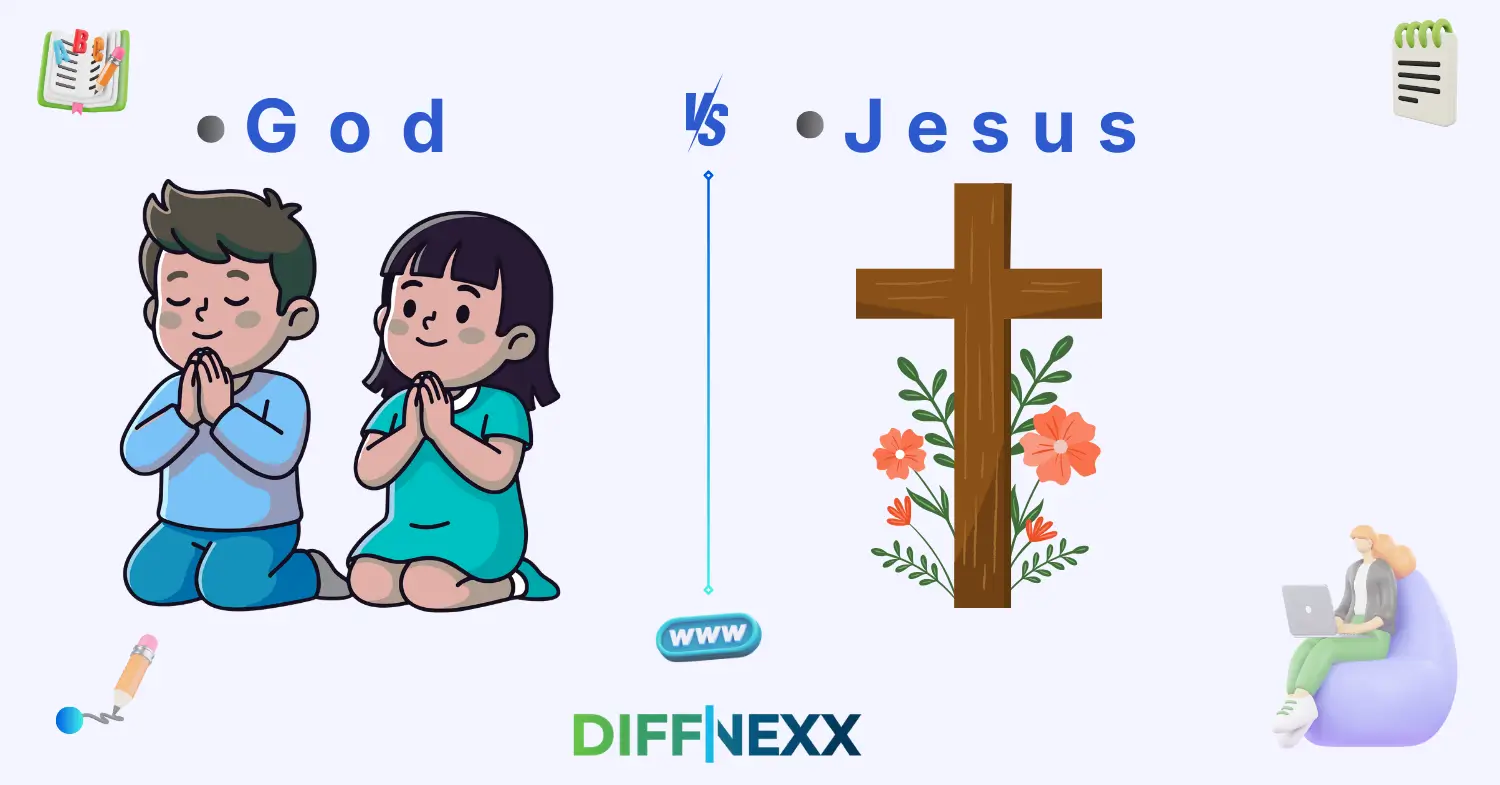
Difference between God and Jesus is a question many people ask during a church service, a religion class, or even a simple conversation with friends. A child might ask, “If Jesus prays to God, are they the same?” That honest question opens the door to deeper understanding.
The difference between God and Jesus depends on Christian belief and theology. In Christianity, God is the eternal Creator. Jesus is believed to be the Son of God who came to Earth in human form. Yet Christians also teach that Jesus is fully divine. That is where confusion often begins.
When people search for the difference between God and Jesus, they usually want clarity, not debate. They want to understand how Christians describe their faith.
Let’s explore this step by step, in simple and respectful language.
Key Difference Between the Two
The key difference is role and identity within Christian belief.
God refers to the eternal divine being — the Creator of all things.
Jesus refers to the Son of God who Christians believe became human to save humanity.
In most Christian traditions, Jesus is understood as part of the Trinity: Father, Son, and Holy Spirit — one God in three persons.
Why Is Their Difference Necessary to Know
Students studying religion must understand this distinction to grasp Christian theology correctly. Without it, many biblical teachings seem confusing.
Theologians, clergy, and scholars discuss this difference carefully. It shapes doctrines, worship practices, and prayers across Christian communities.
In society, religious literacy promotes respectful dialogue. When people understand the difference between God and Jesus, they avoid misunderstandings in interfaith conversations.
Now, let’s clarify pronunciation before going deeper.
🔊 Pronunciation
God
US: /ɡɑːd/
UK: /ɡɒd/
Jesus
US: /ˈdʒiːzəs/
UK: /ˈdʒiːzəs/
With pronunciation clear, let’s define each term carefully.
📚 Core Definitions
God
In Christianity, God is the eternal, all-powerful Creator of the universe. God is described as omniscient (all-knowing), omnipotent (all-powerful), and omnipresent (present everywhere). The tone is reverent and sacred.
Example:
Creator Role – “Christians believe God created the heavens and the earth.”
Jesus
Jesus refers to Jesus Christ, whom Christians believe is the Son of God and the Savior of humanity. He lived in the first century and taught about love, forgiveness, and salvation. Christians believe he is both fully human and fully divine.
Example:
Teaching Moment – “Jesus taught people to love their neighbors.”
📚 10 Clear Differences Between God and Jesus
1. Identity
God is the supreme divine being.
Jesus is the Son within Christian belief.
Example for God: “God is worshiped as Creator.”
Example for Jesus: “Jesus is worshiped as Savior.”
2. Role
God creates and sustains the universe.
Jesus redeems and teaches humanity.
Example for God: “God gave life to all.”
Example for Jesus: “Jesus preached forgiveness.”
3. Form
God is spirit and not limited to physical form.
Jesus took human form.
Example for God: “God is unseen.”
Example for Jesus: “Jesus walked among people.”
4. Historical Presence
God is eternal and outside time.
Jesus lived historically in first-century Judea.
Example for God: “God has no beginning.”
Example for Jesus: “Jesus lived in Nazareth.”
5. Prayer Relationship
Jesus prayed to God the Father.
God does not pray to another being.
Example for God: “Believers pray to God.”
Example for Jesus: “Jesus prayed in the garden.”
6. Title Usage
“God” is a title for the divine being.
“Jesus” is a personal name.
Example for God: “God is merciful.”
Example for Jesus: “Jesus healed the sick.”
7. Theological Position
God represents the full Trinity.
Jesus represents the second person of the Trinity.
Example for God: “God is one.”
Example for Jesus: “Jesus is the Son.”
8. Worship Focus
Some prayers address God the Father.
Others specifically address Jesus.
Example for God: “Thank you, God.”
Example for Jesus: “Lord Jesus, guide me.”
9. Symbolism
God symbolizes ultimate authority.
Jesus symbolizes sacrifice and salvation.
Example for God: “God rules over creation.”
Example for Jesus: “Jesus died on the cross.”
10. Expression Style
God is often described in abstract terms.
Jesus is described through stories and actions.
Example for God: “God is eternal.”
Example for Jesus: “Jesus told parables.”
🎯 Why Knowing the Difference Matters
Students gain clearer understanding of Christian doctrine when they distinguish these roles. It prevents theological confusion.
Religious leaders rely on precise language when teaching. Small wording differences carry deep meaning.
In multicultural societies, understanding these distinctions supports respectful dialogue and reduces misunderstandings.
Real-World Consequences of Confusion
Confusion may lead to inaccurate representation of Christian beliefs. Clear understanding supports respectful conversations across faiths.
🧠 Why People Get Confused
Semantic Overlap
Christians say Jesus is God. That creates overlap.
Context-Based Usage
Prayers sometimes use both names interchangeably.
Informal Speech
People casually say “God” when they mean “Jesus,” or vice versa.
The Trinity Concept
The Trinity doctrine is complex and difficult for beginners.
🎭 Connotation & Emotional Tone
Connotation = emotional meaning attached to a word.
Connotation (bold) = the emotional meaning associated with a word.
God
Positive: Authority, protection, power.
Example: “God watches over us.”
Negative: Sometimes linked with fear of judgment.
Example: “They feared God’s punishment.”
Neutral: Used in theological discussion.
Example: “The concept of God varies across religions.”
Jesus
Positive: Love, compassion, sacrifice.
Example: “Jesus showed mercy.”
Negative: Sometimes misunderstood in historical debates.
Example: “Scholars debate about Jesus’ life.”
Neutral: Academic reference.
Example: “Jesus lived in Roman Judea.”
🗣 Usage in Metaphors, Similes & Idioms
Common expressions include:
- “Playing God” – acting with ultimate authority.
- “Jesus saves” – religious expression of faith.
Example Sentence:
“He acted like God, but he spoke about love like Jesus.”
📊 Comparison Table
| Feature | God | Jesus |
|---|---|---|
| Meaning | Supreme Creator | Son of God |
| Tone | Reverent | Reverent |
| Usage | Worship, prayer | Teaching, salvation |
| Context | Eternal divinity | Historical life |
| Formality | Theological term | Theological & historical |
⚖️ Which Is Better in What Situation?
When to Use God
Use “God” when referring to the supreme Creator or speaking generally about divinity.
When to Use Jesus
Use “Jesus” when referring to the historical figure or Christian Savior.
Situational Clarity
Match the term to the theological context.
Contextual Correctness
In religious studies, precision avoids misunderstanding.
📖 Literary or Cultural References
- “Mere Christianity” (Christian Apologetics, C.S. Lewis, 1952) explains the relationship between God and Jesus.
- “The Passion of the Christ” (USA, 2004) focuses on the life and crucifixion of Jesus.
Both works explore Christian beliefs about divinity and salvation.
❓ FAQs
1. Are God and Jesus the same in Christianity?
Many Christians believe Jesus is fully God and fully human. They see him as part of the Trinity. However, they also distinguish roles between Father and Son.
2. Why did Jesus pray to God?
Christians believe Jesus, in human form, prayed to the Father. This reflects relationship within the Trinity.
3. Do all Christians believe the same thing?
Most mainstream Christian denominations share Trinitarian belief. Some groups interpret it differently.
4. Is God only in Christianity?
No. The concept of God exists in many religions. However, Christian understanding is unique in its view of Jesus.
5. Why is this topic sensitive?
It relates to deeply held beliefs. Respectful language is important when discussing it.
🏁 Conclusion
The difference between God and Jesus centers on identity, role, and theological meaning within Christianity. God refers to the eternal Creator. Jesus refers to the Son who lived on Earth and, according to Christian belief, shares divine nature.
Understanding this distinction helps students, scholars, and everyday learners speak accurately about Christian doctrine. It also promotes respectful interfaith dialogue.
Clear knowledge builds respectful conversations. Keep learning with curiosity and care. 🌿

Anton Reyes is a contributing writer at DiffNexx.com, where he explores meaningful differences in language, culture, and everyday concepts. With a background in creative nonfiction, Anton brings clarity and balance to complex comparisons. His writing helps readers understand subtle distinctions in words and ideas, making learning both insightful and engaging.