Difference between rye and bourbon often becomes clear in a small but important moment. You are at a dinner party. Someone offers you a drink and asks, “Would you like rye or bourbon?” You hesitate. Both look similar in the glass. Both are American whiskeys. But are they really the same?
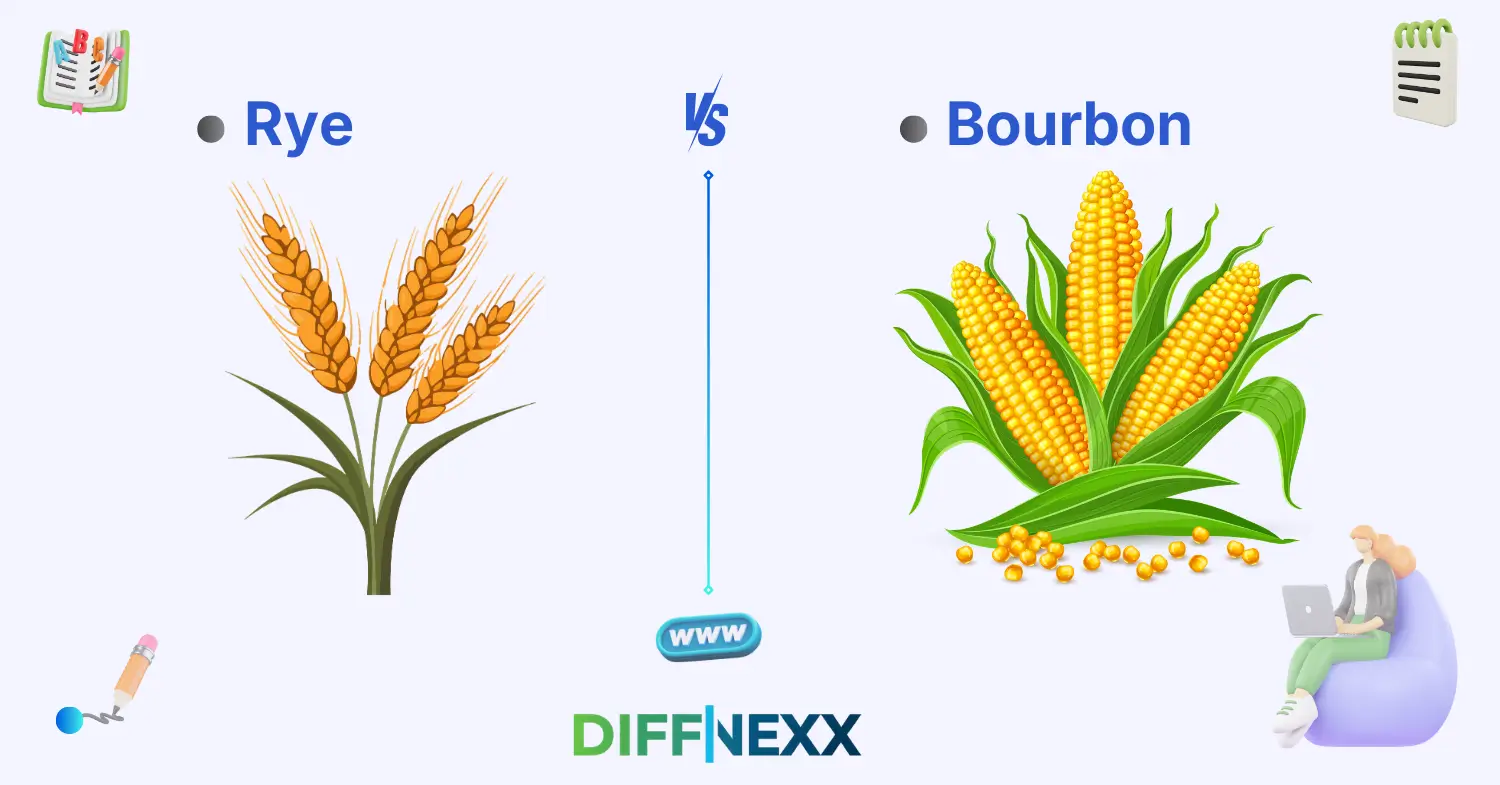
Difference between rye and bourbon mainly comes from the grain used to make them. Rye whiskey is made mostly from rye grain. Bourbon is made mostly from corn. That one change shapes flavor, aroma, and even the feeling of the drink.
Many people search for the difference between rye and bourbon because they want confidence. They want to understand taste, tradition, and proper usage.
In this guide, we will break everything down in clear, simple language before comparing them step by step.
🥃 Key Difference Between the Both
The main difference between rye and bourbon is the primary grain in the mash bill.
Rye must contain at least 51% rye grain.
Bourbon must contain at least 51% corn.
Rye creates bold spice and dryness.
Bourbon creates sweetness and smooth texture.
This single rule shapes everything from flavor to food pairing.
🎓 Why Is Their Difference Necessary to Know for Learners and Experts in Society?
Students studying hospitality, food science, or linguistics must understand accurate terminology. Clear vocabulary builds strong communication skills.
Professionals like bartenders and chefs depend on precision. A cocktail recipe changes if you replace rye with bourbon. Knowledge protects authenticity and quality.
In society, whiskey represents American heritage. Understanding the difference between rye and bourbon shows cultural awareness and respect for craft traditions.
🔊 Pronunciation Section
Rye
US : /raɪ/
UK : /raɪ/
Bourbon
US : /ˈbɝːbən/
UK : /ˈbɔːbən/
Now that pronunciation is clear, let us define each spirit before exploring their differences in depth.
📚 Core Definitions
🌾 Rye
Rye is an American whiskey made mainly from rye grain. It often tastes spicy, peppery, and dry. Its emotional tone feels bold and energetic.
Example: He ordered rye because he enjoys sharp flavors.
🌽 Bourbon
Bourbon is an American whiskey made mainly from corn. It tastes sweet, rich, and smooth. Its emotional tone feels warm and comforting.
Example: She chose bourbon for its caramel sweetness.
📚 10 Clear Differences Between Rye and Bourbon
🔥 1. Emotional Intensity
Rye feels lively and sharp. It gives a strong first impression.
Bourbon feels softer and rounder on the tongue.
- Example 1 for Rye: The rye tasted bold and spicy.
- Example 2 for Bourbon: The bourbon felt smooth and gentle.
⏳ 2. Duration of Flavor
Rye leaves a dry, peppery finish. The spice lingers longer.
Bourbon leaves a sweet and creamy finish.
- Example 1 for Rye: The spicy aftertaste stayed for minutes.
- Example 2 for Bourbon: The sweetness faded slowly and smoothly.
🎯 3. Flavor Focus
Rye highlights herbs and pepper notes.
Bourbon highlights vanilla, caramel, and oak.
- Example 1 for Rye: I tasted clove and black pepper.
- Example 2 for Bourbon: I noticed caramel and honey.
💪 4. Perceived Strength
Rye often feels stronger because of its spice.
Bourbon feels softer even at the same alcohol level.
- Example 1 for Rye: The drink felt powerful and sharp.
- Example 2 for Bourbon: The drink felt calm and balanced.
🧠 5. Rational Selection
People choose rye for complexity and depth.
People choose bourbon for comfort and sweetness.
- Example 1 for Rye: He picked rye for a serious tasting session.
- Example 2 for Bourbon: She picked bourbon for a relaxed evening.
🎩 6. Formality
Rye appears often in classic cocktail bars.
Bourbon appears in both casual and formal settings.
- Example 1 for Rye: The bartender used rye in a Manhattan.
- Example 2 for Bourbon: Guests enjoyed bourbon at a family dinner.
🍽️ 7. Context of Use
Rye pairs well with spicy or savory foods.
Bourbon pairs well with barbecue and desserts.
- Example 1 for Rye: Rye matched the grilled steak perfectly.
- Example 2 for Bourbon: Bourbon complemented chocolate cake.
😊 8. Psychological Impact
Rye feels stimulating and sharp.
Bourbon feels soothing and warm.
- Example 1 for Rye: The rye gave a lively sensation.
- Example 2 for Bourbon: The bourbon created a relaxing mood.
📝 9. Tone in Description
Writers describe rye as bold and vibrant.
They describe bourbon as rich and comforting.
- Example 1 for Rye: The critic called it energetic.
- Example 2 for Bourbon: The critic called it warm and inviting.
🗣️ 10. Expression Style
Rye expresses spice and directness.
Bourbon expresses sweetness and smooth flow.
- Example 1 for Rye: This rye speaks with fire.
- Example 2 for Bourbon: This bourbon speaks with silk.
🎯 Why Knowing the Difference Matters
Students must understand the difference between rye and bourbon to use correct terminology. Clear knowledge prevents mistakes in exams and professional writing.
Professionals must protect flavor balance. Substituting one for the other can change a drink completely. Precision builds credibility.
In society, informed conversation shows cultural literacy. It helps people discuss American whiskey with respect and clarity.
⚠️ Real-World Consequences of Confusion
If a cocktail recipe requires rye and someone uses bourbon, the taste becomes sweeter and less spicy. In production, legal labeling rules require accuracy. Mistakes can harm brand reputation.
🧠 Why People Get Confused
🔤 Similar Spelling or Pronunciation
Both words are short and simple. They appear together on menus and bottles.
🔄 Semantic Overlap
Both are American whiskeys aged in new charred oak barrels.
📍 Context-Based Usage
Restaurants sometimes list only “whiskey” without detail. This creates uncertainty.
🗣 Influence of Informal Speech
Some people use “bourbon” as a general word for American whiskey. This informal habit causes confusion.
🎭 Connotation & Emotional Tone
Connotation = the emotional meaning associated with a word.
🌾 Rye
Positive: Strong and traditional.
Example: Rye represents bold American history.
Negative: Sometimes viewed as too sharp.
Example: The rye felt too spicy for beginners.
Neutral: Used in tasting notes and regulations.
🌽 Bourbon
Positive: Warm and welcoming.
Example: Bourbon feels comforting on a cold evening.
Negative: Sometimes seen as overly sweet.
Example: The bourbon tasted sugary to some drinkers.
Neutral: Used in legal definitions and recipes.
🗣 Usage in Metaphors, Similes & Idioms
Writers use these words metaphorically.
Example with rye: “His attitude is rye—direct and spicy.”
Example with bourbon: “Her voice flows like bourbon—smooth and warm.”
These comparisons reflect flavor traits rather than literal meaning.
📊 Comparison Table
| Feature | Rye | Bourbon |
|---|---|---|
| Meaning | Whiskey from rye grain | Whiskey from corn |
| Tone | Spicy, bold | Sweet, smooth |
| Usage | Classic cocktails | Sipping and desserts |
| Context | Savory meals | Sweet dishes |
| Formality | Traditional bars | All settings |
⚖️ Which Is Better in What Situation?
🌾 When to Use Rye
Use rye when you want spice and complexity. It works well in bold cocktails and savory meals.
🌽 When to Use Bourbon
Use bourbon when you prefer sweetness and smooth texture. It fits relaxed evenings and dessert pairings.
🎯 Situational Clarity
Choose based on flavor goal, not trend.
📌 Contextual Correctness
Match the spirit to the recipe and audience taste for best results.
📖 Literary or Cultural References
- The Shining (Horror, Stephen King, 1977) – Bourbon appears in character scenes.
This work links whiskey to mood and personality.
❓ FAQs
1. Is rye stronger than bourbon?
Rye does not usually contain more alcohol. However, its spice makes it taste stronger.
2. Can bourbon include rye grain?
Yes. Some bourbons contain small amounts of rye. Corn must still be the majority grain.
3. Does bourbon have to come from Kentucky?
No. Bourbon can be made anywhere in the United States. Kentucky is simply famous for it.
4. Which is smoother for beginners?
Many beginners prefer bourbon because it tastes sweeter and softer. Rye can feel intense at first.
5. Are aging rules the same?
Both must age in new charred oak barrels under U.S. law.
🏁 Conclusion
The difference between rye and bourbon begins with grain choice but extends into flavor, tone, and experience. Rye delivers spice, dryness, and bold energy. Bourbon delivers sweetness, warmth, and smooth comfort.
Understanding this difference helps students, professionals, and enthusiasts speak clearly and choose wisely. It improves communication and deepens appreciation for American whiskey traditions.
Next time you face the choice, think about flavor. Do you want bold spice or gentle sweetness? With knowledge, you can select confidently and enjoy each sip with greater awareness. Keep learning and tasting with curiosity. 🥃

Anton Reyes is a contributing writer at DiffNexx.com, where he explores meaningful differences in language, culture, and everyday concepts. With a background in creative nonfiction, Anton brings clarity and balance to complex comparisons. His writing helps readers understand subtle distinctions in words and ideas, making learning both insightful and engaging.