Difference between rdl and deadlift is a common question for anyone starting strength training. Imagine walking into a gym, seeing people lifting weights, and hearing terms like “RDL” and “deadlift.” It can feel confusing at first.
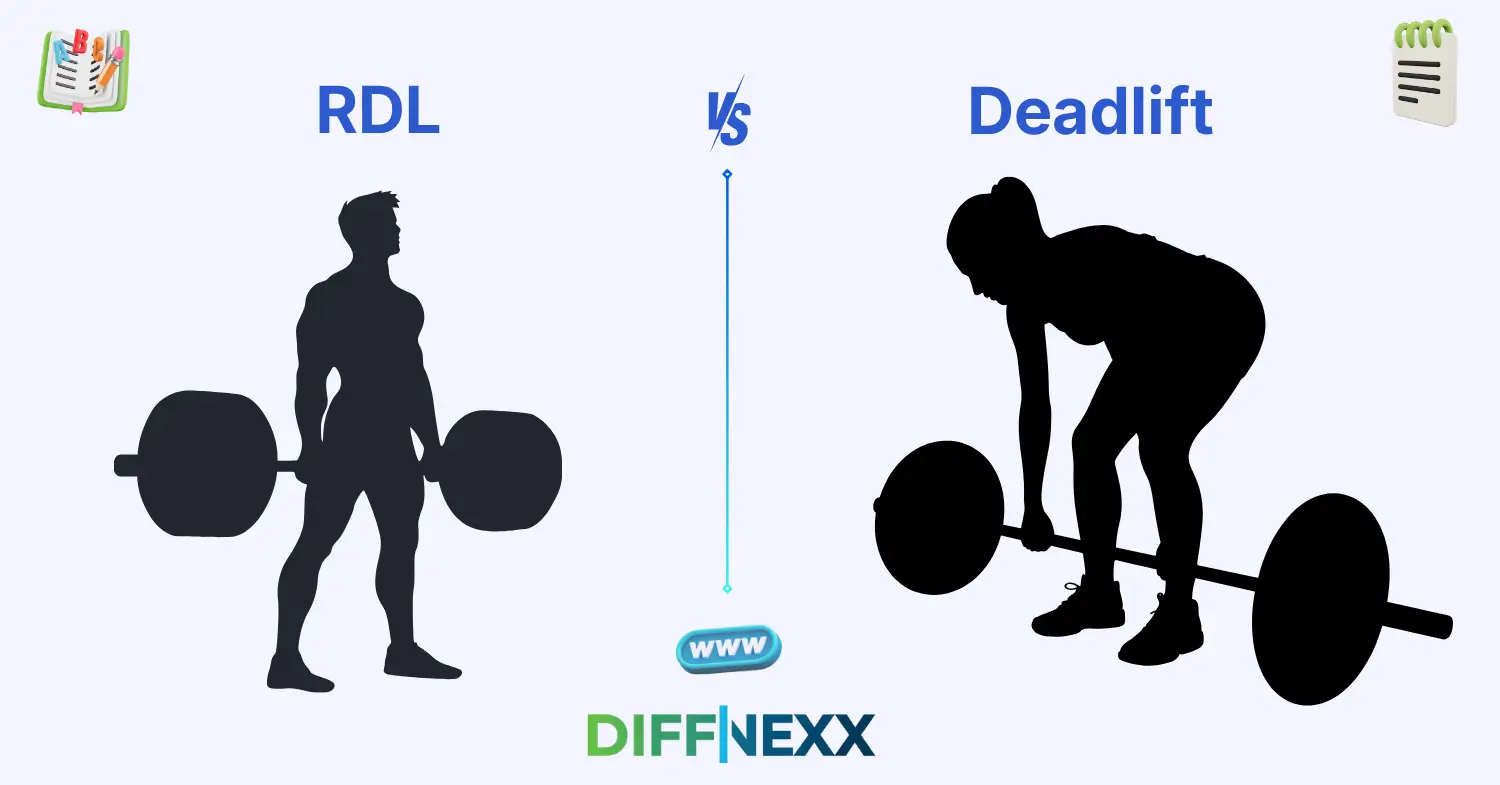
The difference between rdl and deadlift comes down to movement style, muscle focus, and technique. An RDL (Romanian Deadlift) focuses more on the hamstrings and controlled motion, while a deadlift is a full-body lift that starts from the ground.
Understanding the difference between rdl and deadlift helps you train safely and effectively. It also improves your form and prevents injury.
Let’s break it down clearly so you can master both movements.
Key Difference Between the Both
The main difference between RDL and deadlift is how the movement starts and which muscles it targets. RDL begins from a standing position and emphasizes hamstrings, while the deadlift starts from the floor and engages the whole body.
Importance – Why Is Their Difference Necessary to Know
Knowing the difference between RDL and deadlift is essential for both beginners and advanced lifters.
For learners, it helps build correct form early. Using the wrong technique can lead to poor habits or injury.
For professionals like trainers or athletes, understanding the distinction ensures proper program design and muscle targeting.
In society, fitness awareness promotes healthier lifestyles. Knowing exercises correctly helps people train safely and avoid harm.
🔊 Pronunciation Section
RDL (Romanian Deadlift)
US: /ɑːr diː ɛl/
UK: /ɑː diː ɛl/
Deadlift
US: /ˈdɛd.lɪft/
UK: /ˈdɛd.lɪft/
Now that you can pronounce them correctly, let’s define each exercise clearly.
📚 Core Definitions
RDL (Romanian Deadlift)
The Romanian Deadlift is a controlled lifting exercise that starts from a standing position. It focuses on the hamstrings and glutes. The tone is technical and precise.
Example:
“I use RDLs to strengthen my hamstrings.”
Deadlift
The Deadlift is a compound exercise where you lift a barbell from the ground to a standing position. It targets multiple muscle groups. The tone is powerful and foundational.
Example:
“He performs deadlifts to build full-body strength.”
📚 10 Clear Differences Between RDL and Deadlift
1. Starting Position 🏋️
RDL starts from standing. Deadlift begins from the floor.
- Example for RDL: “I lower the bar from my hips.”
- Example for Deadlift: “I lift the bar from the ground.”
2. Muscle Focus
RDL targets hamstrings and glutes more. Deadlift works the entire body.
- Example for RDL: “I feel it in my hamstrings.”
- Example for Deadlift: “My whole body is engaged.”
3. Movement Style
RDL uses a controlled hip hinge. Deadlift uses a powerful lift.
- Example for RDL: “I move slowly and steadily.”
- Example for Deadlift: “I lift with force.”
4. Range of Motion
RDL has a shorter range. Deadlift has a full range from floor to standing.
- Example for RDL: “I stop mid-shin level.”
- Example for Deadlift: “I lift from floor to full height.”
5. Weight Used 💪
RDL usually uses lighter weights. Deadlift often uses heavier loads.
- Example for RDL: “I use moderate weight.”
- Example for Deadlift: “I lift heavy weights.”
6. Knee Movement
RDL keeps knees slightly bent. Deadlift involves more knee bending.
- Example for RDL: “My knees stay stable.”
- Example for Deadlift: “My knees bend more deeply.”
7. Speed of Execution
RDL is slow and controlled. Deadlift can be explosive.
- Example for RDL: “I move slowly.”
- Example for Deadlift: “I lift quickly.”
8. Training Purpose 🎯
RDL improves muscle isolation and flexibility. Deadlift builds strength and power.
- Example for RDL: “I use it for muscle focus.”
- Example for Deadlift: “I use it for strength gains.”
9. Injury Risk ⚠️
RDL requires strict form but less strain on lower back if done correctly. Deadlift can strain the back if form is poor.
- Example for RDL: “I focus on control.”
- Example for Deadlift: “I must keep my back straight.”
10. Learning Difficulty
RDL is easier to learn for control. Deadlift requires more coordination.
- Example for RDL: “It feels simple to practice.”
- Example for Deadlift: “It takes time to master.”
🎯 Why Knowing the Difference Matters
Students must understand the difference to build proper workout routines. It helps them avoid injuries and improve performance.
Professionals like trainers need this knowledge to guide clients effectively. Choosing the right exercise improves results.
In everyday fitness culture, using correct terms improves communication. It also builds confidence in the gym.
Real-world consequences of confusion
If you confuse RDL with deadlift, you may train the wrong muscles. This can slow progress or increase injury risk.
🧠 Why People Get Confused
Similar Names
Both include the word “deadlift,” which creates confusion.
Semantic Overlap
Both exercises involve lifting weights and hip movement.
Context-Based Usage
Gym users often use the terms loosely.
Influence of Informal Speech
Beginners hear terms without explanation, leading to misunderstanding.
🎭 Connotation & Emotional Tone
Connotation = the emotional meaning associated with a word.
RDL
Neutral and technical. It suggests precision and control.
- Example: “RDLs improve muscle control.”
Deadlift
Strong and powerful. It suggests strength and intensity.
- Example: “Deadlifts build raw power.”
🗣 Usage in Metaphors, Similes & Idioms
- “Lift it like a deadlift” – suggests strength and effort.
- “Control it like an RDL” – suggests precision and care.
📊 Comparison Table
| Feature | RDL | Deadlift |
|---|---|---|
| Meaning | Controlled hip hinge | Full-body lift |
| Tone | Technical | Powerful |
| Usage | Muscle focus | Strength building |
| Context | Training control | Heavy lifting |
| Formality | Neutral | Neutral |
⚖️ Which Is Better in What Situation?
When to use RDL
Use RDL when focusing on hamstrings and improving control. It suits lighter training and muscle isolation.
When to use Deadlift
Use deadlift when building overall strength. It is ideal for heavy lifting and full-body workouts.
Situational clarity
If your goal is muscle focus, choose RDL. If strength is the goal, choose deadlift.
Contextual correctness
Matching exercise to goal ensures better results and safer training.
📖 Literary or Cultural References
- Book: Starting Strength (Fitness, Mark Rippetoe, 2005) – explains deadlift techniques.
- Movie: Pumping Iron (USA, 1977) – showcases strength training culture.
❓ FAQs
1. What is the main difference between RDL and deadlift?
The main difference is starting position and muscle focus. RDL starts from standing and targets hamstrings, while deadlift starts from the floor and works the whole body.
2. Is RDL easier than deadlift?
RDL is easier for beginners because it involves controlled movement. Deadlift requires more coordination and strength.
3. Can I do both in one workout?
Yes, many people include both. RDL helps with muscle focus, while deadlift builds strength.
4. Which is better for beginners?
Beginners often start with RDL to learn proper form. Then they progress to deadlifts.
5. Do both exercises build muscle?
Yes, both build muscle. However, they target muscles differently.
🏁 Conclusion
The difference between RDL and deadlift lies in technique, purpose, and muscle focus. RDL is controlled and targets specific muscles, while deadlift is powerful and works the entire body.
Understanding this difference helps you train smarter and safer. It allows you to choose the right exercise for your goals.
Clear knowledge leads to better performance and fewer injuries. It also builds confidence in your fitness journey.
Keep learning, practice good form, and stay consistent you’ll see results over time.

Aamer Shahzad is the founder of Distinly.com, a fast-growing educational platform focused on high-intent “difference between” topics. With over 8 years of experience in English language education and analytical writing, I specialize in breaking down complex “difference between” topics into clear, structured, and easy-to-understand explanations. Distinly.com is your go-to resource for enhancing English skills and writing with confidence.
I specializes in building search-optimized, research-driven comparison content designed for clarity, authority, and long-term digital asset value.