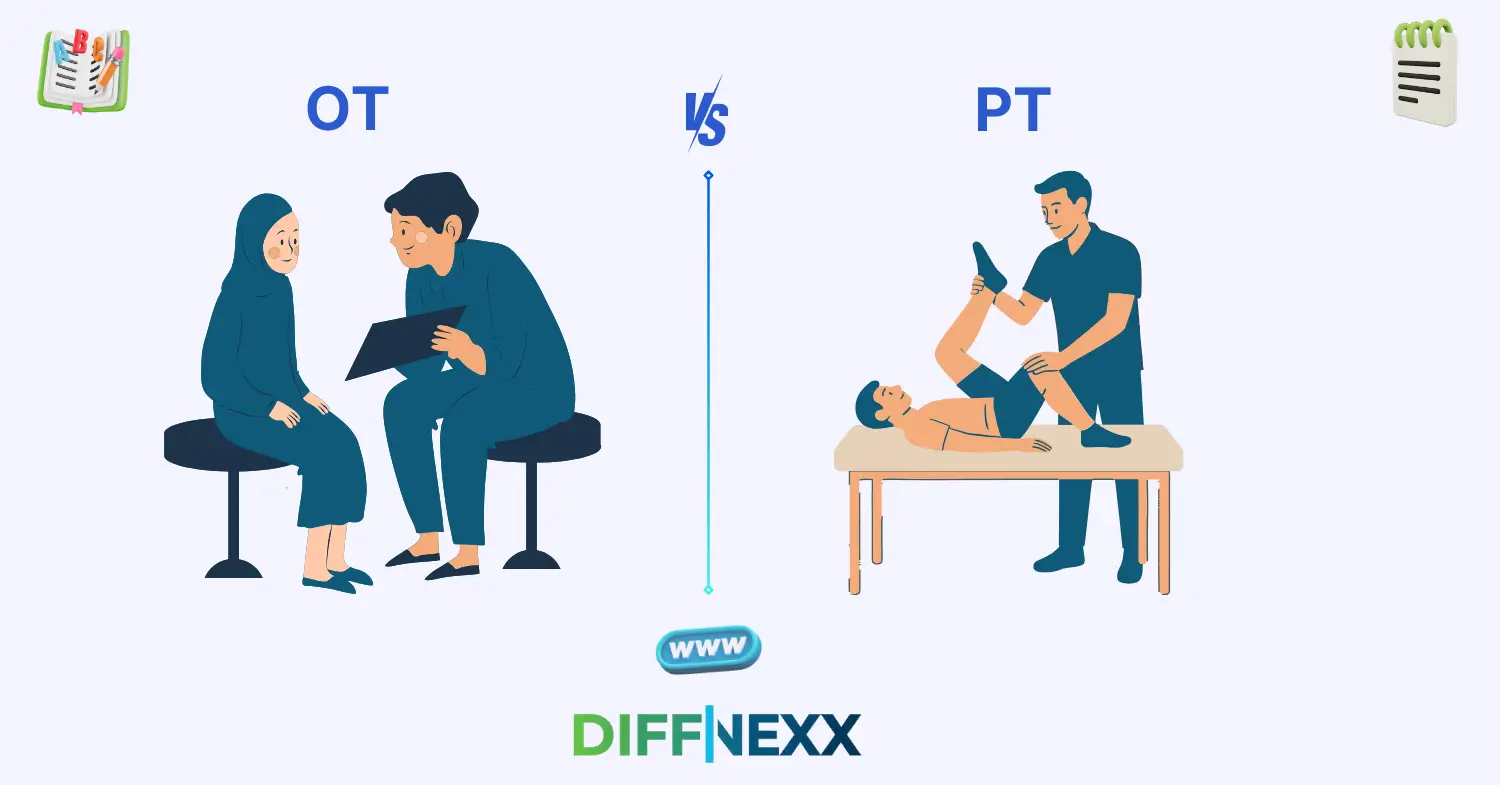
The difference between OT and PT is a common question among students, patients, and anyone exploring rehabilitation careers. Imagine recovering from an injury you meet two different specialists, and both help you move better, but in distinct ways.
OT stands for Occupational Therapy, focusing on improving daily life skills and independence. PT stands for Physical Therapy, which emphasizes restoring movement, strength, and physical function. Understanding the difference between OT and PT helps you choose the right therapy for your needs.
Knowing the difference between OT and PT is essential for patients, caregivers, and healthcare professionals. It ensures proper treatment, clearer communication, and better recovery outcomes.
Let’s explore what sets OT and PT apart, from focus and techniques to emotional impact and practical usage.
Key Difference Between the Both
The main difference lies in focus and goals. OT helps individuals perform daily activities and maintain independence, while PT targets physical movement, strength, and mobility restoration.
Importance: Why Knowing Their Difference Matters
For learners, it provides clarity about healthcare roles and career paths.
For professionals, it guides treatment planning and patient referrals.
Socially, understanding OT and PT improves healthcare communication and ensures patients receive the right type of therapy.
Pronunciation
OT
- US: /ˌoʊˈtiː/
- UK: /ˌoʊˈtiː/
PT
- US: /ˌpiːˈtiː/
- UK: /ˌpiːˈtiː/
Although they sound similar, their functions and focus areas differ significantly. Let’s define each clearly.
Core Definitions
OT (Occupational Therapy)
OT is a therapy that helps individuals regain independence in daily activities such as dressing, cooking, or work-related tasks. It emphasizes emotional and functional recovery.
Example: An OT helps a stroke patient relearn how to dress themselves.
PT (Physical Therapy)
PT focuses on restoring physical function, strength, flexibility, and movement. It often involves exercises, manual therapy, and mobility training.
Example: A PT guides a patient recovering from knee surgery through exercises to regain walking ability.
10 Clear Differences Between OT and PT
- Emotional Intensity
- OT: Supports emotional adjustment and confidence in daily tasks.
Example 1: Encourages self-care after illness. - PT: Motivates physical endurance and recovery.
Example 2: Builds confidence in walking or climbing stairs.
- Duration
- OT: Often long-term, focusing on lifestyle adjustments.
- PT: Can be short-term or intensive for specific injuries.
- Focus
- OT: Daily living skills, work, leisure, and independence.
- PT: Muscles, joints, movement patterns, and rehabilitation exercises.
- Severity
- OT: Addresses functional challenges due to injury or disability.
- PT: Deals with physical limitations caused by trauma, surgery, or disease.
- Rationality
- OT: Prioritizes practical problem-solving for everyday life.
- PT: Prioritizes biomechanics and physical performance improvement.
- Formality
- OT: Requires patient engagement and lifestyle counseling.
- PT: Structured, exercise-based, often clinical protocols.
- Context of Use
- OT: Hospitals, rehabilitation centers, schools, home care.
- PT: Clinics, hospitals, sports facilities, home rehabilitation.
- Psychological Impact
- OT: Builds independence, reduces anxiety about daily life.
- PT: Enhances physical confidence, reduces fear of movement.
- Tone
- OT: Supportive, adaptive, patient-centered.
- PT: Motivational, structured, progress-focused.
- Expression Style
- OT: Task-oriented, lifestyle-driven.
- PT: Exercise-driven, body mechanics-focused.
Why Knowing the Difference Matters
Students gain a clear understanding of healthcare specialties and therapy pathways.
Professionals can refer patients to the right therapy, improving recovery outcomes.
Socially, knowing the difference ensures patients understand their treatment and communicate effectively with healthcare teams.
Real-World Consequences of Confusion
Confusing OT and PT can lead to inappropriate referrals, slower recovery, or unmet patient needs. Correct knowledge ensures therapy aligns with individual goals.
Why People Get Confused
Similar Spelling or Pronunciation
OT and PT are short acronyms that sound alike, causing casual confusion.
Semantic Overlap
Both support recovery, health, and function, but with distinct methods.
Context-Based Usage
Hospitals may have both OTs and PTs working with the same patient, creating overlap in perceived roles.
Influence of Informal Speech
People may say “therapist” without specifying type, obscuring the distinction.
Connotation & Emotional Tone
Connotation = the emotional meaning attached to a word.
OT
- Positive: Independence, empowerment (Example: “OT helps me live independently.”)
- Negative: Slow progress for some patients (Example: “It takes time to see results.”)
- Neutral: Professional therapy term
PT
- Positive: Strength, mobility (Example: “PT restored my walking ability.”)
- Negative: Physically demanding (Example: “PT exercises are tough.”)
- Neutral: Clinical term
Usage in Metaphors, Similes & Idioms
- OT: “Like learning to ride a bike again, step by step.”
- PT: “Like lifting weights to rebuild strength after injury.”
Comparison Table
| Feature | OT (Occupational Therapy) | PT (Physical Therapy) |
|---|---|---|
| Meaning | Regain daily life skills & independence | Restore movement & physical function |
| Tone | Supportive, adaptive | Motivational, structured |
| Usage | Daily activities, rehab, home care | Exercises, injury rehab, clinics |
| Context | Hospitals, schools, home therapy | Clinics, hospitals, sports rehab |
| Formality | Patient-centered, flexible | Exercise-driven, clinical |
Which Is Better in What Situation?
When to Use OT
Ideal for patients needing help with daily activities, work tasks, or adapting to disabilities.
When to Use PT
Best for patients recovering from surgery, injury, or physical limitations affecting mobility and strength.
Situational Clarity
OT = focus on independence in life tasks. PT = focus on physical restoration. Choosing the right therapy ensures effective recovery.
Literary or Cultural References
- Book: Occupational Therapy Essentials (Medical Education, Karen Smith, 2020) – Covers OT roles and interventions.
- Movie: The Intouchables (France, 2011) – Highlights PT in a real-life rehabilitation story.
FAQs
1. Can one therapist provide both OT and PT?
Some may have cross-training, but typically each therapy is performed by a specialized professional.
2. Does OT include exercises?
Yes, OT may include exercises, but primarily to improve functional tasks, not physical performance.
3. Which therapy is better after surgery?
PT is usually the first choice for mobility and strength; OT may follow to regain independence in daily activities.
4. Is OT only for disabled people?
No, OT supports anyone needing help with daily life tasks, including older adults, people with injuries, or those recovering.
5. How long does each therapy take?
Duration varies; OT may be long-term for lifestyle adaptation, PT may be shorter for focused physical rehab.
Conclusion
The difference between OT and PT lies in focus: OT improves independence in daily life, while PT restores physical movement and strength. Both are vital, but their approaches and goals differ.
Understanding this distinction helps patients, students, and professionals make informed choices, ensuring correct therapy for recovery and improved quality of life.
Clear knowledge avoids confusion, enhances communication, and supports effective rehabilitation. Embrace the difference and apply it wisely for optimal health outcomes.

Anton Reyes is a contributing writer at DiffNexx.com, where he explores meaningful differences in language, culture, and everyday concepts. With a background in creative nonfiction, Anton brings clarity and balance to complex comparisons. His writing helps readers understand subtle distinctions in words and ideas, making learning both insightful and engaging.