You hear a scratching sound in the kitchen at night. You freeze. Is it a mouse? Or is it a rat? Most people panic before they even know which animal they are dealing with. The difference between mice and rats suddenly feels very important.
Difference between mice and rats is not just about size. It involves behavior, body shape, intelligence, and even how they interact with humans. Many people use the words “mouse” and “rat” as if they mean the same thing. But they are not identical creatures.
Understanding the difference between mice and rats helps homeowners, students, and even researchers. When you know what you’re seeing, you can respond wisely and safely.
Let’s explore what truly sets them apart.
Key Difference Between the Two
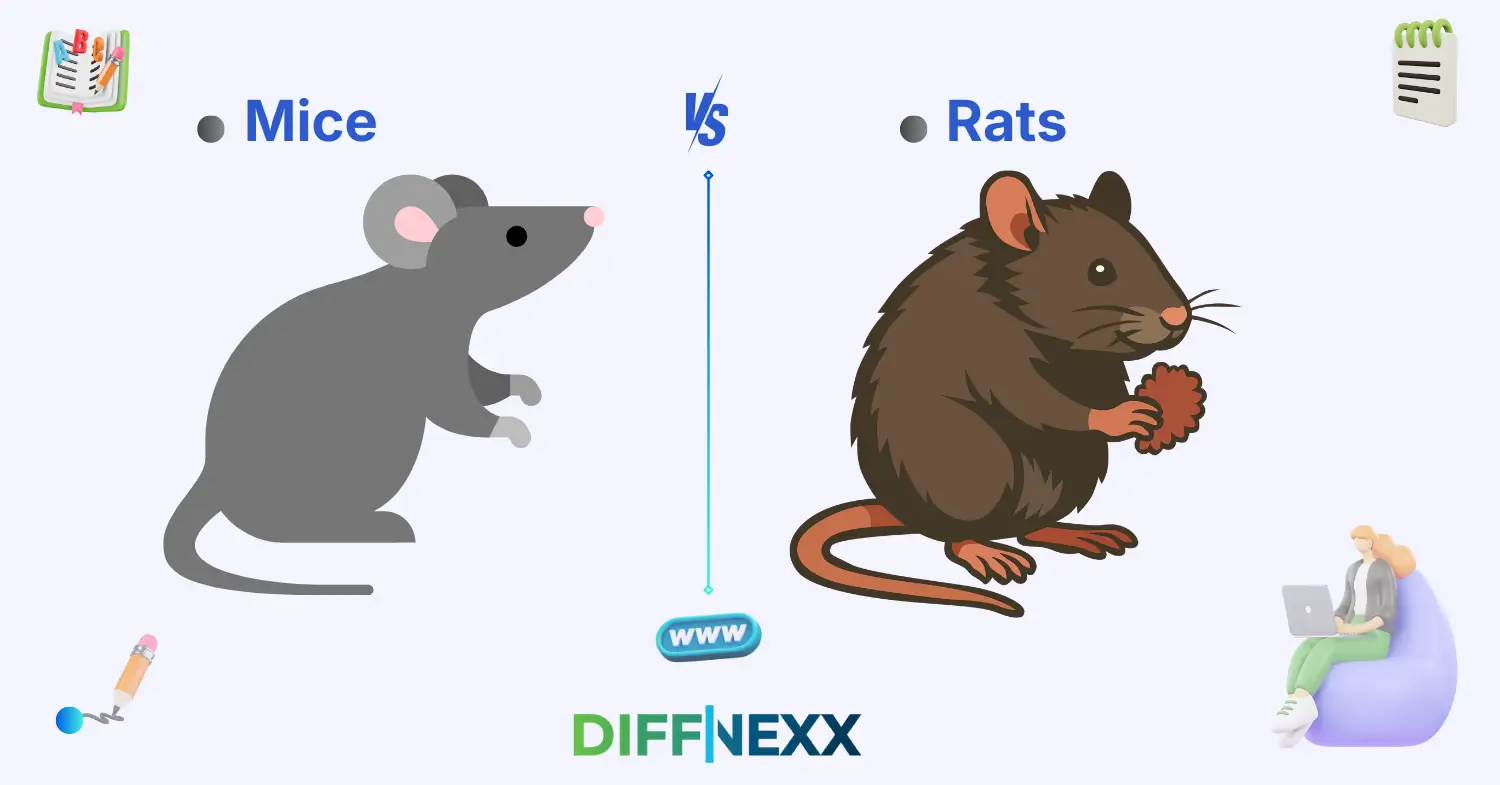
The most obvious difference is size. Rats are larger, heavier, and stronger than mice. However, that is only the beginning. They differ in tail thickness, ear size, facial shape, behavior patterns, nesting habits, and even personality traits.
Mice tend to be curious and cautious at the same time. Rats are often more bold and strategic. These small details matter more than most people realize.
Why Their Difference Matters for Learners and Experts
Knowing the difference is important in many areas of society.
Students studying biology learn how species classification works. Understanding rodents improves scientific knowledge. Experts in pest control must identify the animal correctly before taking action. A mouse problem requires a different strategy than a rat infestation.
In agriculture, misidentifying them can lead to crop loss. In public health, rats are often linked to more serious disease transmission than mice. Clear identification protects homes, farms, laboratories, and cities.
In short, accurate knowledge supports science, safety, and responsible decision-making.
🔊 Pronunciation Section
Mice
US: /maɪs/
UK: /maɪs/
Rats
US: /ræts/
UK: /ræts/
Now that we know how to pronounce them correctly, let’s define them clearly before comparing further.
Core Definitions
Mice
Mice are small rodents belonging to the genus Mus. They have slender bodies, pointed noses, and long thin tails. People often see them as less threatening, though they can still cause damage.
Example: A tiny mouse ran across the pantry floor.
Rats
Rats are larger rodents commonly from the genus Rattus. They have heavier bodies, thicker tails, and stronger teeth. Many people associate rats with urban environments and stronger survival instincts.
Example: A large rat was spotted near the garbage bin.
10 Clear Differences Between Mice and Rats
1. Size and Weight
Mice are small and lightweight. Most adult mice measure about 2–4 inches long without the tail.
Rats are much bigger. Many rats measure 7–10 inches long without the tail.
- Example for Mice: A mouse can fit through a hole the size of a coin.
- Example for Rats: A rat needs a larger opening to enter a house.
2. Body Shape
Mice have slim bodies and delicate features. Their ears appear large compared to their heads.
Rats have thicker bodies and relatively smaller ears.
- Example for Mice: A mouse looks fragile and narrow.
- Example for Rats: A rat looks muscular and solid.
3. Tail Thickness
A mouse’s tail is thin and almost the same thickness from start to end.
A rat’s tail is thicker and heavier.
- Example for Mice: The mouse’s tail looks like a thin string.
- Example for Rats: The rat’s tail appears thick and strong.
4. Face Structure
Mice have pointed noses and small heads.
Rats have blunt noses and broader faces.
- Example for Mice: The mouse’s face looks sharp and triangular.
- Example for Rats: The rat’s face looks wider and heavier.
5. Behavior
Mice are curious but careful. They explore slowly and stay close to walls.
Rats are bolder. They travel farther and show stronger survival strategies.
- Example for Mice: A mouse quickly runs back to its hiding place.
- Example for Rats: A rat may confidently search open areas.
6. Intelligence Level
Mice are intelligent but less adaptable than rats.
Rats are highly intelligent and can learn complex tasks.
- Example for Mice: A mouse avoids a trap after one bad experience.
- Example for Rats: A rat can learn maze patterns in laboratory tests.
7. Nesting Habits
Mice build small nests using paper or cloth.
Rats create larger nests and often burrow underground.
- Example for Mice: A mouse nest may be hidden inside a drawer.
- Example for Rats: A rat may dig tunnels outside a building.
8. Diet Preferences
Mice prefer grains and small food pieces.
Rats eat almost anything, including meat and garbage.
- Example for Mice: A mouse nibbles on cereal.
- Example for Rats: A rat chews through food packaging.
9. Social Behavior
Mice often live in small groups.
Rats form larger colonies with social structure.
- Example for Mice: A few mice may share a small nest.
- Example for Rats: Rats may live in organized underground communities.
10. Public Perception
People often see mice as “cute” in cartoons.
Rats usually carry a stronger negative image.
- Example for Mice: Children enjoy characters like Mickey Mouse.
- Example for Rats: Many people fear rats in urban streets.
Why Knowing the Difference Matters
Students need accurate vocabulary. Clear knowledge improves writing, exams, and scientific understanding.
Professionals such as pest controllers must identify the species correctly. Wrong identification leads to ineffective treatment.
In society, confusion can cause unnecessary fear or careless action. Clear language leads to better communication and safer responses.
Real-World Consequences of Confusion
If someone reports a “mouse problem” but actually has rats, the solution may fail. In research labs, mislabeling species can damage scientific results. Even in conversation, accuracy builds credibility.
Why People Get Confused
Similar Appearance
Both animals have long tails, small ears, and whiskers. At a quick glance, they look alike.
Semantic Overlap
Both belong to the rodent family. People group them together naturally.
Context-Based Usage
In casual speech, people use “rat” and “mouse” loosely. Accuracy often disappears in everyday talk.
Influence of Informal Speech
Movies and cartoons blur the difference. Many people grow up without learning the biological details.
Connotation & Emotional Tone
Connotation = the emotional meaning associated with a word.
Mice
Positive: Often seen as cute or harmless.
Example: “The tiny mouse looked adorable.”
Negative: Can suggest weakness or fear.
Example: “He was as quiet as a mouse.”
Neutral: Scientific or biological discussion.
Rats
Positive: Sometimes symbolize intelligence in science.
Example: “Lab rats help researchers discover cures.”
Negative: Often linked to dirt or betrayal.
Example: “He called him a rat for telling secrets.”
Neutral: Used in formal research settings.
Usage in Metaphors, Similes & Idioms
- “Quiet as a mouse” – very silent.
- “Smell a rat” – suspect something wrong.
- “Rat race” – stressful competition.
Example sentence with mouse: She stayed quiet as a mouse during the meeting.
Example sentence with rat: I smell a rat in this agreement.
These idioms show how emotional meaning differs.
Comparison Table
| Feature | Mice | Rats |
|---|---|---|
| Meaning | Small rodent | Larger rodent |
| Tone | Often softer | Often stronger |
| Usage | Homes, labs, cartoons | Cities, sewers, labs |
| Context | Small infestations | Larger infestations |
| Formality | Scientific & casual | Scientific & serious |
Which Is Better in What Situation?
When to Use Mice
Use “mice” when referring to small rodents, lab animals in early research, or gentle metaphors. Example: Scientists tested the vaccine on mice first.
When to Use Rats
Use “rats” for larger rodents, urban pest issues, or stronger expressions. Example: The city hired experts to control rats.
Situational Clarity
If size matters, choose carefully. If behavior matters, be precise.
Contextual Correctness
In biology class, use exact terms. In storytelling, consider tone and emotional impact.
Literary or Cultural References
- Book: Of Mice and Men (Novel, John Steinbeck, 1937) – Uses mice symbolically to represent fragility.
- Movie: Ratatouille (USA, 2007) – Features a rat as a talented chef in Paris.
These works shape how society views these animals.
FAQs
1. Are rats just big mice?
No. Rats and mice belong to different genera. They share similarities but are biologically distinct species.
2. Which is more dangerous?
Rats often pose greater risk due to size and strength. However, both can carry disease and damage property.
3. Can mice turn into rats?
No. A mouse never grows into a rat. They are separate animals from birth.
4. Do they live together?
Rarely. Rats may attack or drive away mice because they compete for food.
5. Are lab mice and rats different?
Yes. Both are used in research, but rats are often chosen for advanced behavioral studies due to higher adaptability.
🐭🐀Conclusion
The difference between mice and rats goes far beyond size. It includes body structure, behavior, intelligence, and public perception. Although they look similar at first glance, they belong to distinct biological groups.
Clear identification matters in homes, laboratories, farms, and classrooms. When you understand their differences, you communicate more accurately and act more wisely.
Language shapes knowledge. Knowledge shapes action.
Keep observing carefully, and never hesitate to learn the small details. They often make the biggest difference.

Anton Reyes is a contributing writer at DiffNexx.com, where he explores meaningful differences in language, culture, and everyday concepts. With a background in creative nonfiction, Anton brings clarity and balance to complex comparisons. His writing helps readers understand subtle distinctions in words and ideas, making learning both insightful and engaging.