Difference between highlights and balayage often comes up when someone wants a fresh hair look. Imagine you’re sitting in a salon chair, flipping through photos. The stylist asks, “Do you want highlights or balayage?” Suddenly, the choice feels confusing.
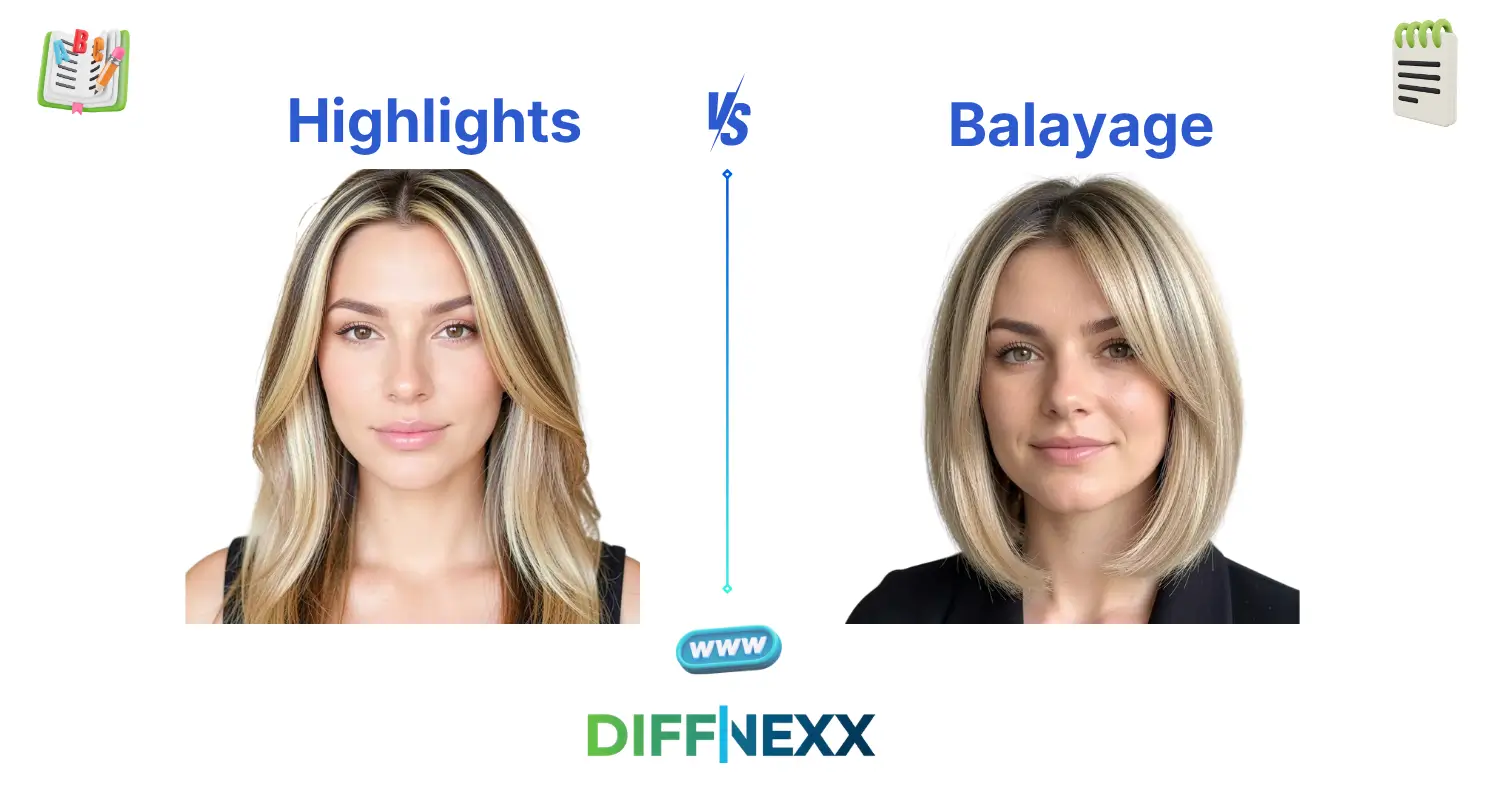
The difference between highlights and balayage is about technique, appearance, and maintenance. Highlights use foil to create defined strands. Balayage is a freehand painting technique that gives a softer, natural look.
Many people hear these terms but don’t fully understand them. That’s why learning the difference between highlights and balayage helps you choose the right style with confidence.
Let’s break it down in a simple and clear way so you can make the best decision ✨.
🔍 Key Difference Between the Both
The main difference is application method and final look.
- Highlights use foil for precise, uniform color.
- Balayage uses hand-painting for a natural, blended effect.
🌍 Importance
Understanding this difference is important for learners and beauty enthusiasts. It helps you communicate clearly with stylists.
For professionals, such as hairdressers, this knowledge improves service quality. It ensures clients get exactly what they want.
In society, personal style matters. Knowing the right hair technique boosts confidence and self-expression 💇♀️.
🔊 Pronunciation Section
Highlights
US: /ˈhaɪˌlaɪts/
UK: /ˈhaɪlaɪts/
Balayage
US: /ˌbæliˈɑːʒ/
UK: /ˈbæl.eɪ.ɑːʒ/
Now that you can say them correctly, let’s explore what they really mean.
📚 Core Definitions
Highlights
Highlights are sections of hair that are lightened using foil or caps. The tone is structured and noticeable.
Example: She added blonde highlights to brighten her hair.
Balayage
Balayage is a technique where color is painted onto the hair by hand. The tone is soft and natural.
Example: Her balayage gave her hair a sun-kissed look.
📚 10 Clear Differences Between Highlights and Balayage
1. Application Technique
Highlights use foil to separate strands. Balayage uses freehand painting.
- Example (Highlights): Foil wraps each section.
- Example (Balayage): Color is brushed onto the surface.
2. Final Look
Highlights look more defined. Balayage looks blended and natural.
- Example (Highlights): Clear streaks of lighter color.
- Example (Balayage): Smooth transition of shades.
3. Maintenance
Highlights need frequent touch-ups. Balayage grows out naturally.
- Example (Highlights): Roots appear quickly.
- Example (Balayage): No harsh root line.
4. Color Placement
Highlights start near the roots. Balayage focuses on mid-lengths and ends.
- Example (Highlights): Color from top to bottom.
- Example (Balayage): Lighter ends.
5. Time Required
Highlights take longer due to foil work. Balayage can be quicker.
- Example (Highlights): Multiple foil sections.
- Example (Balayage): Faster painting process.
6. Hair Damage
Highlights may cause more damage due to full coverage. Balayage is gentler.
- Example (Highlights): Hair feels dry.
- Example (Balayage): Hair stays softer.
7. Customization
Highlights follow a pattern. Balayage is highly customized.
- Example (Highlights): Even spacing.
- Example (Balayage): Unique strokes.
8. Visual Contrast
Highlights create strong contrast. Balayage creates subtle contrast.
- Example (Highlights): Noticeable light strands.
- Example (Balayage): Soft blending.
9. Trend Style
Highlights are classic. Balayage is modern and trendy.
- Example (Highlights): Traditional salon style.
- Example (Balayage): Fashion-forward look.
10. Expression Style
Highlights feel bold. Balayage feels effortless.
- Example (Highlights): Dramatic change.
- Example (Balayage): Natural enhancement.
🎯 Why Knowing the Difference Matters
Students and learners benefit from understanding these terms. It helps them describe styles clearly.
Professionals in beauty and fashion must know the difference. It ensures accurate advice and better results.
In daily life, choosing the right style saves time and money. It prevents dissatisfaction after a salon visit.
Real-world consequences of confusion
If you ask for highlights but want balayage, you may get a very different look. This can lead to disappointment.
🧠 Why People Get Confused
Similar Terminology
Both relate to hair coloring. This creates confusion.
Semantic Overlap
Both lighten hair, so people assume they are the same.
Context-Based Usage
Stylists sometimes use terms loosely. This adds misunderstanding.
Influence of Informal Speech
People often simplify terms in conversation.
🎭 Connotation & Emotional Tone
Connotation = the emotional meaning associated with a word.
Highlights
- Positive: Bright, bold
- Neutral: Traditional
- Negative: Can seem outdated
Example: Highlights create a sharp, bright look.
Balayage
- Positive: Natural, stylish
- Neutral: Modern
- Negative: May seem subtle for some
Example: Balayage gives a soft, sun-kissed feel.
🗣 Usage in Metaphors, Similes & Idioms
While not common in idioms, they can be used creatively:
- “Her ideas were highlights in the discussion.” (stands out)
- “His style blends like balayage.” (smooth and natural)
These expressions add creative meaning.
📊 Comparison Table
| Feature | Highlights | Balayage |
|---|---|---|
| Meaning | Foil-based coloring | Hand-painted coloring |
| Tone | Bold, defined | Soft, natural |
| Usage | Traditional styles | Modern styles |
| Context | Structured application | Freehand technique |
| Formality | Classic | Trendy |
⚖️ Which Is Better in What Situation?
When to use Highlights
Choose highlights if you want a bold and noticeable look. They work well for dramatic color changes.
When to use Balayage
Choose balayage if you prefer a natural, low-maintenance style. It suits subtle changes.
Situational clarity
Highlights suit formal or classic styles. Balayage suits relaxed, modern looks.
Contextual correctness
Your choice depends on your lifestyle and preference. Always discuss with your stylist.
📖 Literary or Cultural References
- Book: Hair: Fashion and Fantasy (Fashion, Laurent Philippon, 2013)
- Book: Milady Standard Cosmetology (Education, Milady, 2016)
- Movie: The Devil Wears Prada (USA, 2006) – showcases fashion and style trends
- Movie: Clueless (USA, 1995) – reflects evolving beauty styles
❓ FAQs
1. Which lasts longer, highlights or balayage?
Balayage usually lasts longer. It grows out naturally without harsh lines. Highlights need more frequent touch-ups because roots become visible.
2. Is balayage better for beginners?
Yes, balayage is often better for first-timers. It requires less maintenance and looks natural. It is also forgiving if you want a subtle change.
3. Do highlights damage hair more?
Highlights can cause more damage because they involve more processing. Balayage is gentler since it focuses on certain areas.
4. Can you combine highlights and balayage?
Yes, many stylists combine both techniques. This creates a balanced look with depth and dimension. It offers the best of both styles.
5. Which is more expensive?
Balayage is usually more expensive. It requires skill and customization. However, it may save money over time due to less maintenance.
🏁 Conclusion
The difference between highlights and balayage comes down to technique, appearance, and maintenance. Highlights offer a bold, structured look, while balayage creates a soft, natural effect.
Understanding this difference helps you choose the right style for your personality and lifestyle. It also improves communication with your stylist and ensures better results.
Take time to explore your preferences. Whether you want a dramatic change or a subtle glow, both options have their strengths. Keep learning and experimenting you’ll find the perfect look for you 💫.

Aamer Shahzad is the founder of Distinly.com, a fast-growing educational platform focused on high-intent “difference between” topics. With over 8 years of experience in English language education and analytical writing, I specialize in breaking down complex “difference between” topics into clear, structured, and easy-to-understand explanations. Distinly.com is your go-to resource for enhancing English skills and writing with confidence.
I specializes in building search-optimized, research-driven comparison content designed for clarity, authority, and long-term digital asset value.