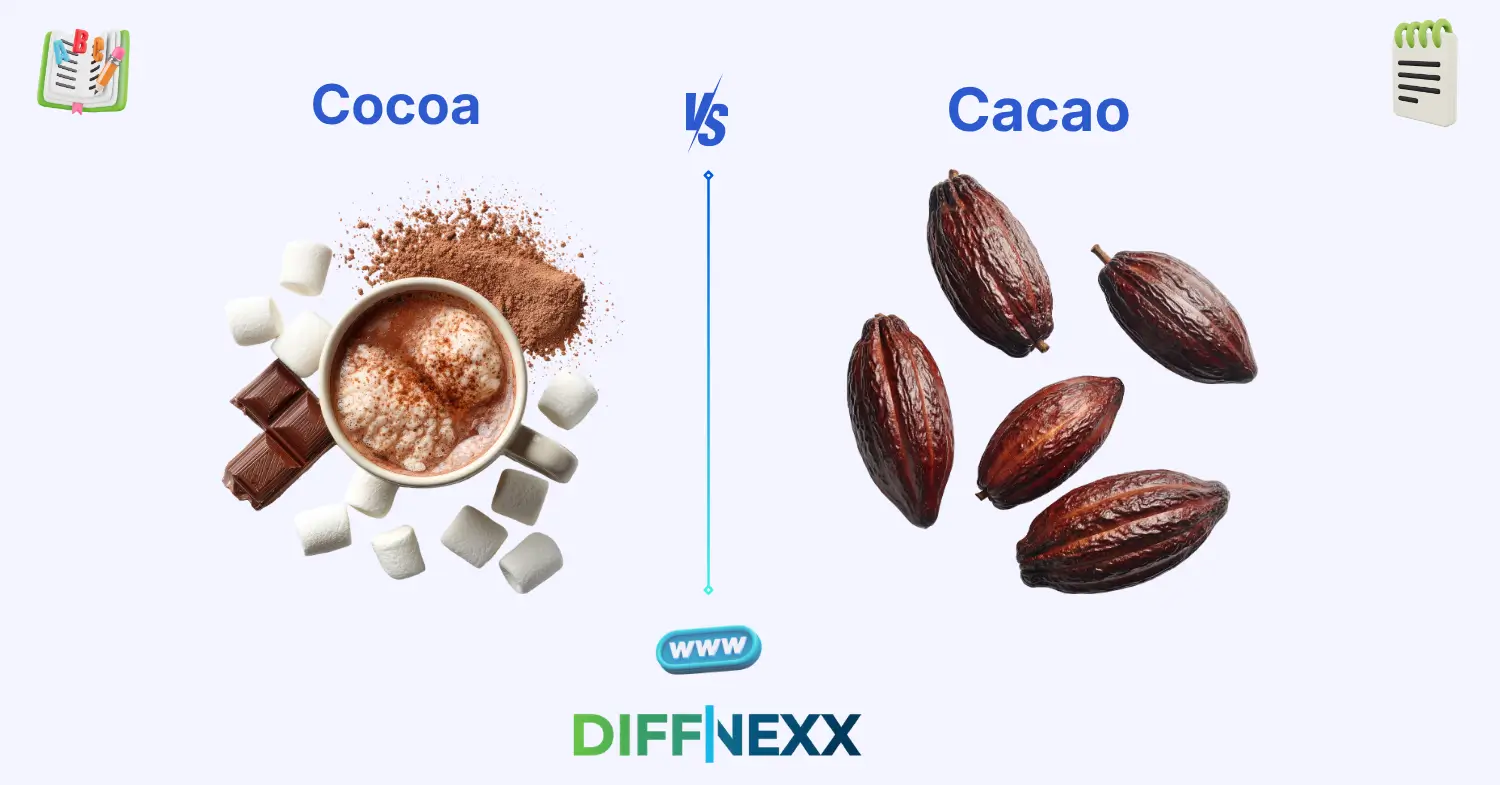
Difference between cocoa and cacao often comes up when someone reads the ingredients on a chocolate bar or a smoothie recipe. Imagine standing in a grocery store. One package says cacao powder, while another says cocoa powder. They look similar, but are they the same?
The difference between cocoa and cacao mainly relates to how the beans are processed after harvest. Both come from the same plant, yet their names and preparation methods vary.
Many people think cacao is simply a fancy spelling of cocoa. In reality, the difference between cocoa and cacao usually reflects how natural or processed the product is.
Understanding the difference between cocoa and cacao helps readers, food lovers, and students choose ingredients wisely and understand food labels better. Let’s explore the key distinctions.
Key Difference Between the Both
The main difference between cocoa and cacao lies in processing and temperature.
Cacao generally refers to the raw or minimally processed form of the chocolate bean.
Cocoa usually refers to the processed form, where cacao beans are roasted and turned into cocoa powder or chocolate products.
In simple terms:
- Cacao = raw or lightly processed beans
- Cocoa = roasted and processed chocolate product
This difference affects flavor, texture, and how the ingredient appears in food.
Importance – Why Their Difference Matters in Society
Understanding the difference between cocoa and cacao helps people read food labels and recipes correctly.
For students and food learners, the distinction explains how chocolate products are made. It also introduces the concept of food processing.
For professionals, especially chefs and nutrition experts, knowing the difference helps when choosing ingredients for recipes or dietary discussions.
For society, the difference matters because people today care more about food quality, nutrition, and sustainability. Clear terminology helps consumers make informed choices.
Pronunciation Section
Cocoa
US: /ˈkoʊ.koʊ/
UK: /ˈkəʊ.kəʊ/
Cacao
US: /kəˈkaʊ.oʊ/
UK: /kəˈkaʊ.əʊ/
Although the words sound similar, they represent different stages of chocolate processing. Let’s clarify their meanings first.
Core Definitions
Cocoa
Cocoa refers to chocolate products made from roasted cacao beans. After roasting, the beans are ground and processed into cocoa powder, cocoa butter, or chocolate.
The word often appears in baking and cooking contexts.
Example:
The recipe calls for cocoa powder to make chocolate cake.
Cacao
Cacao refers to the raw beans of the chocolate plant or products made with minimal processing. These products usually avoid high roasting temperatures.
The tone of the word often appears in natural or health-focused food discussions.
Example:
She added cacao powder to her morning smoothie.
10 Clear Differences Between Cocoa and Cacao
1. Processing Level
Cacao usually refers to beans that are minimally processed. Cocoa refers to beans that have been roasted and processed.
Example for cocoa:
The baker used cocoa powder for brownies.
Example for cacao:
The smoothie included raw cacao powder.
2. Temperature Treatment
Cacao products are processed at lower temperatures. Cocoa products are roasted at higher temperatures.
Example for cocoa:
Roasted cocoa beans create a rich flavor.
Example for cacao:
Raw cacao powder keeps more natural properties.
3. Flavor Profile
Cacao tends to taste stronger and more bitter. Cocoa tastes smoother and milder.
Example for cocoa:
Cocoa powder adds a smooth chocolate flavor.
Example for cacao:
Cacao nibs taste intense and slightly bitter.
4. Usage in Recipes
Cocoa is common in traditional baking recipes. Cacao appears more often in smoothies or health foods.
Example for cocoa:
Chocolate cake usually uses cocoa powder.
Example for cacao:
Energy bars often contain cacao nibs.
5. Context of Use
Cocoa appears in mainstream chocolate products. Cacao appears in natural food markets or health discussions.
Example for cocoa:
Hot cocoa is a classic winter drink.
Example for cacao:
The health store sells organic cacao powder.
6. Formality of Language
Cocoa sounds familiar and traditional. Cacao sometimes sounds more technical or specialized.
Example for cocoa:
The label listed cocoa powder.
Example for cacao:
The packaging advertised raw cacao.
7. Consumer Perception
Many people associate cocoa with comfort foods like chocolate drinks. Cacao often appears in discussions about natural or minimally processed foods.
Example for cocoa:
Children enjoy hot cocoa.
Example for cacao:
Athletes add cacao to protein shakes.
8. Culinary Tradition
Cocoa has long been used in baking and desserts. Cacao often appears in modern health recipes.
Example for cocoa:
Grandmother’s cake recipe uses cocoa.
Example for cacao:
The nutrition blog recommends cacao powder.
9. Psychological Impact
Cocoa often evokes nostalgia and comfort. Cacao may feel trendy or modern in health culture.
Example for cocoa:
A cup of cocoa reminds people of winter evenings.
Example for cacao:
Cacao smoothie bowls appear in wellness cafes.
10. Expression Style
Cocoa usually appears in everyday language. Cacao often appears in specialty or nutrition discussions.
Example for cocoa:
The recipe asks for cocoa powder.
Example for cacao:
The chef used cacao nibs for texture.
Why Knowing the Difference Matters
Understanding the difference between cocoa and cacao helps students read recipes and food labels accurately. Many cooking guides use both terms.
For professionals such as chefs, bakers, and nutritionists, the distinction affects ingredient choice. Different processing methods may influence flavor and texture.
In everyday communication, knowing the difference prevents confusion when discussing chocolate products or health foods.
Real-world consequences of confusion
If someone confuses cocoa and cacao, they might buy the wrong ingredient for a recipe or dietary preference. Knowing the terms helps avoid mistakes.
Why People Get Confused
Similar Spelling
The words cocoa and cacao look very similar. This similarity often leads people to think they are identical.
Semantic Overlap
Both terms come from the same chocolate bean. Because of this shared origin, their meanings overlap.
Context-Based Usage
Many brands use the words interchangeably on packaging, which increases confusion.
Influence of Informal Speech
In everyday conversation, people often say cocoa even when referring to cacao products.
Connotation & Emotional Tone
(Connotation = the emotional meaning associated with a word.)
Cocoa
Positive:
Often linked with comfort and sweet treats.
Example:
A warm cup of cocoa feels relaxing.
Negative:
Rarely negative, though sometimes linked with processed foods.
Example:
Some people prefer less processed cocoa products.
Neutral:
Commonly used in recipes and ingredient lists.
Example:
The recipe includes cocoa powder.
Cacao
Positive:
Often associated with natural or health-focused foods.
Example:
Cacao powder appears in many wellness recipes.
Negative:
Some people see it as trendy or marketing language.
Example:
The label emphasized “raw cacao.”
Neutral:
Used in discussions about chocolate beans.
Example:
Cacao beans grow in tropical regions.
Usage in Metaphors, Similes & Idioms
Chocolate-related expressions often involve cocoa.
Example:
Her smile was sweet like cocoa.
Example using cacao:
The café promoted a drink made with rich cacao.
These terms rarely appear in idioms because they are specific food ingredients.
Comparison Table
| Feature | Cocoa | Cacao |
|---|---|---|
| Meaning | Roasted and processed chocolate product | Raw or minimally processed chocolate bean |
| Tone | Familiar and traditional | Natural or specialty |
| Usage | Baking and desserts | Health foods and smoothies |
| Context | Everyday cooking | Natural food markets |
| Formality | Common everyday term | Slightly technical |
Which Is Better in What Situation?
When to use Cocoa
Use cocoa when referring to common chocolate ingredients used in baking, desserts, or drinks. Most recipes for cakes, brownies, and hot chocolate mention cocoa powder.
When to use Cacao
Use cacao when referring to raw chocolate beans or minimally processed products. Health recipes and nutrition discussions often use this word.
Situational Clarity
Cocoa works best in traditional cooking contexts. Cacao fits better when discussing raw ingredients or specialty foods.
Contextual Correctness
Choosing the correct word depends on processing and context. A baker usually uses cocoa powder, while a smoothie recipe may include cacao.
Literary or Cultural References
Book:
The True History of Chocolate – Sophie D. Coe and Michael D. Coe (Food History, 1996)
Movie:
Chocolat (USA/UK, 2000)
The film explores chocolate culture and its role in society.
These references highlight the cultural importance of chocolate ingredients.
FAQs
1. Are cocoa and cacao the same thing?
They come from the same bean but differ in processing. Cacao usually refers to raw beans, while cocoa refers to roasted and processed forms.
2. Which tastes better, cocoa or cacao?
Taste depends on preference. Cocoa is smoother and milder, while cacao has a stronger and more bitter flavor.
3. Can I substitute cacao for cocoa in recipes?
Often yes, but the flavor may change slightly. Cacao can taste more intense and less sweet.
4. Why do some labels use cacao instead of cocoa?
Brands may use the term cacao when the product is less processed or marketed as natural.
5. Where do cocoa and cacao come from?
Both come from the cacao tree, which grows mainly in tropical regions such as parts of Africa, South America, and Southeast Asia.
Conclusion
Understanding the difference between cocoa and cacao helps readers navigate recipes, ingredient labels, and food discussions with greater confidence.
Both terms originate from the same chocolate bean, yet they represent different stages of processing. Cacao typically refers to the raw or minimally processed bean, while cocoa describes roasted and processed chocolate ingredients.
This small distinction affects flavor, usage, and context in cooking. Bakers usually rely on cocoa powder, while health recipes may use cacao products.
Learning these differences improves vocabulary and culinary knowledge. The next time you see cocoa or cacao on a label, you’ll understand exactly what it means.

Aamer Shahzad is the founder of Distinly.com, a fast-growing educational platform focused on high-intent “difference between” topics. With over 8 years of experience in English language education and analytical writing, I specialize in breaking down complex “difference between” topics into clear, structured, and easy-to-understand explanations. Distinly.com is your go-to resource for enhancing English skills and writing with confidence.
I specializes in building search-optimized, research-driven comparison content designed for clarity, authority, and long-term digital asset value.